Showing posts with label 1969. Show all posts

March 9, 2024

Ray Stevens: Singing about Women, Part 2

Hello once again Ray Stevens fans!! We're on the eve of the annual tradition of setting our clocks ahead one hour at 2am. I don't if the State you live in participates in the clock changes (spring forward/fall back) or not but it's something we've done for decades. One of the main points of this limited blog series was to spotlight some of the songs Ray Stevens has recorded that deal with women. I originally wanted to pinpoint songs that feature a woman's name in the title but then I figured I'd also toss in some notice to songs that are about women, in general, and therefore those would fall into the love song category.

Although a casual music listener probably wouldn't think of love songs or deep, romantic ballads when they hear the name, Ray Stevens, but he's recorded and written a lot of love songs. Some of those love songs actually do involve a lot of mature, straightforward lyrics. The issue has almost always been that music listeners can't separate the funny man from the serious one and once he gained a reputation for comedy/novelty it was almost written in stone in the ears and minds of music listeners and music critics that Ray shouldn't be taken seriously. We all know that Ray was able to overcome the novelty/comedy image throughout much of the 1970s and into the early 1980s. His recordings were very well done, immaculately produced, and arranged. Ray is his own music producer and music arranger and those talents continue to show up on his most recent recordings, too. I decided to use that particular pose of Ray because I feel it captures him deep in the performance. His eyes are open so you can't say he's lost in the feeling but it's a capture that captures a side of Ray Stevens that gets overlooked. So, then, in my second part of this mini-blog series devoted to women's history month we begin with a song Ray wrote and recorded in the late 1960s. The song originally appeared on his 1969 album, Have a Little Talk With Myself. "The Little Woman" celebrates the joy of domestic living and the pride one has in living a modest lifestyle. It also, as you'll find out when listening to the song, demonstrates the strength of a marriage. In the song's storyline Ray is approached by a woman who has perhaps a one night stand on her mind but he gently turns her down and states how much he loves his wife who's waiting on him at home. Ray explored this theme of domestic tranquility in a previous recording a year earlier in 1968 on the song, "The Great Escape". In that one he criticizes the hectic pace of working in the city and all that's one his mind is making the escape back to the tranquil suburbs and returning to his wife and their subdivided house. In the embed below it's the audio track of "The Little Woman".


In 1970 one of Ray's albums, Unreal, featured numerous love songs. One of them, in particular, dealt with the sad side of love. "Islands" tells the story of a couple who've drifted off into their own separate worlds. The woman has left the guy and the song is something of a lover's plea for her to return. Sad love songs tend to outnumber positive love songs on that 1970 album. A couple of other sad ones are "Night People", "Imitation of Life", and the war ballad "Loving You on Paper". The album had it's share of positive and inspiring songs, though, such as "Come Around", "Can We Get To That?", and "America, Communicate With Me". In the video clip below you'll hear Ray perform "Loving You On Paper" from a May 1971 episode of the BBC music series, In Concert.


In Ray's 1973 album, Nashville, there are all kinds of love songs on it. First off is the title track. "Nashville" isn't necessarily about a woman but it's a love song directed at the city of Nashville, Tennessee. In several interviews Ray mentioned that he wrote the song while touring Australia and was homesick. He missed being in Nashville and being with his family. Ray's take on "Never Ending Song of Love" is fabulous as is the love ballad "Love Me Longer". The album features the original recording of "You've Got the Music Inside" which he would re-record five years later. In the latter recording from 1978 he gave it a softer music arrangement to mirror his softer vocal performance. 

As was the case in 1970 with the release of two albums Ray released two albums in 1973, too: Nashville and Losin' Streak. Some of the love songs on Losin' Streak were a re-recorded version of "Just One of Life's Little Tragedies" (originally recorded by Ray in 1963), "Idaho Wine", a mid-tempo recording of "Easy Loving", and a bluesy rendition of "Bye Bye Love". The Losin' Streak album isn't officially uploaded onto YouTube and neither is Have a Little Talk With Myself but if you manually search for songs from either of those two albums you'll come across the audio tracks. I'll follow up with part three later on this week.  

February 6, 2023

Ray Stevens: Re-Visiting the Accolades

The Grammy Awards were aired tonight (representing 2022) and so I felt it was time to revisit the accolades and honors racked up by legendary Ray Stevens over the decades. As most of you know, if you've read some of my blog entries, I'm something of a perfectionist when it comes to lists and a pet peeve of mine is inaccuracy. In my blog introduction I mention that one of the main inspirations of mine for creating this blog page was my frustration with the lack of accurate information circling around on the internet about Ray Stevens. So, one of my goals is to have accuracy. There are several online sites that omit a large number of accolades and awards received by Ray throughout his career and in my blunt opinion it's laziness on the part of website operators to focus only on a select few organizations and then call the award list complete and accurate. The list that I provide always includes a disclaimer that the list is accurate to the best of my knowledge. There are many, many music publisher awards that Ray Stevens has been the recipient of...I've seen them hanging on his walls in photographs...but I've not seen every one of them to accurately state which recording received a publisher award from the BMI organization. I know, from research, some of the recordings but I've never seen a complete list. I wish one day to find out all of the Ray Stevens songs that BMI has recognized with a publisher certificate. In addition to the publisher accolades, he's also received a lot of nominations for various awards...and let's not forget the Gold and Platinum songs, albums, home videos, and multi-million social media videos. The latter of which has never been formally recognized with any award but for pure aesthetics I wish a series of plaques would emerge with the YouTube logo, a thumbnail image from the video, and a commemoration of a video's unique views. The threshold to receive such an award would be 100,000 unique views or more. If such an award existed Ray Stevens could line another wall at his CabaRay showroom with those awards. There wasn't such a thing as a Platinum sales certification prior to 1976. Anything that sold one million copies or more was certified as a Gold Record. When the Platinum award was created the sales thresholds were more defined. A Gold Record would indicate a song or album that sold between 500,000 copies and just under 1,000,000. The Platinum would be awarded to music selling 1,000,000 copies or more. Also, keep in mind, the RIAA certification year isn't when the sales reached their requirement. Record companies and, or, the artist themselves have to put in an audit request to formally begin the sales certification process. The RIAA doesn't automatically certify music sales. When you see Ray's 1985 comedy album receiving a Gold certification in 1989 that's merely the year the audit was conducted...not necessarily the year it achieved half a million in sales. It's  long been my suspicion that several more of his comedy albums from the 1980's are Gold or Platinum in sales but there's not been any audit done. 

The list will also include nominations in additions to wins. 

1969: Gold Record: "Gitarzan" (1,000,000 copies sold)
1970: Grammy nomination "Gitarzan"; Best Contemporary Vocal Performance, Male
1970: Gold Record: "Everything is Beautiful" (3,000,000 RIAA certified sales)
1971: Grammy nomination: "Everything is Beautiful"; Best Contemporary Song
1971: Grammy nomination: "Everything is Beautiful"; Best Arrangement
1971: Grammy nomination: "Everything is Beautiful"; Song of the Year
1971: Grammy nomination: "Everything is Beautiful"; Record of the Year
1971: Grammy win: "Everything is Beautiful"; Best Contemporary Vocal Performance, Male

1973: Grammy nomination: "Love Lifted Me"; Best Inspirational Performance
1974: Gold Record: "The Streak" (5,000,000 RIAA certified sales)
1974: CMA Award nomination: "The Streak"; Single of the Year
1974: CMA Award nomination: "The Streak"; Song of the Year
1976: Grammy nomination: "Misty"; Best Country Vocal Performance, Male
1976: Grammy win: "Misty"; Best Arrangement Accompanying a Vocalist
1977: Gold Record (as Publisher): "Way Down" recorded by Elvis Presley
1980: Grammy nomination: "I Need Your Help, Barry Manilow"; Best Comedy Recording
1980: Georgia Music Hall of Fame election
1980: Nashville Songwriters Hall of Fame election
1986: Music City News Comedian of the Year
1987: Music City News Comedian of the Year
1987: Gold Album: He Thinks He's Ray Stevens (1984 release; 500,000 copies sold)
1988: Grammy nomination: "Would Jesus Wear a Rolex?"; Best Comedy Recording
1988: Music City News Comedian of the Year
1989: Music City News Comedian of the Year
1989: Gold Album: I Have Returned (1985 release; 500,000 copies sold)
1990: Music City News Comedian of the Year
1991: Music City News Comedian of the Year
1992: Gold Album: Greatest Hits (1987 release; 500,000 copies sold)
1993: Music City News Comedian of the Year
1993: Platinum Album: Greatest Hits (1987 release; 1,000,000 copies sold)
1993: Gold VHS Video: Comedy Video Classics (1992 release; 500,000 copies sold)
1993: Multi-Platinum VHS Video: Comedy Video Classics (1992 release; 3,000,000 copies sold)

1994: Platinum VHS Video: Ray Stevens Live! (1993 release; 100,000 copies sold/mail order)

1994: Music City News Comedian of the Year

1994: Platinum Album: He Thinks He's Ray Stevens (1984 release; 1,000,000 copies sold)

1995: Country Weekly Golden Pick Award- Best Comedian

1997: Double-Platinum VHS Video: Get Serious! (1995 release; 200,000 copies sold/mail order)

1997: Gold Album: Greatest Hits, Volume Two (1987 release; 500,000 copies sold)
1998: Gold Album: His All-Time Greatest Comic Hits (1990 release; 500,000 copies sold)

2005: Multi-Platinum VHS Video: Comedy Video Classics (1992 release; 4,000,000 copies sold)

*** I interrupt the awards and honors list to include the following: Ray Stevens has enjoyed a lengthy string of highly visible music videos throughout social media beginning around 2009/2010. There are currently 30 music video uploads by Ray Stevens that have been seen by at least 1,000,000 people (this number doesn't reflect the amount of repeat viewings). There is a video upload on Ray's channel of Bobby Goldsboro on an episode of Ray's CabaRay Nashville show singing "Honey" and that video's gotten more than 1,000,000 unique views, too, bringing the total on Ray's YouTube channel to 31 video uploads of 1,000,000 unique views or more. Overall, more than 168 million have accessed Ray's channel/watched his video uploads since 2009. Now, back to the awards and honors list. ***

2018: Music City Walk of Fame
2019: Country Music Hall of Fame election
2019: Midsouth Regional Emmy nomination: "Ray Stevens Special"
2022: Musicians Hall of Fame election
2022: Cecil Scaife Visionary Award (co-recipient with Brenda Lee)

Throughout various points in time I have come across information stating that Ray is also a member of an Atlanta Music Hall of Fame (election year, 2001) and a Christian Music Hall of Fame (election year, 2012) but I can't find any verification online of either of those Halls of Fame but I remember reading about them online and I remember Ray Stevens mentioned as a member of each. In a goal to be accurate that's why I left out those two organizations in awards and honors list. I also didn't include any of the publisher awards he has received...because it would be an incomplete list if I only listed a few that I know about. The 2019 Midsouth Regional Emmy nomination I'm quite sure was for the PBS television special that aired during pledge breaks in 2018. If you sent in a donation to the local PBS channel airing the show you'd receive, as a gift, a DVD copy of the exclusive Ray Stevens Special. I have a copy of that special in my collection. I made a donation to a local PBS station airing CabaRay Nashville at the time. They've since removed the series from their line-up but I'm glad I made the donation because that special has never, ever become available anywhere. It's an obscurity. Well, I hope you enjoyed taking a look at the various awards and honors that have come Ray Stevens way over the decades and enjoyed my commentary/composition...and that you continue enjoying the music of Ray Stevens!  

July 25, 2021

Ray Stevens audio: "Have a Little Talk With Myself"...

One of the many fabulous albums from Ray Stevens over the years is 1969's Have a Little Talk With Myself. The album was an artistic showcase for Ray's music arranging skills. The album's co-producer, Jim Malloy, praised Ray on the back of album. Jim remarked that Ray not only arranged the music on every song but also sang all the background harmonies, played piano and organ, and played the trumpet solo in the recording of "Spinning Wheel". Jim Malloy's son, David, would become a hugely popular record producer and co-writer of many hit songs for Eddie Rabbitt. Ray Stevens and Jim Malloy produced this 1969 album and the two of them appear in a photo on the back of the album. Jim was also the co-engineer along with Tommy Strong. The album's first single release happened to be "Sunday Mornin' Comin' Down" from a brand new songwriter named Kris Kristofferson. Ray had a minor hit with the song...reaching the Pop charts both here in America and in Canada. Ray also crossed over and reached the Country chart with this song. It marked Ray's first appearance on the country chart. Ray recorded the album in the Monument Records studio. He had been signed to Monument Records since 1963...first as a session musician, music arranger, and jack-of-all-trades in the recording studio...and this relationship evolved into recordings beginning late in 1965. He was under contract with Mercury Records as a recording artist (since 1961) while simultaneously (beginning in 1963) working behind the scenes at Monument Records as a session musician and music arranger. Once his recording contract for Mercury ended he was then allowed to begin recording for Monument Records. 


Have a Little Talk With Myself was Ray's third and final studio album for Monument Records.  Monument released the title track as the second single release from the album. "Have a Little Talk With Myself" became the second single of his career to appear on the Country chart and it happened in the final month of 1969...more specifically the final week of 1969. The single didn't appear on the Pop Hot 100 but it did make an appearance on Bubbling Under the Hot 100...a chart extension of the main Hot 100 which kept track of single releases that hadn't sold enough to break into the main Hot 100 but were big regional sellers. The third single release arrived early in 1970, "I'll Be Your Baby Tonight", from the pen of Bob Dylan. This song has also been uploaded onto Ray's YouTube channel. One of the interesting aspects of the recording is Ray's over-dubbed vocals. He verbally mimics a harmonica in various harmonies and has the effect playing alongside actual instruments. The album features the largest collection of studio musicians of any Ray Stevens album before or since. The "I'll Be Your Baby Tonight" single never appeared on the Hot 100 or the Country chart...selling regionally enabling it to make an appearance on the Bubbling Under the Hot 100 list. Ironically, it charted higher on the Bubbling Under chart than "Have a Little Talk With Myself" did. Now then...here's the audio track of 1969's "Have a Little Talk With Myself"...

May 30, 2021

Ray Stevens speaks fondly of B.J. Thomas...

Hello fans of Ray Stevens! I'm almost certain you've heard the news that B.J. Thomas passed away yesterday at the age of 78. The moment I heard the news I immediately began thinking about "Raindrops Keep Falling On My Head" and how that song is not only tied to B.J. Thomas but also how there's a Ray Stevens connection to it. The writers of the song, Burt Bacharach and Hal David, contacted Ray Stevens in 1969 and asked if he'd fly out to California and listen to a song they'd written...a song that was going to be in a movie. Ray flew out to California and listened to the song and based on recollections that have been published in several magazine articles and newspaper stories he overall liked the song but didn't like some of the lyrics...however, the main reason that Ray turned down the chance at recording the song is because he had just finished recording a brand new song by one of the hottest songwriters in the business, Kris Kristofferson. Ray spent a lot of time musically crafting, arranging, and singing "Sunday Mornin' Comin' Down". The song was scheduled as his next release on Monument Records and so he passed on "Raindrops Keep Falling On My Head". As we know, B.J. Thomas recorded the song and it became a gigantic hit for him and for some people it's the highlight of the movie it appeared in, Butch Cassidy and the Sundance Kid. Ray's rendition of "Sunday Mornin' Comin' Down" wasn't a 'Top-40' hit but it did appear on the Country singles charts in America and Canada as well as on the Pop chart in both countries. In fact, Ray's "Sunday Mornin' Comin' Down" marked his first appearance on the Country singles chart.  

Anytime "Raindrops Keep Falling On My Head" is being written about it's always mentioned that Ray Stevens turned it down. There was one particularly snotty, so-called music historian that I came across online today referring to Ray turning down "Raindrops..." for what he called the 'corny' "Everything is Beautiful". The historian shown that he is not only snotty but incredibly ignorant about Ray Stevens. It's the ignorant "critics" that drive me up the wall. For that critic's information "Everything is Beautiful" had similar success for Ray Stevens as "Raindrops Keep Falling On My Head" had for B.J. Thomas. Each song sold millions of copies and ranked among the Top-10 pop songs of 1970. Ray's 1969 million selling novelty hit, "Gitarzan", was nominated for a Grammy in the Best Male Pop Vocal Performance category and B.J.'s recording of "Raindrops Keep Falling On My Head" was also nominated in that category at the same 1970 Grammy Awards (which honor the previous year's music). Joe South's recording of "Games People Play" was nominated, too. It was on this date in 1970 that Ray's "Everything is Beautiful" reached the top of the Hot 100 for it's first of two weeks at number one. 

Ray, at the 1971 Grammy telecast, won Best Male Pop Vocal Performance for "Everything is Beautiful"...at the time of the ceremony he was on tour overseas and the Grammy was accepted by Glen Campbell and then passed along to Ray. 


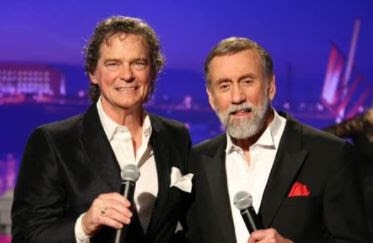
In the photo above we have B.J. Thomas and Ray Stevens on the set of Ray's television series, CabaRay Nashville. In this episode B.J. asks Ray about the story behind why he turned down "Raindrops Keep Falling On My Head". The two speak about "Billy and Sue", a song that B.J. recorded and had a hit with...featuring Ray Stevens playing the organ. B.J. says how much he loved Ray's song "Mr. Businessman" and so he recorded it...but remarked to Ray in the interview that it was the first time he'd seen a song with so many words. This is what Ray said in a press release regarding the passing away of B.J. Thomas...

“BJ Thomas was one of the most natural singers I ever knew. He was a pleasure to know and to work with. The Angels were there when he recorded ‘Rain Drops’ and he’s now added his unique voice to their eternal choir.” -Ray Stevens

May 9, 2021

Ray Stevens: "Dizzy" performance by Tommy Roe...

Hello all you fans of Ray Stevens on this Mother's Day 2021. Today is also the birthday of Tommy Roe and earlier this morning Ray uploaded a video clip of Tommy's appearance on CabaRay Nashville. The video clip features a brief interview/conversation between Ray and Tommy...and then the performance of "Dizzy". If you're not familiar and hadn't looked up information about him yet I'll mention that Tommy Roe was among the artists who migrated from Georgia and into pop music history. Ray shares a history with numerous 1960's recording artists from the Atlanta, Georgia market such as Joe South, Billy Joe Royal, Jerry Reed, Sonny James, and Tommy Roe. The common link happened to be disc jockey, music publisher, and executive Bill Lowery. Tommy's biggest single is the million selling "Dizzy" but he had several more hit singles...including three more that sold a million copies each. His other million selling hit songs are "Shelia", "Sweet Pea", and "Jam Up and Jelly Tight". Tommy retired from recording and giving interviews early in 2018 and so, in hindsight, his guest appearance on CabaRay Nashville is officially one of his last televised appearances before making the decision to retire.

January 4, 2021

Ray Stevens: Freddie's still Funky at 55...

Well, hello once more...in this blog entry we take a look at a novelty song from Ray Stevens that was released 55 years ago in 1966. If you notice I always select even numbered years whenever I go to write a blog entry spotlighting an anniversary of a song or an album. This time around it's even number 55 as in 55 years. "Freddie Feelgood" is one of those songs that I routinely abbreviate it's title. Ray has several novelty songs with extra long titles and so I typically shorten the titles when I'm writing. This time around the full length song title is "Freddie Feelgood and His Funky Little Five Piece Band". I feel that there's no need in writing the song title in it's entirety...those of you that are longtime fans of Ray Stevens oughta know the song I'm referring to and you don't necessarily need to see the song's lengthy title written out. Those of you that are newcomers to Ray's music you'll be able to find video content here or on YouTube by simply searching 'Freddie Feelgood' or 'Ray Stevens + Freddie Feelgood' in the search results. The novelty song is all about a rhythm and blues combo and with the exception of the piano playing Ray vocally mimics all the other instruments in Freddie's band: drums, bass guitar, trombone, and trumpet. The scat singing of Yum-Yum is a highlight as is Ray's vocalization of the trumpet (the instrument Freddie plays). The single made it onto the pop Hot 100 in June of 1966 for a very brief appearance...and it wasn't heard from again until 1969 when it was placed on Ray's Gitarzan comedy album. That particular album had audience laughter and as a result of this the 1966 recording had laughter added to it so it would fit in with the rest of the recordings on that 1969 album. The same was true for another 1966 novelty single from Ray titled "Bagpipes That's My Bag"...it had laughter added to it when it appeared on the 1969 Gitarzan album. Since the early '70s when Barnaby Records purchased the master copies of Ray's Monument recordings nearly all future compilation albums released on Ray Stevens have included the 1969 copy of "Freddie Feelgood" with the laughter. I was raised hearing the copy from Gitarzan and so years later when I heard the single release from 1966 and heard no laughter at all, well, it felt strange not hearing the laughter/applause. 

Ray performed the song on his 1970 summer show and with the help of camera tricks and post-production special effects magic he was able to appear multiple times on the television screen. I'll be embedding the 1970 television performance and the official music video from 1999...


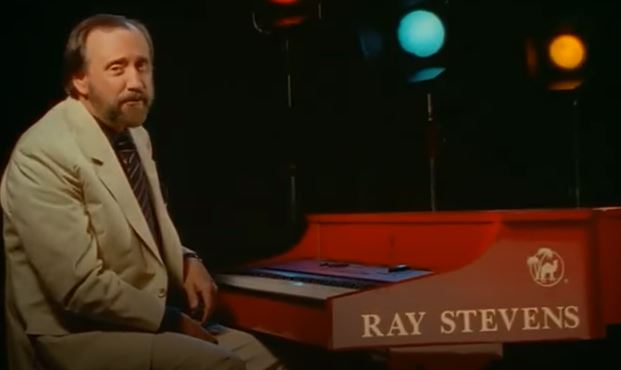
In the screen cap below Ray is seated at one of his various red pianos. The red piano became something of an identity for Ray going back to his years in Branson, Missouri. In fact, 2021 marks the 30th anniversary of his former music theater's grand opening. He performed at the theater for three seasons (1991, 1992, and 1993) and then he rented the theater to a production called Country Tonight. This production remained at Ray's theater throughout the rest of the 1990s and into the mid 2000s. The executives at Country Tonight shut down their program in 2003. Ray spent the remainder of 2003 and 2004 overseeing the theater as construction crews set about removing signage and logo's affiliated with the Country Tonight program. The interior was renovated and, according to Ray's memoir, new carpet was laid down with the goal to have it feel like the The Ray Stevens Theater of the early 1990s with some added features (like a huge remote control gorilla that would raise from the floor).  

Ray's grand re-opening of his Branson theater took place in 2005 and he remained a concert attraction there until the end of the 2006 tourist season...upon which he sold the property to RFD-TV. A decade later, 2016, the property was purchased from RFD-TV by businessmen from Pigeon Forge...but getting back to "Freddie Feelgood" and his funky little 55th anniversary...


Unlike the performance of "Freddie Feelgood" on the 1970 summer show which no doubt tested the abilities of the computer graphics department this 1999 music video was probably a whole lot more easier to make by comparison...but this music video features a lot of neat special effects and quick edits. Ray, for example, appears in front of five differently dressed versions of himself. Even after all this time I still have no idea how they put this music video together. I've never bothered to ask but I'm sure computer whiz's out there no doubt know how the video was put together. Here we have five versions of Ray Stevens dressed in red, side by side, and then in the foreground we have a sixth Ray Stevens in a suit singing the song to us. It's a hilarious music video as one could imagine so I know you're going to enjoy it as you did the summer 1970 video clip!    

April 17, 2020

Ray Stevens performs "Gitarzan" from 1972...

Hello out there!! Does it seem as if there's a glimmer of hope on the horizon surrounding this COVID-19 pandemic? If you watched much news coverage Thursday (April 16th) then you're more than likely aware of the Phase-In Plan to re-open the economy. It's only a plan and it's going to be strict in the first couple of phases but it does appear that there's some vision to get the country open and relax some of these borderline oppressive restrictions and rationing that's taken place over the last month. In the meantime...

Ray Stevens, yesterday, issued a vintage performance from 1972...a performance of his 1969 single, "Gitarzan", from an episode of Hee Haw. In this same episode he performed "Isn't It Lonely Together" but the reason "Gitarzan" was posted on Ray's social media sites is because April 16th was the date in 1969 in which the song reached it's peak position in the Top-10. There is video of Ray performing "Gitarzan" on his 1970 summer show and in that clip he's clean shaven. In the 1972 clip we see one of the earliest performances of Ray with the bearded look that's been so familiar for decades. The beard is present but you can tell it's not necessarily a thick, full-grown beard.


It's an early visual of how he'd look, permanently, from 1978 onward even though there are appearances by Ray in 1975 with an even fuller beard than this. Yes, I find myself musing over the clean-shaven and bearded aspect of Ray's appearance. It's a quirky trait of mine...if you're a long time reader of this fan-created blog you're no stranger to reading this type of commentary! 

March 30, 2020

Ray Stevens sings Bagpipes, That's My Bag

Are you a dedicated fan of the legendary Ray Stevens? By this I mean do you know a lot of songs that he's recorded that a general audience would have no clue about? Do you happen to know of songs that even some of his fans aren't aware of due to the song appearing on an album rather than on a single release? No matter what level of fan you happen to be this fan created blog entry serves as a way of celebrating the career and music of Ray Stevens while at the same time educating people on his diverse career. I go from time period to time period at random. Earlier this morning an audio clip emerged on YouTube of a 1969 Ray Stevens recording, "Bagpipes, That's My Bag". If you're familiar with slang expressions then you'll know the word 'bag' is slang for occupation or it can be used to describe one's hobby or interest. Therefore, bagpipes is the hobby/interest of the character Ray is singing about.


The song was released as the B-side of "Gitarzan" but over the decades it's gotten the B-side treatment. What do I mean by that? Well, as I started off this blog entry, I mentioned the level of fans that exist. Whether we're talking about music, movies, sports, history...whatever the topic...there are passive, casual, ardent, dedicated, loyal, and other adjectives that can describe a 'fan'. When record companies issued a single they wanted the hype and attention centered around whatever recording happened to be on the A-side...and music consumers, in general, only played the A-side of a single because that's the recording they were hearing or reading about. In other words they'd look for the single in stores, take it home, play it...but often never bother to play the B-side...some may have out of curiosity...but by and large a song appearing as a B-side unfortunately gained the reputation of being inferior. This was far from the truth, of course. The B-side was simply thought to be less commercial...it wasn't meant to be taken that the recording itself was inferior and no good. It's very possible that you can have a wonderful recording or a great story idea that lacks commercial appeal and as a result it was placed on the B-side of a single or it remained an album track and only heard by those that purchased an singer's entire album which back then was extremely rare as singles outsold albums. "Bagpipes, That's My Bag", a novelty song if ever there was one, was placed on the B-side of "Gitarzan" and therefore a lot of people never really heard it because the A-side dominated the airwaves. If you never turned the single over or if you never purchased the Gitarzan album then "Bagpipes, That's My Bag", from 1969, is brand new to you!

March 25, 2020

Ray Stevens and Company sing "Along Came Jones"...

One of the recent YouTube videos from Ray Stevens is a 1969 clip of "Along Came Jones". The performance is done against a backdrop of a refined, classical music performance showing Ray Stevens, Andy Williams, and Danny Thomas standing side by side and looking like a performance of "Along Came Jones" is the farthest thing from their minds.

Ray Stevens, Andy Williams, and Danny Thomas; 1969
Note the studious look of all three legendary entertainers. We see Andy Williams and Danny Thomas, in character, intently looking over their notes while Ray appears eager and ready to get things started. The trio walk out on stage and take their places behind the pedestals. After several seconds of fumbling with their "music sheets" and clearing their throats in a comical fashion there's a fanfare where the trio stand still and then Ray launches into a performance of "Along Came Jones". If you hadn't seen this video clip yet try and guess which one plays Sweet Sue and which one plays Salty Sam. Jimmy Osmond is also part of this video clip, too.


Ray Stevens, Andy Williams, and Danny Thomas; 1969

March 23, 2020

Ray Stevens sings But You Know I Love You...

Hello all the Ray Stevens fans out there...as all of you know the music world lost a legendary figure, Kenny Rogers. He passed away at age 81 on March 20th but the news wasn't released until Saturday and a flurry of on-line articles flooded social media sites from all over the world. Ray was quoted as saying: "Kenny was a nice man and a great entertainer who had a way of making a song his own. He will be missed.".

1969
Ray Stevens was recording for Monument Records in the late 1960s. The label had issued a series of single releases on Ray during 1966-1967...his first LP for the label didn't arrive until 1968, titled Even Stevens. The following year he issued two albums for Monument. One of those albums was the comical Gitarzan and the other album was this one, Have a Little Talk with Myself. It is on this latter album where Ray demonstrates his mastery of music arrangement. He had produced and arranged a lot of recordings for a whole host of recording acts on Monument Records and other labels...he was also the arranger of his own recordings while production credits were given to Shelby Singleton (Mercury Records) and later on, Fred Foster (Monument Records). The two albums that were issued on Ray in 1969 credit Fred Foster, Jim Malloy, and Ray Stevens as producers on Gitarzan while Ray and Jim Malloy are the credited record producers on Have a Little Talk with Myself. On both albums Ray continued his role as music arranger. The recordings on this 1969 album are mostly cover songs of contemporary pop music hits for other artists...all done with Ray Stevens arrangements. There are several songs that were originals at the time and those were the title track, "Have a Little Talk with Myself", as well as "The Little Woman" and "Sunday Mornin' Comin' Down"...the remainder of the album were his versions of a wide range of pop songs, among them were: "Aquarius", "Help", "Hair", "Spinning Wheel", and this song...


"But You Know I Love You" comes from the pen of Mike Settle who, at the time, was a member of the pop/rock group, The First Edition, whose lead singer happened to be Kenny Rogers. Their recording of the song was issued late in 1968 and it hit the Top-20 on the pop chart in the first half of 1969...also hitting the Top-10 in Canada. In this time period most recording artists filled out their albums with cover songs and once this song had become a hit then it was recorded by a lot of artists in various formats. Bill Anderson had a huge hit with it on the country chart in 1969...Dolly Parton hit number one on the country chart with her rendition in 1981. A bit of trivia is Dolly's rendition of "But You Know I Love You" took over the number one spot on the country chart from a Kenny Rogers and Dottie West duet, "What Are We Doing In Love?". Kenny and Dottie hit number one the week ending June 13, 1981 and the very next week Dolly was at number one with "But You Know I Love You" on June 20, 1981. That trivial tidbit is made even more ironic given that several years after Dolly's recording hit number one she and Kenny would become frequent duet partners.

In between 1969 and 1981 it was covered by numerous artists, as mentioned, and Ray Stevens was no exception as you can hear when you play the embedded audio clip above. A couple of decades later Ray performed "Ruby, Don't Take Your Love To Town" on an episode of his CabaRay Nashville television show. In the context of this performance it was as a salute to the song's writer, Mel Tillis. Ray's performance is on the episode, Tribute Show. In this episode Ray performs songs made famous by others and tells stories behind the songs and the artists that recorded them. The song was a huge hit for Kenny and The First Edition in 1969 but the first commercially successful rendition arrived in 1967 on the country chart by recording artist Johnny Darrell...a singer that recorded a number of songs first which eventually became iconic or country music standards by other artists that were more well known. He was the first to record "Ruby, Don't Take Your Love To Town" in addition to being the first to record "The Son of Hickory Holler's Tramp" and "Green, Green Grass of Home"...the latter becoming more well known as a Porter Waggoner classic. Ray Stevens, for example, was the first to commercially release "Sunday Mornin' Comin' Down" and it's on his 1969 album shown near the top of this blog entry...but the song itself is more well known as a Johnny Cash hit.

Here's Ray performing "Ruby, Don't Take Your Love To Town"...a song closely identified with Kenny Rogers and the First Edition...


March 1, 2020

Ray Stevens Marches to His Own Beat...

Oh hello...I'm a number of hours removed from when I wrote my previous blog entry. In that one I remarked about the closing of February and the emergence of March. If you're a fan of Ray Stevens then you should be very well aware that he's his own person...not that he hasn't had a lot of valuable help along the way...he gives a lot of credit to the people that supported his career in his memoir, Ray Stevens' Nashville, but for the most part he makes his own decisions when it comes to his career. He marches to his own beat...and it doesn't take a rocket scientist to discover that I titled this blog entry based upon it being the first day of March.

A performance that most surely may have you marching and tapping your foot is his rendition of "In the Mood", a recording released late in 1976. It reached the Top-40 on the country and pop chart early in 1977. In the United States and Canada it was issued as The Henhouse Five Plus Too whereas overseas it was released primarily as Ray Stevens even though I've come across several picture sleeves of the single from international markets in which it credits The Henhouse Five Plus Too as the performers of "In the Mood". The single, if you have never heard it, features Ray Stevens clucking like a chicken. I wrote a blog entry late in January this year all about the single...search the archives to the right for the blog entry.

Earlier today Ray uploaded a video clip onto YouTube from his Branson, Missouri years...a 1992 performance of "In the Mood" done by his stage band, The French Fried Far Out Legion. The band performs the number in it's traditional way and then midway through the lights dim a little bit during a saxophone solo while the other musicians reach for chicken hats. As this is going on we hear the clucking of chickens over the loud speaker...and on cue the musicians begin physically performing the song while Ray's chicken clucks are played for all to hear. The performance is part of the 1993 VHS release, More Ray Stevens Live!, this was the video cassette not released through television ads nor available in retail stores. The only place fans could get the VHS was through his fan club or by purchasing the tape in person at his gift shop at the former theater.

In the video clip you'll see and hear Ray's band as well as hear Ray's voice clucking out "In the Mood" as his band pantomimes to the recording.

February 16, 2020

Ray Stevens sings "I'll Be Your Baby Tonight"...

1969
One of the things that I personally feel that any Ray Stevens fan should possess is some sort of understanding of the many styles of music he's recorded throughout his career. If you consider yourself a dedicated/devoted fan or a student of his career then you should be aware of this 1969 album. If you've never heard of it then let this be your introduction. The Have a Little Talk With Myself album was his fifth studio album as well as his third and final LP for Monument Records following Gitarzan earlier in the year and Even Stevens in 1968. The Have a Little Talk With Myself vinyl album hit in the latter half of 1969. The LP's first single, "Sunday Mornin' Comin' Down", had been released a couple of months prior to the LP. There have been a lot of things written regarding Ray's recording of that particular song...it's almost always referenced to whenever journalists, bloggers, or historians write about the career of songwriter-singer Kris Kristofferson or Johnny Cash. Monument Records issued Ray's recording of the song in September 1969. It made the charts...peaking in the lower regions of the Hot 100 in addition to it appearing on the country music chart (his debut appearance in that format). It's highest charted performance, which is strangely overlooked by historians, happened to be it's showing in Australia where it reached that country's Top-40 pop chart, but it's performance there is never cited. In that time period Ray had quite a following in specific international markets although he was never mainstreamed by the local music media. The album's title track was issued as a single in November of 1969 followed by the single release in February 1970 of "I'll Be Your Baby Tonight" with his version of "The Fool on the Hill" as it's B-side. Ray uploaded an audio of "I'll Be Your Baby Tonight" on YouTube this past Friday, Valentine's Day. The song was written by Bob Dylan and had been recorded by him previously. The 1969 album contains 12 songs...10 of them are cover songs of contemporary pop songs whereas only two of the recordings come from the pen of Ray Stevens: "Have a Little Talk with Myself" and "The Little Woman". Those two recordings were released as A-side and B-side when Monument issued the single release of the LP's title track in November 1969. In February 1970 Monument issued Ray's recording of "I'll Be Your Baby Tonight" which you can hear below... 


In the meantime Ray was in the process of switching to a different record label. He began making popular guest appearances on the weekly television series, The Andy Williams Show. Andy's brother, Don, had become Ray's manager and was responsible for getting Ray onto Andy's show, as well as other television shows of the era, and one thing led to another. Ray ended his lengthy run with Monument Records and signed to Andy's label, Barnaby Records, and within weeks of his signing Ray emerged with his debut single for Barnaby, "Everything is Beautiful"...and another chapter of Ray's career was well underway.

August 24, 2019

Ray Stevens: The Road to the Country Music Hall of Fame...Part Five

As we continue down the road in the Country Music Hall of Fame career of Ray Stevens we pick up in the fall of 1969. In pop culture the headlines were dominated by social unrest and protests centered around the Vietnam War. These sentiments had been boiling since the mid '60s but didn't reach their violent peak until the 1968-1970 time frame. Ray wasn't highly active in the counter-culture but given his age bracket he certainly could have been. Musically, at this point in time, he had dabbled in social commentary in his 1968 studio album...search the archives on the right hand side of this page for Part Four of this mini blog series to see the information surrounding that chapter in his career. In the fall of 1969, for Ray Stevens, he released a song by a new songwriter...a song that would become a major hit for another artist a year later...but Ray holds the distinction of being the first artist to record the song. "Sunday Mornin' Comin' Down" hit the charts in the fall of 1969 on Monument Records and it was from the pen of Kris Kristofferson. Ray's version charted on the pop and the country charts...marking his debut on the country music charts. The single also reached the charts in Canada for Ray but the peak positions both in the United States and Canada were below the Top-40...meaning that radio stations weren't playing the song in spite of it registering sales. Ray was given the opportunity to record "Raindrops Keep Falling on My Head" for an upcoming movie but he turned the song down because of his strong feelings for "Sunday Mornin' Comin' Down" and he didn't want to delay the release of a surefire hit song for a risky soundtrack endeavor.

It's been said that Ray's version of "Sunday Mornin' Comin' Down" didn't become as big a hit due to his image...record buyers had a difficult time picturing clean-cut Ray Stevens going through the experiences sang about in the song...but the same record buyers had no problem identifying the song's lyrics with Johnny Cash...the artist that recorded the song in 1970 and had a huge hit with it. The song Ray turned down, "Raindrops Keep Falling On My Head", became a huge hit for B.J. Thomas when it appeared in the massively popular movie, Butch Cassidy and the Sundance Kid. The B-side of "Sunday Mornin' Comin' Down" happens to be "The Minority", from Ray's 1968 Even Stevens album. The B-side credits Fred Foster, Ray, and Jim Malloy as record producers while the A-side credits Ray and Jim as record producers. The reason, for those that hadn't read Part Four yet, is Fred and Ray made a friendly bet. The details of the bet were if "Gitarzan" became a hit, which Fred believed wouldn't become a hit, that Ray would have creative control over the direction of the next album. Fred lost the bet and so "Sunday Mornin' Comin' Down" was the first release following that losing bet. A brand new album also shown up in the form of Have a Little Talk With Myself. The title track, written by Ray, reached the country charts early in 1970. The album is an outstanding collection of songs made famous by other artists and have mostly been re-arranged by Ray. There are only three original songs on the album: "Have a Little Talk With Myself", "The Little Woman", and "Sunday Mornin' Comin' Down". The rest of the album consists of his versions of contemporary pop songs running the gamut from The Beatles to Blood, Sweat, and Tears as well as his versions of musical pieces such as "Hair" and "Aquarius". Some of the other songs on this album include his versions of "Help", "Spinning Wheel", "Games People Play", and the equally iconic "Hey Jude". Kicking off the 1969 album is a song that became his next single release...from the pen of Bob Dylan comes "I'll Be Your Baby Tonight" and Monument issued it as a single early in 1970. The B-side is from the pen of John Lennon and Paul McCartney, "The Fool on the Hill".

Music elitists and, or, music snobs generally feel that singers should never, ever remake or cover material that was originated by anyone looked upon as God-like in the music industry. Ray has never shied away from covering any type of song regardless of it's place in pop culture or if it's heavily identified with one artist or one group. The 1969 album goes a long way at showcasing this. It's difficult to tell how Ray's career would've gone if he remained on the Monument label...I say this because "I'll Be Your Baby Tonight" became his final single release for the label. Ray had a very lengthy stay at Monument...first as a music arranger/session musician beginning in 1963 and then as a recording artist beginning in 1965 following the expiration of his Mercury Records recording contract. In my previous blog entry I mentioned that Andy Williams was becoming a major player in Ray's career...and things really got going in the spring of 1970 when Ray was announced as Barnaby Records' new recording star. The record label was owned by Andy Williams. Ray's debut for the label arrived not too long afterward in the form of "Everything is Beautiful"...and oh what a classic in the career of Ray Stevens!! The song had been receiving high profile exposure through his guest appearances on Andy's television series on NBC-TV and it quickly became a hit. The single reached number one on the Hot 100 for two weeks...the last week of May and the first week of June...not only that but it hit the number one position in Canada, Australia, and on America's Easy-Listening chart. It was at the top of the latter for three weeks in the summer of 1970. The RIAA certified it a Gold single for than a million copies sold.

Coincidentally Ray Stevens found himself on the cover of The Toronto Daily Star for the week of May 30, 1970 - June 6, 1970. I say coincidentally due to the fact that "Everything is Beautiful" hit number one in the United States for the week ending May 30th. Ray had been told that he picked as the host of a variety show for NBC that was set to air during the summer months while Andy Williams was on vacation. In this era, apparently, it was frowned on by advertisers to air repeats of variety programs (perhaps due to their topicality) and so whenever the host of a show was away on summer vacation a replacement host filled in. Ray was told of his upcoming hosting duties early in the year and so he eventually came up with "Everything is Beautiful" as a possible theme song for this yet to be aired summer series. Ray and his cast taped their episodes in a studio in Canada...which is why you see him off to the right on their version of TV Guide. The television series made it's NBC debut on the night of June 20, 1970 and there were eight episodes altogether. The last episode of the summer series aired the night of August 8, 1970. The show carried a surreal flavor and there were a lot of music performances (obviously) and comedy (obviously) from an eclectic cast. I'm only going to name a few of his cast-members: Mama Cass, Lulu, and Steve Martin. There were other cast-members but those three are the more notable. You can find video clips from Ray's 1970 summer show on YouTube if you're curious/interested in seeing the fun and frolic the show presented to viewers. The program would typically open with Ray seated at the piano singing the chorus of "Everything is Beautiful". The international success of the single as well as it's national exposure on NBC-TV for those eight weeks obviously played a major factor in the single selling more than three million copies. The song became a much recorded Gospel and Inspirational standard. Barnaby Records issued their first album on Ray...titled, as you could imagine, Everything is Beautiful. The album contained two original songs and more cover versions of other artist's recordings. The only other original being "A Brighter Day" which had been the B-side of "Everything Is Beautiful". Ironically Ray recorded "Raindrops Keep Falling On My Head" for this 1970 album...even though he originally turned the song down in 1969...and interestingly the album notes credit it's appearance in the Butch Cassidy and the Sundance Kid movie even though it's the B.J. Thomas recording which is heard in the film and it's soundtrack. It's my belief that Barnaby Records was simply promoting the song itself...not necessarily the recording. Some of the other songs on the album include "Something", "Get Together", "Walk a Mile in My Shoes", "Early in the Morning", and "She Belongs To Me". Ray's next single wouldn't arrive until the fall of 1970...included on an album that was much more socially aware than anything he had issued to that point in his career. Welcome to the commercial peak of the Protest song in pop music...and Ray tested the waters with his own style of Protest anthems...and some record buyers may have considered it Unreal to hear Ray singing about such topics with such conviction...and we'll pick up with the rest of this in Part Six...but it goes without saying that I'm not writing these blog entries under any kind of protest. I'm enjoying this career look-back of Ray Stevens.

August 18, 2019

Ray Stevens: The Road to the Country Music Hall of Fame, Part Four...

Welcome to Part Four of this blog mini-series as I spotlight Ray Stevens' Road to the Country Music Hall of Fame. The year is 1968 and Monument releases their fifth single on Ray in January...a unique offering titled "Unwind". This single credits both Fred Foster as well as Ray Stevens as producers...Ray also wrote both sides of the single. By unique offering I'm referring to the blending of tempo heard throughout the performance. The recording starts off with Ray in frenetic mode detailing all of the things he's got to do throughout the course of the working day and then as his descriptions near the hour of 5pm his vocalization has decreased in tempo to where he sings about winding down once he arrives home and the vocalization has long since shifted from frenetic to mellow but then, following a brief vocal break as the instrumentation plays, the tempo begins to pick back up and the frenetic vocalization resurfaces as the new workday is underway...and the routine plays itself out...but, once more, Ray winds down his vocalization as it draws closer to the end of the workday at 5pm. In the career time-line of Ray Stevens "Unwind" is typically the single that bridges the gap between the various phases of his career. By this I mean it's a single that frequently shown up on various greatest hits and best-of albums released on Ray Stevens even though it wasn't as widely known as his follow-up single...but if you base a 'hit' as a single that makes an appearance on a popularity chart then "Unwind" certainly qualifies. In part three I mentioned how "Freddie Feelgood" (from 1966) returned Ray to the national Hot 100 pop chart for the first time in three years...that single also appeared on the pop singles chart in Australia. "Unwind" reached midway up the Hot 100 here in America in early 1968 and in Canada it reached their pop music chart, too, peaking the Top-30. The B-side of "Unwind" is a devastating ballad titled "For He's a Jolly Good Fellow". Monument followed up this hit single with a song from Ray dripping in social commentary...a pointed look at the corporate elitists...a song partially inspired by a business deal gone bad involving Ray.

It's often been reported about by historians, journalists, and mentioned by Ray in interviews that early in his career he was taken advantage of, briefly, by opportunists that mishandled his money through unwise investments and when he decided to take a look at his earnings he seen how lousy those in charge of his finances happened to be. As a result of the mishandling of his finances and a general negative feeling overall he came up with "Mr. Businessman"...a single that burst onto the music landscape in the summer of 1968. Production by Ray and Fred Foster this self-penned vocal outrage dealing with corporate America's amoral attitudes, misplaced priorities, and the bottom line was a startling contrast to the bluesy love ballads, easy-listening renderings, and novelty songs he'd long been noted for. The single features single note piano key strikes at the beginning of the song...as the tempo rises the key strikes get more stinging and more keys are added into the performance...as more and more instrumentation is added into the performance the piano blends into the background. It's a great hook and in concert whenever Ray starts to play those familiar piano strikes there's an obvious enjoyment that flows from the audience. Commercially "Mr. Businessman" was a very big hit...it reached the Top-30 on the Hot 100 and, ironically enough, the single had even more impact in Canada where it hit the Top-10. Perhaps it's not an irony...I'd say that the subject matter Ray sings about in the song is almost universal...there's good and bad businessmen and businesswomen all over the world.

The success of "Mr. Businessman" ultimately spawned the release of a vinyl album. In those days record companies often preferred to release singles...and if an artist had accumulated a series of hit singles then the record company would issue an album featuring those single releases, their B-sides, and several other recordings to fill out the collection of songs. This means that a lot of vinyl albums of this era were usually filled with one or two recordings that had been released as singles...and most of the time the album was named for one of those hit singles...while the rest of the album contained songs that were not commercially driven and sometimes an album would contain whatever the artist or producer felt like placing there...knowing full well that albums were purchased by the most loyal of consumers while a single was designed to cater to a general audience. In country music the record companies would release a vinyl album named for the hit single but then the remainder of the album wouldn't be explored by the record label for future single releases. There are a lot of country albums of this era with 10 or 11 songs but only one of those would be the single release...to say the album was looked upon with contempt is putting it mildly. Anyway...Monument Records issued their first studio album on Ray titled Even Stevens in the fall of 1968 on the heels of "Mr. Businessman". The album was produced by Fred Foster and Ray Stevens. It features 10 recordings in which Ray was the songwriter on 8 songs, a co-writer of one, while a tenth song was written by another writer. Ray also arranged every song on the album except two of them.


I created that collage a couple of years ago...or it could have been last year...anyway it's me attempting a similar pose from Ray Stevens as he appears on the Even Stevens album of 1968. The back of the album shows Ray seated in front of a music stand. The album comes with liner notes authored by Tupper Saussy. By the way Tupper is the one responsible for the only song on the album that Ray never had a hand in writing or arranging: "The Earl of Stilton Square". Tupper wrote and arranged the song. One of the television shows from this era, Get Smart, had a popular catchphrase...well, the show had several, but to borrow just one of those phrases... 'would you believe??' that Even Stevens never made an appearance on the Billboard 200 album chart!! If that wasn't ironic enough...Ray himself became a businessman but this was out of necessity given how little faith he had in someone else looking after his finances. He was once quoted as saying that nobody's going to look after you but you and so he reluctantly had to become more involved in the business side of the music industry. He eventually hired a manager, though, by the name of Don Williams...not to be confused with the country singer of the same name.

In the meantime the B-side of "Mr. Businessman", for those curious, is the album's seventh song, "Face the Music". Ray wrote the B-side but the music arranging is credited to Louis Nunley. Monument released "The Great Escape" as a single in the fall of 1968 backed with a phenomenal ballad called "Isn't It Lonely Together?". The A-side followed the social commentary vein and it charted on Canada's version of America's Hot 100...but in America the single Bubbled Under the Hot 100. A third figure emerged prominently in Ray's career during the making of Even Stevens and that figure happened to be Jim Malloy. He's credited as the production assistant to Fred and Ray on the 1968 album in addition to being the engineer's assistant. The engineer of the album was Charlie Tallent. The album itself was recorded at Bradley's Barn (a studio owned by legendary music producer Owen Bradley). In early 1969 Monument released a single on Ray that, according to Ray's interviews and his recollections in a memoir, that Fred Foster was completely against.

The single in question had the unusual name of "Gitarzan"...a word that Ray credits to Bill Justis, which as you can see, combines guitar with Tarzan. A title like that led Ray into creating a story about Tarzan, Jane, and their chimp forming a rock and roll jungle band. Ray also credited the rhyming dictionary in guiding him, line by line, in the song's construction. The song is filled with internal rhymes and end rhymes as well as pseudo-rhymes where sound-a-like words follow each other even though they're not identical rhymes. According to Ray's recollections Fred told him that if this song became a hit then Ray would have complete creative control on his next project. "Gitarzan" became a gigantic hit...in America and internationally...and throughout the first half of 1969 the massive popularity of the novelty song eventually brought certifications of a Gold record by the RIAA. In those days a gold record was indicative of sales of over a million copies. The single hit the Top-10 on the Hot 100, the Top-10 in Canada, the Top-10 in Australia, and the Top-10 in New Zealand. It made the charts in other international markets, too, but I decided to limit it to three additional countries for this blog entry. As you can see in the credits the producers are Ray, Fred Foster, and Jim Malloy. In addition to being a co-producer Jim returned as engineer assistant as he had been during the previous album from Ray in 1968. Songwriting credits go to Ray and Bill Justis...credited under his birth name of Bill Everette. The song's B-side, "Bagpipes-That's My Bag", was written by Ray and produced by both Ray and Fred Foster. For whatever reason Jim Malloy isn't credited...but obviously this is more or less due to his not being a part of the B-side's production. Monument issued their second album on Ray, Gitarzan, in the late spring/early summer of 1969. The album features liner notes from talk show host, Merv Griffin. Upon the release of the album from Monument Records they issued a new single...Ray's version of "Along Came Jones"...and while it didn't hit the Top-10 or sell millions of copies it nevertheless reached the Top-30 on the Hot 100 in America and the Top-30 in Canada in addition to it charting in Australia's Top-20. The original recording of the song had been a hit 10 years earlier by one of Ray's influences, The Coasters. The B-side of "Along Came Jones" happened to be another cover of a Coasters hit, "Yakety Yak". There are those that have often remarked that Ray's version of "Along Came Jones" is the funniest...and a lot of it has to do with the additional material that Ray brought to the song. The original from The Coasters lacks the falsetto cries of Sweet Sue as she's being tortured by Salty Sam...and the original also lacks the sinister laugh from the villain. Those are things that Ray brought to the song. The back to back novelty hits and the album itself labeled Ray a novelty singer...even though some may never have recognized him as being anything but a novelty singer in spite of the recorded evidence proving otherwise...some think "Mr. Businessman" is a funny song. Go figure!

In addition to all of this well deserved and long overdue success Ray had been enjoying lately he became acquainted with pop entertainer Andy Williams by the latter half of 1969. Earlier I mentioned that Ray hired a manager named Don Williams...well, he happens to be one of Andy's brothers...but I don't know what came first off the top of my head. I don't know if Ray and Andy got acquainted first and it led to Don becoming Ray's manager or if Ray hired Don as a manger before becoming a business associate of Andy's. Whatever came first Andy Williams began to have some influence in Ray's career around this point in time...and perhaps not a coincidence Ray began making infrequent appearances on Andy's television series. When "Gitarzan" became a massive hit earlier in the year Fred Foster, as mentioned earlier, made Ray a friendly bet that if it became a hit then on the next project Ray would be given complete creative control over. Fred lost the unofficial bet and so Ray and co-producer Jim Malloy set out to work on his next project for Monument Records...and it was a beauty of an album...which I'll go into more detail about in Part Five of this mini-blog series!!

March 30, 2019

Ray Stevens: Voices in the Hall...

Hello once more...a podcast featuring Ray Stevens became available yesterday and it's part of a series called Voices in the Hall. I had seen the title of this series mentioned a couple of times on-line but without reading too much about it I thought it was a program that focused on members of the Country Music Hall of Fame. So, once I came across the podcast of the series with Ray as a guest I erroneously thought it was going to be an interview with Ray on being elected to the Country Music Hall of Fame as well as it being a look back on his career. Ray's interview is Episode Eight in the recently launched series.

Anyway, having not read much about the series, I listened to Ray's interview and also read the manuscript version. It never dawned on me that Ray's interview had taken place weeks or probably months before the March 18th announcement of his election to the Country Music Hall of Fame.

It's a great interview and Ray gets the opportunity to talk about his experiences in the recording studios over the last several decades and his successes with video material (collectively VHS, DVD, and On-line releases) in addition to his years in Branson, Missouri and the recent opening of the CabaRay showroom. The host asks him several questions about several of his recordings and he tells of their origin. "Gitarzan", for example, as well as "The Streak" and "Everything is Beautiful" among others. It really isn't until near the end of the interview that we (the listeners) realize that the conversation took place prior to Ray's election to the Hall of Fame based on some parting words from the host.

It turns out that the title of the series, Voices in the Hall, is meant to be taken literally. It's a conversation/interview series which takes place inside the Hall of Fame facility...it doesn't mean the artists being interviewed happen to be members of the Hall of Fame (which is what I initially thought the series would be about). The irony, of course, is Ray's interview for this series was uploaded weeks after the March 18th announcement that he would be one of the newly elected Country Music Hall of Fame members...but episodes for Voices in the Hall had been recorded weeks prior to that announcement...and so it's eerie to hear the interviewer, Peter Cooper, mention that he hopes Ray will become a member of the Country Music Hall of Fame one day. Once I heard him say that to Ray it dawned on me that the interview had taken place at some point prior to March 18th of this year.

It's a great interview, as I mentioned, regardless of it taking place before the Hall of Fame announcement. Over on the podcast website I commented that I hope a further interview takes place in which Ray can reflect on his career from his newly acquired status as a Hall of Fame member. The medallion ceremony later this year marks the official induction where the members receive their plaque and medallion which is why in the months leading up to the medallion ceremony the newly elected members are sometimes referred as member-elect, much like in a Presidential election. Once a candidate wins the election he's referred as the President-elect until the official Oath of Office takes place. Ray and the other newly elected Hall of Fame members go through a similar process. It's only after the medallion ceremony takes place (equivalent to Inauguration Day for a President) that the newly elected become official inductees.

As of this writing Ray hasn't given any interviews, well, any lengthy remarks about the Hall of Fame election beyond the speech he gave on March 18th which is embedded below the podcast link.

You can listen to the Voices in the Hall podcast by clicking HERE.

His speech at the Hall of Fame from March 18, 2019...


January 13, 2019

Ray Stevens returns to RFD-TV...

Well, hello all of you fans of Ray Stevens!! I have a feeling you all have heard the news that Ray's two television programs have returned to the RFD-TV airwaves. I found out last weekend when the station aired episode three of Season Three (guest starring gospel artist Michael W. Smith). The cable channel had aired the first two episodes of Season Three in the middle part of December before abruptly removing both programs from their line-up. I speculated several reasons for it's sudden departure in one of my final blog entries of 2018 (the one I wrote on Christmas Day) but in that blog entry I kept an open mind and wondered if the cable channel would return either series, or both, to the line-up in 2019 and sure enough both Ray Stevens CabaRay Nashville and Rayality TV made their return to the weekend prime-time line-up on RFD-TV last weekend (January 5th/January 6th) but I never made mention of this in my January 6th or January 8th blog posts because I wasn't too sure if either show had returned on a permanent basis or if it was another false alarm but it looks as if both programs will be part of the RFD-TV line-up for the foreseeable future given that I looked ahead to next weekend's schedule on their webpage and RFD has the fifth episode of Season Three (guest starring Rhonda Vincent) scheduled to air next Saturday night (January 19th)...and this will make three consecutive weekends that the cable channel will have aired the two programs...and so I'm cautiously optimistic that, as I mentioned, each show will be on the weekend line-up on RFD-TV for the foreseeable future with no abrupt removal. Last night's episode guest starred B.J. Thomas.

On January 10th several video clips were uploaded onto YouTube promoting Ray's return to the RFD-TV airwaves. One clip features Ray at the piano inside the CabaRay discussing each series and then there are several video clips that promote a specific episode of Rayality TV. The clip-filled Rayality series features not only a mixture of music videos and live performances but clips from various programs from his extensive library of video footage are also inserted...each episode has a recurring theme...if an episode is titled 'chickens', just as an example, then pretty much all of the clips shown will center around the subject matter of chickens. The first video clip is the one featuring Ray discussing both television programs...


There have been four video clips uploaded to promote the first four episodes of Raylity TV. Seen below is clip one and clip four...


In my previous blog entry I focused on the single release of "Gitarzan" and how last week marked the 50th anniversary of it's chart debut (hitting the weekly music charts on January 6, 1969). I remarked that at some point this year I'll be posting blog entries focusing on the Gitarzan album as well as his second studio album from 1969, Have a Little Talk with Myself. At the moment I'm going to focus on the single release of "Have a Little Talk with Myself". Ray wrote it and it became the title track of his second studio album of 1969...and Monument released it as a single in the latter half of the year and it entered the charts early in 1970. There isn't any video clip of Ray performing the song on camera from the era in which it was recorded but you can find audio clips on YouTube of the 1969 recording. He re-recorded the song more than 40 years later with a different arrangement, and in abbreviated form, for a medley titled "Have a Little Talk with Myself/Just a Little Talk with Jesus" on his Gospel Collection CD. An audio clip of that particular 2014 recording can also be found on YouTube. The song originally appeared on the country charts early in 1970 (his second entry on the country music charts following "Sunday Mornin' Comin' Down" late in 1969).

On the pop chart "Have a Little Talk with Myself", strangely enough, didn't crack the Hot 100 at all...it Bubbled Under the Hot 100...meaning that the single never managed to even make it past the promotional stage. The unique chart is an extension of the Hot 100: for example...if a single hits number one on the Bubbling Under chart but doesn't make it onto the Hot 100 then it's official chart position is number 101. The chart consists of songs that are speculated to become hits on the Hot 100, specifically, but there have been a lot of instances where singles appear on the Bubbling Under chart but then go on to have chart runs in other music formats (such as country, rhythm and blues, soul). "Have a Little Talk with Myself" peaked in the lower half of the Bubbling Under chart (it consisted of 35 positions at the time) and so it's pop music peak position would have a triple digit number because of it peaking on the Bubbling Under chart. In the country music market the single managed to make it into the Top 100 but it peaked outside of the radio heavy Top-40 rankings. If you search the internet you'll find that several recording artists have recorded the song...including the likes of Sammy Davis, Jr. (just to name the most notable) but there have been other recordings of the song. It's an inspirational song and therefore it's often found on the gospel albums released on Ray Stevens...there have only been three gospel albums recorded by Ray anyhow...the gospel songs from his Turn Your Radio On album (from 1972) are the ones that had been reissued several times by a variety of different record labels and on many compilation albums you're usually going to find "Have a Little Talk with Myself" and "Turn Your Radio On" featured in the track lists. The Have a Little Talk with Myself studio album has never been issued in CD or Mp3 format. You can listen to the songs from that album on YouTube...but as a fan I'd love to see the studio album get the CD reissue treatment complete with liner notes and perhaps personal recollections/quotes from Ray Stevens himself...one can always wish. Later on this year I'll highlight the studio album since it, like the Gitarzan album, both turn 50 this year.

January 8, 2019

Ray Stevens: Jungle Gold...

Hello once more...as one could perhaps guess from the blog entry title this particular installment puts "Gitarzan" front and center. It was this week in 1969 that the Ray Stevens single seen it's release. The official release date was January 6, 1969 and so this is the song's Golden Anniversary week (50 years). The song itself is a comical parody of the Tarzan character featuring vocal impressions from Ray of the leading character as well as Jane and their pet chimp. The merging of Tarzan and pop music came together in this novelty record from the pen of Ray Stevens while the song's title, which merged guitar with Tarzan, came from the mind of session musician and recording artist, Bill Justis. He's credited as a co-writer under his birth name of William Everette.

Over the years the song's become, of course, a staple of his concerts...it reached the Top-10 on the pop charts and sold more than a million copies which earned it a Gold Record from the music industry. The success of the single wasn't limited to American audiences...it hit the pop music charts internationally. The single's peak arrived in the spring of 1969 (the April/May time frame). I was doing a little bit of further research and discovered that in the latter half of May 1969 the weekly chart publication, Billboard, debut it's Canadian music charts. In the first ever Canadian pop music singles chart "Gitarzan" was ranked among the week's Top-10 singles.

I'll be posting a couple of performances of the song in chronological order from several television appearances. The first one being from his 1970 summer television show. In each presentation the song grows more and more into a comedy sketch.


In a performance from nearly a year later, in 1971...


The early 1990s performance from his Branson, Missouri theater represents the often performed presentation of the song in which Ray enlists a female actress or one of his back-up singers to portray the part of Jane while the chimp is either performed vocally by Ray, or, some unidentified person is on stage dressed as an ape prancing around to Ray's monkey vocalizations.


I'm not insisting you all should view every video clip...you can pick and choose...or if you want to you can certainly watch each of them. The reason I'm inserting various performances of the song is I find it interesting how the song is performed in each time period...some performances are more elaborate, vocally, while others incorporate a lot of additional dialogue not heard in the original recording. In that sense I think you should view each of the video clips so you can see the various performances of the song. I'm focusing on the live performances which is why the official music video (from 1995) isn't part of this video clip time-line.

The fourth video clip is from last year and it comes from an episode of his CabaRay Nashville television series. It was uploaded onto YouTube in September of 2018.