Showing posts with label 1972. Show all posts

March 24, 2022

Ray Stevens: 1972 performance in Vancouver of "Everything is Beautiful"...

Hello all fans of Ray Stevens!! If you've been reading his social media you probably have seen the video snippet from the first concert of the 2022 season at the CabaRay this past Saturday. Well, to be specific, his daughter posted it on her social media and it was one of those spinning videos...where the camera angle zooms in and out and flips in different directions. It was during a performance of "Gitarzan". I don't embed videos from other sources outside of YouTube. His daughter's name is Suzi Ragsdale and if you search her posts or her video uploads you'll be able to see the video I'm referring to. In this blog entry, though, I'm going back to 1972. This is a performance of "Everything is Beautiful" from a television show in Vancouver, Canada. I like the screen shot chosen for the video...showing Ray in a classic pose from that time period.  


I'm going by the video description that the performance is from 1972. My feeling is that it's from 1970 or mid 1971 at the latest. The reason I say that is because the song came out in the spring of 1970 and was hitting the top of the Hot 100 by the summer...weeks before Ray became the host of Andy Williams' summer show in 1970. Once Ray was on national television each week over the course of the summer months, with this song as it's theme, the single became an even bigger selling song than it already was. However, it's possible that he was still singing the song on television appearances as late as 1972...a full 2 years after it hit. Usually when you do guest television appearances you sing your latest recording or whatever your most recent recording happened to be. There's another video on YouTube that Ray uploaded last month...in that one he's singing "Turn Your Radio On"...and he's in the same venue but he's not wearing the orange vest-like shirt. They're both from the Vancouver appearance. 

The song's been in his concert set-list almost non-stop since 1970...usually the closing song. I'm sure back in the early 1970's he led off his concerts with the song or had it close to the top of the set-list since it was a recent song. I think he began putting "The Streak" and "Everything is Beautiful" as the final two songs in his concerts at some point in the early or mid 1980s.   

July 2, 2021

Ray Stevens audio: "Til I Get It Right"...

As we head into July 4th weekend I'll be composing several Ray Stevens blog entries starting with this one...focusing on the country music classic, "Til I Get it Right". The song comes from the pens of Red Lane and Larry Henley. The two writers have written a lot of songs separately...a Red Lane song that springs to mind is the classic "Miss Emily's Picture" that John Conlee recorded. Larry Henley is credited as a co-writer of a song Ray Stevens recorded in 1982, "Why Don't We Go Somewhere and Love". The co-writer with Larry Henley of that song is Kenny O'Dell. "Til I Get it Right" became a country music classic after it was recorded and released by Tammy Wynette in 1972. Her record producer, Billy Sherrill, utilized his familiar production style and it became a number one hit for her. Now, nearly 50 years later in 2021, Ray Stevens brings the song back and adds his own music arrangement to "Til I Get it Right"...and as you can see it's from his Great Country Ballads digital album released earlier this year...

June 10, 2021

Ray Stevens: Vintage 1970s Photo...

It's me once again!! This vintage photo of Ray Stevens emerged on his social media about half an hour ago and I decided to share it on this blog. There wasn't any information about it...I made the assumption that it might be from the late 1970s. You can clearly see that Military design on the sleeve of the jacket...and from my eyes it appears there's a carnation or some sort of flower on the left side of the jacket. The floor shot angle of the photo gives the appearance of a thin beard...as if he's it's in the process of growing out fuller...so I assume it's from some point in 1978 or 1979...it could even be from some point in the latter half of 1977. There's a period in Ray's career where he stopped appearing clean shaven and I've often pin-pointed this to the year 1978. The earliest photo that I seen Ray with a beard was in the 1960s but it was a photo that wasn't meant for publicity but was more of a personal photo that Ray decided one day to share on his social media. You'd think I'd have that photo in my online collection but I don't. I can't find it on Ray's social media anymore and I saved it on a former computer I was on. I may look in more detail and see if I come across that 1960's photo of Ray with a beard. Anyway...the hairstyle had me thinking 1977/1978/1979 but the thin beard has me thinking late 1977/early 1978. However...Ray also had a beard for a number of years in the early '70s. On his guest appearances on Hee Haw in 1972 and in 1975 he had a beard. The beard was gone when he next appeared on the show in 1976. If that doesn't complicate matters there are photos of Ray from the early 1980s with a thinner beard than usual...but I'll go with my original assumption that the photo originated sometime in the late 1970s. There are a couple of photos from this performance in the Photo section of Ray's Facebook page. Take a look at this one...

As you can see in that awesome photo Ray Stevens is belting out one of his songs...it could be "Everything is Beautiful" or it could be any number of the love ballads he recorded during his years at Warner Brothers in the late 1970s. You can clearly see the flower in that photo which was partially hidden in the photo above. When looking through the various photo's over on Ray's Facebook page I'm reminded of several photos of Ray from this performance that have previously been shared...one photo shared in 2019 shows Ray looking very intense with his head tilted downward looking at the piano. I've posted that photo below to close out the blog entry. When Ray performed his 1979 novelty single, "I Need Your Help, Barry Manilow" he remained seated at the piano for the entire performance. The photo off to the right also had me thinking he may have been singing the chorus of that song when this photo was taken but he's probably in the middle of singing "Everything is Beautiful" as I previously mentioned. If you follow Ray's social media pages then you've seen these photos before...but, like myself, you may forget from time to time if you've seen a photo if it's not a constant presence. Do you have any guesses as to what he might be singing in the photo above? Here's that intense photo of Ray looking at the piano...completely captured by the music.

April 17, 2020

Ray Stevens performs "Gitarzan" from 1972...

Hello out there!! Does it seem as if there's a glimmer of hope on the horizon surrounding this COVID-19 pandemic? If you watched much news coverage Thursday (April 16th) then you're more than likely aware of the Phase-In Plan to re-open the economy. It's only a plan and it's going to be strict in the first couple of phases but it does appear that there's some vision to get the country open and relax some of these borderline oppressive restrictions and rationing that's taken place over the last month. In the meantime...

Ray Stevens, yesterday, issued a vintage performance from 1972...a performance of his 1969 single, "Gitarzan", from an episode of Hee Haw. In this same episode he performed "Isn't It Lonely Together" but the reason "Gitarzan" was posted on Ray's social media sites is because April 16th was the date in 1969 in which the song reached it's peak position in the Top-10. There is video of Ray performing "Gitarzan" on his 1970 summer show and in that clip he's clean shaven. In the 1972 clip we see one of the earliest performances of Ray with the bearded look that's been so familiar for decades. The beard is present but you can tell it's not necessarily a thick, full-grown beard.


It's an early visual of how he'd look, permanently, from 1978 onward even though there are appearances by Ray in 1975 with an even fuller beard than this. Yes, I find myself musing over the clean-shaven and bearded aspect of Ray's appearance. It's a quirky trait of mine...if you're a long time reader of this fan-created blog you're no stranger to reading this type of commentary! 

April 12, 2020

Ray Stevens: Easter Sunday 2020...

Happy Easter Sunday to all the Ray Stevens fans!! In Easter's past I once highlighted Ray's 1990 comedy album, Lend Me Your Ears, because the cover photo has Ray dressed up as Marc Antony, from Julius Caesar, holding a rabbit. This Easter, however, I'm going to lead things off with a gospel recording from Ray Stevens.

An audio clip of Ray's 1972 gospel recording, "Let Our Love Be a Light Unto the People", was uploaded onto Ray's social media pages earlier today. The song comes from the pen of John Ragsdale, Ray's brother, who recently passed away. The track originated on Ray's first gospel album, Turn Your Radio On.


In 2014 when Ray released his second gospel album, The Gospel Collection, he filled out the album with his renditions of gospel and inspirational songs. However, there was one original gospel song on the album from the pen of Don Cusic titled "If Jesus is a Stranger". Ray performed it on several television shows and one of those performances is located below...


The studio recording of "Turn Your Radio On" by Ray Stevens is a bit different than how he performs it in concert. Almost immediately after the single hit in the latter half of 1971 he was performing it with a slightly different vocal delivery with heavy emphasis on rhythm and blues. If you've never seen Ray perform the song in concert and are only familiar with the studio recording from the early '70s take a look at Ray performing the song in 2017 on an episode of the television series Mike Huckabee hosts on The Trinity Broadcasting Network.  The Huckabee television series began in 2008 on the Fox News Channel and ended it's run in 2015. Huckabee ended the series due to his campaign for President. After the 2016 election Huckabee returned to television but on a different network, TBN, in the fall of 2017. The show was still in production prior to the COVID-19 partial lock downs.

This 2017 performance of "Turn Your Radio On" is a bit of a departure as Ray is usually playing a piano or a keyboard when he sings the song but here he's standing on stage belting out the song. Ray's trio of female harmony singers are on hand but his usual group of musicians aren't present on this appearance. Mike Huckabee is seen playing the guitar and it's his band that played behind the music guests.


A couple of blogs ago I wrote about John Ragsdale passing away. In the blog I mentioned a couple of songs that he wrote that Ray recorded. In the blog entry I mentioned "Talking" from Ray's 1970 album, Unreal, and I mentioned "Let Our Love Be a Light Unto the People" found on Ray's Turn Your Radio On album. However, I completely forgot that John co-wrote a 1982 Ray Stevens recording, "Country Boy, Country Club Girl". That song is on Ray's 1982 album, Don't Laugh Now. The co-writer of the song is Buddy Kalb...himself no stranger to the songwriter credits on many Ray Stevens albums. When I was looking at a Ray Stevens CD in my collection, Collector's Series, released by RCA Records, it has "Country Boy, Country Club Girl" on it. The songwriters are credited on that compilation and that's where I was reminded of John's co-write of that song.

There is an audio track of that song on YouTube but it isn't affiliated with Ray's channel. It was uploaded onto YouTube on April 8, 2013. I'm going to embed that 1982 audio recording so you can hear it...perhaps it'll be new to you and maybe entice you to seek out Ray's other early '80s recordings for RCA. Ray's recorded output from the late '70s to early '80s is under-rated, obscure, and often under-appreciated because the majority of his recordings during that time period were not zany, bizarre, comical, novelty songs...his recordings were straight, serious ballads.


April 2, 2020

Ray Stevens: The Passing of John Ragsdale...

Hello all...a couple of hours ago Ray Stevens released the news that his brother, John Ragsdale, passed away unexpectedly as a result from a fall. The information released on Ray's social media sites say that John suffered a fall at his house on the Island of Popa Loma in the Bocas del Toro region of Panama. I did some more research and discovered a publication called The Bocas Breeze. Although I didn't find out much from the publication's website I did find their Facebook page. It is there where I came across something of an obituary for John and it was posted March 29th. I have no idea if he'll be buried on the island or in Panama or if he'll be flown back to the U.S. and buried in Georgia alongside their parents. You can read The Bocas Breeze Facebook article about John by clicking HERE.

As far as I know Ray recorded two songs that are credited to his brother. One of those is a 1970 recording, "Talking", found on Ray's Unreal album. Another recording is "Let Our Love Be a Light Unto the People" which Ray recorded in 1972 for his Turn Your Radio On album. He re-recorded the album in 2016 and titled it Love Lifted Me...he kept the same 1970s arrangements but the vocals were newly recorded. However, "Let Our Love Be a Light Unto the People" was not re-recorded and so among the newly recorded vocals on Love Lifted Me is the original 1972 recording of that song. Here's the 1972 audio track from the 2016 gospel release...


Ray posted a video clip featuring John on the set of the Get Serious! VHS movie from 1995. It's footage from the documentary, Ray Stevens Made a Movie?? Get Serious!!, and along with clips of John in character in several roles there's also footage of him discussing the importance of learning and how education is important. John played the gorilla in the movie and other roles. He also played the gorilla during Ray's years in Branson, Missouri anytime Ray sang "Gitarzan". John can be seen in the VHS tapes Ray Stevens Live! and More Ray Stevens Live!. His appearances are more frequent in the latter VHS...and since he happened to be the Master of Ceremonies at the Branson theater he appeared on stage along side Ray's French Fried Far Out Legion Band during warm-up and intermission. The band is featured on several performances in More Ray Stevens Live! which is why there's more footage of John in that release. The YouTube clip below features a screen cap of John right after the gorilla mask was removed from his face on the set of Get Serious!. In the photo underneath he's seen wearing a CabaRay hat.


John Ragsdale: June 30, 1944 - March 29, 2020

August 25, 2019

Ray Stevens: The Road to the Country Music Hall of Fame, Part Six...

Hello once again!! In Part Six of this mini blog series I'll be looking at 1970, 1971, and 1972 in the Country Music Hall of Fame career of Ray Stevens. In the latter half of Part Five I focused on the release and international success of "Everything is Beautiful" during the summer of 1970 and the subsequent summer series that Ray hosted for Andy Williams on NBC-TV.

I kind of briskly went over the summer 1970 television show in my previous blog entry...stating it ran for eight weeks and I named three of it's cast-members. The official cast-member roster is as follows: Ray Stevens (host), Lulu, Mama Cass, Dick Curtis, Steve Martin, Carol Robinson, Billy Van, Solari and Carr. If you search YouTube for Ray's official channel over there...called raystevensmusic...you'll come across several clips from the summer 1970 series. You can also type in the name Ray Stevens and the year, 1970, and the search results will return a lot of those video clips Ray uploaded over the years from that series. The series, as mentioned, ran for eight episodes from June 20, 1970 to August 8, 1970. If you notice off to the left the title card has three question marks following his name. This sight gag was applied due to idea of Ray hosting the television series and being selected over seasoned television personalities. Viewers of Andy's television series and those that followed music knew of Ray Stevens but to have him headline a television series was presented as a novel idea. In most of the episodes there was a recurring sketch where an off-screen narrator would ask people if they knew who Ray Stevens was. One of the YouTube video clips have the likes of Don Knotts, Tom Smothers, Jonathan Winters, and even Andy Williams himself being asked if they know who Ray Stevens is. When I posted Part Five of this mini blog series I realized that I didn't give his summer 1970 series a proper spotlight...but rather than going in and editing Part Five I decided to kick off Part Six with a somewhat better overview of his television series considering the show's theme song and the show itself enabled Ray and his music to become mainstream rather than something that existed, albeit successfully, under the radar. His 1970 studio album for Barnaby Records, Everything is Beautiful, marked the first time he was solely credited as record producer. The phrase "produced and arranged by Ray Stevens" seen on all of his studio albums going forward would become as familiar to Ray's fans as the catchphrases found in a number of his novelty songs.

Now, then, following all of the popularity of "Everything is Beautiful" during the summer of 1970...a single that hit number one on the Pop charts in America, Australia, Canada, number one on the Easy-Listening chart, as well as the Top-40 in country music (his first single to place among the Top-40 in that format)...now, following this was something that had to be done. A massive hit is a blessing and sometimes a curse...for a follow-up is almost always compared to it's predecessor as far as chart statistics, sales statistics, etc. but a follow-up arrived in July of 1970...right in the midst of his summer television series. "America, Communicate With Me" hit the market during the era in pop music dominated by Protest songs. These songs were filled with a lot of emotional lyrics designed to either speak for or against America's involvement in the Vietnam War or speak for or against America's policies, in general, in both domestic and foreign matters.

Barnaby Records, an Independent label owned by Andy Williams, was distributed during this point in time by CBS Records. The single was heavy on social commentary as you could imagine. It is part of the Protest song era in pop music, albeit not a major pop hit, but it has a unique distinction of actually being a song that examines the protesting from both sides resulting with Ray asking for common ground and asking the country, as a whole, to communicate with him in his effort to make sense of everything that's going on in America because nothing he sees makes any sense whatsoever. The fact that the song didn't attach itself too strongly to either a Conservative or Liberal point of view and the fact that the opening lines tell of one who's tired of all the protesting taking place...well, as you could guess, it didn't exactly endear itself to those that were out there protesting and rabble rousing. Common sense usually wasn't part of the vocabulary of the zealous faction of protesters dominating the news headlines in 1969/1970. Ray's song struck a chord with people, though...ironically it peaked a few slots below the Top-40 on America's Hot 100 pop chart...kept out of the Top-40, in my opinion only, by those in the music industry that didn't appreciate the sentiments expressed in the song. Just as ironic is it's appearance in the Top-40 in Canada...you'd think that a song expressly written to criticize and question everything happening in America would have more of an impact in the home country but yet in Canada it hit their Top-40 pop chart. The single had it's greatest impact in the radio format catering to the adult audience...the Easy-Listening format...called Adult-Contemporary as well. This format, at the time, aimed their radio programming toward adults that identified themselves as contemporary pop music fans but disliked the music geared toward teenagers and younger adults...and so this radio format, dating back a number of years, played the artists on the Hot 100 that had a mature, older following...with reliance on recording artists that specialized in ballad-style crooning rather than the over-the-top flamboyant overtone of rock and roll. This format was home to pop singers that were removed from Top-40 radio in the aftermath of rock and roll in the mid 1950s. In spite of Ray Stevens being in the same age bracket of contemporary pop/rock artists of 1970 his music was having it's greater impact with a larger audience outside of the narrow confines of Top-40 demographic restrictions. There are many reasons for this that I won't go into now but as a result of his impact with general audiences "America, Communicate With Me" reached the Top-20 on the Adult-Contemporary chart in the early fall of 1970. In fact it peaked just a few notches below the Top-10...a truly remarkable feat for a single that fell mostly on deaf ears by those in Top-40 pop radio. Given that today is August 25, 2019 if you were magically return to this week in 1970 "America, Communicate With Me" would be all over Easy-Listening radio stations. The B-side of the single is the social commentary lament, "Monkey See, Monkey Do". That song deals with people being consumed with imitating others as far as fashion and material items go...and competing with one's neighbor for the better car, property, etc.

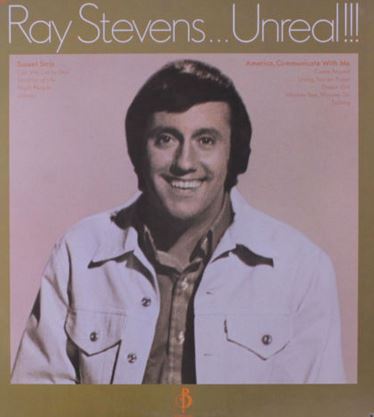
As a follow-up to "America, Communicate With Me" Barnaby Records issued "Sunset Strip" in October of 1970. This particular song was described by some music critics within the pages of Billboard magazine as something of a tribute to the music of Brian Wilson from The Beach Boys. Once you listen to the song you'd be inclined to agree...Ray does a great impression of the sound heard in a lot of surfer music complete with high harmony background reminiscent of Beach Boys records. Lyrically the song takes a look at the famed stretch of road on Sunset Boulevard and the West Coast culture that make up that area. The image of this area projected to the outsiders can be interpreted as excessive self-hype...the term 'plastic' can be applied to something that's not genuine and is meant to be a negative adjective to describe those that dwell in this environment...as a way of saying the people or the area itself just doesn't seem real or authentic given the glamour and escapist allure seen throughout. However, Ray's song doesn't paint people in this kind of negative light but he makes mention in the lyrics that 'some people say you're plastic...' but clearly Ray isn't one of those and he more or less celebrates the carefree nature of those in the area. It's a tribute/celebration of the West Coast culture without getting too heavy into politics and social commentary. In the song's chorus Ray overdubbed his own vocals multiple times to create the choir effect (vocal overdubbing wasn't something knew in his career) and within the chorus Ray sings about how there's something otherworldly/unreal about the strip. This reference line in the song's chorus led to his second studio album for Barnaby Records to be titled Unreal. "Sunset Strip", like it's predecessor, found it's biggest impact with Easy-Listening radio...reaching the Top-20 in that format while peaking within the lower half of the Hot 100. Ray uploaded a 1971 video clip of his performance of this song...search YouTube and you'll be able to see it. The television appearance is from a series called BBC In Concert from May 10, 1971. He performed several songs from this studio album on that television special. The B-side of "Sunset Strip" is a love song called "Islands".

The Unreal studio album was released in November of 1970. It features 11 songs...nine of those were written by Ray. It was his first studio album in a couple of years to feature a majority of self-written songs. The back of the album shows Ray at his piano on the set of his summer 1970 television series. "Sunset Strip" opens up the album while "America, Communicate With Me" is track five, closing out Side One of the album. The other side kicks off with "Come Around"...one of the two songs Ray didn't write. The other song Ray didn't write, "Talking", was written by Ray's brother, John, and it takes direct aim at the daily news headlines and how it seems like those in charge are doing nothing but talking as thousands of American soldiers are dying in Vietnam. The album covers a lot of material ranging from social commentary on everything from the Vietnam War, pop culture trends, societal norms and the war protests, to songs written from the point of view of a soldier writing love letters to send home in "Loving You on Paper". One of the greatest songs in his career happens to be "Dream Girl"...a soft ballad relating the emotionally tragic and often dramatic experiences in the life of an average girl/young woman of that time period escaping life as she buries herself in magazines promoting the heartthrobs of the day and the hottest music acts. This song and an earlier one from 1968, "Isn't It Lonely Together", are packed with raw emotion for that time period. Unfortunately this album was released following the only two single releases to emerge from it...for whatever reason Ray nor Barnaby Records released anything else from the album beyond July's "America, Communicate With Me" and October's "Sunset Strip". In hindsight they should have pushed a couple more songs from the album into early 1971 but this wasn't to be...and the reason why can be explained in one name: Bridget!

During the month of December in 1970 there came a release by Ray Stevens on Barnaby Records titled "Bridget the Midget the Queen of the Blues". This novelty song became an international hit by year's end and into 1971. It reached the halfway point on America's Hot 100 but, some may consider it shocking, it spent several weeks in the runner-up position on the pop chart in the United Kingdom. It's overwhelming success in the United Kingdom was not without it's set of detractors and as is the routine in America the same thing happened in the UK whereby those with influence in the media downplay the impact of something that they deem embarrassing or off-color. You're not going to find glowing reviews of the novelty song in any essays written by music critics from either America or Europe but yet it's sales and popularity spoke for itself. In several interviews conducted with Ray in that time period he mentioned that he'd always wanted to do a song with sped-up vocals such as those heard in "The Chipmunk Song" from the 1960s and so he devised a song built around a soul singing singer/Go-go tap dancer on the sunset strip named Bridget who happened to be 2 feet tall. It's my guess that he wrote the song at some point in 1969 because it's structured with a lot of end rhymes much in the same manner of "Gitarzan" although it's musical execution is completely different. Ray plays the role of the singer/emcee as well as Bridget (in a sped-up voice) and at various moments throughout Ray portrays one of the infatuated and possibly intoxicated audience members who really digs the performance and gets closer to the performance stage throughout the song. This novelty hit branded Ray as a novelty artist once more...and given the reputation of novelty songs Ray probably felt it comical to follow up such a zany comedy song with a performance so completely serious in an effort to downplay the predecessor's success.

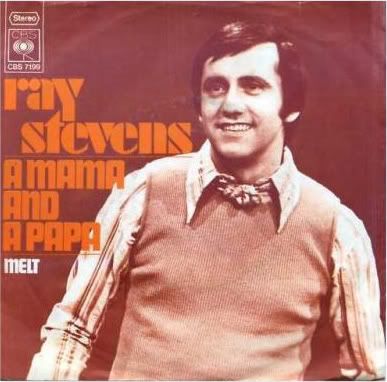
Whatever the backstory happened to be the follow-up to Bridget arrived in the spring of 1971...a gospel number titled "A Mama and a Papa" backed with a B-side exclusive titled "Melt"...certainly not a gospel song...dare I call the B-side sultry?? In March of 1971 the Grammy Awards were held. This year's program was hosted by Andy Williams. Ray happened to be on a tour in Australia and so he wasn't in America in the spring of 1971...so he wasn't able to accept his Grammy for "Everything is Beautiful". Ray won in the category of Best Male Pop Vocal Performance. Glen Campbell accepted the award on Ray's behalf. The song won a second Grammy for Jake Hess in the category of Best Sacred Performance. This may have been the first and only time two performances of the same song received a Grammy in two different music categories during the same year. In the meantime Ray had some Top-10 Easy-Listening success with "A Mama and a Papa" both here in America and in Canada. The gospel flavor of Ray's recordings continued on with "All My Trials" backed with his 1969 recording, "Have a Little Talk With Myself", in the late summer of 1971. Ray demonstrated, once again, his prowess in the recording studio during the production of "All My Trials". He created, through vocal overdubbing, a massive choir performing in various harmonies as background vocals for this single. It, too, reached the Top-10 on the Easy-Listening chart. There are two pressings of "All My Trials". The version that appears on the single has a running time of around three minutes whereas a much longer version...well over four minutes...also exists. The single release edits out a lot of the instrumentation as well as a repeat of the song's chorus.

In the fall of 1971 Barnaby issued a third gospel recording from Ray...this one titled "Turn Your Radio On". This recording made it's way into the Top-20 on the country music charts and it appeared on the pop music charts internationally as it reached the Top-10 in Canada, the Top-20 in New Zealand, and the Top-40 in the UK. On America's Easy-Listening chart, ironically enough, it wasn't a Top-10 hit as his previous two gospel singles had been. It's my guess that "Turn Your Radio On" had such a presence on various pop music charts that it's commercial success impacted it's acceptance on Easy-Listening radio but that's only my theory. The distinctive country arrangement of the song perhaps scared off that format...but yet Canadian's version of the Easy-Listening chart peaked it inside their Top-10...as did Canada's Country music chart. Barnaby finally issued a new studio album on Ray...arriving early in 1972 as "Turn Your Radio On" was peaking. The album was gospel...and titled Turn Your Radio On. The album reached the Top-20 on the Country Albums chart...his highest showing on a national album chart at that point in time. Ray, keep in mind, comes from an era where emphasis was placed more heavily on single releases rather than album releases. Those that purchased the album were treated to a full length version of "All My Trials"...the one that clocks in well over four minutes...rather than the edited copy found on single releases and the one played on Easy-Listening radio.

Following the album release of Turn Your Radio On in 1972 the label issued a fourth single...a rock inflected version of "Love Lifted Me". This single never made the charts in America, Canada, the UK, or Australia but it did manage to make an appearance in Bangkok of all places near the end of the year. Although never officially promoted there I found information years ago which shown the Top-30 singles of the week in Bangkok and, you guessed it, among the Top-30 was Ray's recording of "Love Lifted Me". There's a section inside Billboard Magazine titled Hits of the World. In the October 7, 1972 issue it shows "Love Lifted Me" by Ray Stevens ranked that week in the Top-20. The single would eventually place among the Top-10 but you seldom see this cited in any overview of Ray's career. It is in this era of Ray's career where he was slowly becoming more visible on country music television programs although he remained musically eclectic as ever. In the season opening episode of Hee Haw, for example, Ray was one of the guests. This episode originally aired in September of 1972 and he performed "Turn Your Radio On" and "Along Came Jones". He opened up his own recording studio which he dubbed The Ray Stevens Sound Laboratory. He had long been a resident of Nashville, Tennessee in spite of his pop music directions and he participated in a lot of recording sessions up and down Music Row throughout the '60s and into the '70s. Ray had by this time also grown a beard...but it was temporary...more about this and other things in Part Seven!! 

April 22, 2016

Ray Stevens: A Collage of Gospel...

Hello all...I've put together a collage featuring imagery of Ray Stevens gospel projects over the decades. I've only focused on the major releases and so there isn't any images of budget priced reissues or anything. Ray has recorded three gospel albums in his career. His first, Turn Your Radio On, arrived in 1972. The album featured the hit title track plus several other singles that found their way onto the Top-20 of the Adult-Contemporary chart. "A Mama and A Papa" and "All My Trials" reached the Adult-Contemporary charts in the latter half of 1971 prior to the release of "Turn Your Radio On" in late 1971 which hit the Top-20 on the Country chart in the first half of 1972.  The LP hit all of the usual English speaking countries. The international pressing of the album featured the green lettering of the album's title that you see in the collage below. The LP issued in the United States had different letter coloring.

I'm in a habit of referring to the chart as Adult-Contemporary since that's the name the chart has had since the late '70s. At the time Ray's gospel singles had their chart run the survey it was called Easy-Listening.

Ray's gospel recordings on the 1972 album seen several afterlives. In 1982 the album got reissued complete with different cover art (a contemporary, bearded Ray Stevens appeared on the cover) but the recordings are the same ones from 1972. Later, in 1992, a label named Arrival released an album called The Gospel Side of Ray Stevens. It, too, contained the recordings from 1972...the same goes for a 1996 project from Curb Records titled Great Gospel Songs. Not only did it feature the songs from the 1972 album but it also included 1970's "Everything is Beautiful" and "A Brighter Day". Later still came a CD pairing Turn Your Radio On with Ray's 1975 album, Misty.

Fast forwarding to 2014...Ray releases his second gospel album, Ray Stevens Gospel Collection. It introduced Ray to a much different audience and he participated in several gospel events and gatherings...mostly centered around the Nashville area. One of the songs from the CD, "If Jesus Is a Stranger", became a popular song in his concerts and he performed it during his select television appearances. The much anticipated follow-up is due to be released in mid June of this year...titled Just a Closer Walk with Thee...it picks up where the 2014 gospel CD left off.

The upcoming CD can be pre-ordered at AMAZON. I plan on purchasing the CD from Amazon as it gets closer to release day but for those that ant to pre-order it click that link. You can click the gospel collage to see a bigger image...

October 21, 2012

Ray Stevens: Golden LP Series, Part Eight...

The eighth studio album from Ray Stevens was the gospel collection, Turn Your Radio On. The album featured a lot more original material than standard gospel numbers although one of the more familiar gospel songs, "Turn Your Radio On", acted as the album's title. The album had apparently been in the planning stages for awhile because in the middle of 1971 Ray started releasing gospel singles in the aftermath of "Bridget the Midget" and the massive success he had with the song. The first gospel release was "A Mama and a Papa", a song from the pen of writer named Tom Autry. The single told the tale of the importance of having both a mother and a father figure in your life. As is the case with most gospel songs there's a resistance by mainstream radio to embrace the material and as a result they rarely obtained any publicity...which affects potential sales. Nowadays there are several weekly music charts that specialize in gospel and inspirational releases as well as various radio stations that program all gospel music. 

"A Mama and a Papa" charted for a couple of weeks on the Hot 100 in May 1971 and peaked in the Top-90. It nonetheless did exceptionally better on the adult-oriented Easy-Listening format where it hit the Top-5 in America and the Top-10 on Canada's equivalent. The single's b-side, "Melt", has never appeared on any compilation album and as far as I know the only place it's available is on the b-side of "A Mama and a Papa".

One of the eye catching things about the album's cover is what I've often referred to as the heavenly glow that surrounds Ray. The bright light effect. This particular image of Ray would also appear on several single releases overseas. The second single release, "All My Trials", features a marvelous arrangement and one that in the publicity pieces pointed out that Ray overdubbed his voice over 20 times to create the background choir effect heard throughout. It was released in the fall of 1971 and it peaked in the Top-70 on the Hot 100 but like it's predecessor it had it's biggest impact on the Easy-Listening format where it reached the Top-10. The running time of the song, in it's full length, was more than 4 minutes which must have created issues among some radio stations because there's an edited version that also exists. The edited take removes a large chunk of what I call the instrumental mood music which also includes a passage of nothing but vocally created musical accompaniment where Ray's overdubbed vocal harmonies come into full display. If you're familiar with the longer version you'll more than likely prefer it over the edited version. There's more than 1 minute of audio removed in the edited down release.

The third single release was the album's title, "Turn Your Radio On". Issued late in 1971 it ultimately became a hit single early in 1972. The song reached the Top-10 on Canada's country music chart and the Top-20 on America's country music chart. It also reached the Easy-Listening Top-30 and the Top-70 on the Hot 100. The album hit the Top-20 on the Country Album list. It was by far his biggest showing, to date, on the various country music charts. His various singles had charted more heavily on pop music's Hot 100 as well as the Easy-Listening chart and this would remain the case through the mid '70s when his releases were also starting to appear more consistently on the weekly country music chart. A fourth single release, "Love Lifted Me", became an obscure hit single in Bangkok but nowhere else. Ray's version of the song featured a rock and roll arrangement and it's a great recording but it's one of those kind of songs that had limited appeal regardless of how good it was. Some of the other songs on this collection include "Glory Special", "Let Our Love Be a Light Unto the People", the previously released "Have a Little Talk With Myself", and the gospel shouter "Why Don't You Lead Me To That Rock" which starts out rather quietly but builds up to it's explosive conclusion. Ray would follow up the all-gospel release a year later in 1973 with his ninth studio album which featured a rather peculiar title track...was Ray Stevens really on a Losin' Streak in 1973?

We'll find out in the next installment of the Golden LP Series.

May 6, 2012

Ray Stevens On Hee-Haw, Part 6!!!!!!

***Ray Stevens television alert!!!***

Tonight, May 6th 2012 at 8pm Eastern on RFD-TV, Ray Stevens' second appearance on Hee-Haw will be re-ran. 

RFD-TV is currently repeating the 1972-1973 season...this season originally aired for the first time on the channel during the latter half of 2011 through early 2012. 11 weeks ago the channel started airing the '72-'73 season once again. Ray Stevens, ironically, was one of the guests on the season opener performing "Turn Your Radio On" and "Along Came Jones". Dizzy Dean was one of the other guests on that particular episode. Typically what happens when it comes to airing of the reruns of Hee-Haw is a season of reruns will air, in chronological order, and then once those episodes have aired then they're repeated, only once, for the simple concept of filling a 52 week calendar year.

There were 26 episodes per season, airing weekly, during the first 23 seasons of the series (1969-1991) which adds up to 52 air-dates once you factor in the rerun. During the 1992 season there were only 22 episodes produced...enabling the show to have 4 open spots to air whatever rerun from 1992 that it chose.

Anyway, the particular episode that airs on RFD-TV later tonight, which also features Donna Fargo, was the 11th show of the '72-'73 season and so RFD has 15 more episodes remaining to re-air before they jump into the '73-'74 season later this fall. This 11th episode, for those keeping track, aired for the first time on RFD-TV on November 6, 2011. In this episode Ray, with a beard, performs "Gitarzan" and "Isn't It Lonely Together".

January 22, 2012

Ray Stevens...the Radio gets a Ruby...

This is one of three projects that came along in 2005 from Collectable's Records. The company released 6 of Ray's studio albums for Barnaby Records in CD format...pairing 2 albums per CD for a total of 3 projects. An early complaint was the fact that they passed by his 1973 album, Losin' Streak, and other complaints came from the more purist of fans who were annoyed that the CD re-issues didn't stick with the exact track listing of the vinyl counterpart. In some instances, radio edits of songs were used instead of the full-length album versions. I didn't do much complaining because of the joy I got of finally seeing his Barnaby recordings in print again and for a lot of the songs it was there first time in CD format. At that point in time you had to have been part of the fan base that had bought the original vinyl albums in order to have been familiar with the complete Ray Stevens. I bought a lot of Ray's vinyl albums from on-line stores and so I was familiar with the songs before they were issued on CD but I realized there were plenty of people only familiar with Ray's singles and not his albums. Too many times consumers are only aware of what's commercially available (from radio airplay or video airplay on television) or what's being pushed by a record label or business organization. They don't seek out music on their own. When you purchase a full album by an artist you get to hear all of that artist...in other words you're not just being exposed to the catchy recordings designed for mass appeal (which are great to hear, too, but you know what I mean!).

Speaking of the radio edit, hardcore fans of Ray Stevens will more than likely know about the two takes of "All My Trials". There is the full-length album version and there is also the radio edit which cuts out a lot of the great instrumentation toward the closing of the song. The full version can be heard on the 1996 release, Great Gospel Songs, which Curb Records issued. It was a re-release of Turn Your Radio On with additional songs, "Everything Is Beautiful" and "A Brighter Day", included. The full-length "All My Trials" lasts 4 minutes, 33 seconds while the radio edit clocks in at a little over 3 minutes. There's like a minute or so of instrumentation taken out in the radio edit...for those familiar with the full-length version you'll certainly notice the difference. This 2 album on 1 CD release from 2005 features the radio edit copy of "All My Trials" as track 1. On the 1972 album it's track 7. In the meantime, the Turn Your Radio On album is a Ruby this year...the 40th anniversary of it's release. Now, of course, the terms Silver, Ruby, Gold, etc. etc. are way more associated with other events but I apply them to song and album anniversaries regardless.

Turn Your Radio On originally was released in 1972. In fact, the album reached the Country Album chart in February 1972 for a nearly 20 week stay...peaking in the Top-20. The album, as you can see, displays a smiling picture of Ray. The flashes of bright light on the LP I assume were added in to give the image a more heavenly glow but that's just my opinion. The album features 11 tracks altogether...4 of the songs were released as singles while a fourth recording in the collection is the title track of his 1969 album, Have a Little Talk With Myself. "A Mama and a Papa" hit first in the summer of 1971. The single charted in the Hot 100 based pretty much on the strength of sales. It obtained a bulk of it's airplay on Adult-Contemporary radio stations of the time. It was in the '60s that Adult-Contemporary started to become a viable alternative to radio that programmed youth-driven rock music. The format was titled Middle-of-the-Road and Easy Listening before it was changed to Adult-Contemporary in the late '70s. I refer to this style of music, collectively, as Adult-Contemporary regardless of what it's official chart name specified it as being labeled at the time. "A Mama and a Papa" reached the Top-10 on the Adult-Contemporary chart in the summer of 1971 and it also reached the Top-5 on Canada's version of the Adult-Contemporary chart. A writer by the name of Tom Autry is credited with writing the song.

"All My Trials" is also one of the 4 hits from the album. It's a song that's been recorded, in whole or in medley fashion, by hundreds of artists but NO version is like the Ray Stevens interpretation. The song is performed in the traditional style but the arrangement/choice of instrumentation is vastly different from what one might expect. Beyond the arrangement aspect is the amazing production work that went in to putting the song together. Ray overdubbed his own voice multiple times, in various harmonies, to create the massive choir effect. This same technique can be heard on most of the other recordings on this album, too, with a runner-up being "Glory Special" in it's extensive use of vocal overdubbing. "All My Trials", predictably, didn't gain a lot of support from pop radio stations, either, as gospel music has rarely gained acceptance amongst mainstream music buyers. Like it's predecessor, "A Mama and a Papa", the "All My Trials" single became a big hit on radio stations aimed at adults. It reached the Top-10 on the Adult-Contemporary chart in the fall of 1971.

The third single release from Turn Your Radio On was the title track. "Turn Your Radio On" is a song written by Albert E. Brumley and was the most widely known hit single from the album. Given that the single and album shared the same name, and the fact that it's the one of the few gospel songs from Ray to appear in countless compilation projects, also has something to do with that. Brumley also wrote "I'll Fly Away", which appears on the album. This is the back of Turn Your Radio On, by the way. "Turn Your Radio On" would go on to become one of his biggest hits in Canada as it reached the Top-5 on their Adult-Contemporary chart and the Top-10 on their Country chart. In America the single hit the Top-20 on the Country chart and the Top-25 on the Adult-Contemporary chart. In the United Kingdom it reached their version of the Top-40. Like the two predecessors, "Turn Your Radio On" didn't reach the pop Top-40 in America. A fourth single was released in the late summer of 1972 but it only had significant impact overseas. "Love Lifted Me", a rock/gospel interpretation of the gospel standard, reached the Top-10 in Bangkok which must have been a surprise!? The single didn't reach the charts in America, Canada, or England.

This reissue came along in 1982 on the CBS label. The picture of Ray has long been a favorite of mine. There's just something about that particular grin...no two grins are exactly the same and the one that comes the closest to this one is the grin that appears on the RCA Greatest Hits album of 1983. Oh yes, for those new to this blog, I'll discuss practically anything associated with Ray from his grin, facial expressions, and beard to his choice of stage clothing, his younger clean-shaven appearance, and how his performance styles have changed through the years. Now, obviously, with this being a gospel project the label could've picked a different image of Ray to use but they decided to go with the whimsical, grinning Ray which is what the general public is most familiar with.

November 5, 2011

Ray Stevens on Hee-Haw, Part 4!!!!

In a couple of minutes I'll be ordering the Internet Video Hits DVD from Ray Stevens that I wrote about in my previous blog...but the main reason I'm writing this brief entry is to alert people to Sunday night at 8pm Eastern time. This is the time when RFD-TV will air their weekly episode of Hee-Haw. The episode airing tomorrow night was originally broadcast in 1972 and it features Ray Stevens and Donna Fargo as the special guests. Earlier in the year Ray's first appearance on Hee-Haw was reran on RFD-TV and tomorrow night we'll get to see his second appearance. Fast-forwarding 39 years to November 5, 2011 we see that Ray's current music video on You Tube, "Mr. President - Mr. President", has 310,245 views. This is another increase of nearly 10,000 views in a matter of a few days.

August 29, 2011

Ray Stevens On Hee-Haw, Part 3!!!

Early Monday morning here...a few minutes past midnight...August 29th. On Sunday night the 1972 Hee-Haw episode with Ray Stevens re-aired on RFD-TV. This particular episode first aired on RFD-TV back in late February of this year. After it's February air-date RFD, for whatever reason, began re-running the 1971-1972 season for a second time. Here's hoping that the rest of the 1972-1973 season airs this time around. Ray will appear for a second time during this season. Ray appeared on episode's 78 and 88 in 1972...a 10 week span between appearances...so looking at this year's calendar if all goes well and my math is correct that second 1972 episode featuring Ray will air on November 6th.

As I touched upon in previous blog entries about this episode it marked the arrival of several key cast-members: Misty Row, Marianne Gordon, and Gailord Sartain. In the case of Sartain he wasn't mentioned in the opening credits but he appeared several times in police uniform on the show.

George Lindsey, who'd been appearing on and off as Goober throughout the 1971-1972 season, appeared several times on the 1972-1973 season opener but wasn't featured in the opening cast call either. Ray Stevens performed "Turn Your Radio On" and "Along Came Jones" but didn't participate in any of the comedy sketches. A lot of this happened due to the fact that a lot of the comedy sketches were taped during sessions in which the guest stars weren't at the studio. By the mid '70s and especially throughout the '80s the guest stars were often featured in quite a few of the sing-a-long comedy sketches but in the earliest episodes of the program many of the guest stars were on hand to sing their songs and that was it. The season opener for 1972, with Ray Stevens as a guest, will re-air on RFD-TV later this morning at 10am Eastern.

Arlene Harden and Dizzy Dean are the other guests. Check out my previous entries titled "Ray Stevens on Hee-Haw" and "Ray Stevens on Hee-Haw, Part 2!!!" for further commentary about that particular episode.

In the meantime, Ray's current Spirit of '76 CD is ranked among the Top-40 best selling Amazon Mp3's in the Singer-Songwriter category.

As you can tell I did a redecoration project on this blog page. I removed the Ray Stevens time-line that ran along the right side of the page to only showcase a few items. I did this because the time-line was rather lengthy and it ran quite a long way down the side of the page. Even though I've always known the time-line was lengthy I decided to shorten it up considerably to where it ends right around where the third blog entry ends. This way the blog page looks a lot more concise and compact which is how I prefer it looking for awhile.

July 4, 2011

Ray Stevens on Hee-Haw, Part 2!!

In a previous blog in February of this year I did a review of a 1972 episode of Hee-Haw with Ray Stevens as a guest star. It was the first episode of the 1972-1973 season. As you may know one of the video clips of his two performances that were available on You Tube have been taken off-line. "Turn Your Radio On" is currently still on-line but "Along Came Jones" was removed.

Ray would make a second appearance on the show several weeks later in 1972 but then wouldn't make a return visit for a couple of seasons. As I mentioned in previous blog entries Ray didn't appear annually on Hee-Haw until the '80s and from that point forward you could count on seeing him as a guest and later, guest host, on numerous episodes throughout the '80s. I've seen episodes in later years where Ray performed "Shriner's Convention" and "Love Me Longer" on a 1980 episode. There were episodes I saw where he performed "Can He Love You Half as Much as I?", "Would Jesus Wear a Rolex?", "The Flies of Texas Are Upon You", "Sex Symbols", "Barbeque", and "Where Do My Socks Go?".

I know he's appeared on more episodes and sang more songs than those on Hee-Haw but I never became knowledgeable about Ray until the mid '80s and so that's where my memory dates back to. The 1980 episode with Ray as a guest is something I watched on The Nashville Network in the mid 1990's back when the network was on the air and had added the reruns of the show onto their line-up.

March 20, 2011

Ray Stevens: Nostalgia Valley, Part 25...

Good Sunday late afternoon!! I've been watching the various NCAA basketball games over the course of the last several days and I decided to check in at You Tube about half an hour ago and noticed that a performance from Ray Stevens was uploaded...in the video clip below you'll see him perform his late 1971/early 1972 gospel hit "Turn Your Radio On". I wrote a review of this performance, as well as "Along Came Jones", in a previous blog entry. He performed both of those songs on this particular 1972 television appearance. You'll love it as much as I did.

February 27, 2011

Ray Stevens on Hee-Haw!!

Colossal, amazing, marvelous, wonderful...those are just a few of the adjectives that can be described after watching Ray Stevens perform on Hee-Haw tonight. For those who don't get RFD-TV there's a subscription-based offer and the details are at their web-site. Those who want to subscribe to an on-line version of RFD-TV can do so and according to what I read the first month after sign-up is free. It's a monthly charge to a person's credit card, of course, but with membership you'll be able to watch every program that they air. The link is down toward the bottom of this blog entry.

On tonight's Hee-Haw it was the first episode of the 1972-1973 season...and it included several additional cast-members and the debut of the Empty Arms Hotel sketch that Roy Clark would star in for the next 19 years. Misty Rowe, Marianne Gordon, and Anne Randall joined the cast beginning with this episode...and there were cameo's by Gailord Sartain and George Lindsey. Sartain wouldn't become an official member of the show until later in the year. Lindsey had been making appearances on and off throughout the latter part of 1971 and early 1972 and he, too, became an official member of the show later on. Anne Randall was only on the program during the 1972-1973 time frame.

Meanwhile...Ray Stevens performed "Turn Your Radio On"...and the burning question I asked in a previous blog was answered tonight!! The answer is yes! Yes...on the 1972 episode of Hee-Haw Ray Stevens did indeed have his beard. I would like to have a shirt like the one he wore...it looked to be one of those black silky Hawaiian shirts. Anyway...he performed "Turn Your Radio On" at the piano and then for his second performance he became much more animated and loose as he performed "Along Came Jones"...complete with falsetto babble from the character, Sweet Sue, which even brought a laugh to banjo player Bobby Thompson (who I've rarely seen smile or laugh). In this performance Ray was not at the piano, obviously, and several cast-members were seated in a circle as he merrily told the tale of Jones, Sweet Sue, and Salty Sam. Ray didn't participate in any of the comedy sketches on this particular episode and all in all it was a great appearance!! The episode re-airs Monday morning at 10am Eastern, 9am Central.

Here's that link for those interested in having RFD-TV on your computer...

RFD-TV Video-on-Demand

Ray Stevens: Nostalgia Valley, Part 22...

Good Sunday morning all! I'd been on vacation from work this past week which explains why my blog updates appeared with much more frequency than usual. I return to work on Monday and more than likely I'll blog once or twice a day, or every other day, depending on what's going on in Ray's career at any given moment. Tonight Ray Stevens appears on a 1972 episode of Hee-Haw on the RFD-TV channel. The show airs at 8pm Eastern, 7pm Central. I'll be writing a re-cap of the episode here and over on Ray's official message board later tonight. One of the burning questions is: will Ray Stevens be clean-shaven or will he have a beard? It's difficult to predict because I've seen pictures of him from as early as 1969 with a beard...and then there were pictures taken of him in 1973 with a glorious beard that you could lose your hand in...then in 1975 he had a beard part of the time...so tonight's 1972 episode of Hee-Haw should answer that question.

The big song that Ray had out in 1972 was "Turn Your Radio On". The single had been released late in 1971 but reached it's peak in early 1972. The gospel single was just one of the several gospel-flavored recordings issued by Ray during that time period. "All My Trials", "A Mama and a Papa", and "Love Lifted Me" were released as singles, too. That same year Ray released his Turn Your Radio On album. The single reached the Top-20 on the Country chart in America and the Top-10 on Canada's Country chart. On America's Pop chart, the Hot 100, it reached the Top-70. In the United Kingdom the single reached the Top-40. On Easy-Listening radio the single reached the Top-30 in America and the Top-5 in Canada. Judging Ray Stevens based upon exclusive chart statistics for one format or another doesn't truly represent his popularity. One song may not connect with a country audience the way it may connect with a more wider pop audience. Also, a song that fails to connect with the American public may have become a big hit in Canada or Europe. This is why it's never fair to focus exclusively on the pop chart in America or the country chart in America. To get a sense of his overall popularity it's best to focus on all the weekly commercial charts that are or, were, in publication during the time the songs and albums were released.

There was a point in time when several of his singles were hitting in Canada but not connecting with people in America to the point of pushing the song into the radio-oriented Top-40. A 1963 single, "Funny Man", reached the Top-20 in Canada but on America's pop chart it ranked in the Top-90! Radio listeners in America weren't hearing that wonderful ballad from Ray Stevens but Canadian radio listeners were.

You'll never see his Canadian chart stats quoted much...but there were plenty of times where a song of his hit in Canada but didn't hit as big in America. "Unwind" reached the Top-20 in Canada and "Mr. Businessman" reached the Top-10...by comparison, in America, "Unwind" reached the Top-60 and "Mr. Businessman" reached the Top-30 on the pop chart. This same thing holds true with the various radio formats in America. Several of Ray's singles in the mid '70s hit with country audiences instead of pop audiences. One single in particular, "Love Lifted Me", didn't reach any of the American or Canadian based music charts...but it managed to obtain a Top-5 ranking in Bangkok of all places in the fall of 1972. Apparently the music buyers there appreciated Ray's aggressive, rock-oriented take on the gospel song. You won't see that chart statistic quoted much, if at all, by the numerous authors of liner notes, the biographers, and music historians of the world who either want to focus exclusively on the American pop music chart or the American country music chart.

"Love Lifted Me", as mentioned, didn't make the charts in America or Canada...and it didn't reach the United Kingdom chart, either. A particularly scathing write-up, punctuated with crass and cynical observation, appeared in a July 21, 1972 UK newspaper. Apparently, and of course I have no proof, but the critic seemed annoyed that Ray's biggest hits were happening in America and not in the United Kingdom...something the critic pointed out in his own kind of way. Either that or the critic was marginalizing Ray's popularity as an artist. In hindsight Ray made the United Kingdom charts 7 times as compared to his American chart appearances...which boasts more than 50 appearances altogether when you factor in song, album, and home video releases.

Shifting gears from 1972 and landing 39 years later, in 2011, we find that Ray Stevens' latest music video on You Tube, spoofing the TSA, "The Skies Just Ain't Friendly Anymore", has obtained 71,114 unique views during it's first 10 days on-line! The video was uploaded during the late afternoon on February 17th and it looks as if it'll obtain 100,000 views any day now. I often use the term "hits" when referring to "unique views" but recently I discovered that the phrases aren't interchangeable and that unique views is the proper term to use. I'm sure a lot of other people use those words interchangeably, just as I do, but for the purposes of specificity I'll use the phrase unique views from now on.

Reminder: Those who get RFD-TV, Ray Stevens will be a featured guest on tonight's 1972 episode of Hee-Haw!

January 16, 2011

Ray Stevens sings Great Gospel Songs...

One of the compilations that Curb Records issued was this 1996 gospel collection titled Great Gospel Songs. This is a 13 song collection which can be described as a re-issue of his 1972 LP, Turn Your Radio On, with a couple of additional tracks thrown in. Although the collection contains material recorded between 1969 and 1972 the liner notes by a man named Don Ovens doesn't elaborate much on the material in this collection...although he does offer commentary about "Everything Is Beautiful" and mentions which song on the collection is his favorite. The liner notes consist mostly of biographical data one can find almost anywhere but then there's a few passages that contain commentary about Ray's experiences touring radio stations in the mid and late '50s while under the guidance of Bill Lowery. Such information like that has never appeared in any write-up of Ray Stevens that I've seen...and I've seen A LOT of them through the years. The writer of the liner notes is stingy with the number of hit songs and albums that Ray's enjoyed over the years. He's had more hit singles and more hit albums than the writer alludes to. This compilation is notable for including the unedited version of "All My Trials"...most compilations feature the shortened radio edit which clocks in at just under 3 minutes. The full length version, clocking in at 4 minutes, 33 seconds is the one included here.

1. I'll Fly Away; 1972

2. Love Lifted Me; 1972 {Top-5 Bangkok}

3. Have a Little Talk With Myself; 1969 {Country chart hit}

4. Turn Your Radio On; 1972 {Top-20 Country; Top-10 Canada; Top-30 U.K.; Top-30 AC}

5. Will There Be Any Stars; 1972

6. Why Don't You Lead Me To That Rock; 1972

7. Glory Special; 1972

8. A Brighter Day; 1970

9. Let Our Love Be a Light Unto the People; 1972

10. A Mama and a Papa; 1971 {Top-5 AC}

11. All My Trials; 1971 {Top-5 AC}

12. Yes, Jesus Loves Me; 1972

13. Everything Is Beautiful; 1970 {#1 pop; #1-AC; Top-10 U.K.; Top-40 Country}