Showing posts with label 1996. Show all posts

October 31, 2023

Ray Stevens: 12 All Time Greats cassette

Trick or treat!! Oh yes, it's Halloween!!!

I decided to kick off this blog entry, as you can see, with Halloween/pumpkin coloring. However, this blog entry isn't entirely about any Halloween song from Ray Stevens, in particular, it's more about a rare treat I come across while browsing eBay a few minutes ago. While I was looking through the section listing cassette tapes I came across a release titled Funny Man with 12 All Time Great Greats written across the top of the cassette cover art as you can see off to the right. 

The photo of Ray should be familiar to a lot of you. There have been a couple of CD releases on Ray that have used this photo or one very similar...both being taken, obviously, at the same photo session. Those similar looking photos appear on a few 3-CD collections...one titled The Incredible World of Ray Stevens. Anyway, this 12 All Time Greats was released in 1996 on the MCA Special Products label. The track list appears to have been selected entirely at random...jumping from mid 1980s to late 1980s and back again. I highlight this because it's a rarity...so rare that even I had never known of it's existence until I came across it on eBay. There are 6 recordings per side...and if you're knowledgeable about Ray Stevens compilations you'll immediately notice the inclusion of recordings from 1988 and 1989. I highlight that due to the fact that most, but not all, but most compilation releases on Ray that have come along since the late 1980s and into the 1990s often omit recordings from his 1988 and 1989 albums. There's another compilation that came along titled Legendary Ray Stevens. It's track list, much like the one featured on Funny Man/12 All Time Greats, includes overlooked recordings from his MCA years. The Legendary Ray Stevens also contains 12 recordings and the bulk of those come from the latter half of the 1980s. I have no confirmation about this but it's my assumption that Legendary Ray Stevens and this 12 All Time Greats are companion releases...although each title was released several years apart. Legendary Ray Stevens was released on MCA Special Products in 1994 and, as mentioned, 12 All Time Greats was released in 1996. The similarities of both titles containing 12 recordings and that most of them come from that late 1980s time period leads me to believe they're companion releases. In case anyone has trouble reading the track list of the 1996 cassette here are the song titles:

1. I Used To Be Crazy (1989)
2. Surfin' U.S.S.R. (1988)
3. Armchair Quarterback (1985)
4. Joggin' (1984)
5. Southern Air (1986; with Jerry Clower and Minnie Pearl)
6. Bad (1988)
7. I'm Kissin' You Goodbye (1984)
8. The Pirate Song (1985)
9. Punk Country Love (1985)
10. The Booger Man (1988)
11. Another Fine Mess (1989)
12. Ethelene The Truckstop Queen (1988)

The track list of 1994's Legendary Ray Stevens is as follows:

1. Mississippi Squirrel Revival (1984)
2. Erik the Awful (1984)
3. The Monkees (1984)
4. Stuck on You (1989)
5. There's a Star Spangled Banner (1989)
6. Would Jesus Wear a Rolex? (1987)
7. It's Me Again, Margaret (1984)
8. Your Bozo's Back Again (1989)
9. I Saw Elvis in a U.F.O. (1989)
10. The Flies of Texas (1987)
11. Doctor, Doctor Have Mercy on Me (1987)
12. Gourmet Restaurant (1987)

Track 10 on the 12 All Time Greats, "The Booger Man", is one of the recordings that is considered a Halloween song. There have been times in the past where, during various Halloween seasons, Ray would perform the song on various guest appearances on the Grand Ole Opry. Here's the 1988 recording from his comedy album I Never Made a Record I Didn't Like...

May 29, 2021

Ray Stevens: All-Time Hits reaches 25...

If you're a longtime fan of Ray Stevens then you're aware that throughout most of the 1980s and more heavily in the 1990s there were many compilation albums released featuring songs from Ray Stevens. There are dozens upon dozens of albums released on Ray with the titles of Greatest Hits, The Best of Ray Stevens, All-Time Hits, and The Very Best of Ray Stevens. There's one called His All-Time Greatest Comic Hits and then there's Get The Best of Ray Stevens. Oh, there's also a compilation album titled The Incredible World of Ray Stevens. The compilation albums weren't just here in America...there were compilation albums that were sold overseas and some companies from overseas imported their Ray Stevens compilation albums to America. These compilation albums, most of them, weren't released by Ray Stevens. The record labels upon which he recorded the songs would license and then re-license the recordings to a variety of small-market and overseas record companies. Barnaby Records, in particular, was the label that re-licensed the music the most. Well, technically, Celebrity Licensing would handle the licensing of not only Ray's Barnaby Records recordings (1970-1975) but also his Monument Records recordings (1966-1969). Ray had no involvement in their release. There's often a misconception that Ray deliberately saturated the marketplace in the 1980s and 1990s with his recordings but that simply isn't true. Almost all of those compilation albums were out of his control. Anyway, I began this blog entry recalling those compilation albums because one in particular, All-Time Hits, turns 25 this year. The compilation, released in March 1996, was issued by Mercury Records subsidiary Polygram Records. The label used the imprint Polygram Special Markets. I purchased the cassette copy, first, and later on I purchased the CD copy. 

I purchased the cassette due to it including a song from Ray that, at that point in time, I hadn't heard...the song "My Dad". The song is from his 1983 Mercury album, Me. When I bought the cassette I already had the other 7 recordings on other compilation albums but I decided to purchase it anyhow because I wanted to hear "My Dad" so badly...this was at a time when I only had a couple of Ray Stevens vinyl albums and my cassette collection was only made up of his latter day releases. I'm glad I purchased All-Time Hits...when the intro of "My Dad" came on the speaker I immediately fell in love with the song and then hearing the crisp vocals from Ray caused it to become an instant favorite. Also, in the back of my mind, I knew I had to start purchasing vinyl albums online in order to hear all of the amazing Ray Stevens recordings that I hadn't yet heard. Slowly but surely I built up my Ray Stevens collection of music to where it is today. I love the publicity photo that was used as a cover photo for All-Time Hits. The cassette copy has 8 recordings and one of the unique things about this compilation is because it's associated with Mercury Records it includes the original early 1960's versions of "Ahab the Arab", "Harry the Hairy Ape", and "Funny Man". The original Mercury Records recordings of those three songs, in particular, are usually replaced on most of those compilation albums by his re-recordings from the late 1960's. "Funny Man", originally from 1963, was re-recorded by Ray in 1968 and placed on his Monument Records album, Even Stevens. "Ahab the Arab", originally from 1962, was re-recorded by Ray in 1969 and placed on the Monument Records album, Gitarzan. "Harry the Hairy Ape", originally from 1963, was also re-recorded by Ray in 1969 for the Gitarzan album. The CD release of All-Time Hits features what are called bonus tracks. There were three additional recordings placed on the CD release: "Butch Babarian", "Santa Claus is Watching You", and "One More Last Chance". 

September 21, 2019

Ray Stevens: The Road to the Country Music Hall of Fame, Part Nineteen...

In 1996 Curb Records issued a compilation on Ray titled Great Gospel Songs. This collection of gospel songs was a re-issue of his 1972 album, Turn Your Radio On, with additional songs added. This 1996 collection from Curb includes the rare, full-length version of "All My Trials". The gospel collection includes original liner notes and it includes some of the following: "Turn Your Radio On", "A Brighter Day", "Have a Little Talk With Myself", "I'll Fly Away", "Glory Special", and others. It's a thirteen track collection. The mid 1990s were a period of numerous compilation albums released on Ray Stevens...and sometimes several of his songs would appear on albums featuring other recording artists, too. Those are referred to, obviously, as various artists projects. One of those compilations from 1996 come from the Mercury/Polygram Records label in the form of All-Time Hits. A cassette version and a CD version was issued...the CD featuring eleven songs while the cassette featured eight. Oddly enough most of the tracks on this compilation were recordings that Ray did while he was on Mercury Records (1961-1963 and 1983) with a couple of selections from his RCA era. One of the selling points, for me, of All-Time Hits happened to be the inclusion of his 1983 single, "My Dad", from the Me album. It's very rare whenever one of his recordings from that 1983 album show up on a compilation and at that point in time I only had cassette tape in my collection...I had no CD's or vinyl...and so I first heard "My Dad" on that 1996 collection.

In July of 1996 a label called Varese Sarabande issued a CD copy of Ray's 1969 album, Gitarzan. The reissue came complete with liner notes within the fold-out cover and it also featured three 'bonus tracks' from later on in his career. The bonus tracks on the 1969 reissue were: "The Streak" (1974), "The Moonlight Special" (1974), and "Bridget the Midget" (1970). A couple of months later the import label released a CD copy of Ray's 1968 album, Even Stevens. It, too, featured liner notes about the album and it included four 'bonus tracks'. Now, unlike the bonus tracks on the previous compilation, three of the four bonus tracks on the Even Stevens reissue had rarely, if ever, been available in CD format before: "Party People" (1965), "Devil May Care" (1966), "Answer Me, My Love" (1967).

Amidst the avalanche of compilation albums released on him both overseas and in the United States from an array of record labels minor and major Ray Stevens returned to the concert stage!! In May of 1996 he began a limited run of concerts at The Wayne Newton Theater in Branson, Missouri. It was Ray's first concert in the Missouri town since shutting down his own theater in 1993.

Ray's schedule at the venue, in more detail, was as follows: He performed 8 concerts at the venue during the month of May...from the 6th to the 13th. He increased his concerts in the month of July and performed 12 concerts from July 15th to July 27th. He performed there 12 additional times in August from the 12th through the 24th and lastly from September 2nd until September 14th. By year's end Ray had quietly left Curb Records and signed a brand new contract with one of his former labels, MCA Records. The first project from MCA on Ray happened to be the retail distribution of the previous year's direct mail VHS, Get Serious!. The VHS reportedly sold Double-Platinum through direct mail (based on commentary from Ray on an episode of Music City Tonight in the first half of 1996). The VHS entered Billboard's Music Video chart for the week ending January 25, 1997...and if you're keeping track that happened to be the day after Ray's 58th birthday. The VHS had a strong chart run...reaching a peak within the Top-5 in February 1997 but keeping a consistent presence on the Video chart through August...more than 20 weeks altogether. In between the debut of Get Serious! on the Video chart and it's exit 20 some weeks later Ray issued a new studio album...his first in four years and his first for MCA since 1989. Hum It is filled with comedy, for the most part, and it included a special guest in the form of J.D. Sumner. He and Ray performed a parody of "Daddy Sang Bass" entitled "Mama Sang Bass". You can pretty much guess who portrayed Mama in that song. It's hysterical...the plot of which centers around a Church going couple that sing in the choir. Mama and Daddy work at a pharmaceutical factory...Mama works at making steroids for body builders while Daddy works on a line that manufactures birth control pills. Through osmosis and chemical reactions they symbolically switch gender but it's not physically noticeable...but one day they appear in the church choir and everyone gasps that "Mama Sang Bass" and, of course, Daddy sang tenor. A couple of other songs found on this 1997 album have since become music video classics: "Too Drunk To Fish" and "Virgil and the Moonshot". There are a couple of other songs on the CD that aren't comical but they aren't overly dramatic: "It Ain't Over Till It's Over" and the wonderful "I'll Be In Atlanta". In the latter Ray weaves a tale of the Old South with a lot of references to Gone With the Wind. It's a wonderful song...and an infectious melody...complete with Dixieland/jazz accompaniment.

Rhino Records issued a compilation on Ray in 1997 titled The Best of Ray Stevens. The liner notes were written by the legendary novelty song disc jockey known on-air as Doctor Demento. The art work shows illustrations of several characters from Ray's songs...in which the depiction of Ray has him in a 1970's suit with a couple of green and purple pills in his hand. It's a 20 song compilation that goes in chronological order, for the most part...the first 19 songs are in chronological order...the 20th song, "In the Mood", is from late 1976 and should have appeared on the CD between 1975's "Misty" and 1979's "I Need Your Help, Barry Manilow". The liner notes are extensive and feature plenty of photos of Ray. The compilation was released as part of Ray's 40th anniversary as a recording artist...having issued his first commercial release in 1957. In the latter half of 1997 MCA issued Christmas Through a Different Window...it was Ray's very first Christmas album. He had released Christmas songs in the past but this was his first album of Christmas songs. The dagger of political correctness had all but sanitized comedy and this mindset had also played a role in the war on the idea of saying, Christmas, instead of the generic 'Happy Holidays' or 'Seasons Greetings'. Ray kicks off the album by addressing political correctness head-on: "Guilt For Christmas"...that's what Ray's sending everyone this year. As you could tell it's a bizarre, novelty song heavy Christmas album. Some of the gifts Ray leaves us in song are: "Guilt For Christmas", "I Won't Be Home for Christmas", "The Little Drummer Boy Next Door", "Bad Little Boy", "Nightmare Before Christmas", and "Redneck Christmas". He even revives "Santa Claus is Watching You" and "Greatest Little Christmas Ever Wuz". This Christmas album would set the stage for a series of Christmas-themed concerts from Ray at The Acuff Theater...but more on this and other interesting tidbits from the late 1990s era of Ray's career in the next chapter in Ray's road to the Country Music Hall of Fame!!

July 7, 2019

Ray Stevens: Vintage Visuals...mid 1990s...

Hello once again!! In this installment of the vintage visuals series I take a look at the mid 1990s era in the career of Ray Stevens. The decade was one of change, experimentation, and major successes. I already spotlighted the early 1990s era of his career several blog entries ago and this one zeroes in on 1994, 1995, and 1996.

The Ray Stevens movie, Get Serious!, came along in the latter half of 1995...late summer/early fall. The direct-to-VHS movie was in a lot of ways the climax of Ray's meteoric rise in the world of VHS and direct marketing which got underway a couple of years earlier in 1992. Ray released four home video projects, in total, during 1992-1993. Two of the projects (Amazing Rolling Revue and More Ray Stevens Live!) were sold through his fan club and in the gift shop at his former venue in Branson, Missouri while the other two (Comedy Video Classics and Ray Stevens Live!) were sold over television and in newspaper advertisements. I made mention of those projects in my blog entry where I focused on the early 1990s era of his career. By 1994 Ray had left Branson, Missouri after three seasons (1991, 1992, and 1993) of concert performances at his former theater. On several of his television appearances in 1994 he mentioned that he was in the process of selling the theater...in his 2014 memoir, Ray Stevens' Nashville, he wrote about selling the venue to a company who, in turn, staged the 'Country Tonight' revue at the venue for ten consecutive years (1994-2003) but hard times fell upon the organization by 2003 and they asked if Ray would take back the theater and they would pay the remainder of their debt in the form of rent. So, as Ray put it, he took back the theater at the end of the 2003 summer concert season and spent a year and a half on redecoration and refurbishment and then had a grand re-opening in the summer of 2005. Ray headlined his old Branson, Missouri theater during the summer and fall months of 2005 and 2006 before selling the venue, for good, to the executives of RFD-TV. But let's back up a decade...we're suppose to be focusing on the mid 1990s...

As I started off saying...in several of Ray's interviews in 1994 he spoke of his goal of taking a much needed vacation after the Branson experience. In the summer of 1994 he won his 10th consecutive Comedian of the Year award from the fan-voted publication, Music City News. This publication would eventually go out of business after more than 30 years in print...largely overshadowed by a newer publication, Country Weekly, and their reader-voted Country Pick awards. Country Weekly, however, benefited from it's availability at the checkout stands in nearly every retail/grocery store in America whereas Music City News remained heavily subscription based and was rarely, if ever, widely distributed.

Ray was named Favorite Comedian by the readers of Country Weekly and received a Golden Pick award during the awards gala in 1995. While Ray appeared on the cover of Music City News a couple of times and his name shown up on the cover of many issues as a form of advertisement for a featured article within it's pages, strangely enough, he never appeared on the cover of any issue of Country Weekly during it's 24 years of print publication (1994-2016). His name appeared on the cover a few times and he had his share of appearances/interviews within the pages of Country Weekly but for the most part much of the attention given by Country Weekly, as far as country comedy, went to performers who were stand-up comedians in the traditional sense whose material catered largely to a southern audience (specifically the audience advertisers crave: 18-39 year olds).

The filming of Get Serious!, as mentioned, took place in the winter months of 1994 and early 1995. I was a member of his fan club from 1995 until it closed down in 2002 and in some of the earliest newsletters I have there were updates on the movie's progress and film schedule. The staff of his fan club referred to the film by an acronym. If memory serves me correct the film was referred to as LFSDMCV. The letters stood for: Long Form Story Driven Music Comedy Video. Now, I might have a couple of the letters in the wrong place. It could be LFSDCMV: Long Form Story Driven Comedy Music Video...but I think the first acronym is correct because Ray's emphasis was on the music and the overall execution of the film rather than emphasizing the comedy aspects...so I think LFSDMCV is the correct acronym. I'd have to literally dig through piles of archived papers in a storage bin to find those mid 1990s fan club newsletters...let's just stick to LFSDMCV. An article in Billboard magazine from November 1994, as far as I know, was the first news release concerning Ray in the process of filming a movie. 

Ray's movie was sold through direct marketing throughout the fall of 1995 and into mid 1996. The television commercials for the movie aired on many television stations...most of the time the commercials were airing on cable television stations rather than broadcast television. In the world of television communications the term broadcast networks are used to describe local channels which originate from a local television studio in a viewer's market but carry a daytime and prime-time line-up mandated by a broadcast network whereas cable television networks originate from anywhere, air whatever content they choose, and, usually, are part of every television channel line-up all over the country. CBS is a broadcast network and they have local affiliates all over the country whereas TBS is a cable network, for example, and is provided to cable television providers. If you did not have cable television but still wanted to watch television you were only going to get the basic broadcast networks (FOX, CBS, ABC, and NBC plus whatever the local PBS affiliate happens to be) and the reception would not be that great. In an episode of Crook and Chase's former interview program, Music City Tonight, Ray made mention of Get Serious! having reached Platinum status through direct marketing. The program had earlier presented a Get Serious! night after the VHS had become available. That particular episode featured not only Ray but several of the people who had cameo appearances in the movie: Chet Atkins, Johnny Russell, Williams and Ree, James Gregory, and George Lindsey. Jerry Clower also appeared in the movie but not in a cameo role. He was more or less a supporting player given that he had several appearances scattered throughout the film playing the part of Ray's manager. He, too, also appeared on Get Serious! night. The VHS was released to retail stores in the latter half of 1996 by MCA Records. In the case of two of the early '90s VHS tapes the retail distribution was handled by Curb Records (in 1993 and 1994) but after Ray signed with MCA in 1996 the retail distribution was handled by that label. It was their first product on Ray Stevens since 1989. He recorded for the label during a five year period, 1984-1989, prior to his signing to the Curb label in 1990. In an appearance on Primetime Country in 1996, originally hosted by Tom Wopat, Ray mentioned that Get Serious! was Double-Platinum. Gary Chapman later took over hosting the show for the remainder of it's time in production.

A companion VHS, which you see above, was made available to fan club members in 1995. It's a documentary/behind-the-scenes of the movie's production with a lot of footage that didn't make the final cut and of course numerous bloopers are featured. The 1995 movie marked the music video debuts of "Ahab the Arab" as well as "Gitarzan", "Shriner's Convention", "The Dooright Family", "The Woogie Boogie", and several more. Ray appeared in costume as "Gitarzan" during his performance of the song on Get Serious! night in 1995 on Music City Tonight. After the performance, still in the costume, he went over to the interview couch and conducted the first segment of the show in his costume and spoke about the movie and the fact that during the opening performance of "Gitarzan" Jane had a beard. Ray joked that it was due to Jane abusing hormone injections but, of course, it was Buddy Kalb in drag...miming the words of Jane as Ray was singing them. The camera panned out into the audience where Buddy, as Jane, was positioned and as we heard Ray singing the lines Buddy/Jane was lip-syncing. In keeping with the spirit of the jungle motif and as a visual tie-in with caveman, "Alley Oop", Buddy/Jane 'sang' into a replica of a large leg bone rather than a microphone. It was a fun-filled episode and a great kick-off for the movie.

After a commercial break (one of those commercials being an ad for the VHS) Ray was in regular clothes and seated on the couch. Charlie Chase, one half of the Crook and Chase duo, provided the voice-over for the television commercial. One of the commercials, which aired on cable channel TNT, was uploaded onto YouTube...


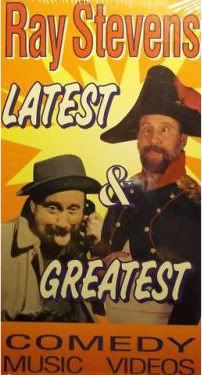
The free cassette tape offer wasn't part of the direct mail advertisements during the course of the entire ad campaign. When I became a member of his fan club I purchased his products directly from their catalog and therefore the free cassette offer wasn't part of the sale. I eventually purchased the cassette tape being spoken of in the commercial for an incredibly low discounted price from his on-line store in the early 2000s. They only had a handful left. The cassette features a full performance of the song, "We Don't Take Nothin' Off Nobody", whereas the movie features the opening verse and chorus. Now, as a result of Ray's phenomenal success with direct marketing his VHS tapes, a compilation was inevitably on the horizon. Latest and Greatest was issued in 1996 on VHS and it featured 10 music videos. It was comprised of 4 music videos from 1992's Comedy Video Classics and 6 music videos from Get Serious!.

A couple of months ago Ray uploaded the music video, "Ain't Nobody Here But Us Chickens", onto YouTube. This isn't to be confused with another song with the same title from the 1940s by Louis Jordan. The song featured in Ray's 1995 movie is an entirely different song. Ray wrote this same-titled song for the Get Serious! movie and it's a duet with his co-star, Connie Freeman...she played the role of Charlene MacKenzie. You'll see another co-star, Tim Hubbard, in the role of Coy. The movie is available on DVD for those that may be wondering. It isn't on Blu-Ray, though. I don't even own a Blu-Ray player, believe it or not, so I'm still a customer of DVD. You can get your copy of the movie by clicking HERE.


June 3, 2019

Ray Stevens CabaRay: June concerts...

Hello all...an early Monday morning and my first fan created blog entry for the month of June 2019. I had a somewhat busy weekend...I brought a lot of items, well, practically all of the items, from a room at my grandparent's house that I've often referred to on-line as my mini-museum and I brought those items to the house I've lived in for the last 19 years. I was going through the items and came across a lot of the Ray Stevens Fan Club newsletters from the mid to late '90s and early 2000s that I saved. I even came across an invoice for my 1995 purchase of the VHS, Get Serious!, from June of that year...I wasn't even aware that I had saved it. Also among the personal items was Ray's tour schedule for 1996 that the fan club mailed out to members. The fan club, known as FFFOL, was in operation from 1987 to 2002. I was a member from 1994 to 2002. The acronym stands for French Fried Far Out Legion. If you own VHS or DVD copies of his 1993 Ray Stevens Live! project you're already aware of that name if you read the closing credits or remember the opening number on More Ray Stevens Live!.

As I looked over the 1996 tour schedule I seen that Ray began the tour in Nashville, Indiana at The Little Nashville Opry on April 13th and he ended the bulk of the tour in Nashville, Indiana at The Little Nashville Opry on September 28th but technically he had one more show date on the 1996 tour and it was in Hiawassee, Georgia on October 5th at Anderson Music Hall. Ray's tour schedule also had him making appearances in Illinois for two concerts on April 20th and 21st at a venue called Nashville North in Taylorsville and then he made his way down to West Virginia for an appearance at the Jamboree in Wheeling (April 27). In May he kicked things off with a series of concerts at The Wayne Newton Theater in Branson, Missouri from May 6th through May 13th and then appeared in Mahnomen, Minnesota on May 18th at the Shooting Star Casino and then on May 19th at the Star Plaza Theater in Merrillville, Indiana. A concert on June 8th in Salem, Ohio took place at the Ponderosa Park. Ray appeared in Cumming, Georgia on June 15th at the Lanierland Music Park. Ray then become something of a resident performer at The Wayne Newton Theater in Branson, Missouri during the months of July, August, and the first half of September 1996. He delivered concerts at the theater on the following dates in July: 15, 16, 17, 18, 19, 20, 22, 23, 24, 25, 26, and 27. The August concert dates were held on the dates of: 12, 13, 14, 15, 16, 17, 19, 20, 21, 22, 23, and 24. Lastly, the September 1996 concert dates at The Wayne Newton Theater were: 2, 3, 4, 5, 6, 7, 9, 10, 11, 12, 13, and 14. The following day he was in Hutchinson, Kansas at the Kansas State Fair and this was followed by a September 21st concert in Renfro Valley, Kentucky before, as mentioned earlier, a return trip to Nashville, Indiana on September 28th.

The 1996 concerts in Branson marked the first time he'd performed there since 1993 when he was headlining his own theater (it opened in 1991 and Ray stepped aside in 1993 and rented the venue to other music-based productions before headlining the venue once more in the mid 2000s). The 1996 concerts had also marked his return to concert performances due to most of 1994 and early 1995 being taken up by the taping/filming of his Get Serious! VHS movie. Ray's career in Branson is legendary even though he didn't have the kind of decades-long run that several other performers enjoyed. He ultimately sold his theater to RFD-TV and they've been using it as a showcase for all kinds of performers. It's officially known as RFD-TV The Theatre. After wrapping up his series of concerts in 1996 Ray continued to engage in limited concert appearances...often staging concerts at the Acuff Theater at Opryland. He occasionally returned to Branson but for the most part he largely retired from extensive touring. He did a series of concert at The Welk Theater in Branson and he made appearances at The Moon River Theatre during the tribute/memorial/remembrance concerts being held for Andy Williams and as of this writing those were his final appearances in Branson, Missouri.

Ray Stevens CabaRay Showroom
Ray has since moved on from Branson and in 2018 he opened his much-anticipated CabaRay showroom. The layout is based upon the venues he used to appear at in Las Vegas in the '70s and early '80s complete with table seating for customers that order dinner along with the concert...theater seating is in the balcony for those that order concert-only tickets...and there's also a piano bar and a gift shop at the CabaRay. Ray will be performing concerts at the CabaRay on the following dates during the month of June: 7, 8, 14, 15, 21, 22, 27, 28, and 29. The first concert of the month has already happened...it was held this past Saturday (June 1st). Ray typically performs there on Friday and Saturday nights and during some months he adds a Thursday concert. The CabaRay is in it's second season of operation. It's located on 5724 River Road in Nashville, TN.

This coming June 6th Ray will be appearing at the CMA Fest...he'll be on the Close-Up Stage being interviewed about his career and recent election to the Country Music Hall of Fame. The scheduled time for the interview is 1:15pm Central and it's suppose to be half an hour...but given it's a live event there's no telling if it'll go longer than that or if it'll get underway at it's scheduled start time. I'll obviously be searching all over the internet later on that day to see if I can find any images, manuscripts of the interview, video/podcast, etc. etc. and if I come across anything from Ray's 2019 CMA Fest appearance I'll be posting/commenting about it...but that goes without saying!!

July 23, 2018

Ray Stevens: Comical Curb appeal...

It's something of a contagious pattern I've been on lately...looking back on the prolific career of Ray Stevens and spotlighting his music from the various record labels he recorded for over the decades. The one label that seemed to appreciate having Ray on it's roster was Curb Records. Yes, I know that Ray's career goes back to the late 1950s and he had success on every label he recorded for starting with Mercury Records in the early '60s but when I say I feel Curb appreciated Ray being on their roster I mean it from a distribution stand point...they issued numerous products on Ray throughout much of the 1990s and then, after his brief return to MCA (1996-1998), Curb began releasing material from Ray once again in the early 2000s...and this second run with Curb lasted into mid decade. The first release by Curb Records on Ray came in the form of His All-Time Greatest Comic Hits in the summer of 1990. This collection has since been certified Gold by the RIAA for 500,000 copies sold. As a testament to the enduring popularity of his 1984 hit, "It's Me Again, Margaret", Curb placed the publicity photo advertising that song on the album's cover. His first studio album for Curb arrived a couple of months later, Lend Me Your Ears. Photo sessions took place at Nashville's Centennial Park at the replica of The Parthenon. The album's title has a double reference. Visually it's a parody of Marc Antony from the Julius Cesar play, a character who made a speech in that play using the phrase 'lend me your ears', but the title also requests music consumers to purchase the album as in "lend me your ears...take a listen to my latest album...". Two music videos, "Sittin' Up With the Dead" and "Help Me Make It Through the Night", emerged in 1990. They were a foreshadowing of things to come. Prior to those music video releases he had previously issued "Surfin' U.S.S.R." (1988) and "Santa Claus is Watching You" (1985) as music videos. The 1990 studio album also features "Barbecue" and "This Ain't Exactly What I Had in Mind"...which would later become animated music videos more than 10 years later.

Early in 1991 Curb issued a newly recorded version of "There's a Star Spangled Banner" from Ray. He had previously recorded the song for his 1989 album on MCA, Beside Myself. This 1991 re-recording for Curb kept the same chorus and music arrangement of the 1989 recording but the opening verse was different. This alternate take on "There's a Star Spangled Banner" was placed on the 1991 Greatest Hits compilation that Curb issued early in 1991. It's in panel two in the above collage. That compilation is deliberately heavy on serious, ballad recordings considering the fact that Curb's first project on Ray happened to be an all-comical compilation release. The only comical recordings on the 1991 hits album is 1987's "Would Jesus Wear a Rolex?" and 1969's "Along Came Jones". By the time Ray's second studio album for Curb came along construction had well been underway in Branson, Missouri for the opening of The Ray Stevens Theatre. This theater opened in 1991...becoming one of the most visited venues in the Ozarks during the summer tourist season...and his studio album arrived in the form of #1 With a Bullet.

Two recordings were promoted as singles from that release. "Working for the Japanese" hit the charts and looked as if it could've had something of a decent chart life but then, out of the blue, radio programmers began removing it from their playlists as it was gaining momentum. So, yes, it was totally unfair to Ray and everyone involved behind the scenes...to play a song and then to pull it from the airwaves on the basis of perceived 'offensive overtones' is actually offensive in itself. Nevertheless it's one of my favorite songs that Ray recorded. The second single release arrived early in 1992, "Power Tools", which is actually the lead-off track on the album. Ironic that the first single from the album is the final track but the follow-up is the lead-off track. The 1991 studio album would be re-visited by Ray several times in the coming years. "You Gotta Have a Hat", while not officially promoted as a single, became a popular song in his concerts at the Branson theater in the early '90s due to it being a comment on the Hat Acts in country music at the time. "Tabloid News", a song that I always thought would make a great music video, hasn't become a music video but pieces of the song have become catchphrases among Ray's fans. A partial music video happened to emerge, though, on one of the VHS home videos. The sketch/video is referred to as the National Supermarket Checkout Examiner which, by the way, is the fictional name of the tabloid Ray sings about in the song. "Power Tools" and "Teenage Mutant Kung Fu Chickens" would eventually become animated music videos more than a decade later.

Ray's original run with Curb Records (1990-1996) coincided with his meteoric rise in Branson, Missouri along side a phenomenal series of VHS home video projects released through his own label, Clyde Records, and advertised through mail order by way of television commercials and print ads. I'm not going to touch on the VHS releases too much because those were strictly the product of his own label and weren't associated with Curb Records but I'll offer the commentary that those VHS projects more or less reinvented the career of Ray Stevens and with hundreds of thousands of sales (we're talking Gold, Platinum, and Multi-Platinum certifications in the world of home video) but with those kinds of sales numbers for home video products in the early to mid 1990s he logically began to shift more of his focus away from audio recording and more into video marketing. Print advertisements for the VHS projects appeared in a variety of daily and weekly newspapers and I even seen an ad for one of the home video's in an issue of TV Guide. That goes to show you how far reaching the impact of those home videos were and the effort put into the marketing. The phenomenal success of those VHS home videos, coupled with the success of his Branson theater, it's easy to see why a new studio album from Ray Stevens wouldn't arrive until 1993 (roughly two years after the release of 1991's #1 With a Bullet).

The third studio album on Curb Records from Ray is Classic Ray Stevens from 1993. As you can see from the album's cover art it's a reference to classical music...complete with a bust of Ray sitting on top of the piano next to a rose and violin. The sheet music reads 'Concerto for Cornball' if I'm remembering correctly. Oh yes...I'm so detailed that I wanted to find out what was written on the sheet music way back when I first purchased the album. Anyway...this studio album has long been misidentified on so many websites as a compilation album due to it's title. If you visit an on-line music store Classic Ray Stevens is usually placed in the section labeled as compilation or greatest hits and it rarely appears among the albums in the studio album discographies of Ray Stevens found on those on-line music stores. Some sites refer to compilation albums as a sampler...and I've found Classic Ray Stevens listed/described as a sampler...it goes without saying but this sort of thing causes music consumers to assume that the songs on that album had all been previously released at some point. Songs from the 1993 album that became popular among his fans include: "Super Cop", "The Motel Song", and the lead-off track, "If Ten Percent Is Good Enough for Jesus". The lead-off track, ironically, became a much bigger hit for Ray nearly 20 years later (!!) when it was re-recorded and then, ultimately, released as an on-line music video in 2010. The video is a concert performance of the song from The Welk Theater. After the release and subsequent promotion of Classic Ray Stevens the remainder of Ray's time with Curb Records was filled out with a couple of non-studio projects. It was also, in 1993, the year that Ray closed down his Branson, Missouri theater. The closing came as a shock, obviously, to fans and probably the Chamber of Commerce and tourist companies as well. The venue had been a constant success for three seasons (1991, 1992, and 1993) where he performed two shows a day for six days a week during the summer tourist seasons. However, as Ray pointed out in subsequent interviews, the idea of having a theater backfired on him simply because of the pace he was working...it became exhaustive. He never felt having a theater was a terrible idea and he loved the performance aspect but he often remarked in interviews that if he would ever re-open his theater he'd not carry such a demanding workload of 2 shows a day, 6 days a week again. Curb Records issued an audio version of Ray Stevens Live! in 1995.

One of their other releases that year happened to be something of a retrospective of his time with the label titled 20 Comedy Hits. It features 20 songs...four of the songs are classics from the 1970s, one is the performance of "Shriner's Convention" from the Ray Stevens Live! VHS and CD, while the remaining fifteen songs come from his three studio albums for Curb Records. This was followed by Great Gospel Songs in 1996. That compilation was a collection of gospel recordings Ray did in the early 1970s and originally found on the 1972 album, Turn Your Radio On. The 1996 project tacked on a couple of additional songs from his Everything is Beautiful album from 1970. As a teenager just out of high school in the mid '90s and no access to vinyl or turntables or the early years of the internet it was a goldmine of an album, Great Gospel Songs. My personal collection of Ray Stevens items at that time was nothing to write home about. I had a lot of his cassette tapes and the VHS projects but nothing on vinyl...I didn't even know the names of any of his albums prior to 1984 at that point in time. It was only after I began corresponding with Ray's office staff via letter writing that I was sent a discography of his studio albums from 1962 to the present...but anyway...following the release of Great Gospel Songs in 1996 he left Curb Records. A home video mail order project he released in 1995 would become available in retail stores in the latter half of 1996 and distributed by MCA, the label he recorded for during the latter half of the 1980s (1984-1989).

Ray would release two studio albums for MCA in 1997 before exiting the label the following year. After several years being represented by his own label, Clyde, Ray found himself on Curb Records for a second time in 2001 under the most tragic reasons imaginable. On September 11, 2001 terrorists attacked the World Trade Center in New York. Several other hijacked planes crashed en route to other destinations on 9/11. The man behind these attacks was identified as Osama bin Laden. The wave of patriotism that swept across America in the weeks and months after 9/11 was something I'd never seen before. Country music, more than any other genre, helped in the healing process by performing songs...many focusing around 9/11...and many of these recordings were also used for charitable causes. Ray added a comical contribution with "Osama Yo' Mama" toward the end of 2001. It was released as a single-only backed with his rendition of "United We Stand". In the collage's above I provided an image of the single release and the album release. The artwork for each release is the same...only difference being is the 10 song album has a banner behind the illustration of Ray that reads The Album. The single release became a sales success throughout the latter half of 2001 and well into 2002. It charted on Billboard's Country Single Sales chart for half a year and was certified Gold. The 2002 album contained 7 recordings from 2000 that had previously appeared on a Clyde Records release, Ear Candy, in addition to "Osama Yo' Mama" and "United We Stand" from late 2001. The only recording not previously released was "Freudian Slip". In discographies his 2002 project is listed as Osama Yo' Mama: The Album. Curb later re-released "United We Stand" as a CD single backed with "Everything Is Beautiful" in 2002.

One of the things Curb began doing in 2002 is re-issuing previously released projects from Ray that he did for other record labels. One of those happened to be a DVD release of his 1992 VHS project, Comedy Video Classics. The release came a full decade after it's original debut and this lead Curb into distributing 2003's Complete Comedy Video Collection. That particular title was originally released on Clyde Records in 2003 but when it was released on Curb Records in 2004 a couple of music videos were added and one was omitted. The 2003 version contains 20 music videos which include "Thank You" and "Hello Mama" referred to on the packaging as Bonus Videos. The Curb Records release in 2004 features 21 music videos. "Santa Claus is Watching You", found on the Clyde Records release in 2003, is replaced with "Power Tools". An additional bonus video is added in the form of "Osama Yo' Mama". On the packaging it's referred to as an Extra Bonus. The release on Curb includes small lettering on the lower left hand side which reads DVD Video. The version released on Clyde Records lacks that feature. Another big story in the career of Ray Stevens at this point in time happened to be the announcement that he was re-opening his Branson, Missouri theater. He re-opened the theater in 2004 for another three season run (2004, 2005, and 2006). In 2005 Curb re-issued Ray's 1990 and 1991 studio albums in CD format. When Ray put together a 3-CD project called Box Set he released it on Clyde Records in 2005. Curb picked up the distribution early in 2006. The collection features a wide array of recordings by Ray from the 1990s and into the 2000s. It includes his early '90s re-recordings of songs like "The Streak", "Ahab the Arab", "Mississippi Squirrel Revival", etc. etc. The recordings of those songs found on Box Set were lifted from his music videos. The material he recorded for Curb and for his own label, Clyde, during the 1990s and 2000s are original. Box Set also features exclusive recordings not found anywhere else...such as "Driver's Education", "Kitty Cat's Revenge", "Family Funeral Fight", and several others. The following month Curb issued two DVD projects on Ray. Gourmet Restaurant and Teenage Mutant Kung Fu Chickens feature limited animation music videos of several of Ray's previous recordings. Each DVD contains five animated videos.

Are you curious about panel two in the above collage? It's a CD single from 2006 titled "The New Battle of New Orleans" written in the aftermath of Hurricane Katrina which Curb issued as a CD-only release. The song was originally written in it's entirety by Chuck Redden and his version can be found on-line. Ray and songwriting partner, Buddy Kalb, partially rewrote the song by removing original lyrics and replacing them with different ones. The original is a strong R-rated composition with heavy criticisms aimed at local and national politicians but Ray and Buddy reconstructed the song. Following the summer 2006 tourist season Ray closed down his Branson theater for good and eventually sold it to RFD television. The company uses the facility to showcase their own stage productions...heavily promoted on their television network, of course. The third panel in the above collage is a photo of Ray holding one of his Comedian of the Year trophies. Ray was named Comedian of the Year by the readers of Music City News magazine for 9 consecutive years (1986, 1987, 1988, 1989, 1990, 1991, 1992, 1993, and 1994).

In 2008 Curb issued a budget priced Greatest Hits compilation on Ray sub-titled 50th Anniversary Collection. This project featured some of the re-recorded versions of several of his big hits originally found on the Box Set. The 2008 CD also features "Osama Yo' Mama" released earlier in the decade. Oddly enough the packaging of the CD had a release featuring two different head shots of Ray. In spite of the different cutouts of Ray on each CD both releases features the same songs. It's anybody's guess why Curb issued the compilation with two different images of Ray. Curb would then re-issue a couple of previously released CD's in early 2009. Hum It was originally released by MCA in 1997. It was the studio album that Ray released after he and Curb parted ways in 1996. Curb issued 1997's Hum It in Mp3 Digital Download format in April 2009 along with Ray Stevens Sings Sinatra...Say What?!?, a CD that Ray originally issued on his Clyde Records label a year earlier in 2008. Following the distribution of those two projects in 2009 Ray and Curb Records parted ways for a second time. As one can clearly see the bulk of his time with Curb Records was largely spent in the realm of comedy video and DVD releases...more so during his second run with the label. Also, I find it interesting, that during both stints with Curb Records he found himself headlining his Branson, Missouri theater.

After parting company with Curb Records in 2009 Ray hasn't recorded for a major label since. Later on in the year he released a certain music video on-line via the hosting site, YouTube...and in closing I'd like to say some things about that music video because of it's major impact on Ray's career and the direction it took over the next several years (2010-2013).

That music video, "We The People", eventually spread like wildfire (this sort of thing was coined as 'going viral') and much like the mail order/direct market television commercials from the early '90s reinvented his career as a mogul of VHS home video this 2009 YouTube music video reinvented his career as an internet music video star...and for the next several years he created exclusive video content that he would upload on his YouTube channel. The exposure that these topically driven on-line videos received not only reinvented his career (cynics/critics referred to it as pandering) but it actually introduced him to thousands upon thousands of people who would otherwise have no idea who he was...so he was reaching audiences in ways he otherwise wouldn't have...and all this on-line exposure and discovery coming after more than 50 years as a recording artist.

Suffice it to say 2010 became the biggest year for Ray Stevens, as far as high profile coverage was concerned, since 2002 and he did it all without the aid of any major record label help or radio station airplay. Since 2010 Ray continued to release on-line music video content and occasionally he would release audio CDs...and even though the internet videos brought him a wave of exposure it was nothing like the exposure he'd later receive after jumping into television headfirst with a weekly music series...first airing on RFD-TV and then locally syndicated on PBS stations across the country. His CabaRay showroom opened in January of this year in West Nashville. This showroom has an even more spectacular design than the theater he owned and performed at in Branson and this time around he's working at a more relaxed pace...only two shows a week (Friday and Saturday nights). The television series is recorded in batches during marathon taping sessions a couple times a year...much like the production of Hee Haw (1969-1993) and Larry's Country Diner...and as a tie in with the title of this blog entry I'd say the CabaRay has tremendous curb appeal...and the interior is just as spectacular.

September 9, 2015

Ray Stevens: All-Time Hits...

As I often do I highlight compilation albums issued on Ray Stevens...some I've got in my collection and some I find posted on-line most typically listed on auction sites that I feel the need to comment about or promote through this fan-created blog page.

All-Time Hits is one of those misleading titles that many record companies place on compilation albums. The basic reason is to grab a consumer's eyes...and then once their attention's been obtained the next thing some, not all, but some consumers do is look at the album's photo/picture of the artist. Then the consumer, in the vinyl era, more than likely would flip the album over and read the song selections. Usually a different photo of the artist appeared on the back of the album...a kind of exclusive photo for those that purchased the album. Promos and ads rarely gave the back of album's much, if any, exposure and so a lot of fans that didn't purchase vinyl albums (preferring singles) weren't aware of the practice of having the main publicity photo of the artist on the front of the album and then a secondary photo on the reverse side.

One of the recurring concepts of compilation albums labeled either Greatest Hits, The Very Best of, or All-Time Hits is the use of photos of the artist that, usually, do not match the era in which the bulk of the recordings took place. This is, of course, more common for artists that have had incredible longevity in the music business. Even though there a lot of artists from Ray's generation and those that came before him that have had a massive catalog of compilation albums issued on them I've noticed that the compilations issued on Ray have had some of the most misleading photo's accompanying a release.

This release, All-Time Hits, originated in 1996 in cassette format and featuring a minimum of just eight recordings it was marketed as a budget-priced release. Issued on Polygram Records, a subsidiary of Mercury Records, the eight recordings on the project happened to have been recorded by Ray during his stay at Mercury (1961-1965, 1983) and one song, oddly enough, from his RCA period (1980-1982). Of course not every recording during his Mercury or RCA stint are represented but 8 recordings are. The track list: "Ahab the Arab", "Harry the Hairy Ape", "Jeremiah Peabody's Green and Purple Pills", "My Dad", "Shriner's Convention", "Speed Ball", "Furthermore", and "Funny Man". Six of those recordings come from the early 1960s but the photo of Ray that's used from a much later era (perhaps from a photo session in 1983 during the making of his studio album that year). If one is not too familiar or conversant with all things Ray Stevens as some of us are you'd probably think that Ray looked like that during the recordings found on this collection but in reality he did not. On six of the eight recordings found here he looked like this...


A note to collectors is this 1996 compilation includes the original recordings of his early 1960s hits on Mercury. A lot of compilations use the Monument re-recordings but on this collection, since it's affiliated with Mercury, the original recordings are featured.

All-Time Hits is also available in CD format. Although a cassette is perfectly capable of holding a large amount of recordings only 8 appeared on the cassette copy. However, for the CD release, three songs were added. In a move to entice CD sales using the allure of "bonus tracks" the 11 track version of All-Time Hits incorporated 2 additional recordings from the early 1960s and one recording from 1981. The three bonus recordings are "Butch Babarian", "Santa Claus is Watching You", and "One More Last Chance". The reason, well, one of the reasons that I have both the cassette and CD releases is because of my desire, at the time, to have any Ray Stevens release that appeared in retail stores.

Secondly it's because I only had a cassette player at the time...I didn't have a CD player and I definitely didn't have a record player, yet. So, once I got a CD player I found All-Time Hits in CD format and purchased it...the allure being I didn't have any of those songs on CD format at the time. You could say I was slow at getting the latest listening devices. I'm still like that...I don't have an Ipod or Ipad or tablet or whatever the most recent listening device happens to be but I do purchase/download songs on Amazon if I choose to but ordinarily I prefer a CD copy.

The CD copy of All-Time Hits displaying all 11 tracks. The titles that have an asterisk to their left indicate the bonus songs found only on the CD. Considering how obscure Ray's 1983 studio album for Mercury happens to be it always puzzled me as to why only "My Dad" appeared on this compilation and nothing else from that album...instead choosing a couple of his RCA recordings to represent the early '80s period. Don't get me wrong, though...the inclusion of "One More Last Chance" is most certainly a welcome addition. Given that "My Dad" appears it's still a mystery as to why his 1983 studio album, Me, has never made it's debut on CD or even Mp3 yet. Polygram, the label that issued this in 1996, certainly had the capability of including songs from the 1983 album or else "My Dad" wouldn't have made an appearance...so it's odd that they, nor Mercury itself, have ever thought to reissue Me. One thing about this collection that can't be said for other compilations issued on Ray Stevens is this one features single releases only. Every track on here found it's way onto the pop or country music charts. Usually the compilation releases included album tracks, chosen seemingly at random, along side the actual single releases. This practice raised awareness for a lot of recordings by Ray Stevens that were originally meant as album cuts.

Yes, this is the cassette copy...the one I purchased at the local Wal-Mart store back in 1996. It's still in excellent shape. I never handle cassettes, CD's, or vinyl singles and LP's in a rough manner or toss them around, etc. I guess the only strike against this collection is the lack of liner notes. I've become spoiled by the liner note concept that accompanies a lot of music collections even though, strangely enough, I never cared one way or another if something featured liner notes or not; but since I've gotten older and have seen a lot of liner notes and articles about Ray that are more fiction than fact it's becoming something of an interest of mine if a compilation features liner notes or not. The thing about liner notes is the subjective nature of the authors, which I don't mind, I'd be more offended to see negative criticisms...but the thing I'd noticed about liner notes is the passing of misinformation and the omission of information. Bios found on Ray omit the fact that Ray recorded an album for Mercury Records in 1983 and the label released several singles on him throughout the bulk of 1984 prior to his departure to MCA and his relaunch as a country comic. Liner notes often omit that Ray had more than a couple of hit recordings for RCA and Warner Brothers...in some liner notes only a couple of songs are highlighted during an entire 7 year time span (1976-1983) and this sort of lack of information does a disservice to any new fan of Ray's and it's maddening to long time fans that don't appreciate seeing his catalog of music go overlooked. So it's great if a CD has liner notes but it's also wise on the reader or the fan's part to do research for themselves, too. I was once a new fan of his...and my only exposure to his music happened to be what appeared on the CD's available in retail stores and the several cassette tapes originally owned by my grandparent's. If I remained content on just enjoying the songs on those projects I'd be missing out on a LOT of other great recordings from his career. Some prefer just to listen to a handful of recordings by him (recordings from the mid '80s primarily) and dismiss anything else he's recorded. 1987's Greatest Hits on MCA and Greatest Hits, Volume Two contain the recordings that are associated heavily with Ray...and therefore those compilations have gotten the most sales.

The liner notes for the Platinum 1987 album, however, doesn't mention that the recording of "Ahab the Arab" is from 1969. The author mentions the song was a hit in 1962...but this naturally suggests to a new fan that the recording they're hearing is from 1962. I didn't learn that the recording was from 1969 until some point in the 1990s...I had gotten the Mercury cassette titled Funny Man and heard his early '60s recordings for the very first time and that's how I heard "Ahab the Arab", the original recording, for the very first time. The cassette features a bearded Ray Stevens on the cover...looking nothing like he did in the early '60s...which fits in with the overall theme of this blog entry spotlighting compilation albums featuring misleading images of Ray on the cover.

July 14, 2011

Ray Stevens: Comedy Video King...

The 1990's will forever be known among fans of Ray Stevens as the home video era. It was during this decade that Ray came up with a revolutionary idea to sell home videos through direct mail and by-pass retail stores. Comedy Video Classics would eventually become a million selling home video and along the reach the #1 spot on various home video charts in 1993 once it was released to retail stores. This is the DVD re-release from several years ago. I've got the original home video as you'll see below and I also have the DVD counterpart. The collection originally hit in 1992...commercials for the home video aired on TV stations night and day and all over the country. As mentioned, the collection hit retail stores in 1993. The product was issued by Curb Records. The home video remained a fixture on the weekly video charts for more than a year. It was eventually named the Home Video of the Year by Billboard magazine. The home video contains 8 music videos.

Amazing Rolling Revue is one of the products that was not advertised beyond his fan base. The project was also released in 1992 but it didn't feature a collection of music videos like Comedy Video Classics did. Instead, Amazing Rolling Revue was intended to be a pilot for a possible television program. The overall concept of the series was to focus on a literal traveling concert...Ray acted as emcee aboard a bus and at various moments we'd get comments from the bus driver, Darrell Waltrip. Sight gags include Waltrip treating the bus as if it were a race car...several times the camera shook to create the illusion that waltrip was being reckless behind the wheel. In addition to the intimate concert portion we also get sketches featuring Ray and several country music personalities. Sylvia joins Ray in a spoof of cooking shows where they sing "Making Cookies". Ray portrays his psychologist character, Sickmind Fraud, in a series of sketches. Chet Atkins makes an appearance in a commercial spoof in which Ray's character is selling replicas of Chet's hands for those who want to play the guitar just like Chet.

Ray Stevens Live! was the official follow-up to Comedy Video Classics as far as direct marketing is concerned. This 1993 home video duplicated the runaway success of it's predecessor as far as chart durability and sales. The only difference being Comedy Video Classics remained charted for a much longer period of time. In fact, when Ray Stevens Live! was released to retail stores in 1994, it often competed with Comedy Video Classics. It wasn't uncommon to see Ray's two home videos flip-flop from week to week: one week the 1992 home video would be at #5 and the 1993 project would be #4 and then the next week the positions would switch. In the Live! home video we see part of a show that Ray put on during his run in Branson, Missouri. Ray had a theater in operation during 1991 through 1993 and he taped several of his performances there. The first Live! home video featured quite a bit of his performances and between song banter. If one has never seen Ray perform "I Saw Elvis in a U.F.O." then you owe it to yourself to look for Ray Stevens Live! on eBay and other on-line flea markets.

Not advertised to the masses this home video sequel includes additional performances from the same concert captured on Ray Stevens Live!. In More Ray Stevens Live! we also are treated to performances by Ray's band and harmony singers. Ray's band went by the name of the French Fried Far Out Legion. Ray's brother, John, is featured heavily in this particular home video as he serves as the theater's emcee. John introduces all of the musicians and harmony singers which leads into performances of "Bridge Over Troubled Water" and "Love Can Build a Bridge". There's a performance of "R-E-S-P-E-C-T" by Janice Copeland in character as Beulah. Copeland was a featured vocalist and co-star in many of the comical sketches that Ray presented for the fans. In the first Live! home video Copeland can be seen as Jane during the performance of "Gitarzan". Ray performs several songs on More Ray Stevens Live! but a heavier dose of the camera time is focused on his band and the performances cut out of the first video. For those curious Ray performs the following songs:

1. Cletus McHicks and His Band from the Sticks
2. Turn Your Radio On
3. In The Mood**
4. The Haircut Song
5. The Mississippi Squirrel Revival
6. It's Me Again, Margaret
7. Everything Is Beautiful

(**)- "In The Mood" was presented in an elaborate production where the members of Ray's band pantomimed the chicken clucking performance that played over the public address system. Most of the band members got into the act by flapping their arms and tilting their heads back and fourth clucking to the rhythm. The audience, I imagine, were well aware that the band wasn't actually clucking like chickens but nonetheless appreciated the effort that was put into the performance.

A few months after Ray closed down his theater he embarked on the making of this direct-to-home video movie. The movie runs 110 minutes and the story deals with an artist who doesn't get along that well with new management. As a comedy singer, Ray plays the part rather semi-autobiographical. Ray's new record producer, in the movie, wants Ray to start marketing himself as a serious artist. He tells Ray of his bright idea which backfires. Ray balks at the idea and is soon running from his record producer as well as Dudley Dorite of the highway patrol. While the record producer and his underlings set about destroying Ray's career and labeling him politically incorrect, Dudley Dorite in the meantime has gathered people who have the same names as those that Ray's put into songs over the years. These people, according to the movie's plot, really exist and they're seeking damages based upon the "embarrassment" that Ray's songs has brought to an entire community. This particular home video followed the previous two's shiny path to Platinum certification. The video reached retail stores in late 1996 and just like it's two predecessors (Comedy Video Classics and Ray Stevens Live!), Get Serious! became a multi-week chart hit throughout the last part of 1996 and into the first half of 1997.

This particular home video is a behind the scenes documentary on how Ray put together his Get Serious! movie. The program features snippets of interviews by those who appeared in the movie. We get comments from the likes of Buddy Kalb, Michael Airington, Chet Atkins, director Rod Thompson, and others. Obviously I suggest you look for the 1995 Get Serious! movie before you go about tracking the documentary down. The documentary is rarely offered for sale but it's a nice companion to the movie. It's a neat look into how the movie was made and it includes bloopers/out-takes showing how much fun everyone had during the production. The title of the home video plays on the unbelievable idea that Ray Stevens would make a feature length movie: Ray Stevens Made a Movie?? Get Serious!!. Those who had supporting roles in Ray's movie were: Buddy Kalb, Connie Freeman, Jerry Clower, and Michael Airington. The cameo appearances are rather lengthy: Chet Atkins, Williams and Ree, Johnny Russell, Charlie Chase, Larry Black, George Lindsey, and several faces familiar to those who own Ray's 1992 Comedy Video Classics release.

A carrying case...originally the case was manufactured to house Ray's first 6 home video releases. However, the movie documentary was something that I didn't own at the time and I substituted it's space in the carrying case with Ray's 2000 home video, Funniest Video Characters. Even though I've since bought the movie documentary I've yet to place it in this carrying case and so Funniest Video Characters continues to remain on display. The case is something that was mailed to me by the fan club as one of the runners-up in a story contest. There was a contest among fan club members to come up with a story that made sense but incorporated a lot of Ray Stevens song titles in the dialogue. I can't even remember what in the world I wrote but apparently it was sufficient since I was one of the people awarded one of those carrying cases. The winner received more things, obviously. We each got a copy of the winner's story. I have it tucked away in one of my desk drawers along with other items from the fan club days. Ray's fan club closed down in 2002 but I had been a member since 1995. I used $10.00 of my high school graduation money to become a member. Then when I got a job a year later I continued sending in my annual payment.

The way I understand it, based upon my own theories, the main reason the fan club shut down (after having been active since 1987) is because of the internet and how people from all over the world could instantly visit a singer's web-site and potentially purchase music and other items. No longer was it financially viable to have a fan club up and running if people from all over the world can easily visit a web-site and purchase music, t-shirts, home videos, etc. etc. using an on-line order form. Fan clubs are still around...but nowadays they're mostly used for publicity purposes and for concert ticket giveaways...most artist's sell their merchandise to the world using their own on-line store. It used to be completely different...a person more or less had to become a fan club member in order to purchase music that had disappeared from the store shelves. When I was a member of Ray's fan club you'd get a catalog in the mail of all the items they were currently selling. You'd also get a newsletter and some trinkets throughout the year just for being a member.

This 1996 best-of collection, Latest and Greatest, showcased exactly what the title states. Several of Ray's music videos from 1995 (the latest) and those from 1992 (the greatest) appeared on this release. There's a total of 10 music videos...6 of them are lifted from his 1995 Get Serious! movie and the other 4 come from 1992's Comedy Video Classics. This 10 music video collection, released in the summer of 1996, wasn't promoted or publicized too much and was more or less an item not widely known beyond his fan-base. I remember that when the collection was released there was a small mention of it in one of his fan club newsletters and so I kind of had an idea that there wasn't going to be much of a publicity push for the collection. Anyway, the way I see it, this 1996 collection was more or less the inspiration for 2001's Greatest Video Hits...a release that was sold through his fan club and eventually in other outlets.

In 2003 Ray released a 6 song collection of music videos called Cartoon Video Collection. The videos feature live-action Ray interacting with limited animation characters while the background images are all illustrated designs. In one of the videos, "Hang Up and Drive", various car wrecks are comically highlighted as a result of driving while talking on a cell-phone. The collection features the following music videos: "Bridget the Midget the Queen of the Blues", "Deerslayer", "Erik the Awful", "Gone for Good", "Hang Up and Drive", and "Osama Yo' Mama".

This 2-disc collection is a 2004 DVD release featuring 21 music videos. There are 10 music videos on disc 1, plus a bonus video, equaling 11 altogether. There are 8 music videos on disc 2, plus 2 bonus videos, equaling 10 altogether. Disc 2 is 2000's Funniest Video Characters with 2 bonus videos added on. Disc 1 is 2001's Greatest Video Hits, minus the music video "Santa Claus Is Watching You" and replaced with "Power Tools", with 1 bonus video added on. The 2001 release features Ray delivering commentary between almost all of the music videos and explaining how he wrote or found the songs he recorded. He talks about the day Bill Justis approached him with the phrase "Gitarzan" which led to the writing of the song. The bonus music videos contained on this 2-disc collection are "Thank You" on Disc 1 and "Hello Mama" and "Osama Yo' Mama" on Disc 2. The name of this 2004 release is Complete Comedy Video Collection. Obviously with the omissions of several music videos it's not exactly "complete" but it's the closest thing to a complete collection of his music videos at that point in time.

These two DVD releases from Curb Records arrived in 2006. Each release features 5 animated music videos. In the DVD titled Gourmet Restaurant we see animated music videos of "This Ain't Exactly What I Had In Mind", "Barbeque", "Jeremiah Peabody's Green and Purple Pills", "Gourmet Restaurant", and "The Ballad of Cactus Pete and Lefty". The other collection, Teenage Mutant Kung Fu Chickens, features the following animated videos: "Can He Love You Half as Much as I?", "Harry the Hairy Ape", "Teenage Mutant Kung Fu Chickens", "Misty", and "Along Came Jones". These music videos, featuring limited animation, were the next step in Ray's earlier experimentation of animated videos on the earlier release called Cartoon Video Collection. The difference between the 2003 and 2006 music videos are the appearance of live-action Ray in 2003. The 2006 videos feature Ray in animated form as you can tell from looking at the DVD covers.

In 2009 Ray issued the Cartoon Carnival series. The series came in Volume One and Volume Two. Each Volume consisted of 10 music videos. The allure of the collections were the additions of 2 newly released music videos on each Volume. "The Moonlight Special" and "Smokey Mountain Rattlesnake Retreat" appeared for the first time on Volume One while "The Camping Trip" and "Hugo the Human Cannonball" appeared for the first time on Volume Two. The other 16 music videos in the two volume series all appeared on collections released in 2003 and 2006.

Since December 2009 music videos have once again become the primary source of creativity and outlet for Ray Stevens. Starting with "We The People" and going forward Ray has released several music videos on the video hosting site, You Tube. All of the videos carry either a political or patriotic flavor...and at the core of all the releases is Ray's distinctive style of humor and his broad acting skills. Millions upon millions of people have watched various music videos from Ray Stevens...and this particular blog entry I feel has demonstrated that Ray Stevens truly is the Comedy Video King.