Showing posts with label 1993. Show all posts

August 13, 2023

Ray Stevens: Branson continues to appreciate Ray...

Hello Ray Stevens fans! It slipped under my radar and I suppose it slipped by your radar, too, but just a few minutes ago while browsing on-line search engines for Ray Stevens content I came across a news item posted by Branson Tri-Lakes News where the Mayor of Branson, Missouri declared July 11, 2023 as Ray Stevens Day. I don't know why the webpage is only now showing up in search results. If it had been online sooner I would've made mention of it a month ago. 

This is a fascinating bit of information due to the fact that 2023 marks the 30th year since Ray closed down his theatre (for the first time) in Branson. The legacy of his theater will forever live on through a couple of video releases: Ray Stevens Live! and More Ray Stevens Live!. When Ray opened up his theater in the summer of 1991 it had been under construction for a number of months... news began surfacing late in 1990 that he was set to open a theater in Branson in 1991. This theater, for those unaware, was designed by Ray and he also had it built...it wasn't a situation where Ray had moved into an already existing venue. 


Ray performed there during the concert/tourist seasons of 1991, 1992, and 1993. He left the theater after finishing up the 1993 season but he didn't sell the theater...instead, he rented the theater to a group of executives that operated a music show called Country Tonite. Their music show headlined Ray's theater for 10 years (!) until 2004. Ray returned to Branson to headline his theater once again. Prior to Ray's theater opening up for the 2005 concert season, in 2004, he had the interior redecorated and he installed some new features like a mammoth electronically controlled bust of a gorilla that would rise up from the floor and lift Ray, while seated at the piano, in the air during a performance!!. 

Ray's return to Branson took up the 2005 and 2006 concert seasons. Now, following the 2006 season, Ray left his Branson theater for the second time and officially put the theater up for sale. It was purchased by RFD-TV within a few years of it going on the market. Ray returned to Branson a few more times in the coming years... first, to perform during a 6-week engagement at The Welk Resort Theatre (2010) as well as a series of tribute/memorial concerts at the Andy Williams Moon River Theatre (2012) and in 2015 he briefly re-appeared in Branson for an appearance at the Moon River Theater. The local news headlines in Branson for that brief 2015 return triumphantly declared that 'Ray Stevens returns home to Branson'. 

However, with the exception of the few and far between re-appearances, his days of being an owner of a Branson theater had come to an end when he put his own theater up for sale in 2006. As many of you know Ray opened up a new kind of venue in 2018 called the CabaRay and it's in West Nashville. It's an intimate venue and Ray based it's interior design on numerous venues he performed in during his years playing the Las Vegas casinos and nightclubs in the '70s and '80s. Do you want to know something fascinating? After all this time there usually isn't a day that doesn't go by that some fan on his social media pages doesn't ask if he's ever going to return to Branson or do anymore concerts down there. So, happy belated Ray Stevens Day. It's plain to see the town of Branson still appreciates your brand of entertainment.

June 12, 2023

Ray Stevens: Eye Catching Song Titles and More...

Hello fans of Ray Stevens!! I touched on this topic more than a decade ago so it's long since been buried in the archives so I thought I'd bring the topic back.. and that's the topic of funny/strange/eye-catching song titles that have appeared on the albums of Ray Stevens over the decades. It may not have hit you yet but the legendary Ray Stevens has entertained us for nearly 8 decades: '50s, '60s, '70s, 80s, 90s, 00's, 10's, and since 2020 we can now include the '20s. Mathematically, as you can see, he's three years into that 8th decade of entertainment. Ray's 1973 album, Nashville, is first in this blog entry about eye catching song titles. On that particular release, which is a non-comedy album, we have songs titled "Destroyed", "Fish Eat Sleep", and "Float". 

1978's There Is Something On Your Mind isn't a comedy album from Ray Stevens. However, it's an album that if you're not familiar with the songs you'd think some of them were comical due to their titles. The title track has some humorous moments which are much more notable within the final minutes when Ray launches into the frantic monologue describing the mindset of the guy who learns that he's the victim of a woman's cheating. Elsewhere on the 1978 album are songs with titles such as "Money Honey", "Your Cash Ain't Nothin' But Trash", and a trio of medley performances referred to as trilogies. The one medley with what some would consider a comical title is "Banned in Boston Trilogy". This performance features a medley of three songs that Ray, in the liner notes of the vinyl album, said were originally banned on numerous radio stations. The songs in the medley are "Sixty Minute Man", "Work With Me Annie", and "Annie Had a Baby". The 1978 album wasn't heavily promoted at all but had it been it would've most likely been described as a covers album of '50s and '60s rhythm and blues... a music format which Ray is a big fan of. In the written introduction found above Ray's photo on the vinyl release he, and I'm paraphrasing, made the album to bring some seriousness back to the music that he feels had gotten lost or downplayed due to a lot of the then current parodies of the 1950's/1960's time period. 

On the 1980 Shriners Convention album, which is a comedy album, eye-catching song titles are plentiful. The one that grabs the eye most often is "Put It In Your Ear". Now, leave it to Ray Stevens to record a song with a title like that but vocally perform it as a serious love ballad. The song's writer is Layng Martine, Jr. The 1980 album also has songs with these titles: "Coin Machine", "You're Never Goin' To Tampa With Me", "The Dooright Family", and "The Watch Song". In 1984 Ray began the phase of his career where he intentionally began marketing himself as a comic performer. Although comedy/novelty had come to define him in the minds of many music listeners well before 1984 it was something he actively worked against... always wanting to show that he could write, sing, and perform serious works as well. Then, in 1984, he figured that if comedy and off-the-wall music is what the general public want from him then that's what he'll give them. Ray had signed to MCA Records in 1984. All but one of the albums Ray recorded during the years 1984 through 1989 were all comedy. His 1989 album was half comedy, half serious ballads. 

Some of the eye catching and possibly strange song titles on those comedy albums were: "Mississippi Squirrel Revival", "Erik the Awful", "Ned Nostril", "Punk Country Love", "Kiss a Pig", "Hugo the Human Cannonball", "Bionie and the Robotics", "Smoky Mountain Rattlesnake Retreat", "Dudley Dorite of the Highway Patrol", "Would Jesus Wear a Rolex?", "Three Legged Man", "Cool Down Willard", "Language, Nudity, Violence, and Sex", "Booger Man", "Blood and Suede", "Mama's in the Sky With Elvis", "I Saw Elvis in a U.F.O.", "I Used To Be Crazy", and "The Woogie Boogie".

What I've noticed for years is what I call the Ray Stevens fanbase vernacular. This is when a fan of Ray's will speak in short hand and never say the exact title of a song but will refer to the song by it's subject matter or some lyric they remember. It's mostly a phenomenon on the internet by those who discover Ray's songs through the music videos that have been added to many video hosting sites. A lot those people perhaps have no idea of who Ray actually is and simply know of him by way of some video they've come across on social media sites. This segment of society more than likely will refer to Ray's 2010 music video, "Come to the U.S.A.", as the anti-illegal immigration song rather than by it's actual name. "Mississippi Squirrel Revival" is often simply called "The Squirrel Song".. and I've seen online commentary from those that have seen Ray in concert and they'll inevitably say something like "Yes!! I saw Ray Stevens in concert and I'm glad he sang the song about the squirrel". The 1993 song, "If 10 Percent is Good Enough for Jesus", is referred to by people as "the Ray Stevens song about Jesus and taxes". Another potential example is his 2021 recording, "Dis-Connected". I call it a potential example because earlier today Ray spotlighted the audio recording on his social media sites. In time I'm sure "Dis-Connected" will be referred to as "that Ray Stevens song about online dating".  

April 18, 2023

Ray Stevens: This album is a gem...a Pearl to be specific...

Hello fans of Ray Stevens!! The products that were released in 1993 have reached their Pearl anniversary. It's what the 30th anniversary is called and so that's why I title this particular blog entry the way I have. This blog post will focus on the 1993 comedy album, Classic Ray Stevens. It's not necessarily an album review but more of a short synopsis prior to my link to the YouTube playlist.

As mentioned this comedy album from Ray Stevens was released in 1993. This was an incredibly busy year for Ray, but to be more specific, it turned out to be his final season in Branson, Missouri for awhile. He had his theater built down in Branson and open for business by the 1991 tourist season. I don't know off the top of my head if he began construction in the latter half of 1990 or if construction began early in 1991...but I do know his first season of concerts at his theater occurred in 1991. The Branson experience was something phenomenal for Ray. In later interviews when he looked back on that early 1990's run in Branson he said that the very thing that lured a lot of his peers in the music industry to flock to Branson was the very thing that caused him to ultimately decide to leave and return to Nashville on a full-time basis in 1994. Ray remarked that his routine zapped a lot of energy out of him (two concerts a day, six days a week, 6 to 7 months a year). He gave a lot of praise to those that built theaters down there and were still performing or headlining there decades later...but it's something he couldn't keep doing. Branson had a lot of theaters but there weren't a lot, or any, recording studios...there wasn't the ability to jump in the car and be at the recording studio in a moments notice and given Ray's close ties with the backstage element of the music industry one could understand his need to want to get back home to Nashville on a permanent basis...and following the 1993 concert season he put his Branson theater up for sale. There wasn't an immediate buyer but he did lease it to the company that put on the Country Tonite production...and they 'rented' the Ray Stevens Theater for the next 10 years. 

In 1993, while all of that was going on in Branson, Ray released a series of projects. There were two VHS tapes and this Classic Ray Stevens comedy album. The two VHS tapes were Ray Stevens Live! and More Ray Stevens Live!. The latter VHS was sold only at his Branson gift shop and through his fan club. Ray Stevens Live! was sold over television and in print advertisements. Curb Records released Classic Ray Stevens and they would distribute the 1993 VHS tape to retail stores in 1994. The comedy album was brand new despite the album's title. If you weren't much of a fan you'd probably think this was a compilation album given it's title...and believe it or not some 'critics' thought it was a compilation album when they reviewed it. I recall a critic remarking that "there's no Ray Stevens classics on here.. there's no Gitarzan, there's no Streak...a misleading title". However, the album's title is a reference to the cover art...not the track list. On the cover we have a bust of Ray Stevens in a classical music setting. The sheet music, if you have the album and a magnifying glass handy, reads 'Concerto for Cornball'.

The album contains 10 comedy songs...well, 9 comedy songs and a sort of whimsical love ballad titled "Meanwhile". The track list is below:

1. If Ten Percent Is Good Enough for Jesus
2. The Higher Education of Ole Blue
3. The Bricklayer's Song
4. Little League
5. Meanwhile
6. Super Cop
7. If You and Yo' Folks Like Me and My Folks
8. The All-American Two Week Summer Family Vacation
9. The Ballad of Jake McClusky
10. The Motel Song

You can listen to the album on YouTube when you click the playlist link HERE.

September 22, 2021

Ray Stevens audio track: "Meanwhile"...

Hello all...one of the things I do and have always done when it comes to this fan created Ray Stevens blog is give spotlight to album tracks from a variety of albums recorded by Ray. In this blog entry I'm spotlighting a love ballad called "Meanwhile". It's actually a combination love ballad, up-tempo sing-a-long. "Meanwhile" is on the 1993 studio album, Classic Ray Stevens. The song comes from the pens of country singer Billy Dean and radio personalities Devon O' Day and Gerry House. If you find yourself searching online stores for Ray Stevens albums you will likely find this album misplaced in a greatest hits category because of the album title. After all of these years music sites still mistakenly refer to this 1993 album as a greatest hits release. 

Classic Ray Stevens features what was, at the time, Ray's familiar line-up of musicians with a couple of add-on musicians recruited specifically for the album. The musicians on this 1993 album included: Ray Stevens (electric piano, synthesizer); Steve Gibson (electric guitar, dobro, and mandolin); Weldon Myrick (steel guitar); Tommy Wells (drums); Mark Casstevens (rhythm guitar and banjo); Gary Prim (piano); Terry McMillan (harmonica); and Stuart Keathley (bass). Stuart also performed the function of the studio engineer. Ray produced and arranged the album. The harmony singers were Lisa Silver, Judy Rodman, and Bergen White. 

The 1993 album's main attraction was it's lead-off song, "If Ten Percent Is Good Enough for Jesus". Ray also performed "The Motel Song" and "Super Cop" frequently to promote the album. On the Classic Ray Stevens studio album "Meanwhile" appears as track five. The production is 1950's country...popularly called traditional country today...it opens with Weldon Myrick's steel guitar and the country flavor is heard throughout even during the up-tempo passages.

November 17, 2020

Ray Stevens audio clip: "The Motel Song"...

In this fan created blog entry I'm going to embed an audio clip of a Ray Stevens song from 1993 titled "The Motel Song". This song made it's debut on an album Ray released titled Classic Ray Stevens. I've mentioned in blog entries that the album's title, over the years, has confused a lot of people. When people see Classic Ray Stevens listed on music sites, and they see the title, they automatically assume that it's a greatest hits or best of compilation. There is one album review I came across where the critic remarked "for a CD called Classic Ray Stevens I don't see any recognizable songs...". 😄 

The reason that's funny, to me, is because the music critic either had no information that the CD was all new recordings and presented in the classic comedic style Ray Stevens fans have come to love or the critic simply didn't have a clue to begin with and didn't know what in the world he was critiquing anyhow. The cover art for the album shows Ray's face on a bust of a classical composer...more likely it's a visual parody of Beethoven. Anyway, the classical music design of the CD's cover art was part of the tie in with the CD's title. Ray covered "The Bricklayer's Song" on this CD...it's track number three. Ray wrote one of the songs, "If You and Yo' Folks Like Me and My Folks". The bulk of the songs were written by Buddy Kalb with several co-written with a writer named Glenn Fortner. In the early '90s Glenn had several songs on Ray's albums. The songs were usually in collaboration with Buddy Kalb. "The Motel Song", though, was one of the songs Buddy wrote himself and Ray recorded.

July 8, 2020

Ray Stevens sings "Super Cop"...

It's me once again!! Those of you who have been fans of Ray Stevens for more than 30 years will know that the 1990s were a decade of opportunity for Ray and a decade full of overdue recognition. He kicked off the decade on a new record label, Curb/Capitol Records. The major news, though, came later in 1990 when he announced the construction of a new music theater in Branson, Missouri. Ray released two back to back studio albums on Curb/Capitol in 1990 and 1991: Lend Me Your Ears and Number One with a Bullet. Curb Records also released two compilation albums on Ray in 1990 and 1991: His All-Time Greatest Comic Hits (a Gold record) and Greatest Hits. In the latter half of 1991 Ray opened The Ray Stevens Theatre in Branson, Missouri. It's first season ran through the end of 1991. It was in the interim that he produced some brand new music videos...for it was the 1990s that saw Ray move into the business of video production.

His own label, Clyde Records, financed a couple of VHS video tapes in 1992: Amazing Rolling Revue and Comedy Video Classics. The rolling revue VHS was sold through Ray's fan club and at the gift shop at his theatre. The second VHS, however, was marketed on television...to unexpected and unprecedented success in the field of VHS marketing and sales. Curb Records began distributing the classics VHS to retail stores in 1993 and sales from the VHS caused it to shoot to number one on Billboard's Top Video chart and it remained in or near the Top-10 for more than a year. Ray, in the meantime, was busy with concerts at his Branson theatre. 1993 had marked Ray's third consecutive season of concerts at the theatre...on the direct market front there was a brand new VHS, Ray Stevens Live!, and an additional VHS available through his fan club and theatre gift shop titled More Ray Stevens Live!. 1993 also saw the release of a new audio album, Classic Ray Stevens.

This album, in spite of it's title, features 10 brand new recordings. It's the album that contained the debut of "If Ten Percent is Good Enough for Jesus", a song that re-emerged in Ray's career 16 years later and became a hit all over again. It also features his rendition of "The Bricklayer's Song" as well as songs with such titles as "The Higher Education of Ole Blue", "The All-American Two Week Summer Family Vacation", and "If You and Yo' Folks Like Me and My Folks". The 1993 album also features a quirky song about an over-zealous security guard at a shopping center, a guard that the locals call "Super Cop". He's a combination Barney Fife and Police Academy's Tackleberry rolled into one. At the conclusion of the 1993 concert season Ray closed down his Branson theater and put it on the selling block in 1994. The same year he appeared on an episode of Music City Tonight, hosted by Lorianne Crook and Charlie Chase, and he performed "The Motel Song" and "Super Cop". The 1994 performance of "Super Cop" is below...


It was on this episode in which Ray was presented a stack of awards for the sales of Comedy Video Classics. The VHS sold over 3,000,000 copies (direct mail and retail) and the two hosts kept handing him Gold, Platinum, Double Platinum, and Triple Platinum awards in recognition of it's success. A much larger plaque was presented to Ray showing Billboard magazine named it their Video of the Year. 1994 saw the retail release of the Ray Stevens Live! VHS and it had nearly a similar run of success on Billboard's Top Video chart as Comedy Video Classics. There were numerous weeks in which the two VHS tapes crossed paths with one another on the weekly chart...often flip-flopping chart positions per week. I make note of that just to illustrate the phenomenal success Ray was having with VHS tape in the early and mid 1990s. Ironically there was never a music video made of "Super Cop"...all that exists are two television appearances where he performed the song. The 1994 performance on Music City Tonight seen above and a 1993 performance on Nashville Now...in that 1993 performance Ray was escorted on stage by security guards, if memory serves me correct.

June 4, 2020

Ray Stevens: A trio performance of Yakety Yak...

Ray Stevens on social media continues to be active...yesterday there arrived a couple of video uploads. In this blog entry I'm highlighting one of those uploads. It's a 1993 performance of "Yakety Yak" on Nashville Now. The performance includes Ray (piano), Chet Atkins (guitar), and Boot Randolph (saxophone). The clip begins with an introduction by show's host, Ralph Emery.


It's my guess that the three of them were scheduled on the same episode, on purpose, given their lengthy history together on recording sessions and the fact that the three of them were involved in recent projects. A year earlier, in 1992, Chet appeared in a very funny sketch titled Chet's Hands which was part of a Ray Stevens VHS release called Amazing Rolling Revue. Boots Randolph had also worked with Ray on an album titled, Boots, released through Ray's Clyde Records label in the early '90s.

The performance, "Yakety Yak", was made famous by one of Ray's favorite groups, The Coasters. Ray recorded the song in 1969 for his Gitarzan album and later on recorded it a second time in 2012 for his Encyclopedia of Recorded Comedy Music. Chet Atkins recorded an instrumental and re-titled it "Yakety Axe" (the axe being a reference to the acoustic guitar). Boots Randolph recorded an instrumental and re-titled it "Yakety Sax" (the sax, of course, being a reference to the saxophone). The Boots Randolph version became internationally famous as chase music during the closing credits on the syndicated half hour episodes of The Benny Hill Show.

On a side note: The discount sale at the Ray Stevens on-line store is extended through the end of this month. It was originally going to be good through the month of May but it's been extended. There's a 20 percent discount through the end of June. Here's a LINK.

September 15, 2019

Ray Stevens: The Road to the Country Music Hall of Fame, Part Seventeen...

As we enter 1992 Ray had recently wrapped up Season One in Branson, Missouri at The Ray Stevens Theatre. The theater had it's grand opening in May of 1991 and closed for the season just before Christmas 1991. He had inserted video snippets into his stage show...a large screen hung high above the stage and whenever he would perform a song there would sometimes be visual accompaniment playing above the stage to enhance the performance. The video content was a hit with audiences and so Ray issued a VHS sold exclusively at his theater of several comedy music videos. This primitive collection would be the stepping stone for a future release that took the VHS market by storm in 1992. It is probably an understatement to say that Ray Stevens dominated the television and print advertisements throughout the bulk of 1992 and into 1993. The direct marketing campaign for the VHS collection of music videos, Comedy Video Classics, began in the spring of 1992 through television commercials and it later morphed into print advertisements in newspapers, magazines, and even within the pages of TV Guide. The collection consists of eight music videos. Four of the music videos had previously been released: 1985's "Santa Claus is Watching You", 1988's "Surfin' U.S.S.R.", and his two 1990 music videos "Help Me Make It Through the Night" and "Sittin' Up with the Dead". The four new music videos were: "It's Me Again, Margaret", "The Mississippi Squirrel Revival", "The Streak", and "Everything Is Beautiful". The commercial for the VHS tape ran on network and cable television outlets...a majority of those commercials airing on cable television stations and as the sales campaign continued full steam ahead the more ever-present Ray's likeness and name had become. The VHS was released through his own label, Clyde Records, which had opened for business in 1988. It's first project was the 1990 direct market Boots instrumental album, from saxophonist Boots Randolph, that I made mention of in the last installment of this mini-blog series. Comedy Video Classics was phenomenal...it set records for VHS sales and ultimately was recognized by the RIAA for having sold more than 2.5 million copies through direct mail.


Ray's theater was the number one destination in Branson for tourists and locals alike and the Comedy Video Classics commercials continued to air, as mentioned, throughout the rest of the year. A secondary VHS was released through his gift shop and fan club titled Amazing Rolling Revue. This 1992 release was actually an unsold pilot for a television series that was never picked up. The footage, as far as I know, was taped at some point in the latter half of 1991 or early 1992 at the latest. The reason I say that is because there's a brief sketch centering around the alien, Zoltar, from the song Ray recorded in 1991 called "Tabloid News". On the VHS this sketch is referred to as 'The National Supermarket Checkout Examiner', a phrase heard in the song as well. As the television commercials and print advertisements for Comedy Video Classics continued to be a presence Ray won his seventh consecutive Music City News Comedian of the Year trophy. His first win having come in 1986. The second season of concerts from Ray at his Branson theater were well underway by the summer of 1992. Ray's record label, Curb/Capitol, officially split...and further audio recordings from Ray would be issued on Curb Records. His publishing company, Ray Stevens Music, would begin enjoying the massive popularity of "Cadillac Style"...a single from country artist Sammy Kershaw. The song was Sammy's debut single and when released in October of 1991 it immediately drew comparison to George Jones. The single remained a country radio staple for several years long after it's peak in early 1992. It was written by a writer that worked for Ray's publishing company.

Interestingly Curb/Capitol didn't finance or actively promote Comedy Video Classics...all of the publicity and promotional work in the direct marketing campaign was done independent of Curb/Capitol. In the spring of 1993, almost a year to the day that Comedy Video Classics hit television airwaves, the VHS was issued to retail stores for the first time and guess who distributed the VHS to retail stores? It was Curb Records. I'd always been under the impression that Curb didn't want to risk anything on a unique concept of selling music videos on VHS tape and passed on the opportunity of participating in the direct mail campaign but then jumped at the chance to distribute the VHS for retail availability. In retail stores it sold Platinum...a sales threshold indicative of over 1,000,000 copies sold...giving it an estimated sales total at that time of 3.5 million. The VHS entered the Billboard Home Video chart during the first week of May 1993...in the runner-up position. It took over number one the following week and it would remain on the Home Video chart for over a year...seldom ranking below number five during the first half a year of retail availability.

The following month Ray took home his eighth consecutive Comedian of the Year trophy at the annual Music City News awards. The same month Curb Records issued their third studio album on Ray...an album that caused a lot of confusion at the time and still causes confusion for many. Classic Ray Stevens arrived in June 1993 filled with brand new comedy songs...but the album's title had led a number of fans and those that run on-line music stores to label it as a compilation or a sampler album of previously released songs. The album received it's title to go hand-in-hand with the art work on the photo. The cover features a bust of Ray...mocking the bust of Beethoven...and the art depicts a classical music scene. Nevertheless a lot of people couldn't grasp the album's title...but the song being pushed as a single made it's debut during the 1993 edition of the Music City News awards. Ray performed "If Ten Percent is Good Enough for Jesus" to the delight of the audience...a satirical song criticizing Congress for the escalation in higher taxes and the mentality of punishing the successful with even higher taxes. Upon the conclusion of this song the very next category presented at the Music City News awards was for Comedian of the Year...and as Ray stood in the wings he heard his name called out for the eighth consecutive year!! The recording of "If Ten Percent is Good Enough for Jesus" found on the Curb Records album is from his Branson, Missouri theater. The remainder of the album is chock full of novelty songs touching on a wide variety of topics as well as a love ballad. The ordeal of a father being coach of his son's "Little League" team is detailed as is the overly zealous nature of some security officers in "Super Cop". The novelty, "The Bricklayer's Song", is found on here. Ray's cover is faithful to the traditional manner in which the song is performed and it was recorded at the Branson theater which Ray was performing in for his third consecutive season. This particular song has several alias titles...one of it's titles is "The Sick Note" while another is "Why Paddy's Not at Work Today" and then there's "Murphy and the Bricks".

I've always liked the comical stories of Jerry Clower and there's a song on here that takes one his stories and translates it into music form: "The Higher Education of Ol' Blue". The song's story counterpart from Jerry Clower is "Crack, W.L., and Rover" from an album he released in 1984 titled Starke Raving!. Ray wrote track seven, "If You and Yo' Folks Like Me and My Folks", while adultery is visited in two distinctly different recordings: the comical "The Ballad of Jake McClusky" and the love ballad, "Meanwhile". A brand new VHS became available through direct marketing from Clyde Records...a performance from his Branson theater and released under the title of Ray Stevens Live!. A second VHS, not sold on television and only available to fan club members and those that visited his gift shop at the theater, was titled More Ray Stevens Live!. The two VHS tapes were of a concert broken in two parts.

In the fall of 1993 after three consecutive seasons of sold-out and near sell-out shows at his Branson, Missouri theater Ray Stevens shocked the tourism industry and the locals of Branson by announcing the closure of his theater. Ray cited health reasons and over exhaustion as a result of two shows a day, six days a week for a span of 6 months per year. It was estimated that during the 18 months that the theater was in business during the 1991, 1992, and 1993 seasons Ray performed for nearly 1.5 million visitors. In interviews Ray spoke of the physical exhaustion and pointed out the irony in that most artists that opened up a theater in Branson did so because they were tired of life on the road and often sleepless or near sleepless nights going from one town to the next during extensive tours. He said the irony for him is that the daily grind wore him out and the idea of having a venue where the fans come see you rather than you go see them backfired for him...and he couldn't wait to take a lengthy vacation and rejuvenate himself physically before resuming his career. In hindsight the pace of the schedule is what caused the exhaustion...two shows a day, six days a week...artists 10 to 20 years younger than Ray, I bet, wouldn't have been able to pull off that kind of schedule but Ray managed to do it for an 18 month period. One of his lesser known nicknames happens to be the Energizer Bunny...and he proved it.

As 1993 came to a close Ray certainly earned a lengthy vacation. He scaled back his television appearances...except for the commercials that continued to air promoting Ray Stevens Live!...and he remained out of the spotlight, deliberately, for most of 1994...except for occasional appearances on interview shows airing on The Nashville Network. On one such appearance he received multiple plaques from the RIAA for the sales achievements of Comedy Video Classics in the realm of direct mail and retail. Billboard Magazine recognized it with a Video of the Year plaque.

The year of 1994 started off on a high note in spite of Ray's break from the concert stage and desire for some kind of vacation. Ray's publishing company shared in the success of "I Can't Reach Her Anymore" from Sammy Kershaw which became a big hit during the first half of the year. The writers, at the time, worked for Ray's publishing company. The single hit in January of 1994 and eventually reached the Top-10. The two single releases that Ray published on Sammy Kershaw were recurrents on country radio...a recurrent is an industry term given to a single that is still heard well after it's left the weekly countdown. "Cadillac Style" and "I Can't Reach Her Anymore" dominated the airwaves on country radio during a good portion of the mid to late '90s even though neither single claimed the number one position on the Country singles chart. Ray's direct mail company, Clyde Records, added some additional VHS titles to their impressive catalog of releases in the spring of 1994 in the form of stand-up comedy from Russian-born, United States comedian, Yakov Smirnoff. The comedian had been a hit on the national level for quite some time and he introduced a catchphrase, "what a country!", into the collective English-speaking vernacular. He signed an exclusive direct mail contract with Ray's Clyde Records company in 1994 and almost immediately a couple of VHS projects were released: What a Country! and Just Off the Boat.

While all of this was going on with Clyde Records, simultaneously, Curb Records began it's retail distribution of Ray Stevens Live! in the spring of 1994 as well. That particular VHS made it's debut on Billboard's Music Video chart the first week of May. In June Ray won his ninth consecutive Comedian of the Year honor at the Music City News awards. In the fall of 1994 after nearly a year of being on a self-imposed vacation, with his name and likeness continuing to appear in the weekly Billboard Music Video chart and in television commercials ensuring consistent publicity during his hiatus, Ray embarked on an ambitious project which ultimately surfaced almost a year later. In the final month of the year a quick look at Billboard's chart for Top Videos for the week ending December 3, 1994 finds Ray Stevens Live! with 31 weeks on the chart and Comedy Video Classics, by this time certified Triple-Platinum, in it's 83rd chart week. The two VHS tapes continued their strong sales on into the next year and all the while Ray was busy on a most secret project...but rumors were swirling that he was going to throw his hat into the ring and become a movie star!?! We'll get to bottom of all this in Part Eighteen!!

July 23, 2018

Ray Stevens: Comical Curb appeal...

It's something of a contagious pattern I've been on lately...looking back on the prolific career of Ray Stevens and spotlighting his music from the various record labels he recorded for over the decades. The one label that seemed to appreciate having Ray on it's roster was Curb Records. Yes, I know that Ray's career goes back to the late 1950s and he had success on every label he recorded for starting with Mercury Records in the early '60s but when I say I feel Curb appreciated Ray being on their roster I mean it from a distribution stand point...they issued numerous products on Ray throughout much of the 1990s and then, after his brief return to MCA (1996-1998), Curb began releasing material from Ray once again in the early 2000s...and this second run with Curb lasted into mid decade. The first release by Curb Records on Ray came in the form of His All-Time Greatest Comic Hits in the summer of 1990. This collection has since been certified Gold by the RIAA for 500,000 copies sold. As a testament to the enduring popularity of his 1984 hit, "It's Me Again, Margaret", Curb placed the publicity photo advertising that song on the album's cover. His first studio album for Curb arrived a couple of months later, Lend Me Your Ears. Photo sessions took place at Nashville's Centennial Park at the replica of The Parthenon. The album's title has a double reference. Visually it's a parody of Marc Antony from the Julius Cesar play, a character who made a speech in that play using the phrase 'lend me your ears', but the title also requests music consumers to purchase the album as in "lend me your ears...take a listen to my latest album...". Two music videos, "Sittin' Up With the Dead" and "Help Me Make It Through the Night", emerged in 1990. They were a foreshadowing of things to come. Prior to those music video releases he had previously issued "Surfin' U.S.S.R." (1988) and "Santa Claus is Watching You" (1985) as music videos. The 1990 studio album also features "Barbecue" and "This Ain't Exactly What I Had in Mind"...which would later become animated music videos more than 10 years later.

Early in 1991 Curb issued a newly recorded version of "There's a Star Spangled Banner" from Ray. He had previously recorded the song for his 1989 album on MCA, Beside Myself. This 1991 re-recording for Curb kept the same chorus and music arrangement of the 1989 recording but the opening verse was different. This alternate take on "There's a Star Spangled Banner" was placed on the 1991 Greatest Hits compilation that Curb issued early in 1991. It's in panel two in the above collage. That compilation is deliberately heavy on serious, ballad recordings considering the fact that Curb's first project on Ray happened to be an all-comical compilation release. The only comical recordings on the 1991 hits album is 1987's "Would Jesus Wear a Rolex?" and 1969's "Along Came Jones". By the time Ray's second studio album for Curb came along construction had well been underway in Branson, Missouri for the opening of The Ray Stevens Theatre. This theater opened in 1991...becoming one of the most visited venues in the Ozarks during the summer tourist season...and his studio album arrived in the form of #1 With a Bullet.

Two recordings were promoted as singles from that release. "Working for the Japanese" hit the charts and looked as if it could've had something of a decent chart life but then, out of the blue, radio programmers began removing it from their playlists as it was gaining momentum. So, yes, it was totally unfair to Ray and everyone involved behind the scenes...to play a song and then to pull it from the airwaves on the basis of perceived 'offensive overtones' is actually offensive in itself. Nevertheless it's one of my favorite songs that Ray recorded. The second single release arrived early in 1992, "Power Tools", which is actually the lead-off track on the album. Ironic that the first single from the album is the final track but the follow-up is the lead-off track. The 1991 studio album would be re-visited by Ray several times in the coming years. "You Gotta Have a Hat", while not officially promoted as a single, became a popular song in his concerts at the Branson theater in the early '90s due to it being a comment on the Hat Acts in country music at the time. "Tabloid News", a song that I always thought would make a great music video, hasn't become a music video but pieces of the song have become catchphrases among Ray's fans. A partial music video happened to emerge, though, on one of the VHS home videos. The sketch/video is referred to as the National Supermarket Checkout Examiner which, by the way, is the fictional name of the tabloid Ray sings about in the song. "Power Tools" and "Teenage Mutant Kung Fu Chickens" would eventually become animated music videos more than a decade later.

Ray's original run with Curb Records (1990-1996) coincided with his meteoric rise in Branson, Missouri along side a phenomenal series of VHS home video projects released through his own label, Clyde Records, and advertised through mail order by way of television commercials and print ads. I'm not going to touch on the VHS releases too much because those were strictly the product of his own label and weren't associated with Curb Records but I'll offer the commentary that those VHS projects more or less reinvented the career of Ray Stevens and with hundreds of thousands of sales (we're talking Gold, Platinum, and Multi-Platinum certifications in the world of home video) but with those kinds of sales numbers for home video products in the early to mid 1990s he logically began to shift more of his focus away from audio recording and more into video marketing. Print advertisements for the VHS projects appeared in a variety of daily and weekly newspapers and I even seen an ad for one of the home video's in an issue of TV Guide. That goes to show you how far reaching the impact of those home videos were and the effort put into the marketing. The phenomenal success of those VHS home videos, coupled with the success of his Branson theater, it's easy to see why a new studio album from Ray Stevens wouldn't arrive until 1993 (roughly two years after the release of 1991's #1 With a Bullet).

The third studio album on Curb Records from Ray is Classic Ray Stevens from 1993. As you can see from the album's cover art it's a reference to classical music...complete with a bust of Ray sitting on top of the piano next to a rose and violin. The sheet music reads 'Concerto for Cornball' if I'm remembering correctly. Oh yes...I'm so detailed that I wanted to find out what was written on the sheet music way back when I first purchased the album. Anyway...this studio album has long been misidentified on so many websites as a compilation album due to it's title. If you visit an on-line music store Classic Ray Stevens is usually placed in the section labeled as compilation or greatest hits and it rarely appears among the albums in the studio album discographies of Ray Stevens found on those on-line music stores. Some sites refer to compilation albums as a sampler...and I've found Classic Ray Stevens listed/described as a sampler...it goes without saying but this sort of thing causes music consumers to assume that the songs on that album had all been previously released at some point. Songs from the 1993 album that became popular among his fans include: "Super Cop", "The Motel Song", and the lead-off track, "If Ten Percent Is Good Enough for Jesus". The lead-off track, ironically, became a much bigger hit for Ray nearly 20 years later (!!) when it was re-recorded and then, ultimately, released as an on-line music video in 2010. The video is a concert performance of the song from The Welk Theater. After the release and subsequent promotion of Classic Ray Stevens the remainder of Ray's time with Curb Records was filled out with a couple of non-studio projects. It was also, in 1993, the year that Ray closed down his Branson, Missouri theater. The closing came as a shock, obviously, to fans and probably the Chamber of Commerce and tourist companies as well. The venue had been a constant success for three seasons (1991, 1992, and 1993) where he performed two shows a day for six days a week during the summer tourist seasons. However, as Ray pointed out in subsequent interviews, the idea of having a theater backfired on him simply because of the pace he was working...it became exhaustive. He never felt having a theater was a terrible idea and he loved the performance aspect but he often remarked in interviews that if he would ever re-open his theater he'd not carry such a demanding workload of 2 shows a day, 6 days a week again. Curb Records issued an audio version of Ray Stevens Live! in 1995.

One of their other releases that year happened to be something of a retrospective of his time with the label titled 20 Comedy Hits. It features 20 songs...four of the songs are classics from the 1970s, one is the performance of "Shriner's Convention" from the Ray Stevens Live! VHS and CD, while the remaining fifteen songs come from his three studio albums for Curb Records. This was followed by Great Gospel Songs in 1996. That compilation was a collection of gospel recordings Ray did in the early 1970s and originally found on the 1972 album, Turn Your Radio On. The 1996 project tacked on a couple of additional songs from his Everything is Beautiful album from 1970. As a teenager just out of high school in the mid '90s and no access to vinyl or turntables or the early years of the internet it was a goldmine of an album, Great Gospel Songs. My personal collection of Ray Stevens items at that time was nothing to write home about. I had a lot of his cassette tapes and the VHS projects but nothing on vinyl...I didn't even know the names of any of his albums prior to 1984 at that point in time. It was only after I began corresponding with Ray's office staff via letter writing that I was sent a discography of his studio albums from 1962 to the present...but anyway...following the release of Great Gospel Songs in 1996 he left Curb Records. A home video mail order project he released in 1995 would become available in retail stores in the latter half of 1996 and distributed by MCA, the label he recorded for during the latter half of the 1980s (1984-1989).

Ray would release two studio albums for MCA in 1997 before exiting the label the following year. After several years being represented by his own label, Clyde, Ray found himself on Curb Records for a second time in 2001 under the most tragic reasons imaginable. On September 11, 2001 terrorists attacked the World Trade Center in New York. Several other hijacked planes crashed en route to other destinations on 9/11. The man behind these attacks was identified as Osama bin Laden. The wave of patriotism that swept across America in the weeks and months after 9/11 was something I'd never seen before. Country music, more than any other genre, helped in the healing process by performing songs...many focusing around 9/11...and many of these recordings were also used for charitable causes. Ray added a comical contribution with "Osama Yo' Mama" toward the end of 2001. It was released as a single-only backed with his rendition of "United We Stand". In the collage's above I provided an image of the single release and the album release. The artwork for each release is the same...only difference being is the 10 song album has a banner behind the illustration of Ray that reads The Album. The single release became a sales success throughout the latter half of 2001 and well into 2002. It charted on Billboard's Country Single Sales chart for half a year and was certified Gold. The 2002 album contained 7 recordings from 2000 that had previously appeared on a Clyde Records release, Ear Candy, in addition to "Osama Yo' Mama" and "United We Stand" from late 2001. The only recording not previously released was "Freudian Slip". In discographies his 2002 project is listed as Osama Yo' Mama: The Album. Curb later re-released "United We Stand" as a CD single backed with "Everything Is Beautiful" in 2002.

One of the things Curb began doing in 2002 is re-issuing previously released projects from Ray that he did for other record labels. One of those happened to be a DVD release of his 1992 VHS project, Comedy Video Classics. The release came a full decade after it's original debut and this lead Curb into distributing 2003's Complete Comedy Video Collection. That particular title was originally released on Clyde Records in 2003 but when it was released on Curb Records in 2004 a couple of music videos were added and one was omitted. The 2003 version contains 20 music videos which include "Thank You" and "Hello Mama" referred to on the packaging as Bonus Videos. The Curb Records release in 2004 features 21 music videos. "Santa Claus is Watching You", found on the Clyde Records release in 2003, is replaced with "Power Tools". An additional bonus video is added in the form of "Osama Yo' Mama". On the packaging it's referred to as an Extra Bonus. The release on Curb includes small lettering on the lower left hand side which reads DVD Video. The version released on Clyde Records lacks that feature. Another big story in the career of Ray Stevens at this point in time happened to be the announcement that he was re-opening his Branson, Missouri theater. He re-opened the theater in 2004 for another three season run (2004, 2005, and 2006). In 2005 Curb re-issued Ray's 1990 and 1991 studio albums in CD format. When Ray put together a 3-CD project called Box Set he released it on Clyde Records in 2005. Curb picked up the distribution early in 2006. The collection features a wide array of recordings by Ray from the 1990s and into the 2000s. It includes his early '90s re-recordings of songs like "The Streak", "Ahab the Arab", "Mississippi Squirrel Revival", etc. etc. The recordings of those songs found on Box Set were lifted from his music videos. The material he recorded for Curb and for his own label, Clyde, during the 1990s and 2000s are original. Box Set also features exclusive recordings not found anywhere else...such as "Driver's Education", "Kitty Cat's Revenge", "Family Funeral Fight", and several others. The following month Curb issued two DVD projects on Ray. Gourmet Restaurant and Teenage Mutant Kung Fu Chickens feature limited animation music videos of several of Ray's previous recordings. Each DVD contains five animated videos.

Are you curious about panel two in the above collage? It's a CD single from 2006 titled "The New Battle of New Orleans" written in the aftermath of Hurricane Katrina which Curb issued as a CD-only release. The song was originally written in it's entirety by Chuck Redden and his version can be found on-line. Ray and songwriting partner, Buddy Kalb, partially rewrote the song by removing original lyrics and replacing them with different ones. The original is a strong R-rated composition with heavy criticisms aimed at local and national politicians but Ray and Buddy reconstructed the song. Following the summer 2006 tourist season Ray closed down his Branson theater for good and eventually sold it to RFD television. The company uses the facility to showcase their own stage productions...heavily promoted on their television network, of course. The third panel in the above collage is a photo of Ray holding one of his Comedian of the Year trophies. Ray was named Comedian of the Year by the readers of Music City News magazine for 9 consecutive years (1986, 1987, 1988, 1989, 1990, 1991, 1992, 1993, and 1994).

In 2008 Curb issued a budget priced Greatest Hits compilation on Ray sub-titled 50th Anniversary Collection. This project featured some of the re-recorded versions of several of his big hits originally found on the Box Set. The 2008 CD also features "Osama Yo' Mama" released earlier in the decade. Oddly enough the packaging of the CD had a release featuring two different head shots of Ray. In spite of the different cutouts of Ray on each CD both releases features the same songs. It's anybody's guess why Curb issued the compilation with two different images of Ray. Curb would then re-issue a couple of previously released CD's in early 2009. Hum It was originally released by MCA in 1997. It was the studio album that Ray released after he and Curb parted ways in 1996. Curb issued 1997's Hum It in Mp3 Digital Download format in April 2009 along with Ray Stevens Sings Sinatra...Say What?!?, a CD that Ray originally issued on his Clyde Records label a year earlier in 2008. Following the distribution of those two projects in 2009 Ray and Curb Records parted ways for a second time. As one can clearly see the bulk of his time with Curb Records was largely spent in the realm of comedy video and DVD releases...more so during his second run with the label. Also, I find it interesting, that during both stints with Curb Records he found himself headlining his Branson, Missouri theater.

After parting company with Curb Records in 2009 Ray hasn't recorded for a major label since. Later on in the year he released a certain music video on-line via the hosting site, YouTube...and in closing I'd like to say some things about that music video because of it's major impact on Ray's career and the direction it took over the next several years (2010-2013).

That music video, "We The People", eventually spread like wildfire (this sort of thing was coined as 'going viral') and much like the mail order/direct market television commercials from the early '90s reinvented his career as a mogul of VHS home video this 2009 YouTube music video reinvented his career as an internet music video star...and for the next several years he created exclusive video content that he would upload on his YouTube channel. The exposure that these topically driven on-line videos received not only reinvented his career (cynics/critics referred to it as pandering) but it actually introduced him to thousands upon thousands of people who would otherwise have no idea who he was...so he was reaching audiences in ways he otherwise wouldn't have...and all this on-line exposure and discovery coming after more than 50 years as a recording artist.

Suffice it to say 2010 became the biggest year for Ray Stevens, as far as high profile coverage was concerned, since 2002 and he did it all without the aid of any major record label help or radio station airplay. Since 2010 Ray continued to release on-line music video content and occasionally he would release audio CDs...and even though the internet videos brought him a wave of exposure it was nothing like the exposure he'd later receive after jumping into television headfirst with a weekly music series...first airing on RFD-TV and then locally syndicated on PBS stations across the country. His CabaRay showroom opened in January of this year in West Nashville. This showroom has an even more spectacular design than the theater he owned and performed at in Branson and this time around he's working at a more relaxed pace...only two shows a week (Friday and Saturday nights). The television series is recorded in batches during marathon taping sessions a couple times a year...much like the production of Hee Haw (1969-1993) and Larry's Country Diner...and as a tie in with the title of this blog entry I'd say the CabaRay has tremendous curb appeal...and the interior is just as spectacular.

June 16, 2013

Ray Stevens and the Video World...

As most of you may already know there's been a dramatic swing in the number of video uploads from Ray Stevens on his You Tube channel. He's gone into the archives and uploaded several music videos that the public at large may not have been aware of until recently. Some of the videos that Ray uploaded onto his channel had already been on You Tube for a number of years (uploaded by a wide array of You Tube members). However, since these particular performances have now become officially uploaded on Ray's You Tube channel, I've decided to make some commentary about some of the uploads in this blog.

"Surfin' U.S.S.R.", a novelty single from Ray in 1988, was uploaded several years ago. It wasn't until a few days ago that it was officially uploaded on Ray's channel. I recall that it had previously been available on Ray's channel but for whatever reason (?) it was removed soon after. That earlier upload has since been removed from his channel line-up. The song kind of blends "Surfin' U.S.A." with "Back in the U.S.S.R." with Ray delivering a spot on impression of Beach Boys-style harmony.

The Cold War between the United States and Russia was still underway and the talks between Reagan and Gorbachev were at an all-time high. That bit of news is perhaps why the music video takes a topical approach complete with Reagan and Gorbachev visual and vocal impressions, a feature which was missing on the album track. I don't have the 45 single and so I can't say for sure if this comical exchange was on the single release but it's definitely not on the album and so I assume it's an exclusive just for the music video.

As of now the "Surfin' U.S.S.R." video has more than 900 views and it can be seen HERE.

Between the years of 1990 and 1994, as longtime fans are well aware, Ray Stevens was one of the best selling attractions in Branson, Missouri. He may have been the biggest attraction at one point but he was definitely one of the most successful down there. He owned, operated, and performed at his own music theater, officially called The Ray Stevens Theatre, from 1991 until 1993. Three consecutive seasons. It was during this time period that home videos became a huge part of his career. The obscure release titled Ray Stevens Comedy Classics arrived in 1991, mostly as an experiment. It became a top seller at his theater and the next release was The Amazing Rolling Revue...which came along in 1992. This home video contained an un-aired television pilot titled 'The Amazing Rolling Revue'. The show's title was a reference to the show's performances being set inside a moving tour bus...being driven by race car driver Darrell Waltrip! To get the effect that the venue was on wheels, the camera would shake and the set would hover around in unison with Waltrip's 300mph tendencies. Soon after the releases of those projects Ray emerged with Comedy Video Classics in the spring of 1992. This collection became a monster sales hit, both in mail order and later in retail stores, during the next 2 and a half years. This project was followed up by Ray Stevens Live! and then More Ray Stevens Live!, both released in 1993. The concert itself was taped in 1992, split into two parts for home video release. Home video #1 was sold over television and in print advertisements while the second home video was sold exclusively at his theater and through his fan club. Ray Stevens Live! was another monster sales hit.

Performances from those two home videos have occasionally appeared on You Tube but never in any great abundance until now!

Can He Love You Half as Much as I, a song that originates from 1986's Surely You Joust album. Although the single never made the weekly charts, it's long been a part of Ray's concert set list, and obviously a fan favorite and a favorite of Ray's. I saw him in concert twice and the last one (as of now) was as recent as 2009...and the song was part of that show. He performed it in the first concert I saw, by the way, and so it's safe to say it's been in his set-list for the last 27 years, considering he was performing it at his theater in the early '90s. It's a comical love song. It was issued as a single early in 1987. The link takes you to a 1992 performance from Ray Stevens Live!.

Gitarzan, a song that originates from 1969, is a definite classic in Ray's career. This song has more than likely been part of Ray's set-list from 1969 onward. It was a Top-10 pop hit that year and it sold more than a million copies. It was also an international hit where it reached the Top-30 of several music charts all over the world. Ray would make a music video of this song in 1995, for the Get Serious! home video, but the particular link above will take you to his 1992 performance from Ray Stevens Live!. The song features resident singer, Janice Copeland, playing and singing the part of Jane.

I Saw Elvis in a U.F.O. is one of those zany novelty songs that Ray is well known for. This performance, also from Ray Stevens Live!, is his most visually detailed. The song, originating on 1989's Beside Myself, was released as a single and Ray performed this at the annual Music City News awards that year. The performance was one of the show's highlights and it's performance incorporated a giant replica of a flying saucer...a special effect that amazed the audience. You can see that performance in a video clip on You Tube but the link I provided, as mentioned, is from Ray's 1993 home video where he dresses like Elvis during the performance and gives more special effects not seen in his 1989 awards show performance.

Some may know of it but I bet a lot don't and that's Ray's song about using cell phones while driving. The song, titled Hang Up and Drive, was made into a music video in the early 2000's. The song originated on a 2000 release from Ray titled Ear Candy but it was re-released in 2002 on the more widely known project, Osama Yo' Mama. The video originated on a project known as The Cartoon Video Collection. That project featured music videos with limited animation backgrounds and a live-action Ray Stevens. Soon after it's release, however, his company would begin releasing cartoon music videos with a completely animated Ray Stevens...for example, Barbeque, a video to a song that Ray had recorded in 1990. In it, Ray appears in cartoon form, singing the praises of barbeque while obsessing over it's taste and his addiction to it.

There are more new uploads at Ray's You Tube channel besides the ones I've mentioned. Given that we're heading into the summer season, which means that there will likely be county fairs, festivals, and even circuses all over the place, I felt like closing this blog entry with Ray's music video of Hugo the Human Cannonball. That song, which originates from 1985's I Have Returned, was recently re-recorded by Ray.

November 30, 2012

Ray Stevens: Golden LP Series, Part 29...

Well, we've made it up to studio album 29 in the career of Ray Stevens!! This particular release arrived in 1993 on Curb Records with a peculiar title, Classic Ray Stevens. The project featured brand new songs but it's title led a lot of believe that it was another in a long line of compilation releases. There are even some reviews of this project that erroneously state that these were re-recordings of songs from his past. As a Ray Stevens fan, it's easy to tell when a music reviewer hasn't actually researched the project that they're now telling us all about. One really quick way to spot an illegitimate review is simply know more about the subject matter ahead of time. There were a couple of songs that were said to be singles but there weren't any commercial singles available in any wide distribution. The song to get the most publicity was the opening number, "If 10% Is Good Enough for Jesus". It was a non-charting hit and one that Ray performed several times on television programs, mostly in April as people rush to get their income taxes filed on time. A couple of other notable songs from this project are "The Motel Song" and "Super Cop". They're notable to those who are familiar with this era of his career as those two songs were also pushed a lot during his television appearances. In "Super Cop" we hear the comical tale of an overzealous security cop at a local shopping mall. In one of Ray's TV appearances he was literally brought out on stage accompanied by two security officers. "The Motel Song", on the other hand, tells the story of a traveling man whose patience is growing thin when it comes to the monotony of motel madness. In each motel he's stayed in he's had the same negative experience time and time again: lack of sleep, noisy neighbors, and the same kind of uncomfortable room.

One of the undiscovered gems is "The Ballad of Jake McClusky". It's a fun little song about small town gossip, hearsay, and recreational adultery. It has a religious overtone throughout the song's sing-a-long chorus as it comes off as a cousin to other songs about such subjects. In "Meanwhile" we hear a memorable blending two stylistically different tempo's as Ray goes from love ballad crooning to full-fledged up-tempo stomping as he tells the story of a man and a woman whose relationship is strained to say the least. All he wants to do is run around with his friends and drink beer and have a great old time, meanwhile, she's had enough and ends up turning to a certain person once again.  

Buddy Kalb and Glenn Fortner were the main songwriters on Classic Ray Stevens as the two of them wrote the majority of the songs as a team. Kalb wrote "The Motel Song" and "The Higher Education of Ole Blue" solo while he co-wrote "Super Cop", "The Ballad of Jake McClusky", "Little League", and "The All-American Two Week Summer Family Vacation" with Glenn Fortner. "If 10% Is Good Enough For Jesus" was written by Hal Coleman, Ken Gibbons, and Roger Searcy. The love ballad "Meanwhile" was written by Devon O'Day, Gerry House, and Billy Dean. "The Bricklayer's Song" is credited to Noel Murphy even though it's been credited to dozens of artists through the decades. Ray, as a writer, provided "If You and Yo' Folks Like Me and My Folks".

Classic Ray Stevens came along at a time when Ray was in the midst of a phenomenally successful home video stampede. I couldn't jump to studio album 30 without first spotlighting Ray's biggest successes during the early-mid '90s and those successes came in the VHS home video format.

Ray had released a home video in 1992 titled Comedy Video Classics on his own label, Clyde Records. The project was sold exclusively through direct-mail by way of TV commercials and newspaper/magazine advertisements. The home video sold more than a million copies through mail order during the latter half of 1992 and into 1993. It was released to retail stores in 1993 and the success continued, reaching #1 and remaining at or near the top for more than 40 weeks. It was a mainstay on Billboard's Home Video chart for more than a year...falling quietly from the weekly sales chart in the early half of 1994. In the meantime, a companion home video, Ray Stevens Live!, hit the TV airwaves in 1993. This project, also on Clyde Records, contained half of a concert filmed at his Branson, Missouri theater. The other half was released as More Ray Stevens Live! in 1993 for fan club members and those who visited his theater's gift shop. The 1992 and 1993 direct-mail home videos enjoyed massive mail order and retail success. Ray Stevens Live! was released to retail stores in 1994 and it remained on the best-seller list for nearly a year. It was during this home video craze that Ray decided to take a little break from performing and he closed his enormously popular Branson, Missouri theater after the 1993 season wrapped up. He had launched the theater in the summer of 1991 and by the end of 1993, after three successful seasons and a combined total of more than a million visitors during those three seasons, he was itching to do some other things.

Classic Ray Stevens is indeed a classic but it was overshadowed by the hugely successful home video's that Ray released during the early to mid '90s. Ray remained a Curb Records artist through mid 1996 even though his home video releases were on his own label, Clyde, with retail distribution in 1993 and 1994 by Curb Records. In late 1995 Ray issued a new home video, a movie titled Get Serious!. This mail-order project was also a success. It hit retail stores in late 1996...and by this time Ray was with a different record label. He marked his return to MCA in late 1996 after previously recording for them from 1984-1989. MCA handled the retail distribution of Get Serious! and it spent almost half a year on the home video sales chart through mid 1997. It was around this time that Ray Stevens released studio album 30!

May 13, 2012

Ray Stevens...those early '90s gems...

I've come across several on-line music sites and other web-sites pertaining to discographies, etc. etc. and mostly all of them are inaccurate about a few of the CD's from Ray Stevens. The reviews of a couple of his CD's from the early '90s incorrectly label the projects as compilation, rather than studio, albums. The first CD I came across that has an inaccuracy is titled #1 With a Bullet, from 1991. The review makes it appear that the CD features previously recorded material. Not only does the review make it appear that the CD is a compilation release it also incorrectly states that Ray recorded for Curb Records in the late '80s and early '90s. Ray began his association with Curb in 1990 and remained represented by that label through 1995. He returned to MCA in 1996, after having recorded for them first during the 1984-1989 time frame, and he remained with MCA through 1998. He returned to Curb Records in the following decade, starting in late 2001, and released various projects for the label during the next 3-4 years. His own label, Clyde Records, had been a part of Ray's career dating back to the late '80s but the label didn't have it's first big success until the 1992 release of Comedy Video Classics and from that point onward, his Clyde Records became the major distributive outlet for his home videos and later, DVD's, and now his CD's.

But going back to the CD review of #1 With a Bullet...the review apparently was picked up and shared all over the internet because I've seen quite a few places list this 1991 studio album in the compilation section rather than in the studio album section of web-site discographies. Elsewhere in the write-up, the reviewer laments that fact that the 'compilation' album doesn't contain any of Ray's songs from the '60s and '70s...which is one more example of the confusion that existed by the reviewer in not knowing that the CD was a studio album. The CD's title is based on any artist's hope that their album will hit the #1 spot on the album charts...and the album's cover art depicts the title literally...showing Ray, holding up a giant bullet, with his index finger pointing in the air (referencing, of course, the #1 in the CD's title).

Another CD that's long been publicized on-line as a compilation is 1993's Classic Ray Stevens. This particular CD features 10 songs that were all brand new at the time of release...well, the only cover song on the collection was his version of "The Bricklayer's Song" that had long been associated with Irish artists..but even that was brand new to Ray's career. Anyway, the CD was one of his studio albums for Curb Records but due to it's title you have modern-day reviewers who apparently didn't do their homework because they routinely label the CD as a "collection of previously released songs" when, in reality, all the songs were new to Ray's career at the time. The album's title is based upon the classical music cover art...showing a bust of Ray atop a piano in a Beethoven-like reference. The sheet music at the piano is titled Concerto for Cornball. Nevertheless, Classic Ray Stevens was indeed a studio album and not a compilation of re-recorded songs as referred to in the many reviews of the CD that appear on-line. Basically, each of the reviews make each of the CD's appear as low-budget compilations rather than impeccably produced and recorded studio albums of their day. 1991's #1 With a Bullet and 1993's Classic Ray Stevens are two of Ray's studio albums for Curb Records. His other studio album for the label was his 1990 release, Lend Me Your Ears. Ray issued a couple of music videos for some songs from the 1990 release: "Sittin' Up With the Dead" and "Help Me Make It Through the Night". Those two music videos would later surface on 1992's Comedy Video Classics along side his mid '80s music video of "Santa Claus Is Watching You" and his 1988 music video for "Surfin' U.S.S.R.". Four additional music videos were shot to compile the award winning #1 home video.

Ray only recorded three studio albums for Curb Records. The label issued several legitimate compilation projects on Ray during the 1990's: Greatest Hits (1991), 20 Comedy Hits (1995), and Great Gospel Songs (1996). #1 With a Bullet and Lend Me Your Ears, ironically, were both re-issued on CD in 2005...and I believe the 2005 re-issue is where the bulk of the more contemporary reviews of #1 With a Bullet have come from. It was during Ray's association with Curb Records that he became famous for his home video releases and his Branson, Missouri concerts...first as a popular guest at other venues and then as a headliner himself at The Ray Stevens Theatre which was in business for three consecutive seasons: 1991, 1992, and 1993. This activity, the home video productions and the Branson concerts, may have played a big part in why his audio output during the 1990's was low by comparison to the decade before. During 1990 through 1999 Ray Stevens released only five studio albums...3 for Curb Records, 2 for MCA Records...the rest of the time was spent on music video creations and concert engagements. The home video releases from Ray during the 1990's were Amazing Rolling Revue, Comedy Video Classics, Ray Stevens Live!, More Ray Stevens Live!, and the direct-to-home video movie, Get Serious!. It's interesting to note that 1992's Comedy Video Classics was inspired by the success of a similar home video that was sold exclusively at his Branson, Missouri theater. The concept was expanded on in the form of Comedy Video Classics and Ray went on to sell millions of copies of the home video through direct marketing and retail during a very prolific 2 year period, 1992-1994, which saw Ray become a leader in home video sales.  

April 8, 2012

Ray Stevens and The Commercials...

Q: How many songs are on The Encyclopedia of Recorded Comedy Music by Ray Stevens?

A: 108

When you watch the commercial for the encyclopedia it harkens back to a time when Heartland Music used to air album commercials on television at various times of the day. Those born after 1995 perhaps have no concept of what I'm referring to since those kind of commercials hadn't aired on TV since around that point in time. It used to be that singers who still had a fan-base and were still popular, but weren't able to get onto the radio for various reasons took to the television airwaves via 30 or 40 second commercials, often for Heartland Music. The singer, or group, would be shown on-screen singing as the album's track list rolled up the screen. Frequently there'd be a voice-over delivering the information about the album and how a person can buy it. The commercials always ended with the purchase information: Name of the album, mailing address, cost, and which styles of payment were accepted.

Ray Stevens did one of those kind of commercials in the late '80s for his 1987 2-LP set, Get The Best of Ray Stevens. The commercial hadn't aired since that point in time but I'd love to see it again!! Ray's album was for his label at the time, MCA. In the early to mid '90s Ray explored the concept of home video sales...selling hundreds of thousands of home videos in a genre not known for those kinds of sales figures at that point in time. Television commercials for three of his home video projects were aired frequently during the years of 1992, 1993, and 1995: Comedy Video Classics, Ray Stevens Live!, and Get Serious!

Once the internet became more and more dominant and the buying habits of music consumers changed, right around the mid '90s, it was no longer really necessary for record labels to purchase air-time on television to sell the music of non-radio artists. The internet enabled those artists to take advantage of the relatively free exposure the internet provided to hundreds of thousands, and in some cases, millions of potential consumers. Now then, since there's been an entirely different generation brought up with on-line advertising and music downloading being the chosen way of purchasing, specifically for those born during the mid-late '90s and later, it's become something of a rarity for that younger audience to see a newly made-yet-traditional commercial like the one you see below show up on-line...  


Being a person of traditional leanings I happen to like the video commercial. There may be some that don't get the point of the commercial considering that they probably rely on web-sharing and Amazon's popularity lists or current radio playlists to influence their buying decisions but for a lot of others the commercial is entertaining/informative and it successfully does it's job of keeping the product front and center, which is the goal of any commercial. The video is more than 3 minutes long...so there will perhaps need to be some extensive editing done if Ray, at some point, wants to air this on television as a typical commercial but it may just remain an on-line exclusive. I really can't see where you can edit it anyway...the commercial runs so smoothly that it doesn't feel like it's as lengthy as it is.

July 14, 2011

Ray Stevens: Comedy Video King...

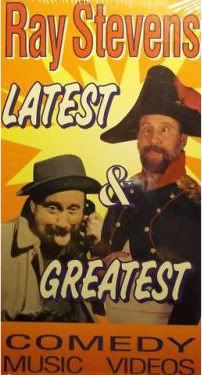
The 1990's will forever be known among fans of Ray Stevens as the home video era. It was during this decade that Ray came up with a revolutionary idea to sell home videos through direct mail and by-pass retail stores. Comedy Video Classics would eventually become a million selling home video and along the reach the #1 spot on various home video charts in 1993 once it was released to retail stores. This is the DVD re-release from several years ago. I've got the original home video as you'll see below and I also have the DVD counterpart. The collection originally hit in 1992...commercials for the home video aired on TV stations night and day and all over the country. As mentioned, the collection hit retail stores in 1993. The product was issued by Curb Records. The home video remained a fixture on the weekly video charts for more than a year. It was eventually named the Home Video of the Year by Billboard magazine. The home video contains 8 music videos.

Amazing Rolling Revue is one of the products that was not advertised beyond his fan base. The project was also released in 1992 but it didn't feature a collection of music videos like Comedy Video Classics did. Instead, Amazing Rolling Revue was intended to be a pilot for a possible television program. The overall concept of the series was to focus on a literal traveling concert...Ray acted as emcee aboard a bus and at various moments we'd get comments from the bus driver, Darrell Waltrip. Sight gags include Waltrip treating the bus as if it were a race car...several times the camera shook to create the illusion that waltrip was being reckless behind the wheel. In addition to the intimate concert portion we also get sketches featuring Ray and several country music personalities. Sylvia joins Ray in a spoof of cooking shows where they sing "Making Cookies". Ray portrays his psychologist character, Sickmind Fraud, in a series of sketches. Chet Atkins makes an appearance in a commercial spoof in which Ray's character is selling replicas of Chet's hands for those who want to play the guitar just like Chet.

Ray Stevens Live! was the official follow-up to Comedy Video Classics as far as direct marketing is concerned. This 1993 home video duplicated the runaway success of it's predecessor as far as chart durability and sales. The only difference being Comedy Video Classics remained charted for a much longer period of time. In fact, when Ray Stevens Live! was released to retail stores in 1994, it often competed with Comedy Video Classics. It wasn't uncommon to see Ray's two home videos flip-flop from week to week: one week the 1992 home video would be at #5 and the 1993 project would be #4 and then the next week the positions would switch. In the Live! home video we see part of a show that Ray put on during his run in Branson, Missouri. Ray had a theater in operation during 1991 through 1993 and he taped several of his performances there. The first Live! home video featured quite a bit of his performances and between song banter. If one has never seen Ray perform "I Saw Elvis in a U.F.O." then you owe it to yourself to look for Ray Stevens Live! on eBay and other on-line flea markets.

Not advertised to the masses this home video sequel includes additional performances from the same concert captured on Ray Stevens Live!. In More Ray Stevens Live! we also are treated to performances by Ray's band and harmony singers. Ray's band went by the name of the French Fried Far Out Legion. Ray's brother, John, is featured heavily in this particular home video as he serves as the theater's emcee. John introduces all of the musicians and harmony singers which leads into performances of "Bridge Over Troubled Water" and "Love Can Build a Bridge". There's a performance of "R-E-S-P-E-C-T" by Janice Copeland in character as Beulah. Copeland was a featured vocalist and co-star in many of the comical sketches that Ray presented for the fans. In the first Live! home video Copeland can be seen as Jane during the performance of "Gitarzan". Ray performs several songs on More Ray Stevens Live! but a heavier dose of the camera time is focused on his band and the performances cut out of the first video. For those curious Ray performs the following songs:

1. Cletus McHicks and His Band from the Sticks
2. Turn Your Radio On
3. In The Mood**
4. The Haircut Song
5. The Mississippi Squirrel Revival
6. It's Me Again, Margaret
7. Everything Is Beautiful

(**)- "In The Mood" was presented in an elaborate production where the members of Ray's band pantomimed the chicken clucking performance that played over the public address system. Most of the band members got into the act by flapping their arms and tilting their heads back and fourth clucking to the rhythm. The audience, I imagine, were well aware that the band wasn't actually clucking like chickens but nonetheless appreciated the effort that was put into the performance.

A few months after Ray closed down his theater he embarked on the making of this direct-to-home video movie. The movie runs 110 minutes and the story deals with an artist who doesn't get along that well with new management. As a comedy singer, Ray plays the part rather semi-autobiographical. Ray's new record producer, in the movie, wants Ray to start marketing himself as a serious artist. He tells Ray of his bright idea which backfires. Ray balks at the idea and is soon running from his record producer as well as Dudley Dorite of the highway patrol. While the record producer and his underlings set about destroying Ray's career and labeling him politically incorrect, Dudley Dorite in the meantime has gathered people who have the same names as those that Ray's put into songs over the years. These people, according to the movie's plot, really exist and they're seeking damages based upon the "embarrassment" that Ray's songs has brought to an entire community. This particular home video followed the previous two's shiny path to Platinum certification. The video reached retail stores in late 1996 and just like it's two predecessors (Comedy Video Classics and Ray Stevens Live!), Get Serious! became a multi-week chart hit throughout the last part of 1996 and into the first half of 1997.

This particular home video is a behind the scenes documentary on how Ray put together his Get Serious! movie. The program features snippets of interviews by those who appeared in the movie. We get comments from the likes of Buddy Kalb, Michael Airington, Chet Atkins, director Rod Thompson, and others. Obviously I suggest you look for the 1995 Get Serious! movie before you go about tracking the documentary down. The documentary is rarely offered for sale but it's a nice companion to the movie. It's a neat look into how the movie was made and it includes bloopers/out-takes showing how much fun everyone had during the production. The title of the home video plays on the unbelievable idea that Ray Stevens would make a feature length movie: Ray Stevens Made a Movie?? Get Serious!!. Those who had supporting roles in Ray's movie were: Buddy Kalb, Connie Freeman, Jerry Clower, and Michael Airington. The cameo appearances are rather lengthy: Chet Atkins, Williams and Ree, Johnny Russell, Charlie Chase, Larry Black, George Lindsey, and several faces familiar to those who own Ray's 1992 Comedy Video Classics release.

A carrying case...originally the case was manufactured to house Ray's first 6 home video releases. However, the movie documentary was something that I didn't own at the time and I substituted it's space in the carrying case with Ray's 2000 home video, Funniest Video Characters. Even though I've since bought the movie documentary I've yet to place it in this carrying case and so Funniest Video Characters continues to remain on display. The case is something that was mailed to me by the fan club as one of the runners-up in a story contest. There was a contest among fan club members to come up with a story that made sense but incorporated a lot of Ray Stevens song titles in the dialogue. I can't even remember what in the world I wrote but apparently it was sufficient since I was one of the people awarded one of those carrying cases. The winner received more things, obviously. We each got a copy of the winner's story. I have it tucked away in one of my desk drawers along with other items from the fan club days. Ray's fan club closed down in 2002 but I had been a member since 1995. I used $10.00 of my high school graduation money to become a member. Then when I got a job a year later I continued sending in my annual payment.

The way I understand it, based upon my own theories, the main reason the fan club shut down (after having been active since 1987) is because of the internet and how people from all over the world could instantly visit a singer's web-site and potentially purchase music and other items. No longer was it financially viable to have a fan club up and running if people from all over the world can easily visit a web-site and purchase music, t-shirts, home videos, etc. etc. using an on-line order form. Fan clubs are still around...but nowadays they're mostly used for publicity purposes and for concert ticket giveaways...most artist's sell their merchandise to the world using their own on-line store. It used to be completely different...a person more or less had to become a fan club member in order to purchase music that had disappeared from the store shelves. When I was a member of Ray's fan club you'd get a catalog in the mail of all the items they were currently selling. You'd also get a newsletter and some trinkets throughout the year just for being a member.

This 1996 best-of collection, Latest and Greatest, showcased exactly what the title states. Several of Ray's music videos from 1995 (the latest) and those from 1992 (the greatest) appeared on this release. There's a total of 10 music videos...6 of them are lifted from his 1995 Get Serious! movie and the other 4 come from 1992's Comedy Video Classics. This 10 music video collection, released in the summer of 1996, wasn't promoted or publicized too much and was more or less an item not widely known beyond his fan-base. I remember that when the collection was released there was a small mention of it in one of his fan club newsletters and so I kind of had an idea that there wasn't going to be much of a publicity push for the collection. Anyway, the way I see it, this 1996 collection was more or less the inspiration for 2001's Greatest Video Hits...a release that was sold through his fan club and eventually in other outlets.

In 2003 Ray released a 6 song collection of music videos called Cartoon Video Collection. The videos feature live-action Ray interacting with limited animation characters while the background images are all illustrated designs. In one of the videos, "Hang Up and Drive", various car wrecks are comically highlighted as a result of driving while talking on a cell-phone. The collection features the following music videos: "Bridget the Midget the Queen of the Blues", "Deerslayer", "Erik the Awful", "Gone for Good", "Hang Up and Drive", and "Osama Yo' Mama".

This 2-disc collection is a 2004 DVD release featuring 21 music videos. There are 10 music videos on disc 1, plus a bonus video, equaling 11 altogether. There are 8 music videos on disc 2, plus 2 bonus videos, equaling 10 altogether. Disc 2 is 2000's Funniest Video Characters with 2 bonus videos added on. Disc 1 is 2001's Greatest Video Hits, minus the music video "Santa Claus Is Watching You" and replaced with "Power Tools", with 1 bonus video added on. The 2001 release features Ray delivering commentary between almost all of the music videos and explaining how he wrote or found the songs he recorded. He talks about the day Bill Justis approached him with the phrase "Gitarzan" which led to the writing of the song. The bonus music videos contained on this 2-disc collection are "Thank You" on Disc 1 and "Hello Mama" and "Osama Yo' Mama" on Disc 2. The name of this 2004 release is Complete Comedy Video Collection. Obviously with the omissions of several music videos it's not exactly "complete" but it's the closest thing to a complete collection of his music videos at that point in time.

These two DVD releases from Curb Records arrived in 2006. Each release features 5 animated music videos. In the DVD titled Gourmet Restaurant we see animated music videos of "This Ain't Exactly What I Had In Mind", "Barbeque", "Jeremiah Peabody's Green and Purple Pills", "Gourmet Restaurant", and "The Ballad of Cactus Pete and Lefty". The other collection, Teenage Mutant Kung Fu Chickens, features the following animated videos: "Can He Love You Half as Much as I?", "Harry the Hairy Ape", "Teenage Mutant Kung Fu Chickens", "Misty", and "Along Came Jones". These music videos, featuring limited animation, were the next step in Ray's earlier experimentation of animated videos on the earlier release called Cartoon Video Collection. The difference between the 2003 and 2006 music videos are the appearance of live-action Ray in 2003. The 2006 videos feature Ray in animated form as you can tell from looking at the DVD covers.

In 2009 Ray issued the Cartoon Carnival series. The series came in Volume One and Volume Two. Each Volume consisted of 10 music videos. The allure of the collections were the additions of 2 newly released music videos on each Volume. "The Moonlight Special" and "Smokey Mountain Rattlesnake Retreat" appeared for the first time on Volume One while "The Camping Trip" and "Hugo the Human Cannonball" appeared for the first time on Volume Two. The other 16 music videos in the two volume series all appeared on collections released in 2003 and 2006.

Since December 2009 music videos have once again become the primary source of creativity and outlet for Ray Stevens. Starting with "We The People" and going forward Ray has released several music videos on the video hosting site, You Tube. All of the videos carry either a political or patriotic flavor...and at the core of all the releases is Ray's distinctive style of humor and his broad acting skills. Millions upon millions of people have watched various music videos from Ray Stevens...and this particular blog entry I feel has demonstrated that Ray Stevens truly is the Comedy Video King.