Showing posts with label golden anniversary. Show all posts

April 21, 2023

Ray Stevens: "Nashville" is Golden

Hello Ray Stevens fans! Earlier this year I wrote a blog entry spotlighting the 50th anniversary of the 1973 album, Losin' Streak. Those of you familiar with Ray's career probably know that he released two albums in 1973. Losin' Streak arrived in the second half of the year whereas in the first half he gave us, Nashville. The Nashville album wasn't as big of a surprise if you happened to have been a long time fan of Ray when the album was released or had seen him in concert. Ray had been living in Nashville since 1962 and was well known up and down Music Row. He was an active session musician throughout the bulk of the 1960s and had formed long lasting friendships with record producers and musicians throughout Nashville as well as in Muscle Shoals, Alabama. His most publicized friendship was with RCA's Chet Atkins but Ray was also a friend to several other record producers/music executives including Ken Nelson (Prep/Capitol Records), Shelby Singleton (Mercury Records), Fred Foster (Monument Records), Jerry Kennedy (Mercury Records), and of course Bill Lowery, the man largely responsible for Ray getting into the recording industry in Georgia back in the late 1950s. Those people along with Andy Williams, Ralph Emery, Mike Sheppard, and scores of people behind the scenes that most of us may never know about were vital to the career of Ray Stevens. Ray, given his position in the music industry, also personally knew a whole host of other record producers and executives that had little to do with his own career but nevertheless the music industry back then guaranteed that singer-songwriter-musicians-publishers, such as Ray Stevens, would run into all types of movers and shakers in Music City. 

Ray's session musician workload began to diminish by 1970 and in several interviews Ray makes it clear that it was his own decision to decrease both the session work and his music arranging for other recording artists because his own career demanded more of his time and attention. 

In 1973 Ray opened up his first recording studio...and Nashville holds the distinction of being the first Ray Stevens studio album to be recorded at a studio he owned. It was called The Ray Stevens Sound Laboratory. Now, just so you won't be confused, that was a name that he used, professionally, for his first recording studio and then when he opened up his second studio the following year he kept that name. He used that studio title on up into the late 1970s. His 1977 studio album, Feel the Music, was the last one that credited the recording studio as The Ray Stevens Sound Laboratory. The albums released beginning in 1978 onward credited it as The Ray Stevens Studio. 

The Nashville album came at a time when country music and pop music, to some people's ears, couldn't be distinguished from one another. Now, if you go back and listen to 1973 country and 1973 pop you can clearly tell the difference...but not in the ears of some. The pop influence in country eventually led to the creation of a syndicated TV series, Pop! Goes the Country. Ray had been charting pop and Adult-Contemporary, on and off, since 1961...but in 1969 one of his singles, "Sunday Mornin' Comin' Down", crossed over to the country chart and this was followed by another appearance on the country chart with "Have a Little Talk With Myself". Then, later in 1970, his mega number one hit, "Everything is Beautiful", reached the country Top-40...and then in 1971 he hit the country charts with his gospel single, "Turn Your Radio On". He made his debut as a guest on the country music show, Hee Haw, in 1972...appearing on the show twice that year. I meticulously make mention of all of these things to reinforce my earlier comment that 'pop singer' Ray Stevens releasing Nashville in 1973 wasn't as big of a surprise as it may have seemed. 

He had been selling music/albums to country audiences and had wide appeal within the umbrella of country music even though, as far as country radio was concerned, his appeal with country audiences fell on deaf ears to them most of the time. No one will convince me that Ray Stevens wasn't attracting country fans during the hey-day of his 'pop' stardom in the early and mid 1970s...his appearances on numerous country music television programs of that era attest to his familiarity with the country audience. As far as chart statistics are concerned I blame country radio for not supporting his music as much as they could have or should have. They supported "Nashville", the single, and it made it's way into the country Top-40. What a recording artist needed was the sales support of the public combined with the airplay support of radio disc jockeys and, later on, radio consultants and radio programmers. Ray almost always had the public support...if you gauge the chart activity on numerous singles he released they'd rise up almost near the Top-50 or Top-40 but with the lack of airplay support the single releases would just die mid-level and not reach the airplay-driven Top-40 portion of the singles chart. 

The music on Nashville is not traditional country music nor is it 'pop music'...it is Ray Stevens music. There are 11 tracks on the album and because the overall album is meant to be influenced by country music you're going to hear some steel guitar on a couple of the songs...

1. Nashville
2. Love Me Longer
3. Float (instrumental)
4. Golden Age
5. Never Ending Song of Love
6. Nobody's Fool
7. Undivided Attention
8. You've Got the Music Inside
9. Fish Eat Sleep
10. Piece By Piece
11. Destroyed

The album is available to listen to on YouTube. The playlist can be accessed when you click this LINK. I'm embedding one of the audio tracks below because I want it to get a bit more spotlight here and that track is his rendition of "Never Ending Song of Love". His take on the song is quite a take! 

January 30, 2023

Ray Stevens: The Golden Losin' Streak Remembrance

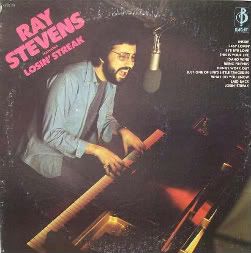
Ray Stevens rocks out in this 1973 photograph...a close-up of the image appearing on his Losin' Streak album. That particular album reaches 50 this year and I'm giving a golden anniversary remembrance to that one of a kind album. If you follow Ray's career then you're very aware of how obscure, under-rated, and unheralded this 1973 album happens to be in comparison to some of his other albums of the same time period. Ray remarked that the album's title ironically described his recording career at that moment in time. He remarked that he was on a commercial losing streak...but no matter...his artistic display more than make up for it. This album was recorded in what Ray nicknamed The Ray Stevens Sound Laboratory. He had recently opened up his own recording studio after having spent years recording in numerous studios along Music Row. He would also rent out the studio to other record producers and artists. Ray kept this studio open for several years even though he personally stopped recording at the location a year later, in 1974, when he opened up a studio on Grand Avenue. That studio remained his base of operations for 45 years until 2019. The production of Losin' Streak was originally meant to be a focal point had the album been promoted as it should have been. There are several songs on this album that play around with Ray's vocalization...and the music arrangements and the overall sound all carry an experimental flavor. The albums Ray released before and after Losin' Streak lack the specific sound heard throughout this album. The album features an instrumental track that Ray composed, "Laid Back". 

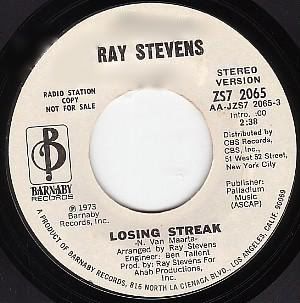
Now, for those who like to be picky, the 1973 album is officially titled Ray Stevens featuring Losin' Streak but I prefer to just call it Losin' Streak. The album contains 11 songs...and Ray is the writer of 5 of the songs. Although Ray had always included songs written by others on his albums it's worth noting that on this particular album and in another album released the same year he was expanding and including more songs from other writers. One writer in particular being Layng Martine, Jr. The tracks "Being Friends" and "Idaho Wine" were from the pen of Layng Martine, Jr. It was in 1973 that Ray 'discovered' Layng Martine, Jr. and signed him to his publishing company (Ahab Music, Co.). The story goes that Layng sought out Ray and said how much of a fan he happened to be and that he wanted to write songs for Ray. Ray published almost every song Layng wrote in this early '70s time period and the biggest Layng Martine, Jr. song Ray published, as far as airplay and sales is concerned, turned out to be "Rub It In", a song that became a massive hit for Billy 'Crash' Craddock. Ray had actually produced a recording of the song by Layng Martine, Jr. but it wasn't a major hit. It reached the charts, though. Now, getting back to Ray's Losin' Streak album... the album's title track, "Losin' Streak", wasn't written by Ray Stevens as some may have thought. The song was written by a writer named Nick Van Maarth. The title track has a very memorable electric guitar and steel guitar blending together...and the up-tempo performance sets the mood for most of the album. "This is Your Life", one of the songs Ray wrote, is the song I imagine Ray is singing on the album's cover. The song contains a shouter of a chorus...some may say he's belting out the lyrics. One of the themes throughout the album is inspiration. "This is Your Life" is a song of inspiration but the one that has inspiration all over it is another Ray Stevens composition, "Inside". Tupper Saussy wrote the positive, reassuring "Things Work Out". Ray brings back a song he originally recorded in 1963, the self-penned "Just One of Life's Little Tragedies". It's a partial re-write, too, as he changes some of the lyrics in the last half of the song in addition to giving it a new music arrangement. Ray also gives a new arrangement to "Bye Bye Love", the classic pop hit by The Everly Brothers. In Ray's rendition the song is changed from an up-tempo sing-a-long to a bluesy ballad. The self-penned "What Do You Know?" closes out the 1973 album. 

I'm closing this blog entry with a couple of audio tracks. One of the tracks is "This is Your Life". Listen to Ray's performance and take in the glorious music arrangement. I'm also going to include the audio track of "Inside". That song would eventually end up as a B-side to a 1974 single-only release from Ray titled "Everybody Needs a Rainbow". The A-side was written by Layng Martine, Jr. The YouTube audio tracks were uploaded by another Ray Stevens fan named Randall Hamm.


May 1, 2021

Ray Stevens: "A Mama and a Papa" at 50...

It's me once again! I thought I'd make a note of a particular single from Ray Stevens marking it's golden anniversary, 50 years. On May 1, 1971 "A Mama and a Papa" was released by Ray Stevens on Barnaby Records. The single would ultimately appear on the album, Turn Your Radio On, in 1972. "A Mama and a Papa" comes from the pen of Tom Autry and it's B-side is the passionate love ballad, "Melt", which Ray Stevens wrote. I don't pay much attention to the days or months that Ray releases albums or singles...I only make note of the year...but when I was reading one of the various pages I follow on Facebook there was a post that drew attention to May 1, 1971 being the day "A Mama and a Papa" was released. The single would reach the Hot 100 pop chart but it's biggest impact came in the Easy-Listening music format. The single reached the Top-10 of that format in the summer of 1971. The image in the video clip below is from the overseas release of the song. Barnaby Records was under the distribution of CBS Records when this single from Ray Stevens was released. 

November 8, 2020

Ray Stevens: Lulu sings on the 1970 Ray Stevens Summer Show...

Hello all once more!!! This is one of the longer gaps of time that I've spent away from the blog page and a lot of it has to do with the nearly week long election cycle. I was gripped with the drama just like everyone else wondering what the conclusion would be...we still don't officially know...we know who the media has picked as the winner but I'm holding out all options for the current President to, if not win, at least find out if any fraudulent activity took place.

In this blog entry I'm going to embed a video clip from the 1970 summer show Ray Stevens hosted for Andy Williams. One of Ray's regular cast members was Lulu, a Scottish born singer, whose multi-talented as a singer, actress, businesswoman, and television personality. I don't follow her career in-depth enough to know if she's a multi-instrumentalist, producer, arranger, and a songwriter, too. If so she'd be something like a female Ray Stevens. If you're familiar with the James Bond movies which I am...my brother has almost every James Bond movie from the first one with Sean Connery through 'Tomorrow Never Dies' with Pierce Brosnan, I think? He may have the rest of the series of films that Pierce starred in. It's been awhile since I seen his James Bond collection. 

But anyway, those familiar with those movies may remember Lulu as the singer of the theme song to The Man with the Golden Gun. She was also the singer of the theme song for To Sir, With Love years earlier in 1967. She had a number of hit songs on the United Kingdom music charts dating back to 1964 prior to her theme song rendition of "To Sir, With Love". That single enabled her to have an international fan base and for several years she routinely hit in the United Kingdom, United States, Canada, and Australia with a succession of recordings. In 1969 her recording of a song titled "Boom Bang-a-Bang" was named the winner of the Eurovision Song Contest. That single nearly eclipsed the popularity of her 1967 single, "To Sir, With Love". The follow-up to "Boom Bang-a-Bang" arrived early in 1970...titled "Oh Me Oh My I'm a Fool for You Baby". 

Lulu recently celebrated a birthday...born on November 3rd. So, now that I've explained to some of you who Lulu happens to be, in case you didn't know, here now is Lulu from 1970...she appears in a brief comical sketch with Ray, first, and then sings "Oh Me Oh My"...

July 25, 2020

Ray Stevens: July 25, 1970...

Hello all!! In a similar blog entry from last month where I celebrated the 50th golden anniversary of "Everything is Beautiful", well, this time around I'm celebrating the 50th golden anniversary of "America, Communicate With Me". To commemorate the celebration I created a similar 50th anniversary image of the single...

Happy 50th Golden Anniversary!!!
"America, Communicate With Me" made it's debut on the weekly music chart on July 25, 1970. It had across the board appeal right out of the gate...among the top selling pop singles for several weeks in the late summer/early fall of 1970. The single appeared on the Hot 100 pop chart and the Easy-Listening chart...something not uncommon for a lot of pop singles of that era since many of them fit the softer, easy listening sound. Ray's single lacked airplay on Top-40 pop radio stations...the main reason why it peaked just outside the radio-dominated Top-40. On the Easy-Listening format the single reached the higher reaches of the Top-20...peaking just outside the Top-10. It was the first single from a forthcoming album from Ray called Unreal. The subject matter of the song dealt with a moderate trying to make sense of a country torn between two extremes...with lyrics hinting at a silent majority and how in spite of all the negativity in the daily news headlines the country is still the greatest on Earth. This is an audio track of "America, Communicate With Me"...


January 12, 2020

Ray Stevens and My Early Anniversary Salute...

I know I'm several months early but I didn't want to wait until the spring/summer to give the spotlight to a certain song in the career of Ray Stevens that hits 50 this year. It's a song that's become one of his signature hits and a song that's become his most recorded...the one and only "Everything is Beautiful". The single came about not too long after Ray had joined a different record company in 1970. He had been an artist/musician/arranger/producer on Monument Records for the last five and a half to six years...playing on other artist's recording sessions, arranging the music for other artists, producing other artists, and all the while finding time to sing, arrange, and play on his own records. He departed Monument Records and joined Barnaby Records, headed up by Andy Williams. Ray's association with Andy went back several months when Ray began making recurring guest appearances on Andy's television series in 1969. One of Andy's brothers, Don, would eventually become Ray's manager.

Ray's debut single for Barnaby Records arrived in the spring of 1970...a song that Ray has long recalled took him three days to complete while chained to a piano in his basement. "Everything is Beautiful" took off quite quickly...it hit the Hot 100 during the final week of March 1970 and a month later it hit the Adult-Contemporary chart. The single also charted Country as well as on music charts across the world. The single reached it's peak on the various music charts right around the same time period...late May 1970. It finished at number one on the Adult-Contemporary chart for the week ending May 23, 1970 and remained at the top for three weeks. It reached number one on the Hot 100 pop chart the week ending May 30, 1970 where it remained for two weeks. The Country chart finish was number 39...making this Ray's first ever appearance within the Top-40 in country music. He had charted twice before in the country format prior to reaching the Country Top-40 in 1970. He had made an appearance on the country chart with "Sunday Mornin' Comin' Down" in November 1969 (peaking at number 55) and "Have a Little Talk with Myself" in January 1970 (peaking at number 63). In fact, as you may have guessed, the country peak of "Have a Little Talk with Myself" happened the week ending January 3, 1970.

It's been said in the history of Ray Stevens' career by several historians and those that are close friends that "Everything is Beautiful", in particular, 'changed the world' for Ray Stevens. In the years prior to 1970 Ray had always been a difficult artist to categorize and he had always entertained his audiences with a balance of straight music and comedy/novelty. My guess as to why this 1970 single 'changed the world' for Ray is given how it cut through and presented him in a different way to a lot of people; and even though he had plenty of serious works in his past to prove his versatility it took "Everything is Beautiful" to finally reach through and show how serious he could be in his recordings. That's not me saying that...that's me interpreting public reaction of that time period...for as a long time fan of Ray's I've heard almost all of his recordings prior to 1970 and there are plenty of non-comedic performances awaiting some future audience to discover. In the meantime, "Everything is Beautiful" was awarded a Gold Record for sales of more than a million copies. In the era before Platinum Records were created any single or LP that sold one million copies or more was declared a Gold Record by the Recording Industry Association of America (the RIAA). The single reportedly sold three million copies worldwide. The song itself carries social commentary and religious overtones at a time when the public, in general, was at a boiling point. The protest era of the late '60s spilled over into the early '70s with the Vietnam War still in the headlines and the political unrest of the Youth culture rebelling against the Establishment culture. The song asked for social and racial acceptance of all people and that pretty much every person has value in spite of our differences in politics, world view, physical and economical differences, etc.

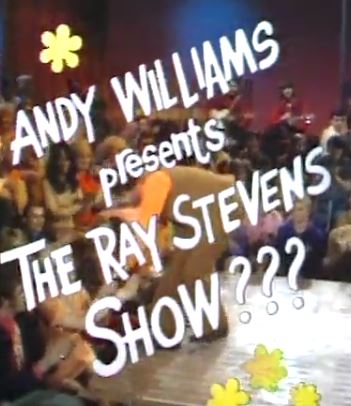
Ray performed "Everything is Beautiful" during an appearance on the Andy Williams Show during one of his various guest appearances. The song became Ray's theme when Andy asked him to host the summer 1970 television series on NBC-TV. Although Ray was no stranger to the music world and he had appeared on television in the past he was a virtual unknown, pretty much, to the television audience...and to capitalize on this the producers and writers of the show came up with the comical title, Andy Williams Presents: The Ray Stevens Show???. In each episode there was a filmed segment where people were asked if they knew who Ray happened to be and their responses were comical. The series debuted June 20, 1970 and ran until August 8, 1970. Ray has uploaded clips from this 1970 summer series onto his YouTube channel. The show hasn't been issued on DVD and so those clips are the closest thing we have. Ray opened each episode by singing lyrics from "Everything is Beautiful" and most episodes included a complex cast sing-a-long in addition to other recurring sketches. The overall mood of the series is often categorized in the surreal nature. Future comic legend, Steve Martin, was among the cast-members of Ray's 1970 summer show. "Everything is Beautiful" became a favorite of gospel music artists and most notably a recording by gospel artist, Jake Hess, hit the same year as Ray's. In the Grammy awards telecast of early 1971 (honoring recordings of the past year) "Everything is Beautiful" won a Grammy for Ray in the category of Best Male Pop Vocal Performance while Jake Hess took home a Grammy for Best Sacred Performance. An overseas tour in Australia prevented Ray from appearing at the 1971 awards and so his award was accepted by Glen Campbell.

Ray Stevens continues to remain as busy as ever. He prefers to keep his happenings super quiet until just before he's about to release something new and it can be nail biting and nerve racking sometimes awaiting whatever comes next from unpredictable Ray Stevens. In March of this year he'll kick off his third season of concerts at his CabaRay dinner theater...everything is still beautiful for recently inducted Country Music Hall of Fame member, Ray Stevens, some 50 years later...

2019

June 15, 2012

Ray Stevens: 50 Years of Hits and Hilarity...

It's finally Friday!! I was not at my computer much on Thursday and so I missed the big DVD news from Ray Stevens and so I'm commenting on it now. Not one, not two, but Three brand new DVD releases have become available at Ray's web-store. First off there's the long awaited DVD release of Get Serious! that I wrote about in my previous blog entry on Wednesday...wondering when a DVD release would become available...then on Friday morning I'm alerted to the news that a DVD of that 1995 movie has finally saw the light of day in DVD format. The movie runs 110 minutes...that's 1 hour, 50 minutes...and it's a whimsical story that parallels a not too humorous situation that all kinds of comedians were facing by the early 1990's. Honestly, though, the situation facing many comedians by the early '90s had been slowly building since the mid to late '70s but it wouldn't be until around 1991-1992, that era, where the situation seemed to form like a noose around comedians, in general.

Well-established comics, whose popularity was originally obtained in a different time period but were by now viewed as legendary figures, were also being subjected to the mentality of a contemporary society and many legendary comics were tainted by the accusations of political incorrectness by a modern-day audience.

Get Serious!, in it's own way, addresses the concept of political correctness while a secondary plot addresses the music business and how industry conglomeration and predetermined airplay at radio stations destroys the chances for anyone creative or unique to make it given how similar radio programmers want the music to sound. In the movie Ray becomes a fugitive, of sorts, running from a local policeman whose formed a posse comprised of people that Ray's sang about in his songs. The music executive and his minions are also in pursuit because of Ray's refusal to get serious and stop singing comedy songs. Now that the movie has finally become available on DVD you all can purchase the film that I've glowingly commented on the last several years. The link will be at the end of the entry.

Secondly, there are the DVD releases of a concert filmed at The Welk Theater in Branson, Missouri. The concert is broken up into two parts and so the DVD comes into two volumes. The first volume is called Such a Night: 50 Years of Hits and Hilarity. As the more consistent readers of this blog are aware, 2012 marks the 50th anniversary of "Ahab the Arab".

The second part of the concert comes in a DVD titled Patriots and Politics. Those who attended the concerts down at The Welk Theater and those who read the reviews and saw some of the pics were let it on how the second half of the concerts were politically oriented. His Tea Party music videos had become popular on You Tube and so it was only natural that this part of his career would be showcased in a concert setting, too.

As you know, politics is a highly debatable subject matter. Some of the concert goers who hadn't necessarily paid much attention to Ray's career and were going because of the older songs they remember him for were genuinely surprised by the political segment. Some liked it and others did not. I assume the polarizing effect of politics is what led to the item description for this particular DVD release. When you click it's link you'll see what I mean.

There are CD versions of those DVD concerts...if you're budget minded you'll probably prefer the soundtracks since they're a bit cheaper than the DVD counterpart. However, Ray has always been a visual attraction...using a lot of sight gags and props in his performances...which is lost to a person listening to an audio CD.

Here's the titles of the DVDs once more:

Such a Night: 50 Years of Hits and Hilarity

Patriots and Politics

Get Serious!

The DVD main page can be found here at: Ray Stevens DVDs. Once there you can click each of new releases to read the information.

May 19, 2012

Ray Stevens and Arabian Gold...

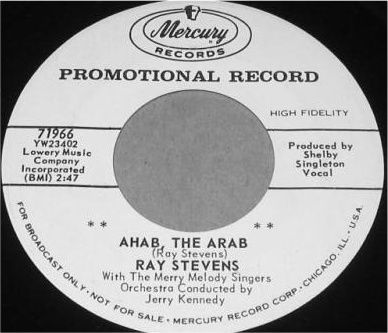
Howdy Ray Stevens fans! We're coming up on the official Golden Anniversary of "Ahab the Arab" and it's debut on the pop charts. It hit during the last week of June in 1962. I started off 2012 by doing a blog about "Ahab the Arab" and it's impact on Ray's career and his business companies. For those who want to read it you can click the blog entry title here: Ray Stevens and Ahab, a Golden Anniversary. I covered a lot of ground in the blog and so that's why I provided the link...I don't want to re-hash everything but I'll say a few things about the song nonetheless. The single became a Gold record and a Top-5 pop hit in America during the summer of '62. Unlike so many other blogs, though, I do not belittle or show contempt for the recording. It's a very humorous song and a career making hit for Ray Stevens. Political correctness and other pressure groups through the decades have routinely griped and complained about this song...decades of repeated accusations that it's racist or ethnically offensive have become accepted as 100% fact in spite of the songwriter's intentions. That songwriter, of course, is Ray Stevens, who shouldn't have to explain the song's inspiration anymore...especially not to those who've done everything they can to twist the song's true origins into something other than what Ray envisioned when he wrote it. "Ahab the Arab" was covered by a couple of other artists...and Ray himself has re-recorded the song a few times. The complete version ran longer than a typical pop song...so Mercury trimmed the song to fit a more radio friendly length. The missing verse was included in the 1995 music video that Ray filmed. I imagine that a few of the fans who weren't aware of the complete version of the song assumed that Ray added that extra verse just for the music video.

I first heard the complete version of the song in the early '90s when my grandparent's bought me a cassette of Ray's titled Funny Man that Mercury Records had released in 1989. That cassette also has "Just One of Life's Little Tragedies" and "The Deodorant Song"...a couple of songs that I refer to as two major discoveries for this Ray Stevens fan as I was just starting to build my Ray Stevens music collection. Why do I call them major discoveries? Well, it's because those two songs were brand new to me, even though they had originally been recorded in the early '60s...at that time 30 years ago. The other songs on that 1989 collection I had already heard on Mercury's 1970 release, The Best of Ray Stevens. I first heard "Ahab the Arab" on the 1987 Greatest Hits album from MCA Records...but that, as I later found out, was the 1969 re-recording from the Gitarzan album. The liner notes made no mention of it being a re-recording so when I was really young I genuinely thought the 1969 recording was from 1962. The reason is because the author mentions 1962 as the year the song was released...but didn't mention that the recording on the collection came from 1969. A lot of liner note authors don't go into such detail so it's not like I'm singling it out on purpose...it just happened that those liner notes accompanied the album that introduced me to "Ahab the Arab" (and seven other songs recorded by Ray Stevens!) for the first time. You can read more about the song in the link I provided near the top of this blog entry.

January 1, 2012

Ray Stevens and Ahab, a Golden Anniversary...

Happy New Year!! As we begin 2012 we take a look at a certain song from Ray Stevens that celebrates a Golden Anniversary this year. There were a lot of changes happening for Ray as 1962 got underway. In one of his first recording sessions of 1962 he recorded a song that would become his breakthrough hit, "Ahab the Arab". The song tells the story of an Arab named Ahab who's in love with a woman that happens to be part of a Sultan's harem. It's a comical love story with an Arabian back-drop. The single, in it's original form, ran well over 3 minutes...an unusually long running time for a pop music single. Mercury edited down the performance for the single release where it clocked in at 2 minutes, 47 seconds. The full length version, which includes a verse telling about the Sultan catching Ahab and the woman in the middle of an embrace, clocks in at roughly 3 minutes, 45 seconds. In interviews Ray often recalls how, at first, he wasn't happy with Mercury wanting to edit his song but everything worked out okay because the single hit the radio in the early summer of 1962 and in it's shortened form it became an immediate hit. The single would go on to sell more than 1,000,000 copies and earn a Gold certification from the RIAA. In those days there wasn't such a thing as a Platinum certification. Anything that reached a million copies in sales was certified Gold no matter how many millions a single would eventually sell. Today there's Platinum, Double-Platinum, Triple-Platinum, etc. etc. The Diamond certification is for CD's that sell more than 10,000,000 copies. The image below is an EP containing just four songs: "Saturday Night at the Movies", "Furthermore", "Julius Played the Trumpet", and "Popeye and Olive Oil". It was released during the time "Ahab the Arab" was becoming a household name. The EP was issued to radio stations only. I assume this was done because it spotlighted several songs that the label felt could potentially become hits and wanted radio stations to hear the songs ahead of time. "Furthermore", by the way, was released after "Ahab the Arab" but it didn't become the kind of hit that Ahab had become.


This is a compilation album featuring nine songs lifted from Ray's debut album for Mercury, 1,837 Seconds of Humor. The two songs from Ray's debut album that weren't featured on this collection were "Furthermore" and "The Rockin' Boppin' Waltz". The album was released by Pickwick Records and as you can tell from the album cover it's an illustration making reference to "Ahab the Arab" complete with the candy bars in the hand and the drawing of Ahab's love interest. Ahab is track six on this collection. I have this album in my collection...I found it on an on-line auction site quite a few years ago. It plays great, too. I wanted the album because of it's obscurity. I also wanted the album because I didn't have any of Ray's songs from his debut album on vinyl and so that was the main driving force behind my decision to purchase it. I still don't have a vinyl copy of 1,837 Seconds of Humor! I have it on CD, though. It was released on a CD with his second album, This Is Ray Stevens, by an Independent record company several years ago. (I have This Is Ray Stevens on vinyl by the way!)

MCA Records released this famous collection in 1987. I call it a famous collection because it became a Gold record a couple years after it's release but it didn't stop there. In the early '90s the collection was certified Platinum for over a million copies sold. The album features 10 recordings and it comes with liner notes by Ronnie Pugh. The album cover is a reference to Bonnie and Clyde, of course, and the slang term "hits" often used in gangster movies. This particular collection features "Ahab the Arab", the Monument recording from 1969, as track number eight. I was 10 years old when this Greatest Hits album was released and my grandfather bought the cassette version. In the liner notes it refers to "Ahab the Arab" being from 1962 (technically correct) but the recording on this collection comes from 1969 but there's no mention of this in the liner notes. The 1969 re-recording is funny, too, and it's this version that the public at large are more familiar with considering how many times it appeared on compilation albums throughout the '70s, '80s, and '90s. I didn't get to hear the 1962 recording of the song until the early '90s when I came across a low-budget release called Funny Man that Polygram Records released. When I played the tape and heard the start of "Ahab the Arab" with it's distinct intro I first thought the label made a mistake...this wasn't the version I grew up listening to...but low and behold I unknowingly was hearing the original recording for the very first time...the complete recording...all 3 minutes and 45 seconds of it!

Released in 1990 on the Curb label, His All-Time Greatest Comic Hits features 10 of Ray's biggest and best-known comedy songs. "Ahab the Arab", as you can see, is track number seven. As explained above a lot of the compilation albums released on Ray during the '70s and '80s featured the 1969 recording of "Ahab the Arab". The recording comes from Ray's 1969 comedy album, Gitarzan. This 1990 collection is no different considering how accessible his Monument Records material had become. Barnaby Records, the label Ray recorded for during the first half of the 1970's (1970-1975), obtained the rights to most of Ray's Monument recordings and often included them on compilation albums of the era. The original recording of "Ahab the Arab", as explained above, was on Mercury Records and usually the only time the original recording of the song appears on a CD is if the distributor is affiliated in some shape, fashion, or form with Mercury Records. This particular collection was certified Gold by the RIAA for selling 500,000 copies. Unfortunately it didn't come with any liner notes but that's okay...I assume Curb Records wasn't exactly expecting the CD to sell half a million copies considering that the CD was released around the same time as Ray's first studio album for the label, Lend Me Your Ears.

"Ahab the Arab" as mentioned above was the breakthrough hit for Ray Stevens. It reached the Top-5 on the Hot 100 and the Top-10 on the R&B chart in the summer of 1962. The single sold more than a million copies and the characters from the song lent their name to several business ventures for Ray. First off Ray's publishing company was for a long time called Ahab Music Company. This name remained until 1977 when it was changed to Ray Stevens Music...and it's remained the name of his music publishing company ever since. An illustration of Ahab's camel, Clyde, and an illustration of a palm tree, became Ray's logo. In the '70s and '80s Ray often wore a ring with the camel logo on it. You can look up images on-line of Ray from this period to see what I'm referring to. In the 1990's Ray's label, Clyde Records, became the home of his music video releases. The label was launched in 1988 but it didn't see much of an impact until 1992 when Ray released Comedy Video Classics. In one recording session in 1962 Ray recorded "Ahab the Arab" for himself and played on the recordings of LeRoy Van Dyke's "Walk On By" and Joe Dowell's "Wooden Heart". All three singles sold millions of copies.

In closing here is the music video that Ray made for the song in 1995. It contains the obscure portion of the song that was edited out of the original single release. A lot of his fans were only aware of the shortened version of the song since it's the version that appears on almost all of the many compilation albums that have been issued and it's the shortened version that Ray often performs in concert. The music video was made for Ray's movie, Get Serious!, that was released Direct-to-Home Video in 1995. The music video closed out the movie.

On Ahab's 50th Anniversary enjoy the 1995 music video...

April 15, 2011

Golden Entertainment from Ray Stevens...

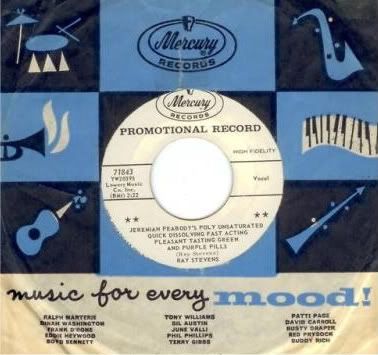
The first commercial success for Ray Stevens as I covered in a previous blog entry was this 1961 single about a wonder drug that is guaranteed to cure everything. I believe Ray was intentionally grabbing for attention when he officially titled the song "Jeremiah Peabody's Polyunsaturated Quick Dissolving Fast Acting Pleasant Tasting Green and Purple Pills". The single, issued by Mercury Records, reached the pop Top-40 in 1961 and was a stepping stone onto an even bigger hit the following year, "Ahab the Arab". Jeremiah Peabody, a follow-up to his 1960 single about Sgt. Preston, established Ray as a comical artist...as some critics put it "...a singer of off-beat, interesting songs...". Sgt. Preston was a near-hit in 1960...then came Jeremiah Peabody in 1961...followed by "Ahab the Arab" in 1962...followed by "Harry the Hairy Ape" in 1963...and rounding out this cast of characters are "Speed Ball" and "Butch Babarian". In press releases and single reviews of this time period there was always emphasis placed on Ray's comedic characters...all the while the B-side's of those songs were typically pop and R&B-driven love ballads that the public at large weren't paying much attention to. In those days people apparently never thought to flip a single over and hear what was on the other side. This 1961 song became part of Ray's live stage show in 2009 during a segment that spotlighted the early '60s era of his career.
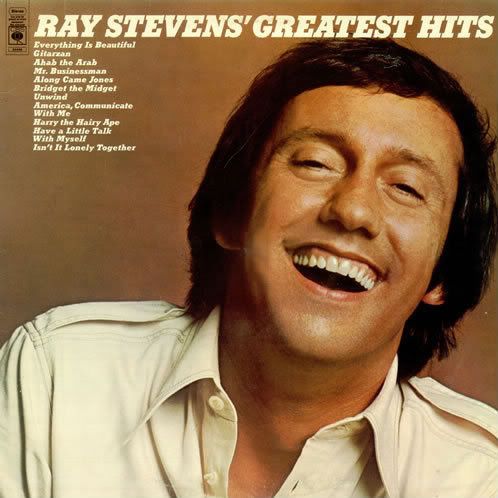
Issued by Barnaby Records in 1971 this Greatest Hits collection features a picture of Ray that was so popular that it later appeared on the cover of The Very Best of Ray Stevens which was issued four years later. This particular collection focuses largely on his late '60s Monument recordings as well as his first recordings for Barnaby in 1970. What many don't know is Barnaby Records bought the master recordings that Ray did on Monument...this is why a lot of his Monument and Barnaby recordings often appear together on the same compilations. It's also the reason why his Monument recordings were always copyrighted to Barnaby Records. If you look on the song credits on any number of Ray Stevens compilations during the '80s and '90s you'll see where his Monument recordings have the phrase Courtesy of Barnaby Records in the credits. Getting back to this 1971 release...it contains several hugely popular recordings from Ray at that time period. "Bridget the Midget the Queen of the Blues", issued late in 1970 and reaching it's popularity peak in early 1971, was the most recent hit on this collection. It hit the Top-5 in England. "Everything Is Beautiful", his 1970 #1 Grammy winner, is the biggest hit single on this collection. One of my favorites, "America, Communicate With Me", was a Top-20 hit on the Easy-Listening charts in 1970...it's included on this 1971 collection.
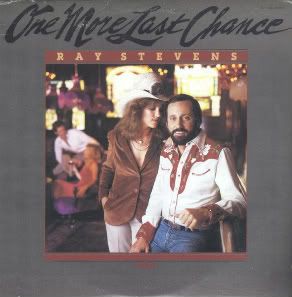

Shifting gears to 1981 we have One More Last Chance, a studio album from Ray Stevens on the RCA label. As you can see I'm working on a pattern...focusing on Ray Stevens products that were released 10 years apart from each other: 1961, 1971, 1981, 1991, 2001, and 2011. The 1981 album, also one of my favorites, is ballad heavy for the most part. It came along during the Urban Cowboy trend in country music...and one of the songs on this 1981 album told a vivid story about singles bars and the night life. That song, "Night Games", was the album's first single. It was released late in 1980 and was still being pushed in 1981...the single reached the Top-20 on the country chart. The album's title track featured a wonderful dose of steel guitar and electric guitar...the steel guitar solo's were great...as was Ray's performance. "One More Last Chance" reached the country Top-40 in 1981. The song was featured in the soap opera, Texas, as was Ray Stevens! Ray did a guest starring role as himself for a series of episodes culminating in his performance of "One More Last Chance" on screen.

The release of this collection in 1991 on Curb Records I feel was in response to a collection they released in 1990 on Ray titled His All-Time Greatest Comic Hits. This 1991 collection features a heavier dose of non-comical recordings from Ray Stevens with an alternate version of "There's a Star Spangled Banner" closing out the CD. An alternate version? Yes! Originally a song with this title appeared on Ray's 1989 album, Beside Myself. In 1991 the song was largely re-written but it retained the same melody and it was placed on this 1991 compilation. In the 1989 original Ray sings about a P.O.W. in the Middle East before switching to commentary about how the American flag is treated in the Middle East region of the world. In the 1991 re-write Ray sings about all the wars and battles that the flag's waved proudly through. In both songs the chorus and melody remain the same. The only recordings on the collection that would be considered comical songs are "Along Came Jones", Ray's 1969 pop hit. There is also the inclusion of "Would Jesus Wear a Rolex?". This song, from 1987, also appeared on His All-Time Greatest Comic Hits. Contemporary releases by Ray in 1991 included "Power Tools", "You Gotta Have a Hat", and "Working for the Japanese". Those recordings are on his #1 With a Bullet CD. 1991 is also the year he opened up his Branson, Missouri theater. He closed it in 1994.

Issued by Varese Sarabande in 2001 this All-Time Greatest Hits collection gathers up 23 recordings from Ray Stevens taken at various moments during the '60s and '70s. The collection has some great liner notes which appear in booklet form complete with pictures. Purists complained about the CD, at the time, because it didn't include the original recordings of a couple songs. "Ahab the Arab", "Harry the Hairy Ape", and "Funny Man" are featured here via late '60s re-recordings. Originally those three songs were recorded in 1962 and 1963 but the CD focuses on the 1968 soulful re-recording of "Funny Man" and the more widely distributed 1969 versions of "Ahab the Arab" and "Harry the Hairy Ape". Outside of those three recordings everything else represented here are the originals. The CD kicks off with the obscure 1960 single, "Sgt. Preston of the Yukon". This is one of the few collections that feature the recording. The collection does a nice job at showcasing several recordings from Ray that often go over-looked on other collections. "Everybody Needs a Rainbow", a great inspirational song from Ray, rarely gets much coverage so I was glad to see it emerge on this CD. The recording came along in 1974 but yet everything Ray did in 1974 seemed to be over-shadowed by "The Streak"...a single that sold more than five million copies world-wide and is track 19 on this collection. In late 2001 Ray released the topical "Osama Yo' Mama" which eventually sold more than half a million copies and became one of the biggest selling country singles of 2002. This was among the many recordings that emerged in the months after the September 11th terror attacks. Some critics, who obviously weren't in the mood for comedy, criticized Ray's choice of response and pointed out that other entertainers were serious in their reaction to 9/11. Of course, other critics understood that Ray uses humor to address situations going on in the country and the world, and that "Osama Yo' Mama" was a perfect outlet for him.
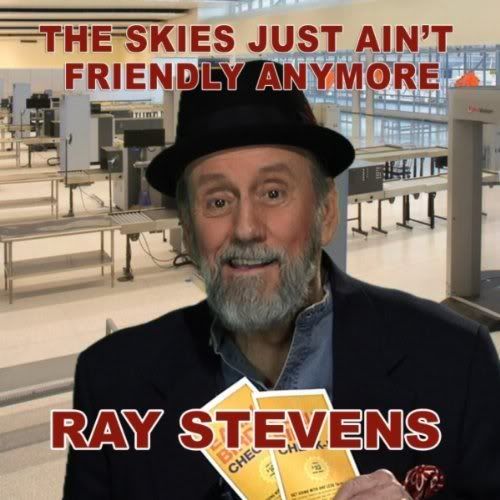
Now we're up to 2011! I was originally thinking about posting pictures of Ray during the last 50 years but when I went to look for some pictures of him from the mid '60s I couldn't find them. I know I have them...somewhere...but at the last minute I decided on this concept. "The Skies Just Ain't Friendly Anymore" is the most recent commercial single from Ray Stevens. The recording, poking fun at the TSA, is his first single of the year and it's music video on You Tube has gotten over 136,000 unique views. The song is part of Ray's Spirit of '76 collection. The song came out at a time when the enhanced pat-downs and security screening at airports, dictated by the TSA, was all over the news. Ray went on a radio call-in tour during much of February 2011 to promote the single and the video. As is the case with topical material, by late March, the TSA wasn't getting much of the headlines as they were in late January and into February...and as a result this particular recording met the same fate. He's currently working on a new music video set to be released at some point in early May titled "Obama Budget Plan".
April 2, 2011

Ray Stevens and the Golden Touch...

Not counting the 4 years Ray Stevens spent working his way into eventual super-stardom (1957, 1958, 1959, and 1960), 2011 continues to be the Golden Anniversary of his 1961 arrival at Mercury Records and the 50th anniversary of his first Hot 100 hit, "Jeremiah Peabody's Green and Purple Pills".

1962: Gold Single - "Ahab the Arab"
1969: Gold Single — "Gitarzan"
1970: Gold Single — "Everything Is Beautiful"
1970: Grammy — "Everything Is Beautiful" (Best Male Pop Vocal Performance)
1974: Gold Single — "The Streak"
1975: Grammy — "Misty" (Best Arrangement)
1980: Nashville Songwriters Hall of Fame
1980: Georgia Music Hall of Fame
1984: Gold Album — "He Thinks He's Ray Stevens"
1985: Gold Album — "I Have Returned"
1986: Music City News Comedian of the Year
1986: #1 Country Album - "I Have Returned"
1987: Music City News Comedian of the Year
1987: Platinum Album — "Greatest Hits"
1987: Gold Album — "Greatest Hits, Volume Two"
1988: Music City News Comedian of the Year
1989: Music City News Comedian of the Year
1990: Music City News Comedian of the Year
1990: Gold Album — "All-Time Greatest Comic Hits"
1991: Music City News Comedian of the Year
1992: Music City News Comedian of the Year
1992: #1 Home Video — "Comedy Video Classics"
1992: Multi-Platinum Home Video — "Comedy Video Classics"
1993: Billboard Home Video of the Year - "Comedy Video Classics"
1993: Music City News Comedian of the Year
1993: Platinum Home Video — "Ray Stevens Live!"
1994: Top-5 Home Video - "Ray Stevens Live!"
1994: Music City News Comedian of the Year
1995: Platinum Home Video — "Get Serious!"
1995: Country Weekly Golden Pick Award: "Best Comedian"
1997: Top-5 Home Video - "Get Serious!"
2001: Atlanta Country Music Hall of Fame
2002: Gold Single — "Osama Yo' Mama"
2009: Christian Music Hall of Fame
2009: "We The People" receives 2 million unique views on You Tube
2010: "We The People" receives 3 million unique views on You Tube
2010: "Come to the USA" receives 3 million unique views on You Tube
2011: "Come to the USA" receives 5 million unique views on You Tube

I didn't list the numerous publisher awards that Ray's been a recipient of because they're too numerous, for one thing, and I don't have an accurate listing of the song's. I know of a handful of songs associated with Ray that were awarded BMI publisher certificates starting with 1969's "Gitarzan" and ending with a Sammy Kershaw recording in 1994 titled "I Can't Reach Her Anymore"...but I don't have an exact total...I believe his publishing company received a certificate recently for the song "Bad Angel" which one of Ray's publishing companies was responsible for (and one of his daughters co-wrote). I don't believe there's a list available of all the publisher certificates and citations that's he's gotten through the years. It would be great if such a list would become public.

February 14, 2010

Ray Stevens: Notice the Difference?

PhotobucketPhotobucket
Each of these Greatest Hits CD's have the same songs on them but each of them feature a different cut-out picture of Ray. Curb Records issued this collection in May of 2008. The ten songs on this collection were lifted from the Box Set collection, a project that was issued in the middle of last decade. It's my understanding that the CD on the left was issued second while the CD on the right was issued first. I really don't know, other than from a collector's point of view, why Curb issued the CD with different pictures. My guess is future collectors may want to have a copy of each CD since the cut-out of Ray appears different on each release.

"Losin' Streak" is the name of a song and an album that Ray issued in 1973. The song is about a guy who can't give up his gambling addiction. It isn't a slow ballad...on the contrary, it's an electric guitar heavy up-tempo number. The Losin' Streak album is the one Ray once remarked that he put a lot of money into and recorded it in a brand new state of the art recording studio, by 1973 standards, but none of the songs became hits. The album has yet to be re-issued on CD. The rest of Ray's material on the Barnaby Records label, 1970-1975, is readily available on CD and Mp3 except the Losin' Streak album. The album featured a first...a big picture of Ray Stevens with a beard.

When I obtained my copy of the album several years ago it was like finding gold...well, I should say it was like finding gold when I came across it on-line for sale. When I played the album it was wonderful to hear and I won't hide how I felt...it was exciting hearing a lot of songs of Ray Stevens that up until that point in time I had never heard. The album ran the gamut of emotions, too. To this day I have no idea why it's never been re-issued on CD for exposure to a current audience. I feel that the lack of hit songs doesn't diminish the album one bit. There are 11 songs on the album. A few of the songs do find their way onto compilation projects from time to time but as far as an official re-issue of this album on CD there's been no such luck...as if the album is literally on a losin' streak.

1. Losin' Streak
2. Just One Of Life's Little Tragedies
3. Inside
4. Things Work Out
5. Bye Bye Love
6. Being Friends
7. Idaho Wine
8. This Is Your Life
9. Laid Back
10. Easy Lovin'
11. What Do You Know

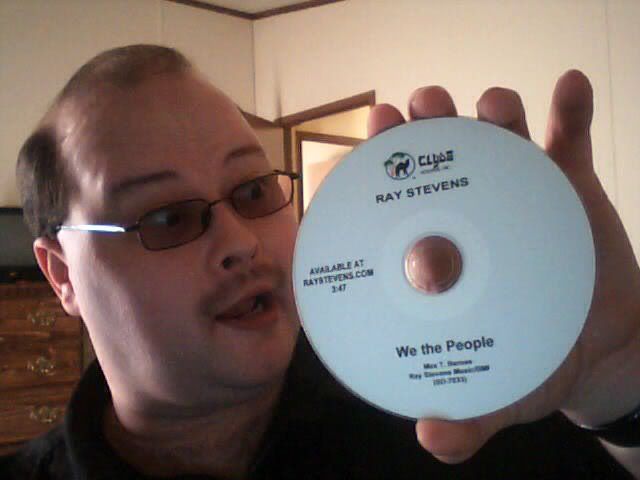
The physical copy of the Ray Stevens single, "We The People", arrived in my mailbox a few days ago. The single as you can see is issued by Clyde Records. I do not know if Curb Records will at some point issue the upcoming CD to retail stores or not. Curb often releases Ray Stevens CD's to retail stores several months after the original release on Ray's own label. The music video hit count at You Tube is 2,668,402 as of this writing. As we get closer to late February I'm hoping that we hear an official release date for the upcoming album. As of now I'm still holding late February as the time frame for the release. I am also hoping more music videos will be forthcoming, too! In the back of my mind I have an idea of what the follow-up song will be and if I'm correct I'd love to see a music video made of it.