Showing posts with label love ballads. Show all posts

March 20, 2024

Ray Stevens: Singing about Women, Part 4

Hello fans of Ray Stevens!! We only have 11 more days left in the month of March and so in this installment of love songs from Ray Stevens we pick up in the year 1977. Ray was no stranger to love ballads but during his years at Warner Brothers (1976-1979) and RCA (1980-1982) there were a whole lot more love ballads per album than at any other time. Well, that's not an official stat but it certainly seems like Ray was singing more love songs than ever.

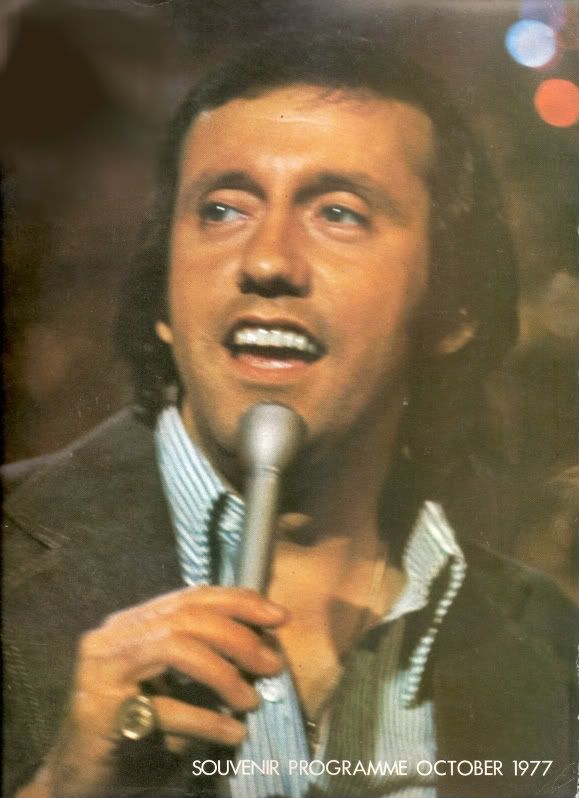
Here we have the great Ray Stevens, in performance, in 1977 belting out one of those love songs. Completely lost in the song as anyone can see from looking at the photo. The album released that particular year was almost completely written by Ray. There were 10 songs on the album and Ray wrote 9 of them. Feel the Music, the name of the album, also features an unusual album photo. On the front of the album there's an illustration of a stereo speaker. On the back of the album there's an illustration of the back of a stereo speaker. The idea behind the album's cover art ties into the title track, "Feel the Music", literally. I come across a music critic's review of the 1977 album a couple of years ago while browsing online. The critic described Ray's style as bluesy-country. "Feel the Music", production wise, is marvelous as practically every Ray Stevens production is. The song has a catchy melody and at various moments Ray sounds as if he's totally in the spirit as the production takes on a gospel vibe. It's an inspirational song. Some of the love ballads on the 1977 album happen to be the exquisite "Road Widow", a song about a traveling musician constantly on the road but constantly thinking of the wife waiting at home. I'd never heard the expression, road widow, before but it's a neat song title for this kind of lonely, road weary song. How many of you are familiar with the phrase 'cheery sad song'? There shouldn't be hardly anyone familiar with the phrase since I just made it up. The phrase describes a sad love song with an up-tempo sing-a-long arrangement. A great example of this happens to be "Alone With You". When you see the title of the song while reading the track list on the album you'd think a song with a title like that would be a full-on, heavy romantic ballad. Well, it isn't.

"Alone With You" is a sad song about a couple who have lost the spark they once had and that the love is all gone and he sings "I'm all alone with you". The music arrangement is up-tempo and bouncy, as mentioned. Now, staying in the same vein, we have the mid-tempo bluesy "Blues Love Affair". That particular song is about a guy who's more or less unlucky in love and all his relationships cause him to be down in the dumps.. causing him to feel as if his love life is just a love affair with misery and the blues. The bluesy-country flavor continues with "Junkie for You", where Ray uses a man's intense desires for a woman as something comparable to an addict. It's a song that only Ray could've come up with.

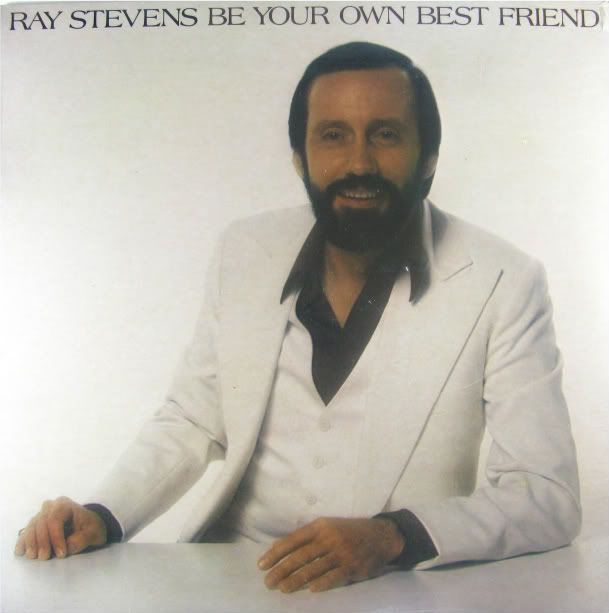
Ray issued two albums in 1978. The first release was his salute/tribute to the music of the 1950s and 1960s. It was specifically rhythm and blues songs that crossed over to the pop chart. The album title, There is Something On Your Mind, is named for the album's closing number. It's a classic that's narrated frenetically. Ray provides commentary on both the front and the back of the album cover. He explains his reasons for recording the album. Then, on the back of the album, commentary from Ray appears underneath each track explaining his decision for recording it and giving some history behind each song. Every track on the album is a love song. It includes his renditions of "One Mint Julep", "Money Honey", plus several medley performances "Dance Trilogy", "Old Faithful Trilogy", and "Banned in Boston Trilogy". The latter features abbreviated performances of "Sixty Minute Man"/ "Work With Me, Annie"/ "Annie Had a Baby". The second album of 1978 was the more conventional album. Titled Be Your Own Best Friend it centers around love ballads, for the most part, and most of the love songs are performed in a soft-rock/Easy-Listening flavor. The one that features this touch the most is the inspirational "With a Smile". 


The love songs found on the album are "You're Magic" (one of my all-time favorites), a soft re-recording of "You've Got the Music Inside", and the majestic "L'amour". That recording is another of my all-time favorites. It also has a neat backstory. Ray mentioned in an interview in the early 1990s that while he was on tour overseas he had heard one of the most beautiful melodies but couldn't understand the lyrics because the singer was French. Ray eventually found out the French recording artist's name and the title of the song. The singer/writer was Gilbert Becaud. Ray got permission to use the melody and he wrote English lyrics to it. "L'amour" is fabulous.. the music and Ray's singing.. it's heavenly. The album credits both Gilbert Becaud and Ray Stevens as the writers. There are a couple of sad love songs on the 1978 album and those are "Two Wrongs Don't Make a Right", more of a song of reconciliation, but we're not told if the pair patched things up or not. "Comeback" is a fast tempo song where Ray pleads and begs for the woman to comeback and don't hesitate. "The Feeling's Not Right Again" would become the name of Ray's 1979 compilation album on Warner Brothers but it made it's debut on Be Your Own Best Friend. The song deals with a man who can't seem to find his soul mate since every time he gets into a relationship it just doesn't have much feeling to it. 

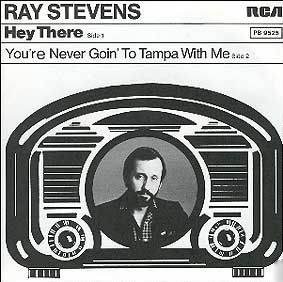
In the latter half of 1979 Ray moved to the RCA label. His first project for the label happened to be his first comedy album since 1974. Shriner's Convention hit early in 1980, the first all-comedy studio album from Ray since Boogity Boogity. The album featured the hit title track and a couple of other recordings became fan favorites. As far as love songs go there happened to be a couple of bizarre ones with it being a comedy album after all. One of the most clever love songs is "You're Never Goin' To Tampa With Me". The women in their southern accents pronounce the word, tamper, as tampa. So, when Ray hears all the women he encounters during Spring Break say that he's never going to tampa with them it confuses him...considering he wasn't planning on going to Tampa anyway. The song doubles as a neat tribute to Florida, though, as Ray name drops quite a lot of famed beaches and cities. 

"The Last Laugh" has Ray singing about multiple ways he'll end his life as a result of being treated badly by a former lover. "Rita's Letter" is a song about a woman that receives a letter from her second husband telling her that he'd be in the neighborhood and would she like to reunite. Eventually they come face to face and she learns that he's changed his name from Beauregard to Nirvana and is part of a religious cult wearing a robe and pony tail. In "The Watch Song" Ray tells the story of being in a bar room fight. In the song Ray's accused of being the other man in a woman's life and her husband wants to fight. They fight and the guy breaks Ray's wristwatch and it causes him to snap. Ray beats the man up, too much it seems, because the guy dies. Ray's character finds himself headed to life in prison and an eventual death sentence. Throughout the song Ray wonders aloud and prays John Cameron Swayze will help him get out of prison and off death row. 

November 27, 2023

Ray Stevens: 1995 'Cornball' CD

Hello fans of Ray Stevens!! I came across a CD copy of the 1995 Warner Brothers CD, Cornball, for sale on eBay. The seller resides on the east coast. When I saw the CD listed on eBay it had me thinking, once again, of Ray's years on Warner Brothers (1976-1979) and how the Cornball CD isn't available for online listening like the other two compilation companion CD's happen to be. In 1995 the record company issued three compilations on Ray's years at the label: Cornball, Do You Wanna Dance?, and The Serious Side of Ray Stevens. The latter two CD's can be found either as digital downloads or are able to be heard on streaming sites. Cornball, for whatever reason, hasn't been as easily accessible. That particular CD collects ten of Ray's recordings during that mid to late '70s time period. In fact, all of the CD's showcase that time period, but because Cornball features his 1979 recording, "I Need Your Help, Barry Manilow", it's the one compilation from 1995 to feature each year he was with Warner Brothers: 1976, 1977, 1978, and 1979. How come? Well, "I Need Your Help, Barry Manilow" was Ray's only recording in 1979...meaning that the other two CD's focus on 1976, 1977, and 1978. Cornball, as an album title, is misleading. 

The title would have you believe that this CD is filled with humorous recordings and nothing else. The fact is that "Cornball" is the name of a song that Ray wrote...a love ballad...and it was originally released on his 1976 album, Just for the Record. There are three or, possibly, four, humorous songs on this ten track collection depending on what you might consider funny or comical. There's his two chicken clucking recordings as The Henhouse Five Plus Too titled "In the Mood" and "Classical Cluck". There's also the parody, "I Need Your Help, Barry Manilow". Those are the three, without a doubt, comical recordings. I've read vintage music essays of the 1950s and most of those consider "One Mint Julep" a comical/novelty song. That particular recording, track 7, comes from his 1978 album, There Is Something On Your Mind. It had been a hit in 1952 for the rhythm and blues group, The Clovers. That particular 1978 album is Ray's salute/tribute to the music of the 1950s. "Money Honey" and "Your Cash Ain't Nothin' But Trash", tracks 4 and 8 on the 1995 CD, also come from that 1978 album. 

When I heard "One Mint Julep" for the first time on the 1995 compilation CD I didn't hear it as a humorous song...but apparently those who find it comical are those who know more about drinking alcohol than I do. 

The song is about a guy who has drank numerous mint juleps and has learned that, while under the influence, he's gotten himself into a relationship he didn't want. Music essayists and historians say the humor comes from a guy getting himself drunk by way of what's mostly a drink observed for special events (like the Kentucky Derby) and isn't what most would commonly want to get drunk on. 

Here is the Cornball track list:

1. In the Mood; 1976
2. I Need Your Help, Barry Manilow; 1979
3. You Are So Beautiful; 1976
4. Money Honey; 1978
5. Cornball; 1976
6. Dixie Hummingbird; 1977
7. One Mint Julep; 1978
8. Your Cash Ain't Nothin' But Trash; 1978
9. Save Me From Myself; 1977
10. Classical Cluck; 1976

February 19, 2023

Ray Stevens: Slow Dance YouTube Playlist

Hello Ray Stevens fans!! In this blog entry, as you can tell, it's focusing on one of the 4 albums released in the Iconic Songs of the 20th Century box set. This time around it's Slow Dance. Now, compared to the other three albums, this one is much more somber and slower paced as you could probably guess. The concept of the album is to recapture the feel of the slow ballad songs that people would slow dance to in a bygone era. If you have this album then you already know not every song is slow...there are a couple that are mid-tempo...but the overall feel of the music remains slow love ballads. I'd say the only song on the album that pushes the tempo a little bit, as far as the music accompaniment goes, is his rendition of "The Great Pretender" but definitely "Answer Me", a song he'd previously recorded several decades earlier as "Answer Me, My Love". There are 12 songs on the album and the playlist is on YouTube...and anybody can listen to the album or any other Ray Stevens album that's been uploaded to the site. Your favorite performances may not be mine. Do you want to know what my favorites are from this album? I won't mention them all but a couple are "Slow Dancing", "Stardust", "Answer Me", and the album closer, "What a Wonderful World". All of the songs have been re-arranged in a Ray Stevens style and so, if you're thinking that these songs will be carbon copies of previously recorded versions by other recording artists, you'll be in for a major surprise. Ray opens the album with his soulful rendition of "Only You and You Alone". 

I'll probably come across like a broken record, on repeat, when I say that this album and the other three that make-up the Iconic Songs of the 20th Century box set are must-have for any Ray Stevens fan. I especially feel that those out there who say they prefer the more serious side of Ray Stevens should take a listen to this album and the other three: Great Country Ballads, Melancholy Fescue, and Nouveau Retro. Those three, along with Slow Dance, represent some of the most recent serious recordings from Ray Stevens. Those of you that have been waiting for some non-comical recordings from Ray, well, those albums should be an answer to your wishes.

You can listen to the Slow Dance album when you click HERE. While at YouTube, and after you listen to Slow Dance, visit the other YouTube playlists of the three albums mentioned above. 

September 14, 2021

Ray Stevens: Slow Dance YouTube playlist...

It's me once again!! In this blog entry I'll be embedding a YouTube link to the Slow Dance playlist. I've previously provided links to the YouTube playlists of three Ray Stevens albums that were released earlier in the year: Great Country Ballads, Melancholy Fescue, and Nouveau Retro. This one, Slow Dance, was released in between Melancholy Fescue and Nouveau Retro. Ray released the albums, in digital download format, one per month: February, March, April, and May. In July all four digital downloads were issued in CD format and packaged in a box set titled Iconic Songs of the 20th Century. The Slow Dance album was the one that could easily be described as collection of Ray Stevens singing romantic ballads. As you can tell from the album cover the emphasis on romance, love, and all that comes with it would be the focal point throughout. The title track refers to the song "Slow Dancing", a song that that was a pop hit for Johnny Rivers and a country hit for Johnny Duncan. The song's subtitle is "Swaying to the Music". If you're familiar with my blog entries you'll know that I don't include subtitles when it comes to song titles or album titles. I use the main title almost always. Anyway, in addition to Ray's rendition of "Slow Dancing" you'll also hear his renditions of songs as diverse as "Stardust" and "Only You and You Alone" to "Unforgettable" and "What a Wonderful World". Ray also gives us his take on "The Great Pretender". You can listen to all of the audio tracks from Slow Dance on it's YouTube playlist, provided by Curb Records, located HERE

Ray uploaded some brief promo videos for each of the four releases. This promo for Slow Dance arrived on YouTube in July...

May 9, 2021

Ray Stevens: Country Music People...Month of May Issue...

It's me once again...and in this blog entry I'm posting about an article written about Ray Stevens in the May 2021 issue of Country Music People. This magazine, as far as I know, isn't sold at news stands in retail stores nor is it in the magazine racks of retail stores. The origin of the magazine is European. A single issue of the magazine is 4 pounds 99 pence. The interviewer is Duncan Warwick. Ray posted images from the magazine on his Facebook page...and if you click on each image and then click the magnifying icon you'll be able to read the entire interview. 

The interview concentrates a lot on Ray's current music and the projects that he's wanting to release in the not too distant future. Later this month he'll be releasing the fourth digital album in his series of releases...in June the 4 digital albums he'll have released will become available in CD format in a Box Set. Then he'll be issuing another series of 4 digital albums followed by a volume two Box Set!! 

If you're a fan of Ray Stevens as I am...and you must be since you're reading this...anyway, if you're a Ray Stevens fan then this is like heaven on Earth right now...a lot of new recordings flowing from the legend...and even more new recordings from him on the way! If you want to purchase a copy of the magazine containing the interview...you can read about the publication and it's price by clicking HERE. If you want to just read the contents of Ray's interview then visit his Facebook page and click the images in the post dated Saturday May 8, 2021 at 12pm.


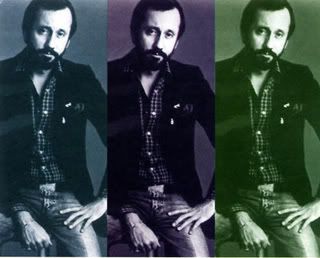
The banner above is something I created one day just for the hell of it. I took an image of Ray Stevens that just happens to be one of my favorite images from one of the various compilation albums that were released on him. I tilted the photo and then inserted the photo of Ray from his 1975 album, The Very Best of Ray Stevens, and created that phenomenal collage! No, in all seriousness, I don't think it's that phenomenal...but I like it and so that's why I'm sharing it with you all.     

February 25, 2021

Ray Stevens sings "Written Down In My Heart"...

Hello all once again!! As we wait in anticipation for the release of the brand new Ray Stevens album let's take a look at a love ballad that he recorded for his 1982 album, Don't Laugh Now. This album was released on RCA Records and it was a blend of mid-tempo songs, up-tempo songs, and ballads. I have it on vinyl and cassette tape. "Written Down In My Heart" was the album's first single release and it reached the Country Top-40. The song comes from the pen of a writer credited as W.T. Davidson. I looked him up and there's only a couple of songs credited to the writer...and it's Ray's song that was the biggest hit for the writer. Now, the website I looked at only focuses on single releases...so it's hard to tell if the writer had any album cuts by recording artists. An album cut, or album track, is what's referred to as a song that appears on an album but wasn't released commercially as a single. 


The song, as you can tell if you're listening to it as you read, is a love ballad. It was released as a single in February 1982. RCA even released a gold color vinyl promo single...copies of it can sometimes be found on eBay and images of it can be found on websites that specialize in vinyl singles. The performance comes from Ray's appearance on Barbara Mandrell's television show, Barbara Mandrell and the Mandrell Sisters. I created a four panel collage of Ray's 1982 album. I feature an image of the vinyl, cassette, and an image of myself and my copy of the cassette. As mentioned I have Don't Laugh Now on vinyl, too, but reaching for the cassette is a lot simpler than having to sift through my stack of vinyl. Ray has a sensitivity or a softness in his vocal performance...there were several displays of this throughout the 1982 album and in several album's prior...but it reached it's peak on this 1982 album. It may have had to do with the overall production that drew out that kind of vocalization from Ray. It's anyone's guess. 

When you take a look at the collage below you'll notice that there's more graphics/art work on the vinyl release. The neon '50s style rock and roll look with the splashy Don't Laugh Now written in that manner was something of a tie-in with the song's opening track...the bouncy rock and roll flavored "Such a Night". There are several rock and roll inspired performances on here...musically speaking of course...Ray remains calm and pleasant vocally. In addition to "Such a Night" there's "Always There" and "Take That Girl Away". The love ballads are "Written Down In My Heart", "Don't Laugh Now", "This Old Piano", "Oh, Leo Lady", and "Why Don't We Go Somewhere and Make Love". There is one mid-tempo song on here, "Country Boy, Country Club Girl", and then there's the album's second single, "Where The Sun Don't Shine", done in a hand clapping sing-a-long southern gospel arrangement which belies the fact it's a humorous song about a romantic break-up. The cassette tape, if you notice, lacks the '50s style neon look and places the album's title and song publicity underneath Ray's photo. I've got a cassette copy of his 1980 album, too...I've always been on the look out for a cassette version of his 1981 album to complete the RCA studio albums in cassette format. Bob Montgomery co-produced this album with Ray. Also, the album's keyboard player, Ron Oates, arranged "This Old Piano", "Written Down In My Heart", and "Why Don't We Go Somewhere and Make Love". Ray arranged the other seven songs on the album.    


October 18, 2020

Ray Stevens: Hee Haw performance of "You've Got the Music Inside"...

Among the several YouTube video clips from Ray Stevens that have arrived over the last several days I'm selecting the 1980 Hee Haw performance of "You've Got the Music Inside". Ray wrote this song and it originally appeared on his 1973 album, Nashville, as a slow ballad. He re-recorded the song in 1978 for his Be Your Own Best Friend album and he gave the song different instrumentation and a slightly different melody...his vocalization had also changed dramatically over the period of time between 1973 and 1978. 

I think his vocals began to shift at some point during the recording of his 1975 Misty album and the release of his 1976 album, Just For the Record. He gave the 1978 recording of "You've Got the Music Inside" a softer vocal delivery. I think he may have deliberately recorded it softer...several other songs on that album carry the soft vocal touch: "With a Smile", "Daydream Romance", and the ultra-soft vocalization heard on "You're Magic". That particular 1978 album had some soft vocalization but it didn't carry over onto his other 1978 album, There Is Something on Your Mind, a very eclectic album where Ray sings his favorite classic rhythm and blues songs. In Ray's television appearances in the late '70s and early '80s, whenever he'd perform "You've Got the Music Inside" it was never like the 1973 or 1978 recordings. In these performances he completely re-arranged the opening to a hand-clapping sing-a-long of the verses and the chorus. Then, as you'll see and hear, he slows down the music to how it sounded on his 1973 recording...and he sings part of the song as a ballad, briefly, before kicking up the tempo once again. He performed this arrangement of the song on an early '80s episode of Pop! Goes the Country and that arrangement accompanies him in this 1980 performance on Hee Haw. The link takes you to a video found on Ray's Facebook video page. The YouTube video I originally pasted in this blog entry became unavailable because the YouTube user's page was removed/deleted. I think I used a couple of other videos of Ray Stevens from Hee Haw from that YouTube channel, too, in some earlier blog entries.

July 29, 2020

Ray Stevens sings "My Melancholy Baby"...

If you're a longtime fan of Ray Stevens, as I have been, you're very familiar with his catalog of music. He's been recording since 1957 and releasing albums since 1962...and along the way not only has he recorded hundreds of novelty songs he also recorded just as many ballads. His pop standards album from 1975, Misty, featured Ray's renditions of pop songs of the past with new arrangements from Ray but "My Melancholy Baby" wasn't among them. It was his last studio album for Barnaby Records. "Misty", "Indian Love Call", and "Young Love" were issued as single releases.

In early 1976 "Mockingbird Hill" was issued as a single...but it competed with another single from Ray, "You Are So Beautiful", his debut single for Warner Brothers. Now, of course, the single Barnaby Records issued early in 1976 didn't get much promotion/publicity but "You Are So Beautiful" ended up hitting the Country Top-20 for Ray.

Yesterday on Ray's social media pages a performance by him from his summer 1970 television show emerged. "My Melancholy Baby" originated in 1912 and eventually became a pop music standard recorded either as an instrumental or a vocal. Some of the legendary names affiliated with the recording are Harry James, Bing Crosby, Judy Garland, Connie Francis, and Tommy Edwards. When Ray performed the song in 1970, if you do the math, it was 58 years old at the time...and if you do additional math you'll discover the song is 108 years old this year!  


August 17, 2014

Ray Stevens: A Variety of Music...

It's no surprise that I love the music of Ray Stevens!! During the time of this fan created blog's existence, if you've read closely, you'll know that I love, love, LOVE the late '70s/early '80s time period of his career a whole lot. I also love other era's of his career, too...but there's an unexplainable gravitation I have with his late '70s/early '80s recordings.

In times past I've attempted to find an explanation as to my fascination with that time period in his career but it's best to just enjoy the music and leave the psychology to Ray's comical alter ego, Sickmind Fraud.

1982's "Written Down in My Heart", a marvelous love ballad, is performed by Ray in this clip...


20 years earlier, in 1962, Ray's big single that year happened to be "Ahab the Arab". A clip of Ray singing the song, in 1965, has surfaced on YouTube once more. It's been uploaded by others in the past and this is the most recent upload...


Jumping a short 5 years later, in 1970, notice the change in stage clothing and the thicker hair. Ray Stevens hosted the summer replacement series for Andy Williams in 1970 and among the many songs Ray performed on the summer series is a pop hit that a lot of people, including myself, refer to as "My Baby Wrote Me a Letter". It's officially titled "The Letter", and it became a huge hit for The Box Tops in 1967. Joe Cocker did a version, too, and his recording was actually the current hit version heard during the summer of 1970, the time of this performance from Ray Stevens.

Now, of course, I'm not naive...so I don't expect blues, soul, or R&B purists to lovingly embrace the Ray Stevens performance of this song...but I happen to be a fan of Ray Stevens and I'm sure those that stop by here are, too, and we definitely embrace all of Ray's performances and this is another great one...

October 26, 2012

Ray Stevens: Golden LP Series, Part Fourteen...

The fourteenth studio album from Ray Stevens arrived in 1977 and was a return, of sorts, to his earlier LP's in that most of the songs were self-written. Feel the Music, the album, was filled with smooth sounding country music aimed at a general audience. In other words it was in the category of pop-country or country-pop, depending on which music critic one was reading. Ray, to be fair, never marketed himself as a traditional country music singer but he began to have considerable television exposure and media attention within country music's ever expanding umbrella during this mid-late '70s time period and he was eventually marketed as a country artist once he joined Warner Brothers. I suspect the fact that he was never marketed as a traditional country music artist is a big reason why he's never been elected to the Country Music Hall of Fame...human beings elect the members and it's human nature to let one's own biases or perceptions play a role in the decision making process. As mentioned, the LP features plenty of songs written by Ray. The emotions that are depicted throughout run the gamut from passionate, playful, happy, somber, melancholy, sad, and spiritual. The opening track, "Feel the Music", is an inspirational number about never giving up in life, be your own person, and always strive to accomplish whatever one sets out to achieve. It's one of the several written by Ray.

The back of Feel the Music shows a publicity photo of Ray Stevens that was used during that time period. The photo would surface several times throughout 1977 and into 1978...even after Ray grew his beard for good. The front of the LP is an illustration of a stereo speaker while the back of the album illustrates what the back of a standard stereo speaker looked like. A bit of trivia about the songs on this LP: the publishing is credited to Ray Stevens Music. Why do I bring that up? Well, prior to this 1977 album, all the songs that Ray published were under the Ahab Music Company name. This LP marked the first time his publishing was referred to by this new name. As far as the image goes I didn't think to take a picture showing the front of the album because that image could be found easily if one did an image search...yet seldom was shown of the LP's back cover and that's the reason why I took the picture. The front of the LP  is shown below. Obviously you all noticed that Ray's likeness doesn't appear on the front of the album...an unheard of concept for any recording artist...particularly one that was well established.

"Set The Children Free", a song written by Buddy Kalb, is a fascinating tale. The song has a religious/spiritual overtone as it tells of human behavior. It's a heavy song and Ray does a fabulous job on the recording. It's the only song on the 1977 LP that wasn't written by Ray. One of the more eye catching song titles on the album is "Junkie For You". It's a bluesy number in which Ray describes his addiction to the woman in his life. Do you want to know one of the best upbeat sad songs of all-time? The answer is "Alone With You". If you simply went by the song's title you'd think it was a passionate love ballad of some kind but it isn't! "Alone With You", with it's uptempo arrangement, tells the sad tale of a couple apparently in their final stages of marriage and how alone the two of them feel. It's arrangement will pull you in right from the start! Speaking of arrangements...the LP features another uptempo, heart pounding sing-a-long in the name of "Dixie Hummingbird". This was one of the two singles released from the album. "Dixie Hummingbird" tells all about a woman from the south that Ray can't get enough of. He hums along during the instrumental break. The single came ever so close to reaching the Country Top-40...it peaked several spots below #40...but it deserved a much better fate. At the other end of the emotional roller coaster there's "Blues Love Affair", a mid-tempo song dealing with the various complexities of love and it's motivation, from true love to one night stands, and everything in between. "Save Me From Myself", a gospel inflected number, tells the story of a man who can't stand being alone and that he's become mentally and physically unstable as a result. The only thing that can cure this, he says, is for the woman to return as soon as possible and rescue him from self-destruction.

"Road Widow", another all-time favorite, tells the story of an entertainer who spends a lot of time on the road. This distance from his wife, in his mind, must cause her to feel he's no longer alive and as a result she's referred to as a "Road Widow"...as he sings about the certain death of a relationship...but ironically he reassures himself that she knew and accepted the kind of life he led traveling all over the country and so there shouldn't be anything to worry about. "Daydream Romance" carries the same traveling man scenario as Ray sings about being on the road and fantasizing about an unspecified lover and how he can't wait to turn the daydreams into reality.   

"Get Crazy With Me" was the other single release from Feel the Music. In this recording Ray sings about breaking away from what's perceived as the norm. In the song Ray sings about a man whose had patience when it comes to a love life but seeing how patience leads to impatience, the man takes a plunge and decides to change his calm, complacent attitude toward not being in a relationship into a no holds barred, risk taking approach where he finds himself asking a woman to get crazy and wild with him...if only for one night. At the core of the song is the viewpoints of a lonely guy whose had a run of bad luck when it comes to women and now he has a chance to change all of that. The song featured an ear catching kind of arrangement...at one moment in the song it sounds as if laser beams are going to shoot from the speakers as a barrage of Sci-fi sounds take control and effectively blast the song into orbit. The sound was not necessarily something that was commonplace on country radio in 1977...but it did reach the popularity charts for a couple of weeks...peaking in the 80's on the Country chart. The song obtained several major publicity efforts...the one that was most impressive was the generous multiple page story in Country Song Roundup titled Get Crazy With Ray Stevens shown below...

The Feel the Music album reached the Top-50 on the Country Album chart. I think it's a great album and I'm sure the more dedicated fans of Ray Stevens then and now still love this album. It's one of my favorites in a long line of favorite Ray Stevens releases. His publishing company scored a big hit in 1977 when "Way Down" became a hit for Elvis Presley. It was the last hit single for Elvis during his lifetime and it features prominent bass vocals from J.D. Sumner. In the meantime, Ray was going about his business of doing concerts, recording songs, appearing on TV, writing songs, producing sessions, publishing songs, and becoming more and more familiar to country music audiences...amongst all of this activity emerged an LP with hardly any fanfare or major publicity. It sounds like to me that something was happening in early 1978...something that one just couldn't get out of one's minds...something...something...that certain something that leaps out at you when you least expect it...something was on Ray's mind and his fifteenth studio album elaborates on this. Be on the lookout for the next Golden LP Series installment...as we explore what was on Ray's mind with his follow-up release in early 1978.   

January 30, 2012

Ray Stevens and some of Those Great Albums...

Feel The Music, from 1977, continues to be one of the great albums from Ray Stevens. The album itself features a musical display of easy-listening pop and a couple of jazzy-country recordings. The label Ray recorded this for was Warner Brothers. I got ahold of this particular album several years ago from eBay and up until that point in time I had never saw what the back of the album looked like. On the back there's a publicity picture of Ray along with an illustration of the back of a stereo speaker. As you can see, the image that's on front of the album is the stereo speaker. The album contains 10 songs...9 of the 10 were written by Ray Stevens while the lone exception, "Set The Children Free", was written by Buddy Kalb. Interestingly, though, during the time that this album was released the music on here was considered mainstream country. This had to do with the simple fact that most major country music radio stations in the mid to late '70s were playing mostly up-tempo or slow ballad songs with a decidedly pop production and instrumentation. This style of pop-country being released by a whole host of country music acts inspired the creation of the television program, Pop! Goes the Country. In hindsight the music on Ray's 1977 album is much more in step with easy-listening and soft rock than it is with country music but nevertheless it was marketed at country music audiences in 1977 and as a result the album and the singles charted country. The album reached the Country Top-50 while "Dixie Hummingbird" and "Get Crazy With Me" were released as singles. "Get Crazy With Me" is a great song and it incorporates a lot of funky musical accompaniment...enabling some of the instrumentation to become non-verbal hooks. It reached the lower half of the Top 100 Country chart in 1977 during a chart run of less than 7 weeks. "Dixie Hummingbird", in the meantime, was the complete opposite. It's jazzy-country arrangement and uptempo delivery created a catchy recording that enabled the single to knock on the door of the Country Top-40, mostly through sales and steady airplay during the single's first few weeks on the market. Sadly, though, it peaked several slots below #40 on the Country single charts and didn't get the chance to really compete with the airplay heavy Top-40. It hung around on the charts for nearly 10 weeks, though. Some of the other songs on this album are "Alone With You", "Road Widow", "Save Me From Myself", the title track "Feel the Music", and "Junkie For You".

This Warner Brothers album from Ray Stevens, Be Your Own Best Friend, released in 1978, came into my collection in the late '90s. At that point in time I was beginning to track down Ray's vinyl albums but I never really had much of a chance to really expand on that until I got on-line in 2002 and was able to visit on-line auction sites and music stores that sold vinyl albums regularly. Up until 2002 I only had a couple of Ray's vinyl albums that a local flea market had for sale. This was one of the first vinyl albums of Ray Stevens that I was able to get my hands on in the late '90s. I had only heard a few of the songs on this album (thanks to the 1995 3-CD project that Warner Brothers issued!). I was obviously interested in hearing the songs whose titles I had long known of but up until then had never heard. "With a Smile" is a slow ballad and one that fits the mood that the album, overall, I assume was attempting to convey. "You're Magic" became one of my all-time favorite songs after I heard it the first time. You can also add "Comeback" to that category, too! In this song Ray sings like a man possessed...in the song he plays the part of a man who definitely wants the woman in his life to comeback to him. He makes this fact perfectly clear! I love the way the chorus goes and the sing-a-long feel. The album contains 9 songs and I think a lot of that has to do with the running time of quite a few of the songs. "Comeback", for example, is lengthy as is "L'amour", "Two Wrongs Don't Make a Right", "The Feeling's Not Right Again", and the title track, "Be Your Own Best Friend". Each of those songs are well over 3 minutes in length...with some close to 4 minutes.

Here's one of the more recent albums from Ray Stevens released on his own label, Clyde Records. 2010's We The People came together as a result of the viral success of his You Tube music video, also titled "We The People". The subject matter is political and as a result the video/song has it's fans and it's detractors. The album contains 22 songs which convey a political message but there are other songs on the collection that express patriotism and offer recognition to what's called small-town America and the values that consist in 'fly over country'. In fact, there's a song on this album called "Fly Over Country" which highlights the practice of some politicians who leave their relatively smaller hometowns for Washington, D.C. and only return to their hometown several weeks prior to election day. This album is not a ha-ha let's have a lot of fun kind of project even though the music videos of some of the songs on here, available on You Tube, are visually whimsical and light-hearted. The music video releases from this album include: "We The People", "Caribou Barbie", "Come to the U.S.A.", "Throw the Bums Out!", and "The Global Warming Song". Ray's 2004 single, "Thank You", was added to this 2010 album to add to the patriotic material. The other patriotic songs on here are "Let's Roll", "Stand Up", "The Fallen Ones", "Midnight in Baghdad", and his "Pledge of Allegiance/Star Spangled Banner" medley. Small-town America gets recognized in "Fly Over Country", "Safe at Home", "Dear Andy Griffith", and "Kings and Queens". The rest of the songs, in addition to the ones that were made into music videos, are strictly in the political vein: "We Are the Government", "Solar Powered Song", "Three Fractured Factions", "Obama Nation", "Sucking Sound", and "If 10% Is Good Enough For Jesus". If you're counting that's 21 songs, yes? There is one song on here that has nothing to do with politics or the military...it's his updated version of "Mr. Businessman" which was lifted from a concert a few years ago. He dedicates the song to a certain businessman who epitomizes the lyrics almost to a tee.

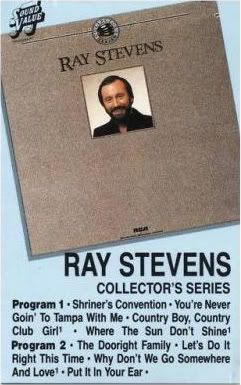
Released in 1985, this overview of Ray Stevens on RCA features 8 recordings. Collector's Series was the umbrella title for a lot of artists who recorded or still recorded for RCA at the time. Each release featured 8 songs and so that's exactly the amount of songs you get in the album spotlighting Ray Stevens. Unlike the other artists given the Collector's Series spotlight, Ray recorded for RCA for just three years: 1980, 1981, and 1982; although research shows he was under contract with RCA from late 1979 through early 1983. With only 3 studio albums to choose material from we get 3 recordings from his 1982 album, Don't Laugh Now, 3 recordings from his 1980 Shriner's Convention comedy album, and 2 recordings from his 1981 One More Last Chance album. A track list of 8 songs on a compilation album, no matter the artist, is something that I imagine is difficult to assemble. This 1985 release came into my possession in the early '90s. I already had a 1987 version of this album which removed 1981's "One More Last Chance" in favor of 1980's "Put It In Your Ear". This meant that the 1987 re-issue featured 4 songs from 1980, 1 from 1981, and 3 from 1982. The 1987 re-issue was released on CD in 1992. This collection was my introduction to 7 of Ray's RCA recordings...previously I had only heard "Shriner's Convention". His RCA recordings (1980-1982), like the Warner Brothers recordings (1976-1979), have never been kept in print for any extended amount of time. This 1985 release and the 1987 and 1992 re-issues remain the only compilations to focus exclusively on his RCA recordings. His Warner Brothers recordings haven't been in print since 1995...except for the Mp3 release of those 1995 CD's a few years ago. As far as studio albums go there's not been any CD re-issue of any Warner Brothers or RCA album by Ray Stevens...and for a lot of fans it just doesn't make much sense why those studio albums have yet to see the light of day in CD or Mp3 format.

January 29, 2011

Ray Stevens...Critical Reaction, Part 3...

I came across a comment from a web-page today suggesting that Ray Stevens only recorded 3 albums of non-comedy material. The person making the comment wasn't specific by remarking that he's aware of only 3 non-comedy albums or if he really believes that's all he's recorded. As the many fans of Ray Stevens are aware he recorded non-comical songs pretty much during his entire early career up until the mid 1980's. This point in time represents the turning point in his career where he decided to have comedy as the main focal point of his recording career. Some think Ray has always had comedy as the focal point of his career but those who think this have a lot of learn when it comes to Ray Stevens. In some of my earlier blogs in 2008 and early 2009 I put his non-comedy albums and songs front and center and in this blog entry I'll be doing the same thing just to reiterate that Ray had a long career releasing non-comical recordings prior to the mid 1980's and he definitely had more than just 3 albums worth of non-comical songs.

The following is a list of studio albums recorded by Ray between 1968 and 1983 which consisted of nothing but non-comical, serious recordings. Given that it's a list of studio albums I'm not going to reference compilation albums during those same years on this list:

1. Even Stevens; 1968 Monument
2. Have a Little Talk With Myself; 1969 Monument
3. Everything Is Beautiful; 1970 Barnaby
4. Unreal; 1970 Barnaby
5. Turn Your Radio On; 1972 Barnaby
6. Nashville; 1973 Barnaby
7. Losin' Streak; 1973 Barnaby
8. Misty; 1975 Barnaby
9. Just For the Record; 1976 Warner Brothers
10. Feel the Music; 1977 Warner Brothers
11. There Is Something On Your Mind; 1978 Warner Brothers
12. Be Your Own Best Friend; 1978 Warner Brothers
13. One More Last Chance; 1981 RCA
14. Don't Laugh Now; 1982 RCA
15. Me; 1983 Mercury

On the other side of the coin between those same years of 1968-1983, Ray issued the following comedy albums:

1. Gitarzan; 1969 Monument
2. Boogity-Boogity; 1974 Barnaby
3. Shriner's Convention; 1980 RCA

That's it! Between 1968 and 1983 Ray issued a grand total of 3 comedy albums. There were numerous compilation/greatest hits releases out during those same years emphasizing a lot of his comical recordings from the early and late '60s but as far as studio albums go he only recorded 3 comedy albums during that entire 15 year span.

Ray's first album is a Mercury release in 1962, 1837 Seconds of Humor. This LP, as well as a 1963 follow-up, This Is Ray Stevens, featured a lot of comical and non-comical recordings...they weren't exclusively all-comedy or all-serious. However, much of the comical recordings from those two albums, coupled with 1969's "Gitarzan" and a 1970 single, "Bridget the Midget", enabled Ray's image to become identified as comical...in spite of the serious recordings he was actually having hits with.

A lot of the comical songs that appear on a wide variety of compilation albums issued on Ray weren't necessarily hit songs in the conventional sense of the definition. More often those comical songs were lifted from studio albums and spotlighted on compilation LP's simply because Ray's biggest commercial impact came with the comical recordings...and for commercial potential it makes more sense to load a compilation project with what sells the strongest.

Music consumers tend to appreciate Ray's comical songs more and more and as a result it's those comical recordings which have the most commercial impact but yet critics tend to believe his non-comical recordings truly show off his talents. I feel both his comical and non-comical recordings equally show off his artistic talents.

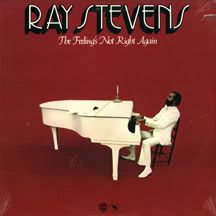
A 1979 LP, The Feeling's Not Right Again, was issued by Warner Brothers. I didn't include it in either list because it's a compilation album featuring material Ray recorded during 1976 through 1978...with just one new recording, "I Need Your Help, Barry Manilow". The Manilow parody became a surprise mainstream hit and apparently the label wanted an entire LP issued to promote the song...instead of it being available as a single-only...and so a compilation LP was issued with obvious emphasis on the new recording. I wrote a few blogs about this album and the song...one blog entry I wrote called The Parody of Barry springs to mind. You can find it in my archives off to the right.

Since 1984 Ray's marketed himself as a comedian as many of you know...and he's had a lot of success and impact since then with his recordings and lately, music videos, but let's never forget the non-comical recordings and that middle period of his career.

Gee, I remember starting this blog entry commenting on something I seen at a web-page suggesting Ray only recorded 3 non-comical albums...and here we are paragraphs later...it's a clear illustration of the impact Ray has had on our lives where we can talk and talk and talk...and talk...about Ray's career and music.

May 6, 2010

The Many Sounds of Ray Stevens...

Revisiting a familiar topic of mine is the many different styles and sounds throughout the career of Ray Stevens. Some fans have this feeling that Ray has to act, look, sing, and or dress only a certain way. I'm in the category of it doesn't really matter...I just like to hear Ray sing and talk. It doesn't phase me what he wears or how he walks, stands, looks, etc etc. Does this mean I don't notice what he wears or whatever? Of course not! I just don't let it take over my fandom to a point where the music takes a back seat. Mostly all singers have various styles of fans and I'm just describing the kind of fan I am. This particular 1987 release originally was released in 1985. Collector's Series was a wide ranging series of albums that RCA released on it's roster of artists...both current and former. I suspect the current roster had their albums issued first while previous artists on the label were issued separately. As I mentioned, the original issue was 1985. As you all can see, the actual picture of the vinyl album appears on this cassette re-issue from 1987. The only difference between the 1985 and 1987 releases are two songs. In the 1985 issue "One More Last Chance" appears where as in this 1987 re-release, "Put It In Your Ear" takes it's place. The songs with the number 1 next to their title represent the songs from 1982 that were produced by Ray Stevens and Bob Montgomery. They come off of the 1982 Don't Laugh Now album. One of my favorite songs is "The Dooright Family". I've written about the two versions of Collector's Series in a couple previous blog entries. You'll find them amongst my archives here. The reason I start this blog entry with that project is because it represents the many sounds of Ray Stevens. I feel that open mindedness and toleration of all aspects of Ray's career is essential at truly appreciating his talents and understanding his music perspective. I feel this way because there are those who just want to hear the comical songs of Ray Stevens and then there are those who prefer to hear the early pop-oriented Ray Stevens prior to his country comedy image make-over in the mid 1980's. I like to hear all sides of Ray Stevens without limiting myself to just one facet of his recording career. In some small way I hope this fan-created blog creates an awareness of Ray's various talents.

While I was on a hiatus, Ray's You Tube video of "We The People" had crossed the three million mark!!

Ray's various talents are on full display in this 1995 movie, Get Serious!, which runs 1 hour, 50 minutes...nearly 2 hours. The home video had strong sales throughout the latter half of 1995...selling Platinum in the process through mail order which requires 100,000 or more in sales. Nearly a year later, in December 1996, MCA Records began to distribute the home video into retail stores across the country. The project became a strong sales hit throughout the first half of 1997...remaining on the Top Music Video chart in Billboard for over 20 weeks. This is the same chart that tracked Ray's enormous successes with Comedy Video Classics and Ray Stevens Live throughout 1993 and 1994 after each home video had been released to retail stores following each of their successful direct market/mail order campaigns. There are 10 music videos featured in this movie. For those interested, as I mentioned in a previous blog entry, you can purchase a VHS video copy of the movie at Ray's web-site store for the low, low price of $5.00!! The obvious reason it's that low of a price is because hardly anyone has a VCR anymore...I still have one, though. For those who still have a VCR in addition to a DVD player check the movie out! It features cameo appearances by quite a few of Ray's music business friends including Jerry Clower, Chet Atkins, Johnny Russell, Crook and Chase, George Lindsay, James Gregory, and several others. In my opinion you shouldn't want to be without this movie because at some point, as a fan, you'll perhaps grow envious of those who have their copy of the home video. In a lot of ways this is everyone's last chance to purchase the movie unless a DVD version becomes available which I suspect is highly unlikely...given that in the 15 years since the movie was released, a DVD version, if issued, must have quickly went out of print because I'm not aware of a DVD version existing. I've got the home video...I bought it when it was new and it still plays flawlessly. I believe the VHS home video of the movie is in limited quantity...so for those wanting what has become a much sought after item now is your chance.

Some people today don't believe that this was an actual song until they look it up on the internet...and even still some would call you insane if you mention that it was a Top-5 smash hit in England in the first several months of 1971. It's true! "Bridget the Midget the Queen of the Blues" was issued as a single in America in late 1970...I believe December 1970. It reached it's peak, of course, in the next year. It was a huge hit in England and I'm sure over there, as is the case here in America, anytime a novelty or comedy recording achieves a certain level of mainstream attention it will go through a phase in which it will receive all sorts of critical punches and draw contempt from the elitists who populate much of the mainstream media. This is why novelty songs and those who specialize in comedy records operate outside of the mainstream. Anytime a novelty song becomes a mainstream hit, without fail, "all hell breaks loose" amongst reporters and music pundits who simply have no sense of humor or lack amusement in everyday life. This novelty song features the gimmick of sped-up vocals popularized by Ross Bagdasarian, the man who brought the world The Chipmunks.

In more serious news...Nashville, Tennessee experienced it's biggest flood in decades. Some reports say it topped the flood of 1975 by several feet. The Cumberland River, due to a huge amount of constant rain fall, overflowed it's banks and flooded much of Nashville. The businesses along the riverside were almost completely destroyed or water soaked to the point where the buildings have become unsafe even after the water recedes. The Grand Ole Opry and the Hall of Fame and other places of interest were flooded. The Opry complex it is reported won't be open for business for at least 6 months or longer. In the meantime the Opry radio show and WSM radio have relocated to other studios until it's safe to return. Ray's office and studio as far as I know wasn't damaged much at all. In a small write-up Ray remarked that he had water in his basement at his house but mentioned that earlier in the day he was in his recording studio and so from what I could gather from the article his office in Nashville was spared any damage. You can look up videos on the flood devastation to get a heavy dose of the incredible damage that took place.

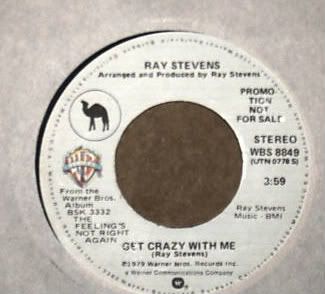
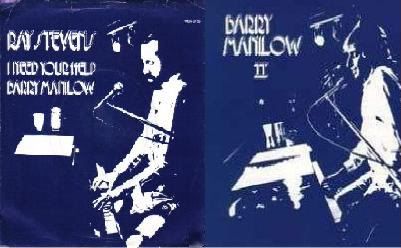
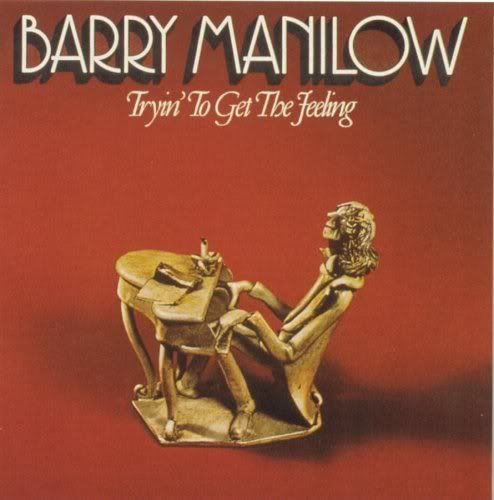
This is what the music industry called a promo single. It often featured the same song on both sides of the single and it's label was white in color. During the mid '70s, Warner Brothers labels were multi-colored but by the late '70s the label color became an off-white. Most singles featured a color label...a white label color was almost always used to differentiate between a commercial release and a promo copy. In the case of Warner Brothers singles if it happened to be a promo copy it would say so on the label. The catalog number, 8849, indicates that "Get Crazy With Me" was the B-side to "The Feeling's Not Right Again" on the commercial release. This single was issued in 1979...interestingly, though, each song had previously been released. "Get Crazy With Me" was first introduced in 1977 on Ray's Feel the Music album...and this song was a single that same year. "The Feeling's Not Right Again" comes from Ray's 1978 Be Your Own Best Friend album. What had happened was in 1979 Ray had an unexpected mainstream hit single with "I Need Your Help, Barry Manilow". Warner Brothers rush released an album to capitalize on the song even more. The album released in 1979 featured a design that was a visual spoof of a 1975 Barry Manilow album, right down to the fancy lettering and Ray's position at the piano. Ray's 1978 song, "The Feeling's Not Right Again", was similar in title to Manilow's 1975 hit, "Tryin' To Get the Feeling Again"...and that's why Ray's 1979 album is a spoof of that particular Manilow album. Due to people out there who get a kick out of seeing the spoof from Ray Stevens side by side with it's target here are a couple of pictures to illustrate how detailed the parody was played out in 1979...

February 14, 2010

Ray Stevens: The Romantic Side...

In salute to Valentine's day, today's blog entry is going to be about the romantic love songs of Ray Stevens. Well, it isn't going to be a 100% devotion to love songs...because a lot of Ray's love ballads depicted couples that were splitting up or trying to overcome differences in their personalities. The romantic songs that Ray Stevens has recorded generally are lifted from his late 1970's and early 1980's period. Ray was on the Warner Brothers label during the late '70s and then he moved to the RCA label in late 1979. Ray's tenure with Warner Brothers was moderately successful. He reached the country or pop music charts in each year of his contract and it was during this time that Ray was deliberately recording a lot of songs that went against what the public at large may have come to expect. His 1976 debut on Warner Brothers was an album entitled Just For The Record. The album featured a mix of songs...several up-tempo songs geared toward country music listeners and a lot of other mid-tempo songs. There were a couple of ballads on the 1976 album but they weren't released as singles: "Once In Awhile", "Cornball", and the inspirational "One and Only You". Ray turned the slow love song, "You Are So Beautiful", into an up-tempo number. It became a Top-20 country hit that year. A second single from the album was another message dealing with love...this time around the setting was in honky-tonk where a man loses his girlfriend to someone else. The song, "Honky Tonk Waltz", was basically the "Tennessee Waltz" set inside a bar room instead of an upper-scale nightclub.

Ray Stevens continued on the romantic side during 1977 as well. However, he did make a return to the comical side of things late in 1976 with the release of "In the Mood". Warner Brothers released the song in America and the United Kingdom...which surprised Ray because according to interviews he gave around that point in time he had recorded it for private use but Warner Brothers executives heard it somehow and insisted it be issued as a single. The comical idea of clucking the instrumental like a chicken was the added touch. The song goes back to the 1940's...popularized by Glen Miller. To this day the chicken clucking version of "In the Mood" remains the only Top-40 pop single to be comprised entirely of animal sounds. We hear chickens, a cow, and a goat...the instrumentation was sparse. It featured a saxophone and a bass...and I believe that was it. Now, in keeping with the comical feel, the single was released in America under the pseudonym The Henhouse Five Plus Too. In England it was issued as a Ray Stevens recording.

After ruling the roost with his poultry parody, Ray was back to being serious once again in the early part of 1977. In a previous blog entry I wrote about Ray's 1977 album, Feel The Music. The album had it's share of love ballads...and one of the finest was the toe-tapping "Dixie Hummingbird". "Alone With You" has a misleading title while "Blues Love Affair" pays tribute to the bluesy sounds that Ray grew up listening to tied to a story of a couple splitting up. One of the more romantic songs on the album is "Daydream Romance" and then there is the bluesy "Junkie For You" about a man who's addicted to a woman and he's got to have his daily fix or else he'll start trembling and shaking...having withdrawal pains. In 1978 Ray put out two very distinct albums. One album was a salute to classic R&B music titled There Is Something On Your Mind. A second album was the soft-rock release, Be Your Own Best Friend. It is on the second album that Ray returns to the more romantic side of things with a series of songs: "You're Magic", "Two Wrongs Don't Make a Right", a re-recording of "You've Got the Music Inside" which was originally recorded by Ray in 1973, "Comeback" ventures into desperation and angst, and the album kicks off with the lovely big ballad, "L'amour".

Ray ended the decade of the '70s with a hit comedy song called "I Need Your Help, Barry Manilow". It would become his final hit for Warner Brothers in 1979...paving the way for his move to RCA Records. He debuted on RCA with a comedy album...titled after a big hit early in 1980 called "Shriner's Convention". On the 1980 album he did feature a couple off-beat love songs. "Put It In Your Ear" is performed as a legitimate love ballad but it's title, plus some comical interludes in Austrian-German dialect, prevent it from being considered a serious song. He does a comical version of the classic pop love song "Hey There" which features serious sounding vocals from Ray Stevens but with a touch of a lisp thrown in for comic effect.

A third off-beat love song on the Shriner's Convention album is "Rita's Letter". In this song we hear the bizarre story of a couple where the man run's off to join a commune and he sends the woman he left, Rita, a letter, explaining all of the experiences he's had since leaving her. A fourth off-beat love song from the album is "The Last Laugh" where Ray tells of a couple on the verge of relationship ruin. The man has had enough and so he goes through thinking of all the things he's going to do to exact revenge...hoping to get the last laugh on the woman...even though his schemes carry possibilities of self-inflicted danger. After the success of the 1980 album, Ray was back to work recording serious songs once again. The results shown up in 1981 on the One More Last Chance album. That album was chock full of romantic love songs of all moods and descriptions. The album is ballad heavy and so it's a lot longer than his previous comedy release in 1980. He followed the 1981 album with two more albums geared toward serious material. Don't Laugh Now hit in 1982...it became his final RCA album. In 1983 he issued the Me album...it was on the Mercury label. Here's a random list of the love songs Ray recorded during 1981-1983: "It's Not All Over", "Take Your Love", "Just About Love", "Melissa", "I Believe You Love Me", "Let's Do It Right This Time", "Night Games", "Why Don't We Go Somewhere and Make Love", "Written Down In My Heart", "Country Boy, Country Club Girl", "Take That Girl Away", "Mary Lou Nights", "Love Will Beat Your Brains Out", "Kings and Queens", and "Special Anniversary".

After having moderate success with his previous two albums, Ray decided to make some sweeping changes in his career. Instead of purposely releasing serious, thoughtful music to show that he's more than a comical singer, Ray went ahead and decided to market himself as a country comedian. The gamble of course paid off as Ray went on to become the most successful country comedy singer during the rest of the 1980's and beyond. This blog entry examined the romantic side of Ray Stevens...the love songs...material that the modern-day music listener wouldn't attribute to Ray Stevens given the decades of comedy and zaniness that have become so well established in the psyche of most people. Let this particular blog entry inspire you to seek out the love ballads of Ray Stevens.

January 10, 2010

Ray Stevens: The Ballad Side

In this blog entry I want to focus on the ballad side of Ray Stevens. I've skimmed through several message boards and blog sites on and off today pertaining to ObamaCare and some blogs and some message boards are pro-ObamaCare. The "We The People" song/music video from Ray Stevens isn't exactly on that crowd's Top-5 to put it mildly.

I suppose it comes with the territory that a singer, namely Ray Stevens, all of the sudden emerges from out of nowhere in the eyes and minds of mainstream audiences and without fail the slings and arrows from critics come out...and all because a song that's clever and one that mocks ObamaCare, "We The People", has received a lot of positive reviews and nearly two million plays on You Tube. Is it just this zany idea that a policy, or in this case, a bill, generated by the Democrats is not to be questioned or mocked? If that's the case, when did that side of the aisle become so sensitive? I mean, for eight years the opposition pushed, played-up, and passed along every nasty remark and joke about George W. Bush you could imagine but now that criticism over the health care bill, and specifically Obama himself, has struck a nerve with some people outside the beltway via "We The People", the pro-health care overhaul supporters resort to the old tricks of name calling and marginalization.

In keeping this blog entry on topic and Ray Stevens oriented I've learned that some people actually have no idea that Ray Stevens has a serious side outside of "Everything Is Beautiful". When I learn of this sort of thing I think to myself how short-sighted some might be. I'm thinking: doesn't it ever occur to some people that songs are needed to fill out an album...and if they know Ray sang a serious song then shouldn't that cause a person to come to the conclusion that, hey, maybe Ray's recorded an album's worth of serious songs? Readers of this blog know how serious Ray can be...and people who see him being silly in music videos would perhaps not know what to make of this same artist crooning love ballads. So, the point is, Ray's immense talents are largely under-rated and over-looked because of public perception. As I touched upon in a blog or two ago, Ray is much more of a singles than albums artist. He's sold much more singles than albums but the downside to this is the buying public are usually only going to be familiar with what's on a single...and with radio, at one time, preferring comical songs from Ray that's what the radio listeners were hearing the most.

I'd suggest that those out there seek out a lot of Ray's CD's and digital albums that are available for purchase. I'd love it if more people become informed and educated about Ray Stevens and his career...his 50+ year career I should say...and discover how diverse and versatile he is. It's easy for people across the internet who don't really know who Ray Stevens is to write him off as a novelty singer and suggest he isn't talented. One of Ray's strengths, among several, is the fact that he can sing. Typically you can't say that about a lot of artists who put out comical or off-beat songs. Traditionally, a novelty song or a comical song was released by a singer or a group of singers that couldn't sing in any serious way but audiences would listen to intentionally silly or goofy lyrics by acts who couldn't compete with the legitimate singers. Ray Stevens, on the other hand, demonstrated that he could croon and sing love ballads with the best of them...but it's the comical songs that became the most commercially successful. By no means did comical songs run his career in the '50s, '60s, '70s, or part of the '80s. You'd be surprised by how very little comedy songs Ray recorded prior to 1984. He recorded something like 45 comical recordings during that time frame...which is a relatively small number made even smaller because most of those recordings remained as album songs and were not issued as singles but since 1984 he's devoted himself primarily to comedy songs.

I'll list the comedy/novelty songs Ray recorded prior to 1984. I'll mark an asterisk next to a commercial single.

1. Rang Tang Ding Dong; 1957*
2. Sgt. Preston of the Yukon; 1960*
3. Jeremiah Peabody's Green and Purple Pills; 1961*
4. Ahab the Arab; 1962*
5. Saturday Night at the Movies; 1962
6. Popeye and Olive Oil; 1962
7. The Rockin' Boppin' Waltz; 1962
8. PFC Rhythm and Blues Jones; 1962
9. Scratch My Back; 1962
10. The Rock and Roll Show; 1962
11. Julius Played The Trumpet; 1962
12. A Hermit Named Dave; 1962
13. Harry the Hairy Ape; 1963*
14. The Weekend; 1963
15. The Deodorant Song; 1963
16. The Great Sebastian; 1963
17. Speed Ball; 1963*
18. Soap Opera; 1963
19. Santa Claus Is Watching You; 1963*
20. Butch Babarian; 1963*
21. Bubble Gum The Bubble Dancer; 1964*
22. Laughing Over My Grave; 1964
23. Rockin' Teenage Mummies; 1965*
24. Mr Baker the Undertaker; 1965*
25. Old English Surfer; 1965
26. Freddie Feelgood; 1966*
27. Bagpipes, That's My Bag; 1966
28. Gitarzan; 1969*
29. Yakety Yak; 1969
30. Along Came Jones; 1969*
31. Mr. Custer; 1969
32. Sir Thanks-a-Lot; 1969
33. Little Egypt; 1969
34. Alley Oop; 1969
35. Bridget the Midget the Queen of the Blues; 1970*
36. The Streak; 1974*
37. Smith and Jones; 1974
38. The Moonlight Special; 1974*
39. Heart Transplant; 1974
40. In The Mood; 1976*
41. Classical Cluck; 1976
42. I Need Your Help, Barry Manilow; 1979*
43. Shriner's Convention; 1980*
44. The Last Laugh; 1980
45. Rita's Letter; 1980
46. Coin Machine; 1980
47. The Dooright Family; 1980
48. You're Never Goin' To Tampa With Me; 1980
49. The Watch Song; 1980
50. Hey There; 1980*
51. Put It In Your Ear; 1980

Yes, I realize that makes 51 songs...but as I was pointing out, 51 is a relatively small number when you have a time-frame that's over 20 years: 1957-1980. Six studio albums of non-comical work could add up to nearly 70 songs altogether when you consider that albums had 11 or 12 songs per release. So, the fact is, Ray put out a lot more serious material than people realize during his early years. After 1984 and his decision to become a comical artist full-time he's recorded hundreds of comedy songs since then...but his serious work shouldn't be over-looked since it makes up a good percentage of his 1960's and 1970's output.

October 23, 2009

Ray Stevens: Backstage Subscription, Part Two

Hello Ray Stevens fans from all over...this is a follow-up blog about the latest addition at Ray's web-site, the backstage feature. I signed up for it yesterday and I found out that when you sign up for a subscription you'll need to have a PayPal account. I never had one...but I decided to get one simply because there was no other way, as far as I knew, to become a monthly subscriber. Anyway, I started a PayPal account of which I probably will only use for this monthly subscription. After becoming a member I was able to view some pictures of Ray but more than that I was able to catch the pilot episode of We Ain't Dead Yet. For those who follow this Ray Stevens blog and his own web-site you'll know that Ray's taped several episodes of a TV show that he hopes to sell to some cable outlet. The pilot episode was amusing, cute, and entertaining and it set up the run of the potential series. It takes place inside a retirement home and it has a Hee-Haw feel to it on purpose. I am not sure if each month people will see a different episode or if the pilot episode was just a special for the month of October.

Anyway...once you subscribe...the monthly payment of $4.97 will be deducted from your checking account each month unless you cancel your subscription. There is a 3 month option, though, for $14.97. I'm not sure if it's 97 cents but I know it's $14.00 and some change. Looking back I should have chose that option but I didn't. I opted for a monthly subscription instead.

With it getting close to November and the holiday season don't forget that Ray has a Christmas CD out of all-serious recordings simply called Ray Stevens Christmas. You can purchase it at Amazon via the link at his web-site. On the left side of the page you'll see various sections and in the "Buy" section a drop down menu opens when you click "Buy". There's a link to "Official Store", "Itunes", and "Amazon". It isn't available at his official web-site store but it's available at Amazon. I did a run-down/review of the CD several weeks ago. There are 10 songs on it...9 of them are holiday standards and one of them is an original song, "Deck The Halls With Teardrops". It's tough to tell if the CD will be promoted much because of it's serious overtone...most people expect comical recordings from Ray. The expectation of comical recordings causes most people to not know how to take what we call "serious Ray".


As previously discussed, the photo of Ray originates from the mid 1990's when his comical Christmas CD was released. The 1997 comical CD was re-released on the same day as the non-comical CD. The comical CD is titled Christmas Through a Different Window. Unfortunately neither FM or AM radio stations like to play the novelty or the bizarre Christmas songs anymore. So-called studies done by radio people seem to suggest that comical songs are annoying rather than entertaining. Naturally the idea of a 'novelty song' is to be amusing and often topical and funny...but to a specific audience. Brow beaters tend to be easily annoyed by such "tomfoolery" and for the last decade or so oldies-style FM and AM radio stations have stayed away from the silly and goofy Christmas songs that once had equal sir-time among the traditional, serious Christmas recordings. Today the various oldies and pop-standards radio stations play legitimate holiday songs...not a comical vignette to be heard. Perhaps I'm listening at the wrong time? I'm not awake at 3:30 in the morning to know what's played but I do know that in the last decade it seems as if radio has pushed off the Christmas comedy songs that were once commonplace on the radio each season. Ray's non-comical Christmas CD, though, features several jazzy/up-beat arrangements so it isn't a slow ballad-heavy project.

Photobucket Speaking of non-comical...this is the 8-track version of Don't Laugh Now. For those who may think to themselves "geeze...how many times is he going to talk about that album???" let me say that I happen to not only love the album but I love the picture, too! Those familiar with my commentary about this album may remember that I once posted the back of the album...showing a very much happy, smiling picture of Ray. A drastic change from the gloomy expression on Ray's face that we all see on the front of the album.

Photobucket When you click the above image you'll see a much bigger picture of the back of the I Have Returned album from 1985. I took the picture with my digital camera and edited some of the excess imagery. Those who only have the cassette version didn't have the pleasure of seeing the picture on the back of the album as you see here. On the front side of the album Ray, as General MacArthur, is wading in the water in a mock-up of MacArthur's famous pose where he said "I have returned". Meanwhile, on the back of that album, Ray had actually waded upon a public beach and he's asking directions from people. The funny pictures on the back of the albums for whatever reason weren't replicated on the inside fold-out cover of cassettes and only the buyers of the albums were treated to those pictures. Of course, a lot of albums have the same picture on the front and back but sometimes they don't.

Photobucket