In a departure from my usual in-depth analysis of Ray Stevens here's a whimsical blog entry discussing the animals that appear in various Ray Stevens songs. We can't start off this entry without mentioning the camel. The camel not only appears in a couple of songs but it's one of Ray's trademarks. The camel's name, Clyde, doubles as the name of Ray's record company. Clyde appears in a couple of songs...but camel's also are referenced in a couple more songs. "Ahab the Arab", from 1962, introduced Clyde the camel.
The story goes that the camel got it's name when Ray spotted Clyde McPhatter walking around at Mercury Records. After "Ahab the Arab", Clyde the camel made a guest appearance in the original recording of "Santa Claus Is Watching You". Clyde was called in as a last minute replacement for Rudolph who, curiously, injured himself while doing The Twist. When you have the reindeer visually planted in your mind...replace Rudolph with a camel...and see how hilarious the image looks now.
The camel and Arabian scenery was re-visited nearly 30 years later in 1991 when Ray recorded "The Sheik of R&B". The title, of course, is a spoof of the movie, Sheik of Araby. In 2010 Ray mentions camels in the song "Come to the USA" and there's footage of him in Arabian attire in the music video. Also from 2010 we have "Caribou Barbie" which is a song all about Sarah Palin and her nick-name that the critics came up with. Each of those 2010 recordings come from his We The People collection. "Deerslayer", from 2000's Ear Candy and 2002's Osama Yo' Mama, is about a hunter who captures a deer (it's laying in the road!). The hunter puts the deer in his car and that's when all the fun begins.
In 1963 Ray sang about another particular animal: The ape! "Harry the Hairy Ape" was Ray's satirical look at rock music and the shaggy long-hair a lot of them were beginning to appear with. In Ray's song, of course, it's a real ape who becomes a singing sensation. In the same animal family is the monkey...and of course "Gitarzan" immediately comes to mind. In that 1969 song Ray sings about a jungle band consisting of Gitarzan, Jane, and the Monkey. A year later, "Monkey See, Monkey Do" appeared on a 1970 album from Ray Stevens titled Unreal. The song has nothing do with monkeys...it's based upon the phrase that refers to people who copy others...mostly for social acceptance. In 1984 Ray did a wild version of the theme song of the rock group, The Monkees. In Ray's recording we hear two Austrian singers perform "The Monkees" theme song but ultimately the duo dissolve into arguing with one another over everything from singing off-key to goat management.
Ray's sang about dogs on several of his albums, too. "Fred" springs to mind...it's from 1984. In another song from 1984, "Joggin'", Ray gets chased by a dog and the song closes with dog howls. In 1960's "Sgt. Preston of the Yukon" we hear about the dog, King, as Ray does some chilling dog howls. In 1963's "Butch Babarian" we get to hear Ray do more dog howls when Butch's dog, Houston, makes an appearance. In 1991 Ray recorded "Back in the Doghouse Again" and while we don't hear any dog howls we get to hear some dog growls toward the end of the song. In "The Dog Song", from 2000, Ray sings from a dog's point of view about a woman who claims to have been treated like a dog but yet the dog recalls all the attention he actually receives...and if a man really treated the woman like a dog she would have never left. In 1993 Ray told the story of "The Higher Education of Ol' Blue" which was based on a story about a boy, his father, and a dog who goes to college. The boy is running a scam against his father in an attempt to get more spending money...so he tells his dad that he needs more money because there's a college course that'll teach dogs to read. It's available on Classic Ray Stevens.
Fish have only made their way onto two Ray Stevens recordings. "Fish Eat Sleep" appeared on a 1973 album, Nashville. 24 years later in 1997 "Too Drunk To Fish" came along...as did a comical music video. In 1975 Ray recorded "Cow Cow Boogie" which was originally conceived in the early 1940's as a satire of the singing cowboy. 1970's music listeners, when hearing it on Ray's album, may have viewed it as a groovy cowboy-type song. It happens more than you think...humor and satire often get lost in time and each successive generation will interpret lyrics to mean entirely different things than originally intended. When Ray recorded the song in 1975 it was more than 30 years old. It's on his Misty album.
The fearsome snake took center stage on 1986's "Smokey Mountain Rattlesnake Retreat" and 1987's "Ballad of Cactus Pete and Lefty". In 2005 Ray recorded "Kitty Cat's Revenge" which dealt with the misadventures of trying to rescue a cat from a drainage pipe. The same year he also recorded "The Cat Song" which deals with a husband's jealousy over a wife's affections toward the family cat...Ray does baby talk at various spots in the song in an effort to explain the way the wife treats the cat. Each of those songs are on the Box Set collection. Famously in 1984 Ray recorded "Mississippi Squirrel Revival" about a squirrel that gets loose in a southern church...and all the while the church goers think all the commotion and disturbance is created by the Lord and they start confessing their sins and asking for forgiveness. A year later Ray recorded "Kiss a Pig"...a cute story about a man who finds a pig and takes him home and treats him like a member of the family.
In 1976 Ray hatched upon an idea to release a chicken clucking version of "In the Mood". Ray remarked that he had the idea and recorded it for private use to share with friends and family...but then his label at the time, Warner Brothers, wanted him to put it out as a single! So, in late 1976, Ray Stevens issued "In the Mood" under the pseudonym Henhouse Five Plus Too. It's b-side was the culturally aware "Classical Cluck". Amazingly, the 2 minute 40 second chicken clucking extravaganza known as "In the Mood" reached the country and pop Top-40 charts in America and the Top-40 in the United Kingdom. In 1985 he revisited the chicken coop again with "Thus Cacked Henrietta", based on Also Sprach Zarathustra...in the recording we also hear cows and a goat much like we did in "In the Mood". In fact the 1985 recording kicks off with a cow mooing.
Showing posts with label camels. Show all posts
Showing posts with label camels. Show all posts
April 18, 2011

December 30, 2009
Ray Stevens: Ahab the Arab revisited
 "Ahab the Arab" goes back to 1962...which is something most if not all serious Ray Stevens fans know off the top of their heads. I've touched upon this song several times in my music journey blog entries and I felt like touching upon it once again. The song became synonymous in the career of Ray Stevens and at one time he was introduced on television shows as Ray 'Ahab the Arab' Stevens. Even today, if one is old enough, they'll refer to Ray as "that Ahab the Arab singer" because for some people that song will always remain linked to Ray no matter how many hit songs, both commercially popular or word-of-mouth popular, that he went on to have.
 It was in that 1962 hit that Clyde the Camel came into existence. Since then, Clyde has become something of a mascot and in the 1990's through the present-day a Clyde logo has accompanied the home videos, CD's, and DVD's released on Ray's own record label, named Clyde Records, of course. It's been said that Ray got the idea to name the camel, Clyde, in reference to Clyde McPhatter of The Drifters fame even though McPhatter had been an R&B act prior to forming that group. A few of the songs that he was associated with ended up being covered by Ray Stevens through the years: "Sixty Minute Man", "Money Honey", and "Such a Night". Ray's version of "Sixty Minute Man" is part of a trio of songs that make up a 1978 recording called "The Banned in Boston Trilogy" on the R&B tribute album from Ray titled There Is Something On Your Mind. Ahab became the name of Ray's music publishing company for almost a decade...known as 'Ahab Music Company'. It switched over to the more officially sounding 'Ray Stevens Music' in the late 1970's.
 In recent years, specifically in the early 1990's and in interviews this decade, Ray has often spoke up for "Ahab the Arab" after political correctness single-handedly hand-cuffed a previous generation of humor and it's humorists. In a more recent interview Ray is less defiant and states that he can see where some think there's political incorrectness within the song but doesn't support the idea that those who condemn the song should have control over those who see nothing offensive with the overall idea behind the song. The bottom line is most people who have problems with the song either don't understand it or simply object to the way the word Arab is pronounced. Some more affluent and high-brow choose to pronounce the word as "air-ub" instead of "a-rab". Yes, it sounds silly to dismiss a song simply on the way a singer chooses to pronounce words doesn't it? Even in high school, teachers would throw a fit if a student would say "a-rab" instead of "air-ub". When asked what the big deal was, a teacher would actually say "air-ub sounds better". But try singing along to lyrics such as "a-hab the air-ub"...it just doesn't come out quite right! This is why it stays forever "a-hab the a-rab".

This 1987 album is where I first heard the sounds of "Ahab the Arab", "Gitarzan", "Along Came Jones", "Everything Is Beautiful", "Turn Your Radio On", "The Streak", "Misty", and "Shriner's Convention". The other two songs, "It's Me Again, Margaret" and "Mississippi Squirrel Revival", I'd heard already on a previous album. Look at that album cover! It's quite great, isn't it! The spoofing of Bonnie and Clyde...and perhaps it's only coincidence that Clyde is the name of Ahab's camel, too. A 'hit' in gangster lingo and in some police jargon means a selected target...meaning that if a hit is placed on someone it means that someone's a target for murder. Of course everyone, I think, is well aware of the various meanings of the word 'hit'. That particular 1987 album has since been certified Platinum for over a million copies sold.
 This 1992 release was in limited distribution but in reality 10 of the songs contained on the release are identical to those found on a couple of albums issued in 1989 spotlighting the material Ray recorded for Mercury Records in the early 1960's; plus there's a couple of songs included on here that he recorded for the label upon his one album 1983 return. There's 12 songs in all ranging from 1961, 1962, 1963, and 1983. This is the only compilation release, that I'm aware of, to include "Game Show Love" among the tracks. That recording took place in 1983 and is one of my all-time favorites. It uses a lot of game show titles and catch-phrases in the lyrics...and for game show fans it's right up your alley. I used to watch game shows...A LOT...back when I was a kid and a teenager. The USA Network used to air vintage game shows on their schedule throughout the afternoon and into early evening. I'd watch them during summer vacation. The label that issued the 1992 CD is an independent named Special Market affiliated at the time, I assume, with Mercury Records or Polygram.
 I'll leave you all with Ray Stevens' current hit single, "We The People", all about ObamaCare. This 2009 music video was done 47 years after the debut of "Ahab the Arab"...I say this just to give some perspective on just how much longevity Ray has had in the music business.
October 24, 2009
Ray Stevens and Clyde
 Nearly 20 years ago I had read somewhere that when Ray was a kid he had one of those plastic kick balls and on the surface of the toy was an illustration of a camel. It's generally stated that the camel on that kick ball was like "an omen" given how popular the camel would become in Ray's career years later. What we do know is that the camel has long since become one of Ray's logos and it's name, Clyde, harkens back to Ray's 1962 hit, "Ahab the Arab". Clyde the Camel was one of the 'stars' in that 1962 hit...a popular figure made popular via Ray's camel impressions. I've never actually heard a camel make noises...I don't think they roar or growl...but ever since I discovered the songs of Ray Stevens and heard "Ahab the Arab" I always think of Ray's camel noise whenever I see a camel on television, on a cigarette pack, or in a cartoon. In the Joe Camel craze quite a few years ago the only thing I could think of was Clyde the Camel. Clyde, for those unaware, carried Ahab throughout the Arabian desert in his quest to rescue Fatima from the Sultan's harem. The name of 'Clyde' was lifted from Clyde McPhatter, one of the various R&B singers whom Ray was influenced by.
As far as the song goes it's a clever and silly song wrapped into one. Some argue that it's a novelty song but I say it's a comedy song. What's the difference one may be asking? Well, the difference is a novelty song captures a trend or a fad that's taking place and uses humor, whether it's sophisticated or low-brow. A novelty song is also a generic phrase applied to something "unusual or off-beat" but if you break it down and examine the differences you'll more than likely realize that a comedy song and a novelty song are two different things. A comedy song is a song that's comical without any connection to a trend or a fad. "Ahab the Arab" is a comedy song whereas "The Streak" is a novelty song.
Throughout Ahab, Ray does a trio of voices. Ray voices Ahab, Clyde, and Fatima. The song plays out like a comical version of Sheik of Araby. In the 1995 music video of the song there's pieces of the video shot in black and white, which in my mind, make it perfectly clear that the Sheik of Araby was an inspiration for the song back in 1962.
The Clyde name was later used for an independent record label...and then he became a mascot for Ray's movie studio where he makes his music videos. Clyde Records and Clyde Pictures respectively. Ahab wasn't given the shaft, though. Ray eventually named his music publishing company after him...for quite a few years Ray's songs were published under the 'Ahab Music Company' name. Ray, of course, owned the publishing company. In the mid 1970's the company's name was changed to the more serious-sounding 'Ray Stevens Music'. After Clyde's introduction in 1962 he was a big enough star that Ray incorporated the camel into a holiday recording, "Santa Claus Is Watching You". In the original recording of that song Rudolph becomes unavailable and can't make the flight and so Clyde takes his place to lead the pack of reindeer: Dasher, Dancer, Prancer, Vixen, Comet, Cupid, Donner, Blitzen, Bruce, and Marvin. In the completely re-written song in 1985 Clyde doesn't figure in the action but is among the several pulling the sleigh: Dasher, Dancer, Prancer, Vixen, Comet, Cupid, Donner, Blitzen, Bruce, Marvin, Leon, Cledus, George, Slick, Dooright, Clyde, Ace, Blackie, Queenie, Prince, Spot, and Rover. I know I'm probably missing a few!
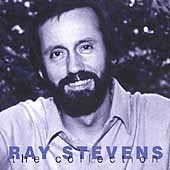 Ray currently records for his own label, Clyde Records. The material is available on-line...mostly at Ray's web-site or at Amazon. Sometimes Curb Records will distribute material to wider outlets as was the case with the Box Set collection several years ago and Ray Stevens Sings Sinatra...Say What???. The latter CD I hadn't seen it in shopping stores in spite of it showing Curb Records as it's current distributor. Clyde Records is the label that's written on the copy I have but Amazon lists Curb as the label. So, going by that, Curb Records continues to help Ray get his music to the masses as the saying goes. In case anyone has any questions I'll try and come up with possible questions and I'll supply the answers.
 Q: How many times has Ray recorded "Ahab the Arab"?
A: There have been just three versions of the song recorded through the years. The first version arrived in 1962. Interestingly, the recording was longer than Mercury Records was hoping for and they informed Ray that they were going to edit the final verse and make it more radio-friendly. Nowadays this is referred to as a "radio edit" where a song is edited several seconds or several minutes...usually instrumental solos. According to Ray he at first balked and felt his song would be ruined if they removed any part of it. Mercury went ahead and released the edited version and it became a hit. There are some compilation projects that feature the full-length version of the song which included the Sultan returning to the tent and finding Ahab and Fatima together. And so 1962 marked the first recording of the song. He re-recorded it in 1969...and I'll go on to say that the 1969 re-recording is much more widely known than the 1962 original. The 1969 version originally appeared on the Gitarzan album that Ray recorded for Monument Records. The third version came along in 1995. Ray re-recorded the song when he made the official music video, which originally appeared on his Get Serious movie that year. The movie was direct-to-home video and not shown in theatres.
Q: What does Ahab say when he's quietly strolling through the sands atop Clyde the Camel in the 1969 version?
A: It's mostly gibberish and doesn't sound as authentic as the 1962 version attempted to sound. In the 1969 version Ray has fun with the so-called Arabic language Ahab is belting out. It uses a once-popular phrase, "Sold American", which was heard a lot on Lucky Strike commercials with the auctioneers talking a mile a minute. I often feel that is who Ray is spoofing in the 1969 version or else he wouldn't end Ahab's shouting with that phrase.
http://www.tobaccovideos.com/videos.php?brand=Lucky+Strike
At that web-site you'll be able to see various Lucky Strike TV commercials. I don't smoke but I've known of the cigarette brand as a major sponsor for Jack Benny. The company sponsored Jack's radio and TV programs in the 1940's and 1950's. "The Lucky Strike Program starring Jack Benny" was it's official title. When I heard one of the Lucky Strike commercials on the radio show and heard the auctioneer end with "sold American" I thought of the 1969 version of Ahab the Arab. Once you're at that web-site click on the video "Be Happy Go Lucky Strike Today". It's a 43 second commercial and it opens up the auctioneer's voice.
Q: Is Ahab the Arab politically correct?
A: This will depend on each individual person. Whether it is or isn't it should be left up to an individual listener to make the decision. Having said that I also feel that whatever conclusion a listener comes to then that's their own decision and it shouldn't be considered the opinion of everyone. As is the case with a vast majority of people who cry political incorrectness they want to push their views and their perspectives onto everyone. I don't see this song as politically incorrect but yet those who find the song offensive I bet will say I'm a racist or say I'm a bigot or say I have no feelings for Arabs since I happen to find the song comical and silly. The politically correct advocates are extremists, pretty much, who want to push their agenda onto others.
Q: How does Ray have a Multi-Platinum single, Everything Is Beautiful, but yet it's only referred to as a Gold record?
A: For years the music industry never certified albums or singles. Once the RIAA began to recognize singles that sold a million copies it became even more competitive. A Gold record was the phrase that was given to every single that sold a million copies or more. There was no such thing as a Platinum record. Along the way someone had the idea to create the Platinum award for sales of two million copies or more. Then the sales requirements were lowered in the 1980's, I think, and Gold meant half a million in sales and Platinum meant a million in sales. Double, Triple, Quadruple Platinum would then be awarded for everything 2 million and higher in sales. So, when historians and Ray himself refer to "Everything Is Beautiful", a single that sold over 3 million copies, as a Gold record, they're using the 1970 sales standards and perhaps Ray has never applied for a triple-platinum certification and so it's technically still considered a Gold record.
Q: Why is there often a polarizing effect when it comes to comedy songs?
A: The simple answer to that is everyone's sense of humor is different. As I touched upon with the politically correct commentary, each individual has their own sense of humor. Along with this they also have their opinions of what should be spoofed and what shouldn't. When you get into the nuts and bolts of why comedy songs often have a polarizing effect it's simply because what's funny to one group of people may not be funny to another group and you have a divided reaction. Also, there are some people who absolutely have no sense of humor. I feel that some, in the politically correct crowd especially, are over analytical. They analyze things to a fault. They dissect words and interpret them completely different from what the writer/author intended...and given that the politically correct crowd are offended they want to see some changes. They don't care about the majority of people who aren't offended...all the politically correct crowd care about is that they were offended. I should refer to that crowd as the special interest crowd...but it isn't as alliterative and prone to tongue twisting as "the politically correct crowd" phrase is.
Q: When did Ray change the name of his publishing company from Ahab Music to Ray Stevens Music?
A: By process of elimination I looked on the back of his 1976 album, Just For the Record, and seen that the songs were all published by Ahab Music. I then looked on the back of his 1977 album, Feel the Music, and seen that those songs were published by Ray Stevens Music. So, 1977 was the year of the name change.
Q: What is R.O.C. Coca-Cola?
A: In the 1962 original recording Ray was using a delivery heavily inspired by Brother Dave Gardner and during the narrative Ray mentions that Fatima was sipping an R.O.C. Coca-Cola when Ahab encountered her in the tent. This was a reference to the cultures of the south where the whites drank Coca-Cola and the blacks were only allowed RC Cola but a lot of them pronounced it "R.O.C Cola". In the song Ray combines both beverages as "R.O.C Coca-Cola". Younger people who hear the original today perhaps won't know what Ray's referring to and probably think it's just a goofy made-up beverage without realizing the cross-culture reference.

Subscribe to:
Posts (Atom)