Showing posts with label gospel music. Show all posts

December 3, 2022

Ray Stevens: Musicians Hall of Fame photos...

Hello out there all you fans of Ray Stevens!! Several days ago Ray was inducted into the Musicians Hall of Fame. There was a shortage of photos from the event but this past Thursday a lot of photos from Ray's portion of the event were uploaded to his social media pages. I'm going to post a couple of the photos in this blog entry. They'll be part of a collage. The Musicians Hall of Fame honors music and those who play music...and it's not an organization that pushes one style of music. Ray Stevens has long been a recording artist that has performed pop music, country music, comedy music, gospel music, middle-of-the-road music, and he has a love for classic rhythm and blues which could be heard in many of his earlier recordings. Some of his music influences were Ray Charles, The Coasters, The Drifters, and numerous stand-up comedians and radio comedians. 

Ray Stevens; 2020

In the late 1990's The Nashville Network aired a television special on Ray called The Life and Times of Ray Stevens. The hour long television special was part of a recurring series of biographical programs on country music recording artists. When the special originally aired, in 1999, it was the longest look into the personal side of Ray Stevens to ever appear. If you're new to Ray's music/career then it's best for you to know that Ray isn't one of these artists that bares his soul and gets too detailed about his personal life in his interviews. The television special opened up a lot of what had been held back from public consumption including his feelings on music and his experiences as a piano player in guitar town (as Nashville is commonly referred to). The TV special enabled fans to hear Ray speak about his music influences, too, in a more relaxed format. 

The next opportunity for the public to learn more about Ray's off-stage goings on and his thoughts on an assortment of topics wouldn't arrive until 15 years later (2014) when he released his memoir, Ray Stevens' Nashville. The 1999 TV special and the 2014 memoir are vital for any Ray Stevens fan. Now, I'm sure some of you haven't seen the 1999 Life and Times special, but if you visit his CabaRay showroom in West Nashville you'll see Ray's career on full display through the presence of numerous publisher awards, Gold and Platinum album and VHS plaques for millions of sales; numerous certifications, awards, and photographs line the walls and fill various trophy cases. 


You'll see his 9 Music City News Comedian of the Year trophies; A Golden Pick award from Country Weekly magazine when their readers voted him Favorite Comedian; You'll see a replica Star from the Music City Walk of Fame; His Country Music Hall of Fame medallion is on display and I'm sure the latest Musicians Hall of Fame medallion will also be on display. You'll see him perform and you'll see the Piano Bar and the gift shop. Ray's career is on display under one roof...the CabaRay showroom. It's Christmas season at the CabaRay and all the information can be found HERE. Ray's concerts are held on Thursday and Saturday.

In the collage above, in panel one, we have Ray holding the trophy showing him as an inductee of the Musicians Hall of Fame in 2022 and wearing the medallion presented to him at the Musicians Hall of Fame last month. In panel two it's Ray and longtime friend/collaborator Buddy Kalb. In panel three we have Ray, hands gripped, looking debonair with the medallion peeking out from his jacket.  

November 20, 2022

Ray Stevens: 2 Days until Musicians Hall of Fame Induction...

Hello once again!! I was going to write a blog entry tomorrow about Ray Stevens being inducted into the Musicians Hall of Fame this coming Tuesday (November 22) but I decided to go ahead and write my celebration blog entry today. Why? Well, I can't help myself...I can't wait until tomorrow evening or late in the night tomorrow...I want to mark the celebration now. This will be Part One, however. I'll write Part Two later tonight or sometime early tomorrow morning. 

A general public most likely know of Ray Stevens by way of any number of comedy recordings. Ray himself likes to say that if anybody knows who he is then more than likely they know of him for some kind of comedy song or some sort of comedy video...now, of course, comedy isn't all there is to Ray Stevens. Throughout his now 65 year recording career (dating back to 1957) Ray has recorded just about every type and style of popular music imaginable. He began singing the style of music that was most dominant...the teenage love ballad. His roots are in Georgia. He was born Harold Ray Ragsdale in Clarkdale, Georgia and he resided in Georgia until a permanent move, five years into his recording career, to Nashville, Tennessee in 1962. Late in his high school years he and his family (his parents and a brother) packed up and moved to the Atlanta area. He and his brother had to switch schools, too. Ray had been attending Albany High School but the move from Clarkdale to the Atlanta suburbs meant he was going to graduate from Druid Hills High School. It was in high school that Ray formed a band called The Barons. Prior to the move to Atlanta, as you can see from the photo, Ray had made a name for himself as co-host of a local radio sock hop. This radio series, co-hosted by Mary Dale Vansant, aired on WGPC radio beginning in 1955. It was a Saturday radio program called The Record Hop. As you may have known or may have guessed by now the style of music that a young Ray Stevens (known as Ray Ragsdale) was originally exposed to was country, gospel, and all kinds of rhythm and blues. In addition he was also exposed to radio comedy/stand-up comedy, rock and roll, and with this love of music and comedy he'd say, decades later, was a big reason he loved The Coasters so much. Ray had come of age right when rock and roll was brand new...turning 18 in January 1957. He was a high school graduate the same year...a member of the Druid Hills Class of '57. Yes...it was the very same year he signed his first professional recording contract. It was with Prep Records, a subsidiary of Capitol Records. As far as the music business/music industry is concerned the first two important figures in the career of a young Ray Stevens were Bill Lowery and Ken Nelson. 

Ray had been using his birthname up until his meeting with Ken Nelson. Ray been known as Ray Ragsdale, locally, in the Albany and Atlanta area but it was through the suggestion of Ken Nelson that Ray should come up with a stage name. Harold Ragsdale perhaps sounded too mature of a name for a teenager and the last name, Ragsdale, didn't seem like it could be marketable. Ray decided to use the last name of his mother, Stephens, for his stage name. In interviews Ray remarked that Ken loved the name, 'Ray Stephens', but he says Ken suggested that the last name be spelled 'Stevens'. Prep Records released "Silver Bracelet" under the name of Ray Stevens in 1957...and it was reportedly a local hit in the Atlanta area. Ken released a few singles on Ray on the Capitol label in 1958 that attracted regional attention. Bill Lowery guided Ray through the next phase of his career...signing him to his own label, NRC. Ray, Jerry Reed, Joe South, Tommy Roe, and Billy Joe Royal were all under the guidance of Bill Lowery...most of them, if not all, shown up on The Georgia Jubilee music program. Bill was an Atlanta-based disc jockey who became a very successful music publisher and was completely independent from New York, Los Angeles, Chicago, and Nashville. One wonders if Ray got his desires of being a publisher from seeing the financial successes of Bill Lowery's music publishing company and how important publishing rights are to a recording? Perhaps...but Ray didn't begin to delve into the music publishing side of the music industry until the late 1960s.


Ray happens to be, in my opinion, a music prodigy. He can play the piano and other keyboard instruments but he can also read and write music for other instruments...and this talent had him in demand for all kinds of recording sessions once he got into Nashville in the early 1960s. In the meantime, though, he professionally parted ways with Bill Lowery and began a professional relationship with Shelby Singleton at Mercury Records in 1961. It was at Mercury where Ray began a lengthy run as a session musician and music arranger...not only on his own recordings but for dozens of other recordings by other recording artists. 

Ray had released a series of love ballads and rhythm and blues style songs in the late 1950s time period. He had also recorded some novlety songs... "Rang Dang Ding Dong" appeared on one side of his debut single in 1957 on Prep, "Silver Bracelet". In 1960, while at NRC, he recorded "Sgt. Preston of the Yukon" which displayed not only his love for The Coasters style of music but it was gaining some exposure outside of the Atlanta, Georgia market. Ironically, the reporting of the novelty song's local success made it's way to the owners of the Sgt. Preston character...their lawyers sent NRC a letter and threatened a lawsuit if the song wasn't pulled off the market. Ray has always said that the near hit of that song inspired him to come up with another comedy recording and so, in 1961, he put out a novelty song on Mercury Records. The song is funny but what caused the most attention was it's title: "Jeremiah Peabody's Polyunsaturated Quick Dissolving Fast Acting Pleasant Tasting Green and Purple Pills". This novelty song became Ray's first hit single...reaching the national Hot 100 chart in Billboard magazine. A year earlier "Sgt. Preston of the Yukon" peaked on Billboard's Bubbling Under the Hot 100...and had it not been pulled off the market it could've become Ray's first hit. It was on Mercury Records, in 1962, that Ray had his biggest hit single to date...the comical "Ahab the Arab". It crossed over to the Rhythm and Blues chart as well. 

Ray's musician side bigger emphasis during his Mercury (1961-1963) and, specifically, his Monument (1963-1970) years. Fred Foster became the next important figure in Ray's music career in 1963. Fred hired Ray to work in the Artist and Repertoire department, arrange the music for recording sessions, lead the sessions, and play on the sessions. So it is definitely no surprise that it was during the first half of the Monument era where Ray concentrated heavily on music arranging and session work. Mercury Records, however, continued to control his recordings and they released a series of love ballads and novelty songs on him while he was producing and arranging the songs of an assortment of recording artists. Ray either played on the sessions or did the music arranging on several Monument Records releases. He was also getting into the publishing business, too. Lowery Music had been the publishing company that controlled the bulk of Ray's recordings but this changed not too long after Ray joined Monument Records. Ray began his own Ahab Music Company and entered the music publishing business. Now, of course, nearly all of the titles published by his own company were his own recordings...or, later, songs written by writers who worked for his publishing company. While at Mercury Records and at Monument Records he worked with Dolly Parton, Patti Page, Brenda Lee, Dusty Springfield, and Brook Benton. 

Monument began releasing singles on Ray in the latter half of 1965...and though all of the single releases were top quality and excellent their first big hit didn't arrive until 1968's "Mr. Businessman". The single that preceded it, "Unwind", reached the pop Hot 100. From 1968 to around 1984 Ray Stevens continued to balance his recordings between pop, country, and comedy...even recording a gospel album in 1972. He became associated with Andy Williams in 1969. Ray's recording of "Gitarzan" became a million selling hit not only in America but it became a hit in several other countries which opened his career up, a little bit, internationally. He slowed down on participating in recording sessions in 1970 because, in his own words, his career become so successful that he didn't have the time to play on the recordings of other singers as the demands from his own career had skyrocketed tremendously since his move to Nashville in 1962. Andy Williams brought Ray to Barnaby Records in 1970. It was also in 1970 that he hosted a summer show for Andy Williams and that show's theme song, "Everything is Beautiful", went on to win Ray a Grammy in 1971 in the category of Best Male Pop Vocal Performance. A recording of the song by gospel singer, Jake Hess, won a Grammy in a gospel category in 1971. While 1969's "Gitarzan" brought Ray some international recognition it was "Everything is Beautiful" that brought him the widest international exposure to date...selling millions of copies...but the international reach would reach a fever pitch in 1974 with the release of the multi-million selling novelty, "The Streak". 


Ray's songs were bouncing from pop to country to adult-contemporary during the first five years of the '70s. His first appearance on the country music chart had arrived in 1969 with his version of "Sunday Mornin' Comin' Down". Ray began marketing himself more and more country by the mid 1970s. Chet Atkins and Ralph Emery were two key figures in Ray's career once the country direction of his career began to take shape. Ray had charted country in 1969, 1970, 1971, 1973, and 1974 with specific single releases and he was a frequent guest on country music programming but it wasn't until 1975 when Ray's single releases began performing even more successfully with country audiences. "Misty", arranged in a Bluegrass style, won Ray a Grammy for Best Arrangement. Ray charted several more country hits as the 1970's ended: "Indian Love Call", "Young Love", "You Are So Beautiful", "Honky Tonk Waltz", "In the Mood", "Dixie Hummingbird", "Get Crazy With Me", and "Be Your Own Best Friend". On regional television commercials Ray was the spokesman for Flav-O-Rich dairy products. I added that tidbit to reinforce the country direction in Ray's career. In 1979 he charted pop for the final time with the novelty "I Need Your Help, Barry Manilow". 

This brings to an end Part One. I'll write Part Two in a couple of hours! 

October 21, 2021

Ray Stevens: "Turn Your Radio On" at 50...

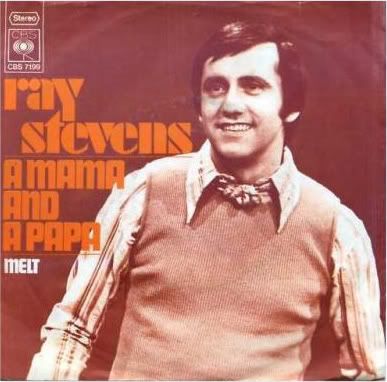
Hello Ray Stevens fans!! It was during this time of the year in 1971 that Ray was nearing the release of his rendition of "Turn Your Radio On". The single was released late in October and it hit early the following month. The single was Ray's third consecutive gospel recording following "All My Trials" and "A Mama and a Papa". Those two single releases hit the Easy-Listening audiences...resulting in two back to back Top-20 hits. On the left side of the page is one of the many picture sleeves that accompanied the vinyl single, "Turn Your Radio On", backed with "Loving You On Paper". I typically don't pick favorites when it comes to picture sleeves on singles but of all the picture sleeves to accompany the single I like that light blue picture sleeve the best. Some may prefer other ones but that's my favorite one...of the ones I've seen. The first three singles from the then upcoming Turn Your Radio On album (released early in 1972) all featured B-sides of non-gospel recordings. The reason for this is because the single releases came months before the recordings for the full length album and as a result the B-side recordings weren't gospel/religious in tone and two of the B-side recordings never appeared on the 1972 Turn Your Radio On album. The B-side of "A Mama and a Papa" was a sultry love ballad called "Melt" that has never appeared on any Ray Stevens album. The B-side of "All My Trials" was "Have a Little Talk With Myself" (a previously released A-side single from 1969). The four single releases from the 1972 album were: "A Mama and a Papa", "All My Trials", "Turn Your Radio On", and the gospel/rock hybrid rendition of "Love Lifted Me". That fourth and final single release was a hit record in the country of Bangkok. When that bit of trivia is mentioned it brings a lot of disbelief but I seen the international music chart in Billboard, called 'Hits of the World', in a 1972 issue and it shown Ray's recording of "Love Lifted Me" among that country's hit songs for several weeks. That single's B-side in general release was one of his recordings from 1970, "Monkey See, Monkey Do", but on promotional copies of the vinyl single the B-side was "Glory Special", which is one of the songs on Ray's 1972 gospel album. It's baffling why the promo single had a recording from the album as a B-side but the commercially released single of "Love Lifted Me" featured a previously released song from 1970...anyway...

"Turn Your Radio On" became a pop, Easy-Listening, and country music hit in the final months of 1971 and into early 1972. The initial release of the single late in 1971 means that it's just about to reach it's golden anniversary...50 years!! 


Ray's rendition of "Turn Your Radio On" is what I grew up hearing on several compilation albums that were released on Ray...most notably 1987's Greatest Hits on MCA Records. The song comes from the pen of Albert E. Brumley...a writer of several gospel standards. There have been several modifications to the song over the decades with lyric additions and lyric deletions but the lyrics heard in the Ray Stevens 1971 rendition are what I'm familiar with the most. Decades later (in 2014) Ray updated the song and included alternate lyrics for each verse but kept the familiar chorus of the song intact. Since I'm spotlighting the 1971 rendition, which turns 50 in the not too distant future, here's the audio recording of the 1971 rendition...

July 17, 2020

Ray Stevens: Rhonda Vincent CabaRay Nashville performance...

Hello all once again!! It's finally Friday...and although this was posted on-line several days ago I hadn't spotlighted it in a blog entry yet. Rhonda Vincent, the bluegrass singer, made an appearance on Ray Stevens CabaRay Nashville during season three. I did a review of her episode in this fan created blog...search the archives for it if interested. Rhonda's birthday was several days ago (July 13th) and on Ray's social media sites a performance of the two singing "Just a Closer Walk With Thee" appeared. Ray recorded this song, solo, on his 2016 gospel album. If you're searching for his solo performance it's on the CD of the same name... Just a Closer Walk With Thee: Gospel Favorites. Ray sings the song mostly in harmony with Rhonda but he has a brief solo. The performance is centered around Rhonda's higher vocals (she is a bluegrass singer after all).

February 2, 2020

Ray Stevens: A Brighter Day shines like Gold...

I usually don't compose a blog entry focusing on the golden anniversary of a B-side but given that Ray Stevens, yesterday, uploaded an audio clip on YouTube of his 1970 recording, "A Brighter Day", I decided to put together a short essay/blog. The song is very inspirational and served as the B-side of "Everything Is Beautiful". As with practically all of his recordings back then "A Brighter Day" was written, produced, and arranged by Ray. Ironically, though, the album that contains "Everything is Beautiful" and "A Brighter Day", titled Everything is Beautiful, is filled with Ray's versions of other pop songs of the day. The album was rush released to capitalize on the phenomenal success of the A-side.

The single was an international hit with picture sleeve's of Ray placed on nearly every release across the globe. The photo off to the left appeared on the single release in Portugal. Ray recorded for Barnaby Records beginning in 1970 and the label's distribution was being handled by CBS Records. I mention that in case anyone wonders why there's a CBS logo on the top left side of the picture sleeve. "Everything is Beautiful" / "A Brighter Day" was not a two sided hit single but for those that purchased the single, and bothered to flip it over, you would've discovered "A Brighter Day" on the B-side. It's funny, though...back in the days of the vinyl single customers rarely had any interest in playing the B-side. If they purchase a single for the A-side then, by God, that's the side they're going to listen to. I know this mentality because in the declining years of the vinyl single my grandfather rarely turned a single over to hear the B-side. In his mind he figured that he purchased the single for one song and he had little to no interest in the B-side. This mentality is the main reason why singles greatly outsold albums for several decades...a casual listener only wanted to purchase the 'hit' song whereas a fan wanted to hear an entire album. When singles began vanishing from retail stores the public had no choice but to purchase an entire album's worth of songs...now, there were cassette single's being manufactured but those weren't distributed widely...and so a general audience had to purchase an entire CD.

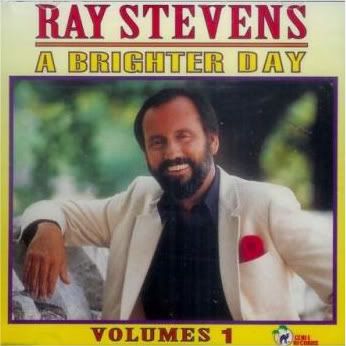
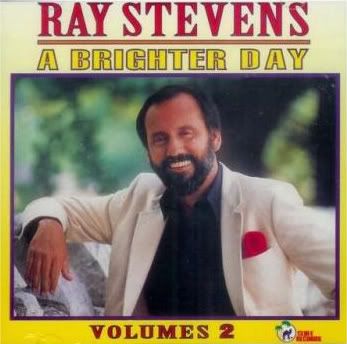
In 1992 a compilation album titled A Brighter Day was released on Clyde Records, a label Ray owns. The photo off to the right is what appeared on the 2-CD collection. There was also a 2-cassette version released as well. To this day I do not own that particular project. When I was a member of Ray's fan club (it closed in 2002) I used to receive mail-order catalogs in the mail advertising Ray's cassette tapes and CDs. A Brighter Day, being a collection of 21 songs on 2 CDs or 2 cassettes, was the most expensive product in the entire mail-order catalog. I joined Ray's fan club in 1994...two years before I got my first job out of high school in 1996. My parent's paid for my first two years as Christmas and birthday gifts in 1994 and 1995. After I got a job in 1996 I paid my own membership dues every year until the fan club closed in 2002. Anyway, the main reason I didn't purchase A Brighter Day back then was due to economics/personal finances at the time. Oh how I wish later on I purchased it...although I had all of those songs on other albums I simply wish I had the collection for completest purposes. It's an obscure release. I don't think it's been available for purchase in more than 15 years...maybe longer. My attitude at that time was "I already have those songs..." but since then my attitude's changed to purchasing compilation albums based on how obscure something may become no matter if I already have the songs. Obviously I developed that attitude well after A Brighter Day was removed from the mail-order catalog and to my knowledge it's never been offered on Ray's on-line web-store. I often see it come up for sale on eBay but I'm leery about purchasing on auction sites nowadays. Some may see that as procrastination or a flimsy excuse...but that's how I feel at the moment. In the meantime let's take a listen to what this blog entry is all about...the legendary Ray Stevens sings "A Brighter Day"...


July 27, 2019

Ray Stevens roasts J.D. Sumner...

Hello once again!! Last week Ray Stevens shared a video clip from 1985 where he roasted legendary gospel artist, J.D. Sumner. The roast took place at the Hyatt Regency Hotel and although I wouldn't dare to guess who all was in attendance I can say with certainty that I recognized The Statler Brothers as well as Jake Hess. I have no idea the emcee...I know of a gospel group, The Blackwood Brothers, and the emcee looks like a member of that group but, as said, I have no idea. The video clip was brand new to me when I seen it last week. I did a Google search for Ray Stevens + J.D. Sumner and discovered that there's a multi-part video clip series that had been uploaded onto YouTube last year. Now, obviously, because Ray wasn't tagged in any part of those video clips from April 2018 I had no idea of their existence.

If you visit YouTube and do a search for those two artists you'll find the clip I'll be embedding below plus you'll come across the various clips already in existence...well over 10 clips...from the 1985 roast. Those multi-part video clips were uploaded by username Bass Singer Eric Winston. In his series of video clips the one featuring Ray Stevens is Part 7 as I found out. The upload from Ray is featured below...


While I was watching the various parts of the extended video clips I seen a number of not too friendly comments. I can summarize their comments by saying the negative reaction stems from a belief, held by some, that gospel recording artists or those that are associated with gospel functions shouldn't present themselves in a secular fashion and that God should be the center of focus in any gathering. The notion of secularism at a gathering of largely gospel personalities obviously rubbed some the wrong way...even though the gala was clearly identified as a Roast and it wasn't promoted as some kind of gospel revival or gospel gathering. I shouldn't have to explain it but for those that aren't aware a Roast is an event filled with insult humor and embarrassing stories, some true and some made-up, directed at whoever the honored person happens to be. It's all done in fun. Simply put: those on YouTube that complained about this 1985 event do not know the concept behind Roasts.

May 27, 2018

Ray Stevens CabaRay Nashville: CeCe Winans

Here I am again...it's time for a recap...this time it's episode 7, Season 6 of Ray Stevens CabaRay Nashville. The special guest star this time around happens to be CeCe Winans. Gospel music has often been part of Ray's television series going all the way back to it's first season. In fact this marks his second gospel-themed episode. Earlier in the series he had Michael W. Smith as a guest. 


Ray opens the show performing "Swing Down Chariot/Swing Low Sweet Chariot", a medley performance he recorded for his 2014 project, Gospel Collection. After the opening performance he introduced CeCe Winans as the Queen of Gospel Music and gave some statistical information to back it up. In her career she's won, to date: 12 Grammy awards, 23 Dove awards, and 15 Stellar awards. The latter two are exclusively Gospel/Christian/Inspirational organizations.

CeCe speaks of her family and how seven siblings were born ahead of her...all of them boys...and then she broke the male dominance...followed by two more siblings, both girls. In total she's the 8th of 10 children. She speaks of her son, Alvin, and says that he was the driving creative force behind her current album. Although not mentioned by name I researched it and the name of the album is Let Them Fall in Love (released in February 2017). Ray makes mention of Kris Kristofferson and how he wrote one of the most iconic, legendary gospel songs of all time "Why Me, Lord?". As you see in the video clip above Ray and CeCe perform the song as a duet. During the passages in which they sing together you can hear how each artist phrases differently...some words sung by CeCe may hit a lower note as Ray hits a higher note...but then the opposite happens in some places of the song and CeCe hits a higher note while Ray sings it lower. In other words, because their phrasing is different, neither artist drowns out the other and you can hear both voices as a result. CeCe mentions that she recorded "Why Me, Lord?" for her current album.

Following their duet CeCe performs "Never Have to Be Alone" and then "Peace From God". Each song can be found on her current album. You can find that album HERE. Ray thanks CeCe for being on the show and then Ray seats himself at the red piano and begins to tell a story about a sea captain that once shipped slaves and how later in life was repentant and ended up writing lyrics to a melody that the slave prisoners would hum. The song ended up being "Amazing Grace". Ray performs one of the variations of the song before closing the show with one of his comical stories.

This episode was purely music heavy and there wasn't a lot of the usual conversation that exists between Ray and the guest, which I often take note of and add into my recaps, and so this particular blog entry will probably appear a bit shorter by comparison. The episode airing this weekend on local PBS stations guest stars Mickey Dolenz and that episode will be uploaded onto Ray's video site next weekend so look for my recap of episode 8 next weekend.

Ray is going to be active at this year's CMA Fest in early June. He'll be singing the National Anthem on the final night of the event (June 10th) plus he'll be interviewed by Robert K. Oermann (also on June 10th) and this interview is to spotlight Ray's 60 years in the music business. The interview is scheduled to last 45 minutes and be conducted between 1pm and 1:45pm. The interview will take place on the CMA Close-Up Stage. You can read all about it by clicking HERE.

There isn't any concrete information as to whether or not this interview or his performance of the National Anthem will be streaming live or if they'll both be uploaded at some later date. I have no doubt that both events are going to be taped for posterity...it's just a case of not knowing if they'll be uploaded onto the internet. Such uncertainty can be a bit aggravating to us Ray Stevens fans; now of course, if a link that becomes available for either of these events, I'll be posting it on the blog page.

April 22, 2016

Ray Stevens: A Collage of Gospel...

Hello all...I've put together a collage featuring imagery of Ray Stevens gospel projects over the decades. I've only focused on the major releases and so there isn't any images of budget priced reissues or anything. Ray has recorded three gospel albums in his career. His first, Turn Your Radio On, arrived in 1972. The album featured the hit title track plus several other singles that found their way onto the Top-20 of the Adult-Contemporary chart. "A Mama and A Papa" and "All My Trials" reached the Adult-Contemporary charts in the latter half of 1971 prior to the release of "Turn Your Radio On" in late 1971 which hit the Top-20 on the Country chart in the first half of 1972.  The LP hit all of the usual English speaking countries. The international pressing of the album featured the green lettering of the album's title that you see in the collage below. The LP issued in the United States had different letter coloring.

I'm in a habit of referring to the chart as Adult-Contemporary since that's the name the chart has had since the late '70s. At the time Ray's gospel singles had their chart run the survey it was called Easy-Listening.

Ray's gospel recordings on the 1972 album seen several afterlives. In 1982 the album got reissued complete with different cover art (a contemporary, bearded Ray Stevens appeared on the cover) but the recordings are the same ones from 1972. Later, in 1992, a label named Arrival released an album called The Gospel Side of Ray Stevens. It, too, contained the recordings from 1972...the same goes for a 1996 project from Curb Records titled Great Gospel Songs. Not only did it feature the songs from the 1972 album but it also included 1970's "Everything is Beautiful" and "A Brighter Day". Later still came a CD pairing Turn Your Radio On with Ray's 1975 album, Misty.

Fast forwarding to 2014...Ray releases his second gospel album, Ray Stevens Gospel Collection. It introduced Ray to a much different audience and he participated in several gospel events and gatherings...mostly centered around the Nashville area. One of the songs from the CD, "If Jesus Is a Stranger", became a popular song in his concerts and he performed it during his select television appearances. The much anticipated follow-up is due to be released in mid June of this year...titled Just a Closer Walk with Thee...it picks up where the 2014 gospel CD left off.

The upcoming CD can be pre-ordered at AMAZON. I plan on purchasing the CD from Amazon as it gets closer to release day but for those that ant to pre-order it click that link. You can click the gospel collage to see a bigger image...

December 4, 2013

Ray Stevens upcoming CD...

As a third shift worker I am typically asleep at this time of the day but about an hour ago I woke up and decided to visit the internet and see if anything was happening in the world of Ray Stevens. I visited a social media site and sure enough an interview had taken place during my nap. This interview happened during a call to the Mike Huckabee Show. The interview dealt with the announcement that an upcoming CD is to be released in January 2014 titled Onward Christian Soldiers. Ray had spoke of this CD before and a couple of articles on various internet sites made mention of this CD but this is the first time a definitive announcement's been made regarding it's release. As soon as I found out that Ray had been interviewed I immediately began searching for any audio link...even though the interview had taken place an hour earlier I was able to find an audio link posted on Huckabee's Twitter page. Typically, audio links rarely become available so soon after an interview has taken place but this time there's a link. The clip runs a little more than 10 minutes and you'll hear Ray discuss the idea behind the CD and he mentions the image that'll appear on the CD's picture sleeve. Long time fans will immediately recognize the image that Ray describes but according to the interview a Cross symbol will be edited into the picture.

The audio link of the Mike Huckabee interview with Ray Stevens is located HERE and near the end there's a small sampling of an upcoming song from the Onward Christian Soldiers CD, "If Jesus is a Stranger".

October 21, 2012

Ray Stevens: Golden LP Series, Part Eight...

The eighth studio album from Ray Stevens was the gospel collection, Turn Your Radio On. The album featured a lot more original material than standard gospel numbers although one of the more familiar gospel songs, "Turn Your Radio On", acted as the album's title. The album had apparently been in the planning stages for awhile because in the middle of 1971 Ray started releasing gospel singles in the aftermath of "Bridget the Midget" and the massive success he had with the song. The first gospel release was "A Mama and a Papa", a song from the pen of writer named Tom Autry. The single told the tale of the importance of having both a mother and a father figure in your life. As is the case with most gospel songs there's a resistance by mainstream radio to embrace the material and as a result they rarely obtained any publicity...which affects potential sales. Nowadays there are several weekly music charts that specialize in gospel and inspirational releases as well as various radio stations that program all gospel music. 

"A Mama and a Papa" charted for a couple of weeks on the Hot 100 in May 1971 and peaked in the Top-90. It nonetheless did exceptionally better on the adult-oriented Easy-Listening format where it hit the Top-5 in America and the Top-10 on Canada's equivalent. The single's b-side, "Melt", has never appeared on any compilation album and as far as I know the only place it's available is on the b-side of "A Mama and a Papa".

One of the eye catching things about the album's cover is what I've often referred to as the heavenly glow that surrounds Ray. The bright light effect. This particular image of Ray would also appear on several single releases overseas. The second single release, "All My Trials", features a marvelous arrangement and one that in the publicity pieces pointed out that Ray overdubbed his voice over 20 times to create the background choir effect heard throughout. It was released in the fall of 1971 and it peaked in the Top-70 on the Hot 100 but like it's predecessor it had it's biggest impact on the Easy-Listening format where it reached the Top-10. The running time of the song, in it's full length, was more than 4 minutes which must have created issues among some radio stations because there's an edited version that also exists. The edited take removes a large chunk of what I call the instrumental mood music which also includes a passage of nothing but vocally created musical accompaniment where Ray's overdubbed vocal harmonies come into full display. If you're familiar with the longer version you'll more than likely prefer it over the edited version. There's more than 1 minute of audio removed in the edited down release.

The third single release was the album's title, "Turn Your Radio On". Issued late in 1971 it ultimately became a hit single early in 1972. The song reached the Top-10 on Canada's country music chart and the Top-20 on America's country music chart. It also reached the Easy-Listening Top-30 and the Top-70 on the Hot 100. The album hit the Top-20 on the Country Album list. It was by far his biggest showing, to date, on the various country music charts. His various singles had charted more heavily on pop music's Hot 100 as well as the Easy-Listening chart and this would remain the case through the mid '70s when his releases were also starting to appear more consistently on the weekly country music chart. A fourth single release, "Love Lifted Me", became an obscure hit single in Bangkok but nowhere else. Ray's version of the song featured a rock and roll arrangement and it's a great recording but it's one of those kind of songs that had limited appeal regardless of how good it was. Some of the other songs on this collection include "Glory Special", "Let Our Love Be a Light Unto the People", the previously released "Have a Little Talk With Myself", and the gospel shouter "Why Don't You Lead Me To That Rock" which starts out rather quietly but builds up to it's explosive conclusion. Ray would follow up the all-gospel release a year later in 1973 with his ninth studio album which featured a rather peculiar title track...was Ray Stevens really on a Losin' Streak in 1973?

We'll find out in the next installment of the Golden LP Series.

September 9, 2012

Ray Stevens: Nostalgia Valley, Part 41...

In our 41st stroll through Nostalgia Valley as we spotlight the career of Ray Stevens we re-visit 1971. This was the year that Ray placed three vastly different singles onto several Top-10 charts...but if you're a casual fan or one that is familiar with a lot of the various career bio's floating around on Ray Stevens you wouldn't know about that because 1971 was also the year that came in the shadows of a massive #1 million selling hit single a year earlier in 1970. There's never been too much exploration into what was happening in Ray's career in 1971 because a lot of the more professional authors, writers, critics, etc. like to skip around too much when they offer information. Typically what we get is a commentary that highlights specific years...for example: a writer might mention Ray's 1970 #1 hit but then jump ahead 4 years to 1974 and pick up the commentary from there. If a reader of the commentary, or the essay, happens to be a fan of Ray Stevens or happens to be someone that's interested in Ray's music and in time becomes a devoted fan, I feel the reader is being cheated out of 4 years of information and music due to those omissions. I know that when I'd read essays and liner notes in a variety of albums and CD's issued on Ray through the years there always seemed to be a pattern to the information and that pattern was to simply highlight only "the big songs" and pretty much ignore the rest. Now this isn't the case all the time. There are some liner notes and some bio's on Ray that go beyond hitting the obvious but those are few and far between unfortunately. I've written about liner notes before and so search the archive section off to the right for more expansive commentary on the subject.

You may be asking: okay, what exactly are those three vastly differently Top-10 hits from Ray Stevens in 1971??

The first Top-10 of 1971 for Ray Stevens happened to be a single that was issued in December 1970 but had it's successful chart run in the early months of 1971. "Bridget the Midget", the mysterious hit single from Ray Stevens, reached the Top-50 on the pop chart in America and the Top-5 in the United Kingdom. I call it the mysterious single because a lot of people who hear of the song don't really believe such a song exists until they find it. The single, which features sped up vocals in the tradition of the Chipmunks, is a brilliant send-up of Go-Go dance clubs. Ray plays the part of the singer/narrator/announcer as well as a customer who seems under the influence and clearly infatuated with the star attraction, Bridget, whose also voiced by Ray. It's a comic vignette in song. The single never appeared on any album until the label, Barnaby, issued a Greatest Hits collection on Ray. The song, ironically, would be a featured track on just about every greatest hits-type collection issued on Ray through the 1970's but then it's availability on compilation releases started to diminish by the mid 1980's and in my mind a shroud of mystery began to form around it. It returned to a compilation project in 1990 on the release of His All-Time Greatest Comic Hits, which is where I first heard the song. That 1990 project from Curb Records was later certified a Gold album for sales exceeding 500,000 copies.

The other two Top-10 hits for Ray in 1971 were what became the first two releases from a soon to be released gospel project, Turn Your Radio On. "A Mama and a Papa" became a major Top-5 Easy-Listening hit in America as well as in Canada. It's a story about the importance of having a mother figure and a father figure in any child's life. Gospel music rarely has any kind of support from what's called mainstream radio and it's chart performance on America's Hot 100 and Canada's pop chart is reflective of this. Nevertheless, the single became a hit anyway. The other Top-10 hit for Ray in 1971 was the total opposite of "A Mama and a Papa" in both mood and delivery. "A Mama and a Papa" has a subdued vocalization while "All My Trials" showcases a glorious, triumphant vocalization with wonderful use of multi-tracking and overdubbed harmonies. It, too, became a Top-5 hit on the Easy-Listening chart. There are two versions of this recording. The shorter version omits a lot of the instrumental breaks as well as some of the lyrics found on the longer version. The reason for this was simple: to shorten the song for radio airplay. The longer version, which runs 4 minutes and 33 seconds, can be found on a 1996 compilation from Curb Records, Great Gospel Songs. The shorter version clocks in at just over 3 minutes, a far cry from 4 minutes, 33 seconds. The shorter version is what appears on most compilations but sometimes the longer version is chosen instead.

January 16, 2011

Ray Stevens sings Great Gospel Songs...

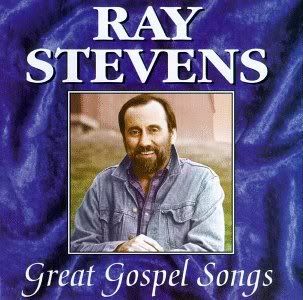
One of the compilations that Curb Records issued was this 1996 gospel collection titled Great Gospel Songs. This is a 13 song collection which can be described as a re-issue of his 1972 LP, Turn Your Radio On, with a couple of additional tracks thrown in. Although the collection contains material recorded between 1969 and 1972 the liner notes by a man named Don Ovens doesn't elaborate much on the material in this collection...although he does offer commentary about "Everything Is Beautiful" and mentions which song on the collection is his favorite. The liner notes consist mostly of biographical data one can find almost anywhere but then there's a few passages that contain commentary about Ray's experiences touring radio stations in the mid and late '50s while under the guidance of Bill Lowery. Such information like that has never appeared in any write-up of Ray Stevens that I've seen...and I've seen A LOT of them through the years. The writer of the liner notes is stingy with the number of hit songs and albums that Ray's enjoyed over the years. He's had more hit singles and more hit albums than the writer alludes to. This compilation is notable for including the unedited version of "All My Trials"...most compilations feature the shortened radio edit which clocks in at just under 3 minutes. The full length version, clocking in at 4 minutes, 33 seconds is the one included here.

1. I'll Fly Away; 1972

2. Love Lifted Me; 1972 {Top-5 Bangkok}

3. Have a Little Talk With Myself; 1969 {Country chart hit}

4. Turn Your Radio On; 1972 {Top-20 Country; Top-10 Canada; Top-30 U.K.; Top-30 AC}

5. Will There Be Any Stars; 1972

6. Why Don't You Lead Me To That Rock; 1972

7. Glory Special; 1972

8. A Brighter Day; 1970

9. Let Our Love Be a Light Unto the People; 1972

10. A Mama and a Papa; 1971 {Top-5 AC}

11. All My Trials; 1971 {Top-5 AC}

12. Yes, Jesus Loves Me; 1972

13. Everything Is Beautiful; 1970 {#1 pop; #1-AC; Top-10 U.K.; Top-40 Country}

November 17, 2010

Ray Stevens...The One and Only...

One of the items that was an exclusive to the Ray Stevens fan club was the 1992 compilation gospel album, A Brighter Day. The fan club shut down in 2002. The collection, as you can see, was issued in two volumes. Each volume features 10 recordings ranging from 1968 through 1977. Much of the material, in fact all of the material on Volume One, was lifted from his 1972 gospel album, Turn Your Radio On, while the songs on Volume Two originated elsewhere. Looking at the collection of songs I can see that Volume One features pretty much standard gospel recordings while Volume Two is more inspirational in tone...with a few songs delving into societal commentary. Ray penned four of the twenty songs on this collection and he produced and arranged every recording. The four songs that were written by Ray appear on Volume Two.

The album's title references an inspirational song that Ray recorded in 1970. "A Brighter Day" was written by Ray and it originally appeared as the B-side of another Ray Stevens composition, "Everything Is Beautiful". These two songs were the only original recordings featured on his 1970 album, Everything Is Beautiful, and they both make an appearance on the Volume Two collection. The rest of the material on Volume Two feature more inspirational recordings like "One and Only You", "Set The Children Free", and "Everybody Needs a Rainbow". Social commentary blended in with inspirational overtones is the goal of "Mr. Businessman", "Walk a Mile In My Shoes", "Come Around", and "Get Together". I was really surprised to see the inclusion of "One and Only You" and "Set The Children Free" given that the two songs originated on Warner Brothers, 1976 and 1977 respectively. Typically the songs associated with Warner Brothers that Ray recorded hardly ever show up in any collection.

The track list for this collection is below. I've included the year that Ray originally recorded the songs. Given that the Turn Your Radio On album was issued in 1972 it's safe to say that most of the songs were recorded at some point in 1972 while other songs from the album, which were released as singles, show a copyright year of 1971. The songs with the three stars indicate those written by Ray Stevens:

Turn Your Radio On; 1971
I'll Fly Away; 1972
Will There Be Any Stars?; 1972
Glory Special; 1972
A Mama And A Papa; 1971
Love Lifted Me; 1972
Yes, Jesus Loves Me; 1972
Why Don't You Lead Me To That Rock; 1972
Let Our Love Be A Light Unto the People; 1972
All My Trials; 1971

Everybody Needs A Rainbow; 1974
Walk A Mile In My Shoes; 1970
One And Only You; 1976
Set The Children Free; 1977
Mr. Businessman; 1968***
A Brighter Day; 1970***
Have A Little Talk With Myself; 1969***
Get Together; 1970
Come Around; 1970
Everything Is Beautiful; 1970***

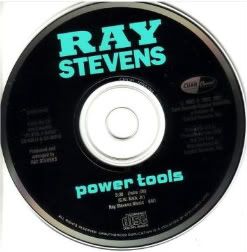
CD singles never really caught on, in my opinion, as compared to the vinyl 45 single. A CD single would include two or three songs on one disc...with the first song being the "A-side" and the next song or two being the "B-side". This CD single is of "Power Tools", a comedy song that Ray recorded in 1991 for his album #1 With a Bullet. There wasn't any "B-side" as this was considered a promo single available at radio stations. As is the case with many vinyl singles, the CD singles are also in abundant supply in various on-line marketplaces. This CD single from Ray was issued early in 1992...and "Power Tools" reached the country charts as well! Although it charted well below the Top-40 it became the last single to reach the country charts for Ray until a decade later, in 2002, when "Osama Yo' Mama" reached the Top-50. Those who follow Ray's career, as I do, know that he shifted focus from audio to music video during the 1990's and as a result had his biggest successes with music video projects during the '90s decade.

"Power Tools", for those who've never heard the song, was written perhaps due to the increase of the macho do-it-yourself kind of men that were becoming something of a growing trend during this time period. A lot of it more than likely had to do with the Tim Allen comedy program, Home Improvement, which focused on a do-it-yourself type who happened to be the host of a local TV show which celebrated the glory of power tools and all the fun you can have with them. The humor of Ray's comedy song was aimed at the very audience who watched fix-it shows and home restoration programs...most notably the PBS programs This Old House and The New Yankee Workshop as well as the comical Home Improvement. It isn't surprising that during the '90s we saw the launches of Home and Garden Television (HGTV) as well as the Do It Yourself Network (DIY).

January 8, 2010

Ray Stevens: The Great Gospel Songs

Hallelujah!! It's time to write about the Great Gospel Songs, a collection that was issued nearly 14 years ago this month. The exact date was January 9, 1996...so we're a day shy. The collection was released on Curb Records which became involved with Ray in 1990 and throughout the decade and into the next Curb often distributed Ray Stevens material. In fact, except for the latter half of 1996 through early 1998 when Ray was signed with MCA Records, Curb Records was the main record label that distributed material to shopping stores. Ray's 2002 release, Osama Yo' Mama, was on the Curb label. Curb is the label that released the various music video DVD collections to stores this past decade. The fans of Ray Stevens know what I'm referring to because the DVD's availability wasn't widely promoted...available mostly through mail-order. 2004's The Complete Comedy Video Collection DVD as well as two separate DVD collections of animated cartoon music videos titled Teenage Mutant Kung Fu Chickens and Gourmet Restaurant, were distributed by Curb Records in 2006.

Great Gospel Songs on the other hand came along in 1996 as a re-introduction, of sorts, of Ray's gospel recordings of the early '70s. In a lot of ways it was basically a re-issue of his 1972 gospel album, Turn Your Radio On, with different song sequence and the addition of two songs not included on the original release. The gospel album has since been re-issued on CD/MP3. This happened in 2005 as part of a two album on one CD release. The album is paired with his 1975 album, Misty, on the special release CD. The track list for the 1996 collection includes the following...

1. I'll Fly Away
2. Love Lifted Me
3. Have a Little Talk With Myself; 1969
4. Turn Your Radio On
5. Will There Be Any Stars?
6. Why Don't You Lead Me To That Rock?
7. Glory Special
8. A Brighter Day; 1970
9. Let Our Love Be a Light Unto the People
10. A Mama and a Papa
11. All My Trials
12. Yes, Jesus Loves Me
13. Everything is Beautiful; 1970

The two songs from 1970 weren't featured on the original release of Turn Your Radio On in 1972 but are both in the religious/inspirational vein that their inclusion is appropriate. As far as statistics go, this 1996 collection boasts five hit singles:

"Have a Little Talk With Myself" hit the country music Top-70.

"Everything Is Beautiful" hit #1 on the pop chart, #1 on the Adult-Contemporary chart, Top-40 on the country chart, and won a Grammy.

"Turn Your Radio On" hit the country Top-20, the Top-65 on the pop chart, and the Top-30 on the Adult-Contemporary chart.

"All My Trials" hit the Top-70 on the pop chart and the Top-10 on the Adult-Contemporary chart.

"A Mama and a Papa" hit the Adult-Contemporary Top-10 and the Top-85 on the pop chart.