One of the finest teen pop love ballads from Ray Stevens came along in 1967 on "Answer Me, My Love". This was among the several single releases that Monument Records issued on Ray Stevens throughout the mid and late '60s that never appeared on any full-length album. The love ballad was accompanied with the catchy sing-a-long "Mary, My Secretary" on the single release. Neither song would appear on any album until some 25 years or so later. "Answer Me, My Love" would appear in 1996 on a CD re-issue of Ray's 1968 Monument album, Even Stevens. That re-issue is on the Varese Sarabande label. Fans and music consumers in general may recognize that label as being prolific in it's treatment of Ray's catalog of music through the years. Varese, for a short period of time, was responsible for keeping Ray's earliest recordings for Monument and Barnaby in print. I researched their first release on Ray being the 1996 Even Stevens re-issue followed by the re-issue of 1969's Gitarzan. Those 1996 releases were soon followed by The Country Hits Collection, All-Time Greatest Hits, and 12 Hits in 1998, 2001, and 2002 respectively. The All-Time release features the super rare "Sgt. Preston of the Yukon" from 1960.
"Mary, My Secretary", also from 1967, wouldn't appear on any album until a 3-CD project titled The Incredible World of Ray Stevens came along. As mentioned in earlier blog entries, this title was released twice...both featuring 3 CD's...but the material was different on each collection. The overseas release features 30 recordings and the America release features 36 recordings. Also, the international release was a packaging of 3 previously issued CD's in one collection while the America release contained songs that appear to have been chosen at random on the first 2 CD's while the third CD is his 1987 release, Crackin' Up. To be clear, "Mary, My Secretary" appears on the 36 track version of The Incredible World of Ray Stevens which you see in the image above. I took this picture a few minutes ago and if you click this picture link you'll see the picture of Ray that was used for the 30 song version. You'll notice right away both releases have nearly the same art design and lettering concept but the images of Ray are different. As far as "Answer Me, My Love" goes, it doesn't appear on this collection...only "Mary, My Secretary" does. I think a lot of Ray Stevens fans agree with me that there needs to be proper CD or Mp3 releases of his Monument catalog. So far two of his studio albums for the label have been issued in their entirety: 1968's Even Stevens and 1969's Gitarzan. Several of his single-only releases for the label have become available in limited quantity on various limited release CD's through the years...all of those releases have long been out of print.
The Monument album that continues to get overlooked is 1969's Have a Little Talk With Myself. I've always felt for the longest time that the reason for the continued omission of that album is due to it's extremely topical feel. Nearly all the songs on that particular album are tied to the pop sounds and social messages of the late '60s...but recently I started to think that the bigger reason the album has never made it to CD or Mp3 in more than 40 years is that several of the songs may be tied up in copyright battles or other legal issues. If so, that could explain why his versions of quite a few of those songs have not seen the light of day during the last 43 years. Also, the license fees for those songs may be enormously expensive today as compared to back then which can also explain why there's been no Have a Little Talk With Myself re-issue. He covers the Beatles, Joe South, Bob Dylan, Blood Sweat and Tears, The 5th Dimension, The Cowsills...just to name a few...acts that certainly defined that era of pop/rock music. The songs that appear on the 1969 album are as follows:
1. I'll Be Your Baby Tonight
2. But You Know I Love You
3. Aquarius
4. The Fool on the Hill
5. Sunday Mornin' Comin' Down
6. Spinning Wheel
7. Games People Play
8. Help
9. Hair
10. Hey Jude
11. The Little Woman
12. Have a Little Talk With Myself
As you can see from the track list, this is the album that featured his version of a brand new song at the time, "Sunday Mornin' Comin' Down". The song was written by Kris Kristofferson. Ray's recording was the first in a long line of recordings by other artists...most notably the hit recording by Johnny Cash in 1970. Ray issued his version as a single in 1969...which, of course, gave Ray the distinction of being the first major recording artist to issue it as a single in addition to being the first artist to record it. Ray's image was in sharp contrast with the song's lyrics...and to this day, when asked about the song, Ray refers to the image factor being a key ingredient in whether the same song can become a hit twice depending on whose singing it. Ray put a lot of production into his recording, too, while the Cash version was minimal in production but heavy on dramatics. I like both versions...but being a Ray Stevens fan I always point out that he introduced the song to the music world even if Johnny Cash had the bigger hit with it. Ray's version reached the lower half of the pop chart and the Top-60 on the country chart in 1969...his first ever appearance on a country music chart. "The Little Woman" and "Have a Little Talk With Myself" were written by Ray...the uptempo title track became a country music chart hit, too.
Ray's biggest area of exposure came with his many appearances on the Andy Williams Show. Soon after, Ray departed from the Monument label. Ray was one of the most popular guests on Andy's program and due to this he was picked to be the host of a summer TV show in 1970 which aired during Andy's time-slot on NBC. Ray had by this time joined the Barnaby Records roster in 1970, a label owned by Andy Williams. Ray remained a frequent guest on Andy's television programs through 1970 and into 1971. Decades later the two of them became major attractions in Branson, Missouri. Andy owned and appeared in his Moon River Theater while Ray appeared at his own Ray Stevens Theatre. Ray owned and operated his theater from 1991 through the end of the 1993 season. When he stopped appearing at the theater he ventured off into other aspects of the music and entertainment business. A lot of his 1990's releases were home video projects. He would later perform a series of concerts at the Wayne Newton Theater. Sandwiched between his closing down of his theater in 1993 and the concerts at Wayne Newton's theater was the release, in 1995, of his home video movie, Get Serious!. The movie runs 1 hour, 50 minutes. The movie went without a title during it's first months of production and was known by the acronym: LFSDCMV. The acronym stands translates to the following: Long-Form Story-Driven Comedy Music Video. Later this year Ray will appear in a string of concerts saluting the life and career of Andy Williams. The concerts featuring Ray will take place in October...click Here to read all about it.
September 2, 2012
Ray Stevens: Nostalgia Valley, 39...
In this particular trip into Nostalgia Valley we visit primarily the final years that Ray Stevens was on the Barnaby Records label. Ray joined the label in 1970 and remained on their roster on into early 1976. The label went through a series of distributors, both nationally and internationally, in the form of CBS, MGM, Janus, and GRT to name a few. Ray had become the top artist for Barnaby Records and in 1975 he recorded his last studio album for the label, Misty. On this particular album Ray does his versions of several pop standards with a few newly written songs added in. The new songs, referred to as original songs since they appear on a covers project, are "Take Care of Business" and "Sunshine". The former was written by Layng Martine, Jr. and is said that the title may have been inspired by a phrase in Ray's 1968 hit, "Mr. Businessman". The two songs are extremely different, though, in terms of storyline. "Sunshine" was written by Ray...and it features an uptempo arrangement similarly heard on the album's title, "Misty". The rest of the album contains Ray's versions of pop standards.
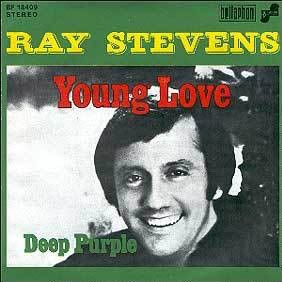
"Misty", one of Ray's biggest airplay hits, became a single in 1975 and it reached the Top-10 on the country chart. It would also reach the Top-20 on the pop chart and in early 1976 it won a Grammy in the Best Arrangement of the Year category. It's become what is known as a signature song and is performed in his concerts to this day. Although the album's award winning Top-10 title track easily became the biggest hit of the project that isn't to say the other recordings weren't as great. The second single from the album was his fancy, doo-wop take on "Indian Love Call" and it's unlike anything you'll ever hear. It reached the country Top-40 but it didn't have the staying power of "Misty" and it's become what is known as an obscure hit. Barnaby released two more singles from this album as 1975 came to a close and 1976 opened up. "Young Love", a former smash hit from Sonny James as well as Tab Hunter, became the third single release from Misty. It featured a dramatically different arrangement from the light and bouncy sing-a-long that the general public was accustomed to. Ray turned the song into a slow love ballad. Although the single missed the radio-friendly Top-40 it nevertheless charted a section below, in the country Top-50. As you can see from the single's picture sleeve, the b-side is Ray's version of "Deep Purple". For me, "Deep Purple" is one of the masterpieces of the album...not taking anything away from the vocal acrobatics of "Indian Love Call" or any of the other recordings on the album. Try singing any number of these songs the way Ray Stevens did...it's nearly impossible. "Deep Purple" is one of those songs that I think would be nearly impossible to replicate by others. When the song begins I often think of Rudy Valle for some reason...but then the arrangement shifts and the vocalization from Ray leaps into a different range and it's become a full-on, upbeat pop song. Those who've heard Ray's version no doubt are aware of the glorious note that he puts onto the performance toward the end of the recording...and as an avid listener and as a fan you can't wait to hear it. Do you want to know another song from the album that you can't wait to hear? "Lady of Spain"!! Ray puts a lot into this recording, too. Traditionally performed as a love ballad, Ray changes things with the arrangement and urgent vocal delivery...singing like a man possessed for the Spanish woman he craves...and the Fats Domino vocalization that Ray uses is another treat you can't wait to hear again and again. "Mockingbird Hill" found it's way onto a single release in 1976. Ray used a lot of tra-la's and tweedle-de's during the song's chorus and it sounds nothing like the original recording from years earlier. The single didn't reach the charts but several compilation albums from the late '70s and early '80s from independent labels featured the song on their releases.
Fans can see Ray perform "Misty", "Indian Love Call" and several other songs by purchasing a Pop! Goes the Country DVD from an on-line store that I've written about in previous blog entries. The DVD features a 1975 episode and he performs "Misty", "Indian Love Call", and "Twilight Time". The latter song is not featured on the Misty album. You can purchase the DVD at This Web Page. That's the product page for the Volume Four DVD...it includes a video embed of Ray and other artists featured in that volume. Now, for those new to that site, several other DVD volumes feature appearances from Ray Stevens. Volume Four, as mentioned, features a 1975 episode. Volume Nine features a Ray Stevens episode from 1977. Volume Fifteen features a Ray Stevens episode from 1979...he debuts "Shriner's Convention" on this episode...months before it was released as a single in early 1980. Volume Seventeen features a Ray Stevens episode from 1982. On that episode, hosted by Tom T. Hall, Ray opens up the show with an alternate version of "You've Got the Music Inside" but the remainder of his performances are in medley form, trading off with Tom T. Hall, as the two sing bits and pieces of their songs at the request of the audience. The two close the show singing a duet, "It's Hard To Be Humble". In the just released Volume Twenty-Four, it features a Ray Stevens episode from 1978. The item description states that Ray performs "Gitarzan", "Everything is Beautiful", and "Sweet Dreams". Since I don't own that DVD, yet, I obviously don't know whether or not the songs are performed in full length or in medley form. Once you see any of the episodes starring Ray Stevens you'll notice a lot of the memorable moments come not only from his performances but also from the interview segments with Ralph Emery and later, Tom T. Hall.
The songs listed below are on the 1975 Misty album:
1. Misty
2. Indian Love Call
3. Over the Rainbow
4. Oh Lonesome Me
5. Mockingbird Hill
6. Cow-Cow Boogie
7. Young Love
8. Take Care of Business
9. Sunshine
10. Deep Purple
11. Lady of Spain
"Misty", one of Ray's biggest airplay hits, became a single in 1975 and it reached the Top-10 on the country chart. It would also reach the Top-20 on the pop chart and in early 1976 it won a Grammy in the Best Arrangement of the Year category. It's become what is known as a signature song and is performed in his concerts to this day. Although the album's award winning Top-10 title track easily became the biggest hit of the project that isn't to say the other recordings weren't as great. The second single from the album was his fancy, doo-wop take on "Indian Love Call" and it's unlike anything you'll ever hear. It reached the country Top-40 but it didn't have the staying power of "Misty" and it's become what is known as an obscure hit. Barnaby released two more singles from this album as 1975 came to a close and 1976 opened up. "Young Love", a former smash hit from Sonny James as well as Tab Hunter, became the third single release from Misty. It featured a dramatically different arrangement from the light and bouncy sing-a-long that the general public was accustomed to. Ray turned the song into a slow love ballad. Although the single missed the radio-friendly Top-40 it nevertheless charted a section below, in the country Top-50. As you can see from the single's picture sleeve, the b-side is Ray's version of "Deep Purple". For me, "Deep Purple" is one of the masterpieces of the album...not taking anything away from the vocal acrobatics of "Indian Love Call" or any of the other recordings on the album. Try singing any number of these songs the way Ray Stevens did...it's nearly impossible. "Deep Purple" is one of those songs that I think would be nearly impossible to replicate by others. When the song begins I often think of Rudy Valle for some reason...but then the arrangement shifts and the vocalization from Ray leaps into a different range and it's become a full-on, upbeat pop song. Those who've heard Ray's version no doubt are aware of the glorious note that he puts onto the performance toward the end of the recording...and as an avid listener and as a fan you can't wait to hear it. Do you want to know another song from the album that you can't wait to hear? "Lady of Spain"!! Ray puts a lot into this recording, too. Traditionally performed as a love ballad, Ray changes things with the arrangement and urgent vocal delivery...singing like a man possessed for the Spanish woman he craves...and the Fats Domino vocalization that Ray uses is another treat you can't wait to hear again and again. "Mockingbird Hill" found it's way onto a single release in 1976. Ray used a lot of tra-la's and tweedle-de's during the song's chorus and it sounds nothing like the original recording from years earlier. The single didn't reach the charts but several compilation albums from the late '70s and early '80s from independent labels featured the song on their releases.
Fans can see Ray perform "Misty", "Indian Love Call" and several other songs by purchasing a Pop! Goes the Country DVD from an on-line store that I've written about in previous blog entries. The DVD features a 1975 episode and he performs "Misty", "Indian Love Call", and "Twilight Time". The latter song is not featured on the Misty album. You can purchase the DVD at This Web Page. That's the product page for the Volume Four DVD...it includes a video embed of Ray and other artists featured in that volume. Now, for those new to that site, several other DVD volumes feature appearances from Ray Stevens. Volume Four, as mentioned, features a 1975 episode. Volume Nine features a Ray Stevens episode from 1977. Volume Fifteen features a Ray Stevens episode from 1979...he debuts "Shriner's Convention" on this episode...months before it was released as a single in early 1980. Volume Seventeen features a Ray Stevens episode from 1982. On that episode, hosted by Tom T. Hall, Ray opens up the show with an alternate version of "You've Got the Music Inside" but the remainder of his performances are in medley form, trading off with Tom T. Hall, as the two sing bits and pieces of their songs at the request of the audience. The two close the show singing a duet, "It's Hard To Be Humble". In the just released Volume Twenty-Four, it features a Ray Stevens episode from 1978. The item description states that Ray performs "Gitarzan", "Everything is Beautiful", and "Sweet Dreams". Since I don't own that DVD, yet, I obviously don't know whether or not the songs are performed in full length or in medley form. Once you see any of the episodes starring Ray Stevens you'll notice a lot of the memorable moments come not only from his performances but also from the interview segments with Ralph Emery and later, Tom T. Hall.
The songs listed below are on the 1975 Misty album:
1. Misty
2. Indian Love Call
3. Over the Rainbow
4. Oh Lonesome Me
5. Mockingbird Hill
6. Cow-Cow Boogie
7. Young Love
8. Take Care of Business
9. Sunshine
10. Deep Purple
11. Lady of Spain
Labels:
1975,
1976,
country pop,
deep purple,
lady of spain,
ray stevens,
sweet dreams,
young love
September 1, 2012
Ray Stevens: Nostalgia Valley, 38...
It's hello September, goodbye August as we are in the midst of what's referred to as Labor Day weekend. We visit some specific years in this installment of the Nostalgia Valley as we look at 1987 and 2002...not necessarily in chronological order. The blog kicks off a decade ago...in 2002...
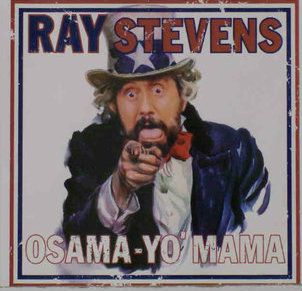
Ray Stevens fans certainly will never forget his contribution, in song, to the aftermath of 9/11. Songs bashing and celebrating the capture and defeat of Osama bin Laden were all the rage in the latter half of 2001 and into 2002. The fervor seemed to peak around 2003, though, but not before a gallery of artists put out music reflecting the country's mood. The single, "Osama Yo' Mama", was a major success and it sold more than half a million copies throughout 2002 and was often ranked in the Top-5 on the Country Singles Sales chart. It had peaked at #1 early in it's chart run but remained in the Top-5 for over half a year. The song, it should be pointed out, was released in December 2001 and hit the sales charts early in 2002. The image you see is the CD single which is backed with his version of "United We Stand". The song reached the Country airplay chart in early 2002...peaking in the Top-50...his first chart appearance there since early 1992. In between 1992 and 2002 Ray's biggest successes were his home videos and his concerts. This is reflective in the fact that between 1992 and 2002 only FOUR studio albums were released in that 10 year period: Classic Ray Stevens, Hum It, Christmas Through a Different Window, and Ear Candy; whereas, in that same time frame, SEVEN home videos hit the market, either sold exclusively through his fan club or through TV commercials and print ads: Amazing Rolling Revue, Comedy Video Classics, Ray Stevens Live!, More Ray Stevens Live!, Get Serious!, Ray Stevens Made a Movie?? Get Serious!!, and Funniest Video Characters. Once "Osama Yo' Mama" had become a major sales and modest airplay hit, a full-length CD soon followed as 2002 progressed. The CD's cover was exactly like the image on the CD single...the only difference being the phrase The Album written behind the illustration of Ray as Uncle Sam. Some critics mistakenly referred to the CD as The Album since that's what's shown directly under Ray's name. The actual title is Osama Yo' Mama: The Album to differentiate it from the CD single. As you can see from the image below, the cover art for both the CD single and full-length CD are exactly the same. The full-length CD is more or less a re-issue of Ear Candy with a few changes. Seven of the ten songs on the 2002 CD originated on 2000's Ear Candy release. The 2000 release was available on Ray's own label, Clyde Records, but then the brand new Osama single hit big in late 2001/early 2002. When Curb decided to put out a full-length CD to support the single, I assume Ray wanted to give exposure, to a wider audience, the songs he had released in 2000 in limited quantity. The songs from Ear Candy that didn't make it onto the Osama Yo' Mama: The Album release were "The King of Christmas", "No Lawyers in Heaven", and "The Dog Song". In their place were "Osama Yo' Mama", "United We Stand", and the previously unavailable "Freudian Slip".
Strangely enough, Ray never performed the Osama song that much. I'm sure he performed it wherever he was appearing in concert but I've never saw him perform it on any television programs of that time period. Perhaps a big reason for that was due to the recent death of The Nashville Network...which had by 2002 become a channel for reruns of 1970's and 1980's programs, wrestling programs, and other programming designed for an under 40 audience. The country music format had left the channel by 2000...putting an end to the last major national outlet for artists of Ray's generation, not counting the Grand Ole Opry radio series, which by 2002 had been on the air for 77 years. Now, this was long before select radio stations began to seriously cater to traditional country music and to artists that were over 45. In 2002 there weren't as many niche channels/stations on satellite radio or what's called terrestrial radio that catered specifically to an older audience and in a lot of ways The Nashville Network, even as late as 1998, could still be counted on for giving national exposure to artists that had long been given the boot on Top-40 country radio. So, as mentioned previously, when The Nashville Network as a country music dominated channel ceased to exist, a lot of the product from the over 40 artists who'd typically appear on the channel for exposure suddenly found themselves 'starting over' as the Internet craze swept the country. Several artists created web-sites to promote their music and concert dates...as well as sell merchandise. Fast-forward 10 years, 2012, on-line sales are much more commonplace today and it's fairly easy for practically anybody to sell their product on-line without having to mess with the unwritten rule of kissing up to radio programmers or TV show producers in order to get the latest song heard by the masses. Ray Stevens, as you all know, eventually discovered a way to use on-line exposure to his advantage and introduce himself to an entirely different audience in the process...but I'm getting ahead of myself...I was discussing 2002 but now let's travel back 25 years to 1987...
I can't say enough about this nutty 1987 album from Ray Stevens. I've written about it before and I'll more than likely write about it again at some future date. For this is an album that features nutty comedy songs...the few albums leading up to this one, plus the ones that immediately followed for the label, never contained the kind of humor found in these recordings. The cover art for Crackin' Up is obviously based upon Humpty Dumpty. The back of the album has no additional picture of Ray...it would've been comical to have Ray peaking up from behind the wall or shown him attempting to climb back up after falling off...but that wasn't to be. Instead, the back of the album shows the song list. One of the oddities about the song title lettering is that they used a kind of purple on a blue backdrop...the cassette version has this touch. You can easily open up the cassette and read the titles on the actual tape cartridge or on the inside of the cover sleeve once you've purchased it but back in the day if you were browsing through cassette tapes at the local shopping store and came across Crackin' Up...well, you'd have to strain to see the song titles. Fortunately later pressings/re-releases have fixed the letter coloring issue but if you happen to have the cassette release from the first few years it was in print (1987-1990) then you'll know what I'm talking about! The big song from this album was the topical, satiric "Would Jesus Wear a Rolex?". Would you believe that the single created such a stir that commentators were writing entire opinion columns in the newspapers centered around the song. Would you believe that some people misunderstood the song and felt it mocked religion in general? Did you know it was in the running for a Grammy? Did you know that Ray performed the song several times on different episodes of Hee-Haw? Ray, unlike many of the artists that appeared on the show, was able to perform the song on several different episodes. I think a lot of this had to do with the fact that he co-hosted quite a few episodes throughout 1987 in addition to appearing as a guest on a few other episodes in 1987 and 1988. The taping sessions I think afforded him that rare opportunity to create awareness for the song, on a highly rated syndicated show, multiple times. The song also afforded him appearances on non-country oriented programs of the day. That's how big the song had become. In a bizarre twist of fate the single came one spot short of achieving a Top-40 ranking on the country charts. It was more or less the result of the topicality and controversy surrounding the song...it's sales success no doubt was a big reason it performed as well as it did on the country singles chart. It was during this time that sales and airplay determined chart placings. If a single attained strong sales but lacked strong airplay chances were it would come close to breaking into the Top-40 portion of the chart...of course, if a single achieved a hefty amount of airplay but modest sales it would more than likely achieve a Top-40 placing but not have the staying power to climb into the Top-20. Sales and Airplay pretty much had to be equal in order for practically any song to obtain a Top-10 or #1 finish. That's just the way it was. The single is just another example, in a long line of examples, where chart finishes fail to show a song's true popularity.
I'm happy to say that when I saw Ray Stevens in concert a couple of years ago he performed "Would Jesus Wear a Rolex?"...it took me by complete surprise because it's a song that I didn't think he performed too much anymore considering the topicality of the song is more or less rooted in the mid and late '80s televangelist scandals. He performed it...sounding practically the same as he did on the original recording...and he hit all the spots perfectly. What do I mean by that? Well, it means that he emphasized the lyrics in concert as he had done on the recording. Maybe I was caught up in his performance to notice if he had actually changed anything in the delivery but let me tell you, seeing Ray Stevens in person and seeing him perform those songs in a concert setting, well, it's definitely memorable. Those going to his concerts later this year don't be surprised if you find yourself being caught up in the atmosphere, too! The 1987 album also features "Sex Symbols", "The Flies of Texas Are Upon You", "Cool Down Willard", the nutty "Three Legged Man" and his version of "I'm My Own Grandpaw"...among several more.
Ray Stevens fans certainly will never forget his contribution, in song, to the aftermath of 9/11. Songs bashing and celebrating the capture and defeat of Osama bin Laden were all the rage in the latter half of 2001 and into 2002. The fervor seemed to peak around 2003, though, but not before a gallery of artists put out music reflecting the country's mood. The single, "Osama Yo' Mama", was a major success and it sold more than half a million copies throughout 2002 and was often ranked in the Top-5 on the Country Singles Sales chart. It had peaked at #1 early in it's chart run but remained in the Top-5 for over half a year. The song, it should be pointed out, was released in December 2001 and hit the sales charts early in 2002. The image you see is the CD single which is backed with his version of "United We Stand". The song reached the Country airplay chart in early 2002...peaking in the Top-50...his first chart appearance there since early 1992. In between 1992 and 2002 Ray's biggest successes were his home videos and his concerts. This is reflective in the fact that between 1992 and 2002 only FOUR studio albums were released in that 10 year period: Classic Ray Stevens, Hum It, Christmas Through a Different Window, and Ear Candy; whereas, in that same time frame, SEVEN home videos hit the market, either sold exclusively through his fan club or through TV commercials and print ads: Amazing Rolling Revue, Comedy Video Classics, Ray Stevens Live!, More Ray Stevens Live!, Get Serious!, Ray Stevens Made a Movie?? Get Serious!!, and Funniest Video Characters. Once "Osama Yo' Mama" had become a major sales and modest airplay hit, a full-length CD soon followed as 2002 progressed. The CD's cover was exactly like the image on the CD single...the only difference being the phrase The Album written behind the illustration of Ray as Uncle Sam. Some critics mistakenly referred to the CD as The Album since that's what's shown directly under Ray's name. The actual title is Osama Yo' Mama: The Album to differentiate it from the CD single. As you can see from the image below, the cover art for both the CD single and full-length CD are exactly the same. The full-length CD is more or less a re-issue of Ear Candy with a few changes. Seven of the ten songs on the 2002 CD originated on 2000's Ear Candy release. The 2000 release was available on Ray's own label, Clyde Records, but then the brand new Osama single hit big in late 2001/early 2002. When Curb decided to put out a full-length CD to support the single, I assume Ray wanted to give exposure, to a wider audience, the songs he had released in 2000 in limited quantity. The songs from Ear Candy that didn't make it onto the Osama Yo' Mama: The Album release were "The King of Christmas", "No Lawyers in Heaven", and "The Dog Song". In their place were "Osama Yo' Mama", "United We Stand", and the previously unavailable "Freudian Slip".
Strangely enough, Ray never performed the Osama song that much. I'm sure he performed it wherever he was appearing in concert but I've never saw him perform it on any television programs of that time period. Perhaps a big reason for that was due to the recent death of The Nashville Network...which had by 2002 become a channel for reruns of 1970's and 1980's programs, wrestling programs, and other programming designed for an under 40 audience. The country music format had left the channel by 2000...putting an end to the last major national outlet for artists of Ray's generation, not counting the Grand Ole Opry radio series, which by 2002 had been on the air for 77 years. Now, this was long before select radio stations began to seriously cater to traditional country music and to artists that were over 45. In 2002 there weren't as many niche channels/stations on satellite radio or what's called terrestrial radio that catered specifically to an older audience and in a lot of ways The Nashville Network, even as late as 1998, could still be counted on for giving national exposure to artists that had long been given the boot on Top-40 country radio. So, as mentioned previously, when The Nashville Network as a country music dominated channel ceased to exist, a lot of the product from the over 40 artists who'd typically appear on the channel for exposure suddenly found themselves 'starting over' as the Internet craze swept the country. Several artists created web-sites to promote their music and concert dates...as well as sell merchandise. Fast-forward 10 years, 2012, on-line sales are much more commonplace today and it's fairly easy for practically anybody to sell their product on-line without having to mess with the unwritten rule of kissing up to radio programmers or TV show producers in order to get the latest song heard by the masses. Ray Stevens, as you all know, eventually discovered a way to use on-line exposure to his advantage and introduce himself to an entirely different audience in the process...but I'm getting ahead of myself...I was discussing 2002 but now let's travel back 25 years to 1987...
I can't say enough about this nutty 1987 album from Ray Stevens. I've written about it before and I'll more than likely write about it again at some future date. For this is an album that features nutty comedy songs...the few albums leading up to this one, plus the ones that immediately followed for the label, never contained the kind of humor found in these recordings. The cover art for Crackin' Up is obviously based upon Humpty Dumpty. The back of the album has no additional picture of Ray...it would've been comical to have Ray peaking up from behind the wall or shown him attempting to climb back up after falling off...but that wasn't to be. Instead, the back of the album shows the song list. One of the oddities about the song title lettering is that they used a kind of purple on a blue backdrop...the cassette version has this touch. You can easily open up the cassette and read the titles on the actual tape cartridge or on the inside of the cover sleeve once you've purchased it but back in the day if you were browsing through cassette tapes at the local shopping store and came across Crackin' Up...well, you'd have to strain to see the song titles. Fortunately later pressings/re-releases have fixed the letter coloring issue but if you happen to have the cassette release from the first few years it was in print (1987-1990) then you'll know what I'm talking about! The big song from this album was the topical, satiric "Would Jesus Wear a Rolex?". Would you believe that the single created such a stir that commentators were writing entire opinion columns in the newspapers centered around the song. Would you believe that some people misunderstood the song and felt it mocked religion in general? Did you know it was in the running for a Grammy? Did you know that Ray performed the song several times on different episodes of Hee-Haw? Ray, unlike many of the artists that appeared on the show, was able to perform the song on several different episodes. I think a lot of this had to do with the fact that he co-hosted quite a few episodes throughout 1987 in addition to appearing as a guest on a few other episodes in 1987 and 1988. The taping sessions I think afforded him that rare opportunity to create awareness for the song, on a highly rated syndicated show, multiple times. The song also afforded him appearances on non-country oriented programs of the day. That's how big the song had become. In a bizarre twist of fate the single came one spot short of achieving a Top-40 ranking on the country charts. It was more or less the result of the topicality and controversy surrounding the song...it's sales success no doubt was a big reason it performed as well as it did on the country singles chart. It was during this time that sales and airplay determined chart placings. If a single attained strong sales but lacked strong airplay chances were it would come close to breaking into the Top-40 portion of the chart...of course, if a single achieved a hefty amount of airplay but modest sales it would more than likely achieve a Top-40 placing but not have the staying power to climb into the Top-20. Sales and Airplay pretty much had to be equal in order for practically any song to obtain a Top-10 or #1 finish. That's just the way it was. The single is just another example, in a long line of examples, where chart finishes fail to show a song's true popularity.
I'm happy to say that when I saw Ray Stevens in concert a couple of years ago he performed "Would Jesus Wear a Rolex?"...it took me by complete surprise because it's a song that I didn't think he performed too much anymore considering the topicality of the song is more or less rooted in the mid and late '80s televangelist scandals. He performed it...sounding practically the same as he did on the original recording...and he hit all the spots perfectly. What do I mean by that? Well, it means that he emphasized the lyrics in concert as he had done on the recording. Maybe I was caught up in his performance to notice if he had actually changed anything in the delivery but let me tell you, seeing Ray Stevens in person and seeing him perform those songs in a concert setting, well, it's definitely memorable. Those going to his concerts later this year don't be surprised if you find yourself being caught up in the atmosphere, too! The 1987 album also features "Sex Symbols", "The Flies of Texas Are Upon You", "Cool Down Willard", the nutty "Three Legged Man" and his version of "I'm My Own Grandpaw"...among several more.
Labels:
1987,
2002,
country comedy,
Obama,
ray stevens,
would jesus wear a rolex
Subscribe to:
Posts (Atom)