Showing posts with label lady of spain. Show all posts

March 21, 2020

Ray Stevens: The Ralph Emery Show Interviews, June 1975...

Hello all!! Earlier today the remaining episodes of the Ralph Emery Show from June 1975 featuring Ray Stevens were uploaded onto YouTube. In a couple of previous blog entries I mentioned that once all the episodes make it on-line I'd put together a blog entry containing all five episodes.

June 23, 1975

June 24, 1975

June 25, 1975

June 26, 1975

June 27, 1975

I've listened to the June 25th episode and as soon as I publish this post I'll be listening to the June 26th and June 27th episodes. In the June 25th episode Ray speaks about the Misty album and throughout the hour Ralph plays Ray's recordings of "Young Love", "Indian Love Call", and "Lady of Spain". The first song of the hour is Donna Fargo's recording, "Hello Little Bluebird". Ralph mentions that the song was recorded at Ray's studio. Ralph and Ray get into a comical argument regarding the year Sonny James recorded "Young Love". Ralph says it's 1955 and Ray says 1957. The answer is in the middle...the song originated in 1956 and was first recorded by one of it's writers, Ric Cartey. Sonny James recorded his version in the latter half of 1956 and it became a hit in 1957 followed by the Tab Hunter version. Throughout the hour show from June 25th you'll hear recordings by the likes of Charley Pride, Connie Smith, Billy Walker, Johnny Carver, and even an instrumental by Sonny James. The final song of the June 25th episode is Ray's version of "Lady of Spain". Ray mentions the instrumentation used for the recording and how he excitedly hollers out the name of the saxophone player, Norman Ray, in the recording...

International single release, 1975

July 14, 2019

Ray Stevens is One of a Kind...

One of the things that I've enjoyed over the last 10+ years of writing this fan-created blog is the variety of music styles and time periods that can be written about from one blog entry to the next given the fact that the career of Ray Stevens is lengthy and encompasses a lot of territory within the music landscape. In the last blog entry I spotlighted a video clip of Ray giving the spotlight to Loretta Lynn at his CabaRay showroom in a concert from July 5th of this year...and in this blog entry I'm stepping back 44 years to 1975.

I'm sure the most devoted of fans out there have heard his rendition of the pop music standard, "Lady of Spain". The recording made it's debut on Ray's 1975 album, Misty. This album featured mostly cover songs from Ray of pop music standards featuring different arrangements...a concept that resurfaced on a couple of future albums from Ray. It isn't a new concept or something unique to the career of Ray Stevens, though. Prior to Misty in 1975 he issued the album, Have a Little Talk with Myself, in 1969. In that album he performed his versions of contemporary pop songs...some with new arrangements and some retaining the original arrangements...but each were clearly transformed into the Ray Stevens style. In the case of both albums each featured a couple of original recordings. The 1969 album, among the cover songs, were originals such as "The Little Woman", "Sunday Mornin' Comin' Down", and the title track "Have a Little Talk with Myself". Oh, yes, if you caught my previous blog entry or have been a longtime fan of Ray Stevens you'll know that he recorded "Sunday Mornin' Comin' Down" before anyone else...so when it appeared on the 1969 album it was considered an original song.

This is the photo that accompanied the single's release in Germany in early 1976. The irony being that Ray had already left the Barnaby Records roster for Warner Brothers when this single was released. It's rare now but at that time in was commonplace for a record label to release further singles on an artist even after the artist left the label...the most common reason is for contractual reasons. An artist may have signed a contract giving the label the option to release a set amount of recordings, either in the form of albums or singles, after the completion of the contract. In this case the presence of a newly released recording from a previous label finds itself in competition with the artist's newly recorded material for his/her current label but almost always the recordings released from an artist's former record label rarely achieve heavy media publicity. I've read reports down through the years that some record labels issue singles on a previously signed artist, strategically, in an effort to coincide with the artist's current release on a competing label...and although, contractually, it is legal, it nevertheless may be a sign of bitterness on the part of the artist's former record label to possibly diminish whatever media attention/hype the artist may receive from the next record label. In Ray's memoir, Ray Stevens' Nashville, he explains that during the course of his career he's recorded for a lot of record labels and he mentions that some have asked why he's recorded for numerous labels and what causes an artist to go from one label to another. He explained that in most cases an artist leaves one label for another because a contract has expired and either the label doesn't want to re-sign the artist or the artist wants to shop around for another 'home', as they call it. He made mention of never burning bridges...which is a valuable piece of advice...because a record label that you were once signed to may, down the road, show an interest in having you on their roster again or the label may have gone through a major executive shake-up and have a whole new team in charge and they may want to do business with you or you may want to work for them.

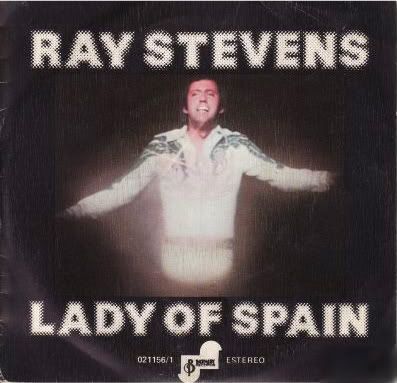
The recording of "Lady of Spain" features a completely different arrangement and tempo than the pop music standard from the 1930s. The song is most commonly played as an instrumental...most often on the accordion...but the vocal versions of the song were performed in a slow, ballad presentation. Ray transformed the song into a rollicking, up-tempo festive presentation and his vocal styling on this recording is comparable to Fats Waller, Jim Croce, and Dr. John rolled into one. Ray Stevens is definitely one of a kind...with the B-side being "Mockingbird Hill"...a pop standard from 1951. A couple of years after Ray recorded "Mockingbird Hill" it became a hit single for country singer, Donna Fargo, in 1977. The photo used on the single release in Germany is from Ray's 1973 studio album, Nashville. There are other releases of "Lady of Spain" / "Mockingbird Hill" which features the photo from the Misty album.

The Misty album features the following Ray Stevens recordings:

1. Misty
2. Indian Love Call
3. Over the Rainbow
4. Oh, Lonesome Me
5. Sunshine**
6. Cow-Cow Boogie
7. Young Love
8. Deep Purple
9. Mockingbird Hill
10. Take Care of Business**
11. Lady of Spain

The titles with the two asterisks ** indicate original songs...the rest of the recordings were songs previously recorded by other artists. "Sunshine" was written by Ray Stevens whereas Layng Martine, Jr. wrote "Take Care of Business". "Sunshine" is a bouncy, happy, up-tempo sing-a-long utilizing pretty much the same instrumentation heard on "Misty". Ray once remarked in an interview that not only does he want lyrics to tell a story but also the music to tell a story...and you'll certainly feel happy and be all smiles when listening to the music accompanying "Sunshine". The latter song's title was inspired by a line in Ray's 1968 recording, "Mr. Businessman", but that's where the similarities end. "Take Care of Business" is a slow ballad of mounting lust and desire that a man has for his wife and how his job keeps the two apart...but he's determined not to allow his job to interfere with his relationship any longer...and he emphatically states that he and his wife are going to "Take Care of Business" later that night when he goes home. As you see "Lady of Spain" is the album's closing performance and a perfect way to close out the album.

The musicians featured on the album should be familiar to those that have examined his studio albums over the years. "Misty" and "Sunshine" were recorded during the same session and because of this the credits specify which musicians are heard on those two recordings as well as "Indian Love Call" and "Deep Purple". In today's music industry you may have a different group of musicians for every recording found on an album...and with music being purchased digitally there's a lack of traditional elements found in the physical copy of a CD. On a digital album's product page you're likely going to see a photo of the artist or the cover of the album if it's also available on CD and you'll see the song titles...but rarely will you see musician credits, songwriter credits, publisher credits, or where the songs were recorded. I like seeing those things...so I continue to purchase a CD if one is available...rather than purchasing a digital/Mp3 copy.

August 2, 2015

Ray Stevens: Lady of Spain at 40...

Hello one and all...a certain Spanish lady that Ray Stevens sang about in 1975 is 40 this year. Originating on the Misty album comes "Lady of Spain"...a pop music standard that up until 1975 had been performed mostly as a love ballad and in some performances as an instrumental on guitar and or accordion. In fact, in the performances that feature a vocalist (recordings from the likes of Bing Crosby, Eddie Fisher, Dennis Day, and dating back to 1931's recording by Al Bowlly and Ray Noble's orchestra) the singer is usually singing the song at a slower tempo against the up-tempo musical backdrop.

Although the instrumental performances carried an up-tempo flair in comparison to some of the vocal performances none could compare to the raucous, up-tempo lively performance by Ray Stevens. In the Ray Stevens recording his vocal matches the musical tempo...and on top of that he does a swell vocal impression of the legendary Fats Domino during the first half of the record before it explodes even further into a frenzy prior to Ray calling out the name of the saxophonist at the session, Norman Ray, who goes into a saxophone solo. The image off to the left is from the German release early in 1976. The recording itself took place in 1975 but commercially seen a single release in the summer of 1976...one final single release on the Barnaby Records label several months after Ray had joined and already released his debut album for Warner Brothers. Given that "Lady of Spain" seen it's release after he left Barnaby meant that all of the media hype that could've been used for the single had instead gone to his current single release for Warner Brothers, "You Are So Beautiful"...but longtime fans of Ray are well aware of his cover of "Lady of Spain". It's one of my all-time favorites.

The image of Ray that the record distributors overseas used on the single release of "Lady of Spain" comes from his 1973 album, Nashville. Once upon a time international publicity of American artists utilized previously released publicity photo's or images from previously released albums instead of issuing an exclusive photo for each country...in fact I came across an article on Ray dated from 1976 but it clearly used a photo of Ray from 1970 as a visual. This kind of thing continues to go on today but to a lesser extent. If you visit any number of sites that feature information or articles about Ray Stevens chances are you're going to see a publicity photo of Ray from the latter half of the 2000s or the familiar photo of Ray from his 1992 Comedy Video Classics home video...that release occurred 23 years ago (!) as hard as it is for me to believe...but sites use that photo of him to this very day.

One of the strange facts about the single release of Ray's cover of "Lady of Spain" is that it credits a writer by the name of H.B. Tilsley alongside Tolchard Evans, Stanley Damerell, and Robert Hargreaves. On almost all other single releases of the song by other artists the writers are credited as Tolchard Evans and Erell Reaves (a pseudonym for the lyricists). I'll post an image of the single release from Ray a little bit later. In the meantime "Lady of Spain", as the title of this blog entry points out, turns 40 and so does all of the recordings on the Misty album. Yes, the big hit from the album is the Grammy inning title track but the entire album is Grammy worthy. Even though Ray's performance of "Misty" is incredible, in hindsight, it's massive success over shadowed the remaining performances from the album with "Lady of Spain" being one of those over-looked gems. Another under-rated performance from that album is this single's B-side, "Mockingbird Hill"...oh, and then there's the splendor of "Indian Love Call" and the memorable vocals on "Deep Purple". Here's something to amaze your friends with...Ray Stevens, in 1975, visited The Great American Songbook decades before it became commonplace as a commercial endeavor. As mentioned, the image used on this picture sleeve comes from Ray's Nashville album. In some of my earlier blog entries I've posted other picture sleeves of "Lady of Spain"...one happened to be the image of Ray from the Misty album.

I came across an interesting item on eBay several hours ago...an album called Puzzle credited to Ray Stevens and the release year being 1978 and the country of release being Spain. I can't read foreign languages but common sense would lead one to assume that it's a double album (2 vinyl albums) based on the sticker that appears on the album's cover. The year of release being 1978 and the fact it contains 2 vinyl records has me thinking it's an earlier version of a United Kingdom double album project that surfaced a year later in 1979 called The Greatest Hits Collection or a re-release of a 1977 double album project called The Many Sides of Ray Stevens. The bizarre fact surrounding this Puzzle double LP is there's no picture of Ray on the album's cover but a familiar font of his name appears. The font comes from the 1975 Greatest Hits compilation with the rather large copy of the "S" letter. Any information about this Puzzle LP is appreciated. The back of the LP isn't on display and perhaps a picture of him and the list of songs on the album appear on that side of the cover but as you can see all that's on the front is the title, the number of vinyl discs, and the artist name.

Here's that image of the single release I made mention of earlier. The writers are credited as R. Hargreaves, T. Evans, S. Damerell, and H.B. Tilsley. I did some research in the past and Tilsley happened to be a composer often credited as Henry B. Tilsley...and his name appears on other works featuring the other credited writers. Further research at some future point in time may provide me with answers as to the reason Tilsley is credited as a writer in some pressings of "Lady of Spain" but yet he's uncredited as a writer in other pressings. If you're familiar with the long running program hosted by Lawrence Welk (1951-1982) then you'll immediately be familiar with "Lady of Spain" as the theme song for Myron Floren, an accordionist and right hand man on the program for pretty much it's entire run (both locally, nationally, and in syndication).

October 25, 2012

Ray Stevens: Golden LP Series, Part Twelve...

Studio album 12 in the career of Ray Stevens arrived in 1975 in the form of Misty. The LP contains 11 songs with 9 of them covers of mostly pop standards dating back well before 1955...with a few latter day pop songs thrown into the equation. The LP spawned four single releases...three of those releases became chart hits.

As mentioned, issued in 1975, "Misty" was the first single release. The single displayed Ray's arranging talents as he changed the slow, love ballad associated with Johnny Mathis into an uptempo, Bluegrass-infected arrangement. The main instrumentation on "Misty" was the banjo, fiddle, and the steel guitar accompanied by the piano and other instruments but by and large the banjo and steel guitar were the most prominent. The single features a lengthy, famous steel guitar solo in the middle of the song. The piano makes it's way into the solo but it's the steel guitar that dominates. As a single, "Misty" would reach the Top-5 on the Country chart and the Top-20 on the Hot 100. It's success was soon followed with the Misty album...which features a rather peculiar photo shoot of Ray decked out in a flashy white suit with a dark backdrop. I've often remarked that it looks as if he's taking in the applause from some concert or television appearance. I wish I knew the story behind this unique cover shot but I don't. There are two original songs on here to break up the flow of cover songs. "Sunshine", written by Ray and arranged in a Bluegrass flavor, is a catchy love song. Layng Martine supplies "Take Care of Business", a love ballad with heavy emphasis on love...it's one of the few songs in Ray's long career that you could describe as sultry or 'hot'. The title was probably inspired by a recurring line in Ray's 1968 hit "Mr. Businessman". Elsewhere on the album we have covers a plenty...one of the greatest is his take on "Deep Purple" which, near the end, features one of the highest notes he's ever delivered.

High notes and desire flood his version of "Indian Love Call" where instead of giving it an uptempo feeling, associated with Slim Whitman, he slows the delivery way down and turns it into a drawn out love ballad complete with doo-wop background vocals. He took his version to the Country Top-40 in the middle of 1975 and it reached the Top-70 on the Hot 100. If you order one of the DVD volumes of Pop! Goes the Country that I've written about in a few blog entries you'll be able to see Ray perform the song from the time period it was a hit. Ralph Emery, the show's host, comments that the song had been a hit for Slim Whitman as well as Nelson Eddy and Jeanette McDonald but it had never been performed quite like the way Ray Stevens does it. The single became a fixture on several compilation albums through the latter half of the '70s and into the early '80s but then it became obscure. The thing that I've often found annoying by that practice is it prevents successive audiences of hearing certain songs from his career that were actual chart hits and with reduced availability the song(s) become less and less familiar...even though the familiarity should never go away within an artist's fan base. A Ray Stevens audience in 1989, for example, should have been as familiar with his current recordings as his older recordings. A fan of Ray's in 2012 should have some sort of basic knowledge about where Ray came from as well as his music path and various other things pertaining to him. Songs he recorded in 1975, for example, are as familiar to me as songs he did in 1968 or 1988 or 1973 or 1993 or 2002, etc., etc. However, this all-encompassing point of view obviously isn't shared with many record companies and so a lot of compilation albums released on Ray Stevens seemed to cater to specific time frames and it's perhaps decided that someone in 2012 may not care to hear something Ray recorded in 1970 or 1983 or 1991. "Indian Love Call" made a re-appearance in an early '90s compilation release and it appeared on later Mp3 digital releases but it's definitely one of those hit songs from Ray that's obscure now.

"Young Love", originally a huge hit for Sonny James and later, Tab Hunter, received the Ray Stevens treatment for the Misty album. "Young Love" became the third single release from the album in the latter half of 1975. Ray's version reached the Country Top-50 and on the Hot 100 pop chart it managed to crawl up several spaces where it peaked...one of his lowest charting Hot 100 finishes since the mid 1960's. Some of the other cover songs, not released as singles, but still just as great are "Over the Rainbow", "Cow Cow Boogie", and "Oh, Lonesome Me". The latter is the only cover song originating in country music from the pen of Don Gibson. 

Depending in what country you lived in at the time, Barnaby Records often issued singles seemingly at random...pushing songs that may have been album tracks or B-sides in America but issuing them overseas as A-sides. Judging by the picture sleeve, "Lady of Spain" is the A-side and "Mockingbird Hill" is the B-side. The picture of Ray comes from his 1973 Nashville album. "Mockingbird Hill" had been pushed as an A-side early in 1976. It was around this point in time that Ray and Barnaby Records parted ways. This was by far his longest-lasting home...having released his first singles for the label early in 1970. Several months after Ray's departure from the label, "Lady of Spain" Bubbled Under the Hot 100. Ray's departure from Barnaby in the early part of 1976 ended on a high note, actually. He won a Grammy in 1976 for Best Arrangement of the Year for his version of "Misty". There was no lengthy gap between single releases, though, and his debut single for the much larger Warner Brothers Records arrived soon after "Mockingbird Hill" had failed to reach the charts.

September 2, 2012

Ray Stevens: Nostalgia Valley, 39...

In this particular trip into Nostalgia Valley we visit primarily the final years that Ray Stevens was on the Barnaby Records label. Ray joined the label in 1970 and remained on their roster on into early 1976. The label went through a series of distributors, both nationally and internationally, in the form of CBS, MGM, Janus, and GRT to name a few. Ray had become the top artist for Barnaby Records and in 1975 he recorded his last studio album for the label, Misty. On this particular album Ray does his versions of several pop standards with a few newly written songs added in. The new songs, referred to as original songs since they appear on a covers project, are "Take Care of Business" and "Sunshine". The former was written by Layng Martine, Jr. and is said that the title may have been inspired by a phrase in Ray's 1968 hit, "Mr. Businessman". The two songs are extremely different, though, in terms of storyline. "Sunshine" was written by Ray...and it features an uptempo arrangement similarly heard on the album's title, "Misty". The rest of the album contains Ray's versions of pop standards.

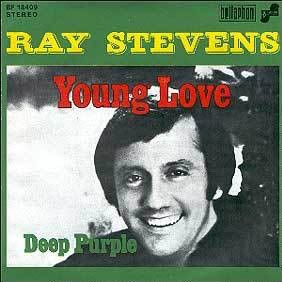
"Misty", one of Ray's biggest airplay hits, became a single in 1975 and it reached the Top-10 on the country chart. It would also reach the Top-20 on the pop chart and in early 1976 it won a Grammy in the Best Arrangement of the Year category. It's become what is known as a signature song and is performed in his concerts to this day. Although the album's award winning Top-10 title track easily became the biggest hit of the project that isn't to say the other recordings weren't as great. The second single from the album was his fancy, doo-wop take on "Indian Love Call" and it's unlike anything you'll ever hear. It reached the country Top-40 but it didn't have the staying power of "Misty" and it's become what is known as an obscure hit. Barnaby released two more singles from this album as 1975 came to a close and 1976 opened up. "Young Love", a former smash hit from Sonny James as well as Tab Hunter, became the third single release from Misty. It featured a dramatically different arrangement from the light and bouncy sing-a-long that the general public was accustomed to. Ray turned the song into a slow love ballad. Although the single missed the radio-friendly Top-40 it nevertheless charted a section below, in the country Top-50. As you can see from the single's picture sleeve, the b-side is Ray's version of "Deep Purple". For me, "Deep Purple" is one of the masterpieces of the album...not taking anything away from the vocal acrobatics of "Indian Love Call" or any of the other recordings on the album. Try singing any number of these songs the way Ray Stevens did...it's nearly impossible. "Deep Purple" is one of those songs that I think would be nearly impossible to replicate by others. When the song begins I often think of Rudy Valle for some reason...but then the arrangement shifts and the vocalization from Ray leaps into a different range and it's become a full-on, upbeat pop song. Those who've heard Ray's version no doubt are aware of the glorious note that he puts onto the performance toward the end of the recording...and as an avid listener and as a fan you can't wait to hear it. Do you want to know another song from the album that you can't wait to hear? "Lady of Spain"!! Ray puts a lot into this recording, too. Traditionally performed as a love ballad, Ray changes things with the arrangement and urgent vocal delivery...singing like a man possessed for the Spanish woman he craves...and the Fats Domino vocalization that Ray uses is another treat you can't wait to hear again and again. "Mockingbird Hill" found it's way onto a single release in 1976. Ray used a lot of tra-la's and tweedle-de's during the song's chorus and it sounds nothing like the original recording from years earlier. The single didn't reach the charts but several compilation albums from the late '70s and early '80s from independent labels featured the song on their releases.

Fans can see Ray perform "Misty", "Indian Love Call" and several other songs by purchasing a Pop! Goes the Country DVD from an on-line store that I've written about in previous blog entries. The DVD features a 1975 episode and he performs "Misty", "Indian Love Call", and "Twilight Time". The latter song is not featured on the Misty album. You can purchase the DVD at This Web Page. That's the product page for the Volume Four DVD...it includes a video embed of Ray and other artists featured in that volume. Now, for those new to that site, several other DVD volumes feature appearances from Ray Stevens. Volume Four, as mentioned, features a 1975 episode. Volume Nine features a Ray Stevens episode from 1977. Volume Fifteen features a Ray Stevens episode from 1979...he debuts "Shriner's Convention" on this episode...months before it was released as a single in early 1980. Volume Seventeen features a Ray Stevens episode from 1982. On that episode, hosted by Tom T. Hall, Ray opens up the show with an alternate version of "You've Got the Music Inside" but the remainder of his performances are in medley form, trading off with Tom T. Hall, as the two sing bits and pieces of their songs at the request of the audience. The two close the show singing a duet, "It's Hard To Be Humble". In the just released Volume Twenty-Four, it features a Ray Stevens episode from 1978. The item description states that Ray performs "Gitarzan", "Everything is Beautiful", and "Sweet Dreams". Since I don't own that DVD, yet, I obviously don't know whether or not the songs are performed in full length or in medley form. Once you see any of the episodes starring Ray Stevens you'll notice a lot of the memorable moments come not only from his performances but also from the interview segments with Ralph Emery and later, Tom T. Hall.

The songs listed below are on the 1975 Misty album:

1. Misty
2. Indian Love Call
3. Over the Rainbow
4. Oh Lonesome Me
5. Mockingbird Hill
6. Cow-Cow Boogie
7. Young Love
8. Take Care of Business
9. Sunshine
10. Deep Purple
11. Lady of Spain

May 26, 2010

Ray Stevens: 45 at 35...

Well, here's some discussion about a couple of 45's from 35 years ago...back in 1975 Ray Stevens was amidst a streak of hit singles that had started in 1968. In 1975 he was on the pop and country charts with "Misty" and later that year, "Indian Love Call". A lot of ink is given to "Misty" and rightfully so...it was a Grammy winner for Ray. However, not much attention is given to the other songs that populated the Misty album that year. "Indian Love Call" is a wonderful vocal performance...the melody is changed from what one may be accustomed to and there's some high tenor love calls heard throughout. The calls are not as high or shrilly as Slim Whitman's worldwide hit version but the vocal dynamics from Ray more than make up for it. The arrangement is jazzy, almost doo-wop like. The recording became a country hit and it crossed over to the pop chart as well. It didn't get much pop radio airplay but the strength of it's sales enabled it to rank among the Top-70.

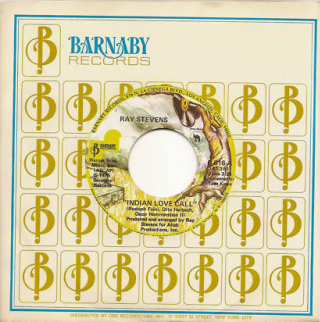
This single's catalog number is Barnaby-619 and it's b-side is "Mockingbird Hill". The single didn't enter the country or pop music charts but nevertheless it's from the 1975 Misty album. This was a follow-up to Ray's version of "Young Love", which hit the country Top-50 in late 1975. Ray's version of "Lady of Spain" is quite a departure, vocally. In the song Ray comes across sounding a lot like Fats Waller in some places. The original version of the song was a crooning love ballad performed by a host of pop music artists but in the hands of Ray Stevens it was turned into an uptempo party song. The Spanish music introduction in Ray's version soon fades away to an urgent early rock and roll arrangement. Ray seems to be completely wrapped up in the free for all performance that he excitedly hollers out "blow it, Norman!!" to the album's saxophonist, Norman Ray, prior to the instrumental solo. I would've loved to see him perform the song, in this arrangement, in concert. Heck, I would've loved to have been in the studio while he was recording this song! It's one of my favorites from the Misty album. The Mp3 digital album of Misty is available at Amazon but their sound clip doesn't necessarily convey the mood of "Lady of Spain" because it's, after all, a sound clip...it doesn't represent the song as a whole. It cuts off right before the rocker instrumentation kicks in.