Showing posts with label indian love call. Show all posts

September 22, 2024

Ray Stevens: A collection I wish I Had...

Hello once again! Ever since I began this fan created blog centered around legendary Ray Stevens one of the albums that I've often spotlighted and singled out is a release simply titled The Best of Ray Stevens. Now, if you're a dedicated fan of his, then you'll know that The Best of Ray Stevens or a variation of that title is the title of many compilation albums that have been released on Ray over the decades. Some may wonder how does a fan keep it all straight given the similar titles of compilation albums and some may have trouble keeping track. One of the things I've always done is relay the year of release or the record company name. For example The Best of Ray Stevens released by Mercury Records in 1970 could be referred to as The Best of Ray Stevens (Mercury) or The Best of Ray Stevens (1970).


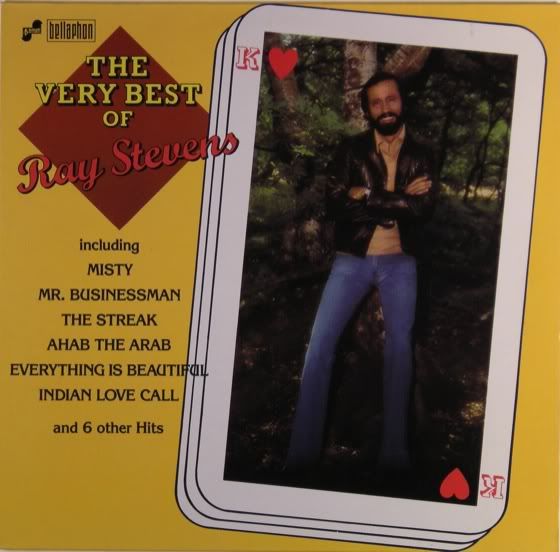
I love the album cover. I like the design and I like the photo of Ray that's used. I also like the coloring. Now, eagle eye fans of Ray or those that already are aware, will notice that in the lower left hand side there's a K-Tel mark. That's the record company that issued this particular The Best of Ray Stevens in 1980. As mentioned earlier there can be a lot of confusion for those that are new to Ray's career and are browsing through his album discography given there are several compilation albums using the same title. For this particular album it might be best to explain that it had been released a year earlier by a company called Imperial House. That particular release happened to be a 2-LP set but as you can see it contains the same title, lettering, coloring, and photo that the 1980 K-Tel release has. The 1979 release has the phrase, 2 Record Set, on display just below Ray's name with the Imperial House mark on the lower left hand side of the album cover. The image shown first is the 1979 Imperial House 2-LP release. The 1980 release wasn't a 2-LP collection but it did feature 18 of the 20 recordings found on the 1979 release. The 1979 2-LP set features 20 recordings ranging from the 1960s through his then most recent recording, "I Need Your Help, Barry Manilow". However, do not let the inclusion of that 1979 recording fool you. It's the only Warner Brothers recording by Ray to make the album's track list. The label skipped over the recordings he did in 1976, 1977, and 1978. Here is the track list of that 1979 double album. LP One, Side 1: "Ahab the Arab", "Indian Love Call", "Harry the Hairy Ape", "Unwind", and "Gitarzan". LP One, Side 2: "Mr. Businessman", "Along Came Jones", "Freddie Feelgood", "Nashville", and "Turn Your Radio On". LP Two, Side One: "Everything is Beautiful", "America, Communicate With Me", "Sunday Mornin' Comin' Down", "The Moonlight Special", and "The Streak". LP Two, Side 2: "Misty", "Have a Little Talk With Myself", "Isn't It Lonely Together?", "Bridget the Midget", and "I Need Your Help, Barry Manilow". The two recordings left off of the 1980 K-Tel release were "Unwind" and "I Need Your Help, Barry Manilow". 

A budget minded person may ask oneself: why did the 1979 release with 20 recordings contain 2 vinyl albums yet the 1980 release with 18 recordings contain just 1 vinyl album? I wish I knew the answer. Perhaps the company that issued the 1979 release wanted the allure of having the advertisement of "a 2-LP collection!!" to accompany the sales campaign. It's a collection I wish I had. By the way, did I say that the album photo is one of my all-time favorites of Ray Stevens? I think I did...yeah, I did...

March 9, 2021

Ray Stevens sings "Indian Love Call"...

Hello once again!! I came across an upload on YouTube earlier today of a Ray Stevens performance I'd never seen before. The appearance originated on British television in the mid 1970s on a television program hosted by Mike Yarwood. In the video clip Ray is singing "Indian Love Call" and he's got a beard. The one that uploaded the video says it's from a Christmas 1976 television program. It had me thinking a little bit...by the time December 1976 rolled around Ray had already released several singles and an album for Warner Brothers records and so why perform "Indian Love Call" and not something more recent? 

Ray's release of "Indian Love Call" was in the summer of 1975. The single was released internationally like a lot of Ray's music happened to be during the 1970s. In the Netherlands and Belgium the "Indian Love Call" single was backed with "Sunshine" as a B-side. In the United Kingdom, here in the U.S., and almost everywhere else the single was backed with "Piece of Paradise", a song that was a B-side exclusive until it appeared on a compilation album in 1998. 

I'd seen some information online suggesting that this television special actually aired early in 1976 but was taped in the latter half of 1975. Regardless of when the show was taped it was called Look, Mark Yarwood Christmas 1976. I'm not going to embed a video clip...I'm going to post a link that you can watch HERE. I do this so that, in the future, if the video gets taken down for whatever reason I won't have an empty video box with a disclaimer reading that the video content has been removed. I took several screen caps, though, and I'll conclude this blog entry with one of those screen caps...

April 6, 2020

Ray Stevens: Photo Session Photo...

Hello once again! I know the title of this latest fan created Ray Stevens blog entry isn't too creative...simply titled 'Photo Session Photo'...but earlier today a photo of Ray from 1975 appeared on his social media sites. The photo is an out-take during a photo session in the woods. I'm assuming the session took place somewhere in Centennial Park in downtown Nashville (where the giant replica of the Parthenon sits) or it could very well have taken place elsewhere. The photo more or less gives me a chance to reignite the clean-shaven/bearded Ray Stevens topic I return to from time to time.

Ray Stevens, 1975.
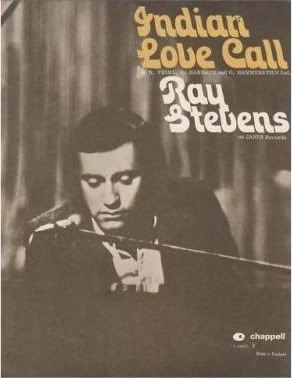
This is the photo that graced the social media sites of Ray Stevens earlier this afternoon. If you're familiar with the 1975 compilation album, The Very Best of Ray Stevens, then you'll be familiar with the wooded backdrop. I imagine there were dozens of photos taken during the session. I've seen other photos of Ray from this session. One such photo appears on a 1980 issue of Country Song Roundup. That very same image also appears on an album that was released on Ray in Australia. The sheet music for "Indian Love Call", one of Ray's hit songs in 1975, features a photo of Ray from this photo session, too. There is another photo of Ray posing behind that unique looking tree and that photo can be found in the liner notes of a 1997 CD released on Rhino Records, The Best of Ray Stevens. A close-up photo of Ray from the photo session appears on the cover of a compilation from Madacy Records titled The Collection. If we dig even further there's a very obscure photo of Ray in a wooded setting...clean-shaven and wearing sunglasses...posing next to a car with the Warner Brothers Records logo painted on the hood. I have never posted that image in this blog, as far as I know, due to it being obscure. I don't believe the person that originally posted it on-line kept it on-line but while it was on-line I saved it to my computer simply because I had a feeling it might vanish from view. I'm in the process of looking for that image. Once I find it I'll at long last post it on my blog...that is, if I hadn't done so already years earlier.

March 21, 2020

Ray Stevens: The Ralph Emery Show Interviews, June 1975...

Hello all!! Earlier today the remaining episodes of the Ralph Emery Show from June 1975 featuring Ray Stevens were uploaded onto YouTube. In a couple of previous blog entries I mentioned that once all the episodes make it on-line I'd put together a blog entry containing all five episodes.

June 23, 1975

June 24, 1975

June 25, 1975

June 26, 1975

June 27, 1975

I've listened to the June 25th episode and as soon as I publish this post I'll be listening to the June 26th and June 27th episodes. In the June 25th episode Ray speaks about the Misty album and throughout the hour Ralph plays Ray's recordings of "Young Love", "Indian Love Call", and "Lady of Spain". The first song of the hour is Donna Fargo's recording, "Hello Little Bluebird". Ralph mentions that the song was recorded at Ray's studio. Ralph and Ray get into a comical argument regarding the year Sonny James recorded "Young Love". Ralph says it's 1955 and Ray says 1957. The answer is in the middle...the song originated in 1956 and was first recorded by one of it's writers, Ric Cartey. Sonny James recorded his version in the latter half of 1956 and it became a hit in 1957 followed by the Tab Hunter version. Throughout the hour show from June 25th you'll hear recordings by the likes of Charley Pride, Connie Smith, Billy Walker, Johnny Carver, and even an instrumental by Sonny James. The final song of the June 25th episode is Ray's version of "Lady of Spain". Ray mentions the instrumentation used for the recording and how he excitedly hollers out the name of the saxophone player, Norman Ray, in the recording...

International single release, 1975

August 20, 2018

Ray Stevens: Music City Walk of Fame ceremony...Tomorrow...

As I write this blog entry this morning I can't help but think ahead to tomorrow...that's the day when the latest Stars will be added to the Music City Walk of Fame. I've written a couple of blog entries about the ceremony already (August 12th and just the other day, August 18th) and I'll no doubt be blogging about the ceremony tomorrow when it actually takes place. The ceremony is scheduled to get underway tomorrow (August 21st) at 11:30am Central and I do not know which of the recipients will be spotlighted first. If you've been reading my previous blog entries or have been reading the coverage that Ray and his social media staff have added to their on-line sites then you'll know that in addition to Ray receiving a Star there's going to be honors for Jeannie Seely, Brenda Lee, and Ben Folds. Ray and Brenda have a Georgia connection and their career's parallel one another...both began recording professionally in the late 1950s, too. Jeannie Seely is one of the legendary female country music artists and regularly appears on the Grand Ole Opry every weekend. Ben Folds is someone I knew of, by name, but not being a listener of the style of music he performs I know very little about him. I looked up some things on the internet just to find out biographical information on him and I was reminded of where I had originally heard the name...a group called Ben Folds Five was in existence from 1995 to 2000. I found out that he's long since had a solo career, too.

What about that collage? Well, it's a random photo collage depicting Ray through the years. Panel one actually appeared as the cover page for sheet music of "Indian Love Call" in 1975. The color of the pamphlet happened to be green and so there's a green overtone to the photo of Ray. The second panel's photo of Ray originated at some point in the mid 1980s. It appeared in a magazine article on Ray Stevens in 1986 and later served as the cover photo of a 1992 gospel collection, A Brighter Day, on Clyde Records. Panel three comes from the recently uploaded video of Ray in 1971 on an episode of BBC In Concert. He's performing "Gitarzan" in that 1971 appearance and then I decided to place a photo from this year of a "Gitarzan" performance next to it. So it jumps from 1971 to 2018. The final panel is a photo of Ray last year at one of his concert stops prior to the grand opening of his CabaRay showroom this past January.

In the collage off to the right I decided to emphasize imagery focusing on his CabaRay showroom and his locally syndicated PBS series, CabaRay Nashville, in addition to spotlighting two of his signature hits, 1962's "Ahab the Arab" and 1974's "The Streak". The first panel uses the same photo I spotlighted in the other collage because I happen to like the photo. The center panel is a somewhat recent publicity photo of Ray which appeared a couple of years ago when he released the on-line music video and CD single, "Dear America", in September 2016. I purchased the Mp3 instead of the CD because I didn't know if a CD copy would arrive in what they call a jewel case or in a slip case or if it would arrive in a plain white paper sleeve. A couple of previous CD singles offered at Ray's web-store had arrived in plain paper sleeves...no art work/cover photo...so I decided I'd hold off on purchasing the CD single of "Dear America" just in case it didn't arrive with a photo of Ray and instead I purchased the Mp3.

The Music City Walk of Fame is located at 121 Fourth Avenue, South and it's situated inside a park setting as you can see from the sign off to the left. The ceremony is going to take place inside the park beginning at 11:30am Central tomorrow (August 21st). As mentioned in other blog entries I've written the park is located across the street from the Country Music Hall of Fame. On one side of the park there's the Bridgestone Arena and on the other side of the park there's the Symphony Center. It's all situated in one sector of downtown Nashville. You can Google images of the park and you'll see the general layout and how the Star plaques are lined up on the sidewalk. The ceremony is free to the public so if you're a fan of Ray Stevens and are in the area by all means visit the Music City Walk of Fame tomorrow and experience the event. As is the case in many ceremonies of this kind there's likely to be acceptance speeches by those honored and of course there's going to be biographical information delivered by the emcee of the ceremony, too. Since there's going to be four honoree's receiving their Star I assume each one will be allotted a predetermined amount of speaking time. I don't think the ceremony is going to clock each honoree, though. As of this writing I don't know if Ray will appear first or if he'll appear last. He'll be the oldest of the honorees: Ray was born in 1939, Jeannie Seely was born in 1940, Brenda Lee was born in 1944, and Ben Folds was born in 1966. So, they might honor each one based on seniority or they go by reverse seniority (in that case Ben Folds would be first to receive a Star and Ray would be spotlighted last). However the presentation ends up being I'll be looking forward to the ceremony! It's almost 11am here in the East...almost 10am in Nashville...around this time tomorrow morning it'll certainly be busy at the Music City Walk of Fame park!!

February 17, 2014

Ray Stevens and Hee Haw...1975...

Late last night I posted a blog/review of the October 1975 appearance of Ray Stevens on Hee Haw. It happened to be the fifth episode of the 1975-1976 television season and more specifically it aired on October 11, 1975. As hard as it is to believe, it was just his third appearance on the program. He made his first two appearances in 1972. He appeared on the 1972-1973 season opener on September 16, 1972 (singing "Turn Your Radio On" and "Along Came Jones") and then a second appearance happened on November 25, 1972 (singing "Isn't It Lonely Together" and "Gitarzan"). Each of those performances had been taped in the summer of 1972.

Then, three years pass by, and finally in October 1975 Ray Stevens makes a third appearance and in the blog entry I posted prior to this one I detailed that episode so I won't go over what I already mentioned. In this blog entry I'm posting the video clips of his performances...we start with "Indian Love Call"...


Isn't that just the greatest??

Okay, now we have his big hit that year, "Misty"...


I love seeing classic clips of Ray Stevens!!! Hopefully you all do, too!

February 16, 2014

Ray Stevens on Hee-Haw, Part 7!!!!!!!

I certainly hope some of you all seen Sunday night's episode of Hee Haw on RFD-TV! It featured the one and only Ray Stevens as a special guest. The episode originated in October 1975, the fifth episode of the 1975-1976 television season. In a word, Ray was at his usual excellence!! His first performance of the night happened to be "Indian Love Call". Now, if you're familiar with Ray's version of that song and if you're familiar with the amazing performance he did on Pop! Goes the Country the same year then you should have been even more thrilled that he performed the song standing up...minus the confinement of the piano. Ray sang like a man possessed...full of energy and very animated as he sang the difficult number. I feel the absence of a piano allowed him to 'perform the song' but don't get me wrong...the performance on Pop! Goes the Country is just as incredible, vocally. Ray's attire on Hee Haw was similar to his attire on Pop! Goes the Country...a cream colored shirt and blue jeans.

Throughout the episode Ray appeared in a series of comical pop-up scenes, often accompanied by a thick cloud of smoke, begging to perform "Misty". In one scene Ray did his Gabby Hayes impression and recited a brief parody of "Where Do I Begin?". Ralph had also asked him to do that routine on Pop! Goes the Country.

Ray's second performance...of course, "Misty"!!! Throughout the program, as mentioned, Ray appeared in brief segments promoting the song and it's eventual performance. The actual performance, like "Indian Love Call", didn't feature him at the piano. In a sight gag, when Ray gets to the part where he sings "and a thousand violins begin to play", Ray looks around in the air several times as if to ask "where's that music coming from?". The band wasn't on camera. He may have been using a click track. In this performance he changed shirts and wore a white shirt with dashes of blue...it looked almost like the shirt he's wearing on his 1973 Nashville album...but minus the stars.

To answer the question on everyone's mind...the answer is a loud YES...Ray Stevens did have a beard during this 1975 appearance. The episode, as mentioned, originally aired in October of 1975. This means that the performances had been taped in the summer of that year. Hee Haw had a unique production cycle: a summer taping period and a fall taping period. The summer segments would be edited together to make up 13 episodes and then the fall segments would be edited together to make up 13 additional episodes (those fall produced episodes started airing early the following calendar year, the summer produced episodes are what kicked off each fall season). So, yes, an entire 26 episode season was built around 2 production periods a year.

Unfortunately RFD isn't airing Hee Haw on Monday morning anymore. It used to be a person could catch the 8pm Sunday night airing and then, if you chose, catch the replay of the program Monday morning at 10am but for the last several weeks it hasn't aired on Monday mornings. Hopefully someone will upload the episode onto You Tube...if not then those that missed it will have to wait awhile before it re-airs on RFD-TV. The channel airs a full season, then reruns those episodes, and then moves on to the next season. If I see any clips of Ray from this episode appear on You Tube I'll embed the clips in a future blog entry.

January 28, 2013

Ray Stevens provides a Love Call...

Oh yes, once more I take a look back into the fascinating musical career of Ray Stevens. This time around I want to give some more spotlight to a vocal gem that Ray recorded in 1975 titled "Indian Love Call". The song was part of an album of pop music standards that Ray issued in 1975. The album was titled for it's first single release, Misty. That particular album was issued on CD several years ago, paired with his 1972 gospel album, Turn Your Radio On. "Indian Love Call" had been recorded by dozens of pop artists since it's creation with the biggest recording from Slim Whitman in 1952. Created for a musical in 1924, it came into pop music prominence in 1936 when it was recorded as a duet between Nelson Eddy and Jeanette MacDonald.

"Indian Love Call" became a Top-40 country hit for Ray Stevens in 1975 and it charted Top-70 pop as well. It's b-side, "Piece of Paradise", remained as a single-only until 1998 when it was unearthed on the Varese Sarabande release, The Country Hits Collection. Unless you have the "Indian Love Call" single, the 1998 CD compilation continues to be the only project to feature "Piece of Paradise". The b-side shouldn't to be confused with a similarly titled song from Ray eight years later in 1983 called "Piece of Paradise Called Tennessee". The two songs are completely different. Ray arranged "Indian Love Call" and changed it's more familiar uptempo performance into a slow, bluesy, doo-wop performance. There is very little video documentation of Ray performing this song which is such a shame. However, I've pointed out in a few blogs a couple of years back there are DVD's of the television series Pop! Goes the Country and several episodes star Ray Stevens. In one episode from 1975 he performs "Misty" and "Indian Love Call" as well as "Twilight Time". The very first time I heard the Ray Stevens version of "Indian Love Call" was on a 1991 compilation release from Curb Records titled simply, Greatest Hits. That 1991 compilation is noteworthy among several fans of Ray Stevens for it's inclusion of an alternate recording, with different verse lyrics, of "There's a Star Spangled Banner" (the song kept the same lyrics in the chorus).

As far as I know this remains the only video footage of Ray Stevens performing "Indian Love Call". It's on the Volume Four DVD of Pop! Goes the Country. The DVD cases, some of them, have been refreshed and modified from the plain light blue color that appeared originally. I own the DVD with the light blue color background but as you'll see when you click the link the DVD case is updated to an orange color. Ray appears on several other volumes. Search his name in the search box. I own a few of the Volumes featuring a Ray Stevens episode. There are a couple that I still don't own...including a 1978 episode and one from 1977.

January 29, 2012

Ray Stevens and Obama Money, Part 17...

Good early Sunday morning!! We are a week away from the Super Bowl. The Pro-Bowl is tonight and I may or may not watch it. It all depends on the broadcaster's moods. Usually we get broadcasters who belittle the Pro-Bowl and attempt to take the joy out of watching it with their caustic comments. Even though people say that broadcasters shouldn't spoil the mood if a person really wants to watch a sporting event the truth is that broadcasters CAN spoil the mood if their style isn't harmonious with the viewer and that's why for me a broadcaster is important when it comes to whatever sport I'm watching on TV or hearing on the radio.

Now, taking a look at the You Tube numbers we see that Ray's current music video, "Mr. President - Mr. President" is inching closer to half a million on-line views. It's current total is 462,039. It's been on-line for 4 months and I expect it to smash through the 500,000 mark at some point in February. A gap of a little more than 28,000 views separates it from the half a million mark. The President gave one of the most low-rated State of the Union speeches in history several days ago...commentators viewed it as a replay of 2009, 2010, and 2011's speeches with just a tweak here and there for topicality purposes. I didn't watch the speech...I heard snippets of it during newscasts on both radio and TV and that's all I needed to hear to form my own conclusion that it was the same old-same old speech instigating class warfare, highlighting so-called economic unfairness and so-called inequality, and how the Government should be the solution to everybody's personal and financial problems but a little ol' thing called the Constitution keeps getting in his way. In other words it was the same old garbage as before more or less...maybe more since the speech ran overtime.

Speaking of the President, the "Obama Budget Plan" music video from Ray Stevens is nearing 1.1 million views. At the moment it has 1,088,519 views. It was uploaded 9 months ago and was a slow climb to half a million views. The recurring battles about the budget and the debt ceiling in the latter half of 2011 pushed the video into the million views stratosphere.

A recent controversy surrounding Kentucky Senator Rand Paul and the TSA in a Nashville airport caused some activity for Ray's video titled "The Skies Just Ain't Friendly Anymore". The video has 276,126 on-line views now and was the second single/video release from Spirit of '76 in 2011. The music video's been on-line for almost 1 year...11 months and counting. It's a lot closer to 300,000 views now than it was prior to the Rand Paul story. The TSA music video, as I theorized in a couple of blogs, hits home with those who travel frequently and have to deal with the screenings and invasive pat downs. The song's title refers to the phrase "fly the friendly skies" made famous by United Airlines. His 2010 anti-illegal immigration video, "Come to the U.S.A." is nearing 5.8 million views! The totals at the moment are 5,791,250! The Obama Care music video from 2009, "We The People", has 4,648,990 views. "Throw the Bums Out!" has 854,504 and "God Save Arizona" is in the 800,000 range too with 840,795 views.

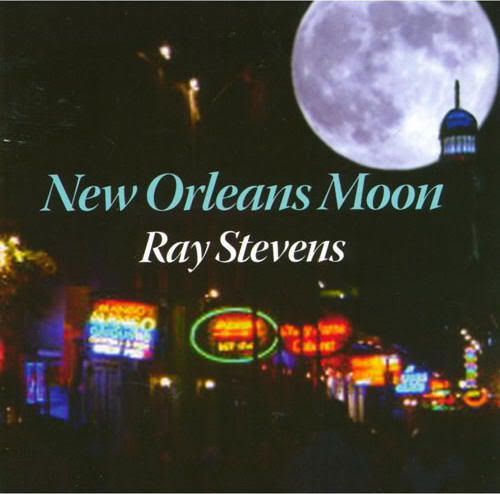
A short 5 years ago Ray Stevens released this wonderful salute to the music of New Orleans. New Orleans Moon, from July 2007, features Ray's versions of many songs celebrating not only New Orleans but the entire state of Louisiana as well. There are 11 selections on the CD and like a few of Ray's albums in the past this one slipped through without a lot of fanfare. A lot of that presumably had to do with the simple fact that none of the songs are comical and as a consequence there's a large segment of the listening audience that prefer comedy and funny business from Ray Stevens instead of thought-provoking, serious work. This has long been the case...even when Ray was releasing only non-comedy albums year after year...there are just some people who expect/insist on Ray Stevens being the funny guy without a trace of seriousness. Now, of course, there are plenty of people who appreciate all the music from Ray Stevens...whether it's serious or comical. "New Orleans Moon", the title track, was written by Ray and Chuck Redden. As a side note, Chuck wrote "The New Battle of New Orleans", by the way. Ray and Buddy Kalb re-wrote a lot of the original lyrics in the song and Curb Records issued Ray's version in 2005 as a CD single in limited quantities. That song isn't on this 2007 CD but I decided to mention the 2005 single's existence anyway!

Meanwhile, the first track on New Orleans Moon is "Way Down Yonder in New Orleans". I purchased the digital download/Mp3 album of New Orleans Moon when it was brand new but have never purchased a copy of what they now call the physical CD. I plan on doing so at some point. On this CD you will hear Ray's take on "Basin Street Blues", "New Orleans", "Louisiana Man", "Louisiana", "Do You Know What It Means to Miss New Orleans?", and "When The Saints Go Marching In" among several others. Pay attention for several impressions by Ray of Louis Armstrong.

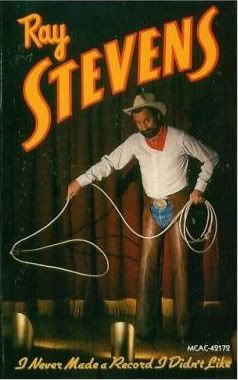
This was a comedy album released in 1988 from Ray Stevens. I recently came across commentary about the album and some of the songs from it and so I decided to give some spotlight to it again. I Never Made a Record I Didn't Like is based upon a phrase attributed to Will Rogers that went something like: "I never yet met a man I Didn't Like". Given the connection it makes sense for Ray to dress up as Will Rogers on the album's cover. Consisting of ten recordings the material runs the gamut from satellite TV curiosities and Hollywood scandals to hippies and boogie men to the Beach Boys, Michael Jackson, and Elvis...and everything else in between. First things first is "Surfin' U.S.S.R." which became a music video. The video features an extended comedic routine at the start with parodies of Ronald Reagan and Mikhail Gorbachev. Ray supplies the voices for both. There are also parodies of their wives who get in a fight in the background as their husbands talk about U.S. and Soviet relations...leading up to Reagan inquiring about Malibu, California and why there happens to be a Soviet sub there. Cue the main song as the two start dancing. The audio recording doesn't feature the Reagan and Gorbachev parody, though, it's only available on the music video. "Blood and Suede" is the story song about a Hollywood car crash between a drunk driver and a singer. The singer was listening to his own album real loud while the drunk driver, in a Mercedes, plowed into the Porsche. The song carries satirical undertones about the fast living and fast cars image of Los Angeles and it's surrounding area, cut throat lawyers that exist everywhere but are glamorized in Hollywood movies, and the egotism that exists amongst celebrities in general (the singer, afterall, was listening to own Greatest Hits album prior to the crash). For those who have this album, as I do, take a more closer listen to the song. When I originally heard it for the first time in the early '90s I didn't soak in everything that the song addresses. At that time I was mostly fascinated with it's melody and Ray's hushed small town hamlet storytelling narration. On this particular album Ray performs songs in various vocalizations. There's the Beach Boys style in "Surfin' U.S.S.R.", a talking blues style on "The Booger Man", a broad exaggeration on Bob Dylan in "Old Hippie Class Reunion", Michael Jackson enunciation parodies in "Bad", and of course in "Blood and Suede" we have the hushed storyteller delivery. There are songs in Ray's natural voice, too: "Mama's in the Sky With Elvis", "I Don't Need None of That", "Ethelene the Truckstop Queen", "Language, Nudity, Violence, and Sex", and "The Day I Tried To Teach Charlene MacKenzie How To Drive". The song about Charlene MacKenzie was released as a single and it charted on the Country Top 100...but it peaked in the low-80s on the charts. "Surfin' U.S.S.R." didn't reach the country charts but it was issued as a commercial single and music video. The album reached the Top-60 on the country charts in the fall of 1988 and remained a best-selling country album for more than 15 weeks.

One of the great recordings of Ray's career is his take on "Indian Love Call". Aside from the obvious vocalization there is the standout arrangement of the song which is unlike any version. Whereas usually the song is performed as a mid-tempo love ballad with the love calls being a trademark, in Ray's version we get the love calls but we also get the R&B flavored, doo-wop harmony in the background. As many Ray fans know he often over-dubbed his own voice on his earliest recordings and the choir of doo-wop vocalizations heard in the background are his own voice. When he performed the song on television around the time it was a single he'd use a click track which integrated his over-dubbed background into the live recording. Ray's only performance of the song on television, that I'm aware of, is a 1975 appearance on the Pop! Goes the Country program. I'm aware of this because I own a DVD which features the 1975 episode in it's entirety. Ray, with a full beard by the way, sings "Misty", "Indian Love Call", "Twilight Time", and does a duet with the other guest, Sammi Smith, on "Everything Is Beautiful" as the show's credits roll. I'd written about the Pop! Goes the Country DVD collections many blogs ago. You can look up the information about them by searching their web-site, Country Music DVD. The 1975 episode with Ray Stevens is on DVD Volume 4. There are a couple more DVD's featuring episodes with Ray, too. On each DVD there's multiple episodes featuring all sorts of country music celebrities as guests but for the purposes of this blog I only highlight the DVD releases with a Ray Stevens episode. "Indian Love Call" reached the country Top-40 for Ray in 1975 and was one of his last single releases for Barnaby Records prior to his switch to Warner Brothers in 1976. His ballad rendering of "Young Love" reached the country Top-50 in early 1976 while the wonderful "Mockingbird Hill" didn't reach the charts.

March 6, 2011

Ray Stevens: Nostalgia Valley, Part 23...

One of the fascinating recordings from Ray Stevens came along in 1975 when he tackled "Indian Love Call". I'd always liked the song...and when I discovered quite a few years ago that Ray Stevens had recorded the song I couldn't wait to hear it. I got my hands on the vinyl album, Misty, after purchasing it on-line...and I played the album and loved all the songs (obviously...since Ray's doing the singing!). "Indian Love Call" as performed by Ray Stevens is nothing like the previous recordings of the song by other artists and once you hear Ray's version it's safe to say that you'll end up preferring the way he performed the song. Around the middle of 2010 I purchased a DVD of Pop! Goes the Country mainly because Ray is a featured guest on one of the episodes. The episode, from 1975, featured Ray singing not only "Indian Love Call" but "Misty" and "Twilight Time". The show's host, Ralph Emery, along with the other guest, Sammi Smith, both agreed that Ray's take on "Indian Love Call" was like nothing you'd ever heard before. Ray very seldom performed the song on TV appearances and it's hard to tell how long it was part of his concerts...but for those who want to see his performance as well as see his relaxed, easy-going demeanor during the interview segment with Ralph look no further than Classic Country DVD. Ray's performance of "Indian Love Call" is found on Volume Four of Pop! Goes the Country. Ray is also featured on Volumes 9, 15, and 17.

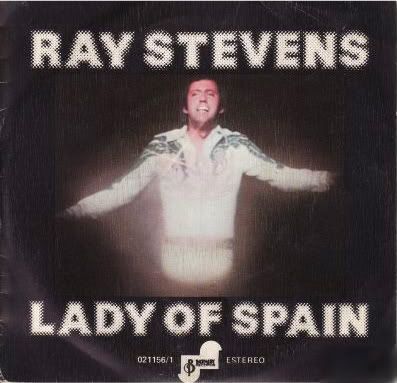
I don't think Ray ever performed this song on TV...maybe in concert...I would've loved to see a performance of this song, though! Those who've never heard it will probably wonder who he's doing a vocal impression of...I've narrowed it down to a few people. One of my on-line friends suggested Fats Domino...maybe Fats Waller. It's got a classic R&B sound blended in with Spanish-Mexican instrumentation. "Lady of Spain" originates from the 1930's. The conventional way of performing it, at the time, was in the style of crooners which nowadays are referred to as either Big Band or Pop Standards. I first heard this song performed by Dennis Day on Jack Benny's radio program of the 1950's. Dennis sang the song in his customary operatic-tenor delivery. I read where Eddie Fisher recorded the song in 1952 and I looked it up on You Tube and it sounds almost identical to the way Dennis Day performed the song. Ray leaves out a lot of the middle lyrics and instead replaces them with a hard driving saxophone solo by Norman Ray. Much in the same manner as "Indian Love Call" causes you to forget all of the previous recordings of the song by other artists, this recording of "Lady of Spain" by virtue of it's uptempo sing-a-long nature will have you liking it more and more. The image of Ray on the single sleeve is the same one that appears on his 1975 Misty album.

The winning formula on the Misty album seemed to be: arrange songs that were popularly known as ballads into uptempo sing-a-long's and then arrange songs that were popularly known as sing-a-long's into ballads...which is why "Lady of Spain" is transformed into an uptempo song and the usually midtempo "Indian Love Call" is transformed into a bluesy ballad. "Young Love" is performed at an extremely slow pace...as a response to the song's extremely uptempo delivery made famous by Sonny James. One of the few covers in which the original arrangement remains pretty much intact is his take on "Cow Cow Boogie". When I first saw the song list for Ray's 1975 album, years before I owned a copy, I assumed "Cow Cow Boogie" was a song that Ray either wrote or co-wrote simply because of it's funny title. I then heard the song one night while listening to an AM radio station which played pop standards. The version I heard was from a female artist whose name wasn't announced. It could have been Patti Page for all I knew but research shown that the hit versions were recorded as a duet by The Ink Spots and Ella Fitzgerald as well as a solo recording by Ella Mae Morse. It was Morse's version that I heard on the radio back in the late '90s. Ray's version, as I mentioned, doesn't stray too much from the original arrangement. The album contains 11 songs and as a change of pace I'm going to include the writer's names, too...

1. Misty (Erroll Garner and Johnny Burke)
2. Indian Love Call (Rudolph Friml, Otto Harbach, and Oscar Hammerstein II)
3. Over the Rainbow (Harold Arlen and E.Y. Harburg)
4. Oh, Lonesome Me (Don Gibson)
5. Sunshine (Ray Stevens)
6. Cow-Cow Boogie (Don Raye, Gene DePaul, and Benny Carter)
7. Young Love (Carole Joyner and Ric Cartey)
8. Deep Purple (Mitchell Parish and Peter DeRose)
9. Mockingbird Hill (Vaughn Horton)
10. Take Care of Business (Layng Martine, Jr.)
11. Lady of Spain (Robert Hargreaves, Tolchard Evans, Stanley Damerell, and Henry Tilsley)

Some of the writers have unique names that's for sure! As you can see, tracks 5 and 10 were original recordings. The rest of the material are his versions of Pre-1960 pop hits with the country classic, "Oh, Lonesome Me", added into the mix.

Meanwhile...fast-forwarding 36 years to 2011...

A look at the totals this hour show "The Skies Just Ain't Friendly Anymore" with 101,751 unique views on You Tube.

September 24, 2010

Ray Stevens...Back in Branson!!

Hello all the Ray Stevens fans! By now some of you have made your way to watch Ray's concert series in Branson, Missouri at the Welk Theatre. I've read some commentary from those who've seen the show and as I imagined early on it's a runaway success. Those who've seen the show have said that the first half is devoted pretty much to political and patriotic material...giving publicity and exposure to his We The People collection while the second half features the Ray Stevens classics. By the way, there's a new item issued in Ray's web-site store...it's a T-shirt which features the picture of Ray from the We The People CD and the new t-shirts being offered include the phrase Great Awakening Tour 2010. The other T-shirt features Ray in front of the flag in Founding Father costume with We The People Have Awakened on the front and Throw the Bums Out! on the back. That is the shirt that I have...I may send off for the newer T-shirt at some point. Ray's web-site store is located at his web-site...of course!! Ray Stevens Web-Store.

As most people are aware, Ray Stevens is often credited with putting Branson, Missouri on the map in the early '90s with his consistent string of sold-out concerts at his own theater. There were theater's in Branson well before Ray built his in 1991...Roy Clark as well as Boxcar Willie were among the very first entertainers to open theater's down there. However, the timing was right in the early '90s and Ray just happened to be in the right place at the right time. It was at a point in country music's history where a lot of established (though still popular) acts were being pushed off the radio...and quite a few of them went to Branson either to open up a theater or to become featured acts in the variety of theaters already in business. Ray built his theater upon a suggestion from an associate who realized that in each of Ray's previous engagements in Branson that the tickets sold out rather quickly. Armed with knowledge like that it didn't take long for Ray to decide to have his own theater. Ray's theater was in business during 1991, 1992, and 1993. He shut down the theater afterward and decided to go back out on the road...the sheer exhaustion of doing two shows a day six days a week throughout the bulk of each calendar year, he said, was a big reason that he needed to take a break. He also remarked that he wanted a break from the business side of running a theater...and so...he shut down the theater and it was leased to other productions. He returned to the theater a decade later and did a couple more seasons in Branson before shutting it down for good. As I commented in previous blogs the theater was bought by RFD-TV at some point in 2007 or 2008. The image you see is of Ray making one of his grand entrances in 1993...riding a Harley-Davidson as a visual tie-in with his 1980 song, "Shriner's Convention"...complete with Hawaiian flower shirt.

You all can click on the image for a bigger look, of course. One of the things that I'm sure a lot of you visitors are aware of by now is I re-size images so that they don't take up a lot of space. A lot of blogs post huge images to where a lot of their words are shoved off to the left or right margins but I prefer to have my blog looking somewhat organized and neat. The image is of "Indian Love Call", a single that Ray Stevens released in 1975. Those of you who want to see video of Ray performing this song from the year it was released need to purchase a DVD of Pop! Goes the Country. The performance will be featured on Volume Four, Chapter Three of the disc. There are a five more episodes of the program on that release but Ray's portion is Chapter Three. I consider it one of the best volumes because not only is Ray Stevens featured in one of the episodes but you also get episodes starring the likes of Faron Young, Carl Smith, Ronnie Milsap, Charlie Daniels, Johnny and June Carter Cash, Bobby Bare, The Statler Brothers, and others. You can find the DVD's at their web-site store Classic Country DVD.

September 1, 2010

Did Someone mention Ray Stevens??

Kicking off the month of September...did someone mention Ray Stevens by any chance? If so then you've come to the right blog in the blogosphere. Whatever questions or suspicions or whatever you have pertaining to Ray Stevens this is one of the few places on-line to seriously discuss Ray Stevens. The blog features a lot of information, fan-driven, about Ray Stevens and it shows a time-line on the right side of the page giving an almost year by year breakdown of Ray's career. I don't expect or suggest anyone to go reading through all of the blogs I've written since 2008...the task of doing such a thing would be time consuming and exhausting. I sometimes bring back a topic I've already written about but I always end up adding more...several of my Ray Stevens blogs focus on particular albums he's recorded...and often I purposely repeat some of my blogs so that anyone who discovers this blog site won't have to go through reading the mountain of blogs I've previously written...in other words chances are I'll expound on something I'd written in the past.

Ray doesn't perform this song in concert anymore...I think he may have performed it during the era it was a hit for him which would have been 1975...but I don't think he's performed "Indian Love Call" with any consistency since then. It's a vocally challenging song in it's original form but Ray's version makes the vocal even more challenging. Ray changes the song from an uptempo sing-a-long to an almost R&B-style delivery...simply put Ray's version isn't the style popularized by Slim Whitman. Where can you see Ray perform this song? Well, I'll tell you! You can see Ray perform this song on a 1975 episode of Pop! Goes the Country which is available on DVD. In the episode Ray has his beard so he doesn't look as he does on this song book. The DVD is titled Pop! Goes the Country, Volume Four. In the episode Ray not only sings "Indian Love Call" but he also sings "Misty", "Twilight Time", and does a short, cultured version of "The Streak". You can Google the name of the DVD for more information or visit their website at Classic Country DVD.

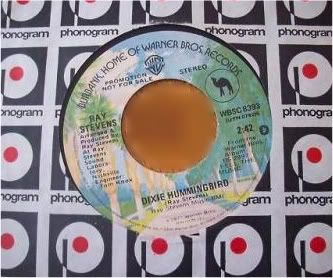
As I often say, "Dixie Hummingbird" is one of my favorite Ray Stevens songs. The funny thing is I first heard the song in 1995...it had been recorded by Ray in 1977! This is one of the things about Ray that often gets overlooked...while a lot of his comical songs are topical and can be dated...a song like "Dixie Hummingbird" sounds as if it were written by Ray today. This is what you call timeless. I can't exactly say what it is that I like about the song...I could say I like the opening narration...but I'd also have to say that I love the melody of the song and the way Ray sings the lyrics. Given that the song has hummingbird in it's title we're going to hear humming take place at various points in the song. Ray happens to do this during the instrumental breaks in the song. This isn't pleasant humming, though...this song is deep in dixieland/swing and loud accompaniment that the humming that takes place is rather intense and driving. The song comes from his 1977 Feel The Music album on Warner Brothers.

May 26, 2010

Ray Stevens: 45 at 35...

Well, here's some discussion about a couple of 45's from 35 years ago...back in 1975 Ray Stevens was amidst a streak of hit singles that had started in 1968. In 1975 he was on the pop and country charts with "Misty" and later that year, "Indian Love Call". A lot of ink is given to "Misty" and rightfully so...it was a Grammy winner for Ray. However, not much attention is given to the other songs that populated the Misty album that year. "Indian Love Call" is a wonderful vocal performance...the melody is changed from what one may be accustomed to and there's some high tenor love calls heard throughout. The calls are not as high or shrilly as Slim Whitman's worldwide hit version but the vocal dynamics from Ray more than make up for it. The arrangement is jazzy, almost doo-wop like. The recording became a country hit and it crossed over to the pop chart as well. It didn't get much pop radio airplay but the strength of it's sales enabled it to rank among the Top-70.

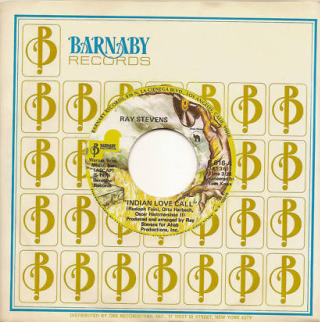
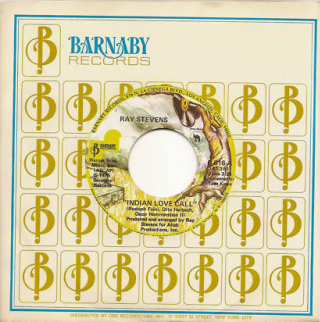
This single's catalog number is Barnaby-619 and it's b-side is "Mockingbird Hill". The single didn't enter the country or pop music charts but nevertheless it's from the 1975 Misty album. This was a follow-up to Ray's version of "Young Love", which hit the country Top-50 in late 1975. Ray's version of "Lady of Spain" is quite a departure, vocally. In the song Ray comes across sounding a lot like Fats Waller in some places. The original version of the song was a crooning love ballad performed by a host of pop music artists but in the hands of Ray Stevens it was turned into an uptempo party song. The Spanish music introduction in Ray's version soon fades away to an urgent early rock and roll arrangement. Ray seems to be completely wrapped up in the free for all performance that he excitedly hollers out "blow it, Norman!!" to the album's saxophonist, Norman Ray, prior to the instrumental solo. I would've loved to see him perform the song, in this arrangement, in concert. Heck, I would've loved to have been in the studio while he was recording this song! It's one of my favorites from the Misty album. The Mp3 digital album of Misty is available at Amazon but their sound clip doesn't necessarily convey the mood of "Lady of Spain" because it's, after all, a sound clip...it doesn't represent the song as a whole. It cuts off right before the rocker instrumentation kicks in.

April 9, 2010

Ray Stevens: Pop Goes the Country...1975!

Volume Four in the 20 volume series of Pop! Goes the Country DVD's arrived in the mail today. This one, like the two volumes I wrote about in another blog entry, features Ray Stevens. This particular episode comes from 1975...35 years ago...and Ray is at his all-time best yet again. He opens the show singing "Misty" and during the interview segment he sings a cultured, classical version of "The Streak" which has host, Ralph Emery, and the other guest, Sammi Smith, in fits of laughter. Sammi was on the stage preparing for her song when the camera would pan over to her and she'd be laughing...the classical version of the song continued on to it's conclusion and then Ralph introduced Sammi who had to quickly regain her composure before singing "Which Way Do You Wanna Go?". Later, Ray sings "Indian Love Call" and it's an incredible performance. If you've never seen him perform the song in a concert setting such as this you'll be in for a treat. This marked the first time I had seen footage of him singing the song. Ray had a Top-40 country hit with the song in the second half of 1975 here in America and he also enjoyed Top-40 success with the single over in England. It was his sixth Top-40 single in the United Kingdom..."Misty" had reached the Top-5 in the United Kingdom and the Top-5 on the country chart here in America...in addition to reaching the Top-20 on the pop chart.

Sammi Smith's second song of the episode was "Help Me Make It Through the Night", which was her biggest hit. Ray performed an up-beat version of "It's Twilight Time" and in my opinion he must have been thinking about recording the song for his MISTY album because it's arranged in a similar way to most of the songs on that album. Of course, the song never made it onto that album but it's a wonderful performance nonetheless. The album hit during the first week of July 1975 on it's way to a Top-5 finish.

This episode, according to the company that sells the DVDs, lists the episode as June 10, 1975. What I don't know is whether or not that's the day it was taped or if that's the day it was aired. Whenever it was taped or aired it's a wonderful appearance...and one that shows Ray with his beard, something rare during this era of his career. As a matter of fact, Ray is clean shaven on the MISTY album...but on a compilation released that same year he's full of beard as you see below.

The finale of Pop! Goes the Country features Ray and Sammi joking around with Ralph. Sammi plays a guitar and dedicates her rendition of "Misty" to Ray...she only sings a few lines while Ralph jokingly attempts to stop her performance; after which, she pretends to be offended that Ralph was talking over her dedication. Ray sings a piece of "Everything Is Beautiful" as the credits start to roll. There are five other episodes of the show on this DVD and they're all from 1975. I bought three of the DVD's because of Ray Stevens' involvement but these programs are a must for any country music fan. On Volume Four, in addition to the Ray Stevens-Sammi Smith episode, you'll also get episodes that feature Faron Young, Carl Smith, Melba Montgomery; there's episodes with the Statler Brothers and Susan Raye; Ronnie Milsap and Charlie Daniels appear on an episode; Johnny Cash and wife, June Carter, get an entire episode devoted to themselves. Bobby Bare is featured in an episode, too.

January 9, 2010

Ray Stevens: We The People are Awakened

The feeling continues to grow as "We The People" climbs into the Top-30 on Amazon's best-selling MP3 list. As far as country music MP3's are concerned it's still among the Top-3. The official web-site of Ray Stevens crashed multiple times on Friday January 8th and a lot of it had to do with increased traffic which as everyone knows causes a web-site to crash. I believe a lot of this increased traffic stems from the television exposure that Ray's music video had in a brief segment on The O'Reilly Factor. I think that the exposure helped to introduce the song to those who aren't as conversant when it comes to social networks like You Tube or Facebook and as a result even more visitors checked out Ray's web-site looking for the ObamaCare information. There's always a risk or a slim chance that an internet hit isn't well known outside the confines of cyber-space. Some people who don't frequent places like You Tube or just don't even pay attention aren't going to know a music video is available. One of the things that this experience has done with "We The People" taking on a life of it's own is that a good 75 to 80% of people weren't even aware that Ray had been active. A lot of people make the statement that they thought he had retired or had died years ago...so on one hand it's satisfying to see Ray get a lot of media hype and attention and on the other hand it's ironic to see that a lot of people didn't, on their own, seek Ray's music out and instead are just becoming aware of his presence through the "We The People" song.

There's also a good chance that people who discovered Ray through this song will check out his catalog of music...which dates back to the late 1950's. I think one of the things that's surprising to a lot of people who weren't really into all things Ray Stevens is how serious he actually is. As I mentioned in the earliest blog entries that I wrote, Ray had always wanted to be taken seriously and sing serious songs and love ballads but he had a sense of humor and also wanted to express it occasionally. The thing that happened, as long-time fans already know, is that the love ballads and non-comical songs weren't obtaining the same degree of attention from the buying public. One of the things that may be fascinating for some to learn is that the music critics, both in pop and country, almost always gave Ray's serious side good reviews and they would groan and bellyache whenever he'd issue a comical song or an entire album of comical songs. The exact opposite would occur with the buying public...with the exception of a few non-comical songs from Ray that achieved Top-40 rankings, nearly all of his biggest commercial successes came with the comical material. So it was like the buyers wanted fun and silliness from Ray while the critics wanted the serious, thought-provoking Ray.

Those who are amazed or surprised that Ray has serious opinions and world views perhaps thought that an artist known for light, comical banter doesn't take anything seriously? That's just my guess as to why some out there are shocked or stunned by the song...more stunned that it came from someone like Ray whose branded "safe" or "non-threatening". I think the very idea that the song comes from someone the public would least expect is where the 'novelty' aspect comes from...even though the lyrics are dead-serious. This is where I think the genius of Ray Stevens shines through and it has to do with the song's arrangement and the humorous music video imagery. The arrangement is bouncy and the chorus is catchy while the music video is funny to watch...and something else that's funny...

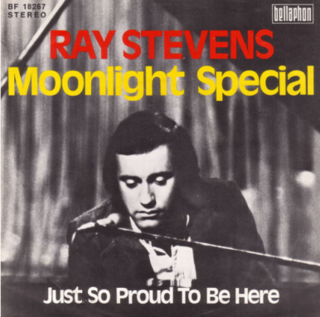
I've been a fan of Ray's 1974 single, "The Moonlight Special", ever since I first heard the song. It was on a 1983 Greatest Hits tape that RCA issued. The tape came into my possession during the early '90s when I located it at K-Mart. The song is a parody of the Midnight Special TV show which featured Wolfman Jack. I happen to think that the inability of a lot of teenagers and even young adults to laugh at themselves is why the single wasn't as big a hit as I think it should have been. As far as statistics go the single peaked just inside the Top-75 of the pop music chart and I believe it was based upon strength of sales instead of airplay. I did a blog entry about this single and titled it "Anniversary Under the Moonlight". 2009 had marked the single's 35th anniversary. The song itself is broken into three acts and the Sheep Dog acts as presenter/emcee. The Sheep Dog, of course, is the Wolfman Jack parody. Ray's own voice appears throughout singing the chorus of the song...but mostly the song is composed of his impressions of Wolfman Jack and the guests appearing on "The Moonlight Special".

For those who want to hear an R&B, bluesy take on "Indian Love Call" look no further than Ray's version of the song. He recorded it in 1975 and it became a Top-40 country music hit. Surprisingly the single didn't do as well with the pop audiences and that's perhaps because the overall feel of the song didn't mesh with the sound of pop radio at the time...or another reason could be that pop music DJ's didn't like the song altogether, no matter whose singing it. Some songs just seem to have this vibe that causes DJ's or music buyers to freak out and they don't want to hear the song by any artist and perhaps "Indian Love Call" is one of those songs? If that's the case the sentiments don't extend to the pop-standards crowd who loved the first known recording by Nelson Eddy and Jeanette MacDonald in 1936. Slim Whitman recorded the song in 1952 and his version is often considered the definitive recording because of his yodeling techniques when phrasing some of the lyrics. Ray's version I'd assume was a sleeper hit with country audiences because it doesn't exactly sound 'country' and the origins of the song aren't 'country'. I will make the assumption that a big factor in the song's acceptance had to do with Ray himself and perhaps the country DJ's getting a kick out of Ray's bluesy arrangement.

November 2, 2008

When I'm Calling You-ou-ou-ou....

Photobucket Released by Ray Stevens as a commercial single in 1975, this cover of a pop standard appeared originally on his Misty album. The single wasn't a 'smash hit' but it did decent on the country music charts that year, reaching the Top-40.

The song "Indian Love Call" goes way back to the early 1920's when it was part of an operetta called, Rose Marie. The song has been recorded by numerous artists through the years, both local talents and national talents, but the version that most in a specific age bracket will recall is the 1952 recording by Slim Whitman. That particular recording was a huge pop hit. The songwriters are Rudolf Friml, Otto Harbach, and Oscar Hammerstein, II.

Ray Stevens recorded his take on the song in 1975 and did very different arrangement than originally heard. I suppose one of the unwritten rules in pop music or country music, music in general, is whenever an artist decides to cover a song, to always perform a song exactly the way the original sounded? In some cases, songs that are so well known it's almost impossible to find a new arrangement that'll add something different to the recording. In the pre-rock days of pop music, artists would almost always record everyone else's songs. As soon as a songwriter wrote a song, it got sent through the publishing houses, and before long an artist would perform the song...then another artist would perform the same song...then another, and another...often in the span of one calendar year. The thing was, the only difference a lot of times between a Sinatra performance and a Crosby performance of the same song was that one version featured Sinatra singing and the other had Crosby singing...the arrangements/melodies were the same.

Ray liked to dabble and play around with songs...a lot. If a song was popular up-tempo, Ray would cover it as a ballad...and the other way around...a popular ballad may be turned into a mid-tempo or up-tempo performance. This performance of "Indian Love Call" demonstrates Ray's ability to blend R&B/doo-wop and straight pop into one performance. I would imagine the purists who prefer "Indian Love Call" not be dabbled with and prefer it always sung the way Slim Whitman recorded it, I suppose that segment would consider it tasteless if one were to tweak with the song's melody. It's hard to tell.

There was no denying that Ray had a hit on his hands, though. The single reached the Top-40 on the country chart in 1975 as the follow-up to his previous hit, "Misty". On the pop chart it reached the Top-65. The picture at the top of this entry is of a songbook that was released as a promo item. I do not know where the picture was taken but I have a guess that it was in Centennial Park in Nashville, Tennessee or it could have been taken in Ray's back-yard for all we know.

Also, there is a picture of Ray in the woods on the cover of a compilation LP called The Very Best of Ray Stevens issued on Barnaby the same year. So my guess is the pictures were taken at his house or maybe a local park somewhere.