Oh yes...perhaps the most popular or the second most popular woman from a Ray Stevens recording is Ethel. The woman that kept seeing a streaker in Ray's 1974 million selling single, "The Streak". The catchphrase, well one of them, even appears on the album cover. Throughout the recording Ray's eyewitness character continually warns Ethel not to look but it's always too late. Ray wrote and recorded a rough draft of the song shortly after reading about the fad of streaking prior to it becoming a national fad, most often happening on college campuses. Ray didn't immediately release the song but once streaking became a huge news item, perhaps reaching it's peak at the Oscar ceremony, Ray decided to put the finishing touches on his song and record it. When he released the song on Barnaby Records there were already at least a dozen or more novelty songs about streaking available. Ray has always felt that the reason his recording out performed the other songs is due to his having the concept of the song partially written weeks before streaking became a cultural phenomenon. He owed the song's success to having had the time to focus on it rather than cobbling together lyrics seemingly at random just to cash in on the fad. The single sold millions of copies worldwide. The sales figure that's often cited is more than 5,000,000 copies sold. It not only reached the top of the Hot 100 pop chart here in America but it crossed over and become a Top-5 hit in country music and a number one hit in the United Kingdom. In America the song was at number one for three weeks. It had a meteoric rise to the top...once it hit the Hot 100 it was sitting at number one within a month's time. The single reaches it's golden anniversary this year but for this occasion it's okay if Ethel takes a look and celebrates the milestone. Although the 1974 Boogity Boogity album is officially a comedy release it did contain at least one love song. It happens to be the album closer, "Just So Proud To Be Here". Ray also includes his rendition of "Don't Boogie Woogie", a rocking piano pounding performance that sounds a lot like Jerry Lee Lewis and ironically Jerry Lee Lewis would in fact record that song...one year after Ray. Here's an audio track of "Just So Proud To Be Here". I don't know if Ray chose to write a song with this as a title because of his friendship with Minnie Pearl or not. If you'd ever seen Minnie in performance she'd holler out her opening "How-dee!" and follow it with "I'm just so proud to be here...".
In 1975, still with Barnaby Records, Ray issued the single, "Misty". Now, technically, the name of the song is a woman's name but the song is actually about emotional feelings. If you've never heard the song before it's about how misty-eyed a man gets the moment the love of his life is near him. So, yes, it's still a love song but it isn't about a woman named Misty. Ray won a Grammy early in 1976 in the category of Best Music Arrangement for his recording of "Misty". Elsewhere on the Misty album there are plenty of love songs. One of the greatest on the album is his version of "Lady of Spain". There's also the delightful "Sunshine", a song that's arranged and sang with such vocal happiness that you're bound to smile throughout as you listen to it. On the opposite end of the up-tempo productions we have the sensual vibe that exists throughout his performance of "Take Care of Business". That song, from the pen of Layng Martine, Jr., uses a phrase heard throughout Ray's 1968 single, "Mr. Businessman". Layng was a writer at Ray's publishing company and if I recall correctly the songwriter chose "Take Care of Business" as a title because he felt it might grab Ray's attention to the point of his possibly recording the love ballad...or he used that title because "Mr. Businessman" happened to be one of Layng's favorite Ray Stevens songs. It's one or the other. Ray's marvelous ballad renditions of "Indian Love Call" and "Young Love" are on the 1975 album as well.
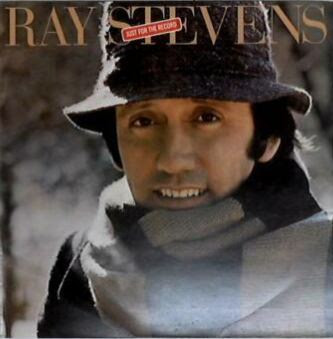
In 1976 Ray exited Barnaby Records and signed on with Warner Brothers records. His debut album for the label, seen above, is titled Just For the Record. It's a glorious album chock full of up-tempo, mid-tempo, and ballad performances. In the category of love songs this album has plenty. His rousing rendition of "You Are So Beautiful" was the album's debut single and it was followed by another love song, "Honky Tonk Waltz". A savory ballad found on here is "Once in Awhile" whereas "Cornball" is a bouncy sing-a-long kind of song where Ray sings about a guy that no matter how hard he tries he can't seem to impress the woman but he's so desperate that he feels the need to remind her that he'll always be available if she ever gets lonely. I tend to use the word, glorious, a lot when describing specific Ray Stevens recordings. I'll use that word again.. "Gimme a Smile" is a glorious love song about a strained relationship that's reached a breaking point and Ray asks for forgiveness and a smile.
So far I've touched on quite a few Ray Stevens recordings that fall into the category of a love song or those that contain women's names in the song titles in these first three blog entries focusing on Ray singing about women. In part 4 I'll be spotlighting some recordings of Ray during the years 1977, 1978, and 1980 as women's history month continues.
Hello fans of Ray Stevens!! I came across a CD copy of the 1995 Warner Brothers CD, Cornball, for sale on eBay. The seller resides on the east coast. When I saw the CD listed on eBay it had me thinking, once again, of Ray's years on Warner Brothers (1976-1979) and how the Cornball CD isn't available for online listening like the other two compilation companion CD's happen to be. In 1995 the record company issued three compilations on Ray's years at the label: Cornball, Do You Wanna Dance?, and The Serious Side of Ray Stevens. The latter two CD's can be found either as digital downloads or are able to be heard on streaming sites. Cornball, for whatever reason, hasn't been as easily accessible. That particular CD collects ten of Ray's recordings during that mid to late '70s time period. In fact, all of the CD's showcase that time period, but because Cornball features his 1979 recording, "I Need Your Help, Barry Manilow", it's the one compilation from 1995 to feature each year he was with Warner Brothers: 1976, 1977, 1978, and 1979. How come? Well, "I Need Your Help, Barry Manilow" was Ray's only recording in 1979...meaning that the other two CD's focus on 1976, 1977, and 1978. Cornball, as an album title, is misleading.
The title would have you believe that this CD is filled with humorous recordings and nothing else. The fact is that "Cornball" is the name of a song that Ray wrote...a love ballad...and it was originally released on his 1976 album, Just for the Record. There are three or, possibly, four, humorous songs on this ten track collection depending on what you might consider funny or comical. There's his two chicken clucking recordings as The Henhouse Five Plus Too titled "In the Mood" and "Classical Cluck". There's also the parody, "I Need Your Help, Barry Manilow". Those are the three, without a doubt, comical recordings. I've read vintage music essays of the 1950s and most of those consider "One Mint Julep" a comical/novelty song. That particular recording, track 7, comes from his 1978 album, There Is Something On Your Mind. It had been a hit in 1952 for the rhythm and blues group, The Clovers. That particular 1978 album is Ray's salute/tribute to the music of the 1950s. "Money Honey" and "Your Cash Ain't Nothin' But Trash", tracks 4 and 8 on the 1995 CD, also come from that 1978 album.
When I heard "One Mint Julep" for the first time on the 1995 compilation CD I didn't hear it as a humorous song...but apparently those who find it comical are those who know more about drinking alcohol than I do.
The song is about a guy who has drank numerous mint juleps and has learned that, while under the influence, he's gotten himself into a relationship he didn't want. Music essayists and historians say the humor comes from a guy getting himself drunk by way of what's mostly a drink observed for special events (like the Kentucky Derby) and isn't what most would commonly want to get drunk on.
Earlier in the year I wrote a blog entry about a 1976 Ray Stevens album reaching 45 this year. That album, Just for the Record, is a wonderful collection of songs and it was the first of several studio albums Ray recorded for Warner Brothers. I periodically return to the Ray Stevens recordings of the late 1970s...I just have this attachment to them...it can't be explained beyond my saying that I love those recordings! Maybe I love them because they're over-looked and under-appreciated? Maybe I love the sound of those recordings and perhaps because those records sound so different than what he was doing at Barnaby Records during the first half of the decade and what he would eventually do at RCA Records at the start of the 1980s...because the Warner Brothers sound is so different from what came before and after his years spent there maybe that's why I have this intense love for those songs. See, I told you it's hard to explain my attachment to those songs!!
"You Are So Beautiful" was Ray's debut single for Warner Brothers in 1976...and as you can see from that 1979 television appearance on Pop! Goes the Country he enjoyed performing it for the fans. Ray followed it up with "Honky Tonk Waltz"...a clever song blending country music within the framework of a waltz. The song takes place inside a bar room. There's a video performance of Ray from 1977 singing the song on an episode of Pop! Goes the Country...but I'm going to embed the audio track...
A lot of the recordings Ray Stevens did for Warner Brothers were spotlighted in 1995 on a set of three CD's: Cornball, Do You Wanna Dance?, and The Serious Side of Ray Stevens. YouTube has the audio tracks from the second two compilation albums but for whatever reason there weren't any official uploads of the songs featured on the Cornball release. Some wonderful recordings from Ray of "Your Cash Ain't Nothin' but Trash", "One Mint Julep", "Cornball", "Once in Awhile", and "Money Honey" are on that compilation. I came across an audio of "Money Honey" just recently but I've not posted it in any blog entry yet. I've been waiting to see if it'll stay online...and so far it's remained on YouTube. Instead of posting a YouTube embed of the audio track I'll post this "Money Honey" LINK.
If anyone comes across this blog entry at some future date and they click the link and it takes you to a blank screen then you'll know why I decided not to embed the YouTube screen.
I thought the title of this blog entry was to focus on Ray Stevens songs that are mellow, smooth, and calm...the songs I've opened the blog entry with are anything but mellow, soothing, or calm...especially the heavy drum beats and all out showmanship heard on "Money Honey". That recording featured only five musicians...in fact, the entire 1978 There is Something On Your Mind album from which "Money Honey" originates, it only featured five musicians total! The musicians heard on "Money Honey" were Ray Stevens (keyboard, synthesizer, percussion), Mark Casstevens (acoustic guitar), Reggie Young (electric guitar), Jack Williams (bass), and pounding away on the drums on that recording was Jerry Kroon. This line-up of musicians was also heard in the recording of "Old Faithful Trilogy". The 1978 album has 8 songs...on 6 of those recordings Johnny Christopher played acoustic guitar while Jerry Carrigan played drums. I'm sure the two of them were unavailable the day "Money Honey" and "Old Faithful Trilogy" were recorded.
Yes, after getting things started with some up-tempo songs we're heading into mellow lane now...take a listen to this soothing ballad from Ray Stevens titled "Two Wrongs Don't Make a Right"...you're gonna love the sound and the way in which Ray sings the lyrics...
Staying with that same 1995 compilation album we have the 1976 inspirational ballad, "One and Only You", from the pen of Buddy Kalb. This is significant...it marked the first time Ray recorded a song written by Buddy Kalb...a writer who would go on to dominate a lot of Ray's albums beginning in the mid to late '80s.
Ray's Warner Brothers era also contains these ballads: "L'amour", "Blues Love Affair", "Road Widow", "You're Magic", "With a Smile", and "Daydream Romance". Here's a bluesy, mid-tempo offering from Ray titled "Blues Love Affair"...from his 1977 Feel the Music album...
Although I love the recordings Ray Stevens did in the late 1970s and I've shared several in this blog entry...historians/critics only focus on novelty songs when it comes to Ray Stevens...and because of that his Warner Brothers time period is often referenced with two novelty recordings: 1976's chicken clucked "In the Mood", released as The Henhouse Five Plus Too, and 1979's "I Need Your Help, Barry Manilow"...and all of the serious recordings he did for the company get ignored time and time again...but yet that's one of the reasons why this blog exists...to spotlight what historians and essayists, alike, choose to ignore. "Daydream Romance"...that one is so mellow you'll feel as if you're off in a dream world...take in the relaxed, tranquil music...this is the perfect audio track to conclude this blog entry with!
Hello all once again!! One of Ray's greatest friends and business associates, the late Chet Atkins, was born on this day in 1924. Chet was one of the people that saw the natural talents of Ray Stevens and the two became nearly inseparable friends. They went into real estate together as well. Chet, as everyone knew, was a master guitarist and he was also the head of RCA Records in Nashville for many, many years...and he was a top record producer for RCA. Ray played on numerous recording sessions for Chet in the early to mid '60s. Ray was also a consistent session musician on a wide range of recordings produced by Shelby Singleton (Mercury Records) and Fred Foster (Monument Records). If all of this wasn't impressive enough both Ray and Chet, when they found the time, were golfing buddies.
In 1976, according to Ray's recollections, Chet asked him if he'd produce a recording on him...singing! Chet Atkins singing was something of a rarity...and therefore it became a novelty item when the Buddy Kalb song, "Frog Kissing", was released on Chet Atkins. Ray produced, arranged, and published the song as well as sang soft harmony vocals...listen carefully and you'll hear the faint harmony vocals on the single release. The novelty became a hit in 1976. Ray and Chet appeared together on the syndicated Marty Robbins television show in 1977 and performed the song. In the television performance Ray is noticeably more present with his harmony vocals. The two performed the song a second time on television in 1980 during a Chet Atkins special. By this time Ray had a beard and was recording for the label, RCA, that Chet was once an executive of.
Chet stepped down from his executive role at RCA by the early 1970s (Jerry Bradley took over most of the country music productions from that point forward) and in 1982 he left the RCA company after a 35 year run (joining the label as a guitarist in 1947) and he signed with Columbia. Chet was elected to the Country Music Hall of Fame in 1973. A life-size bronze statue of Chet was unveiled in January 2000. It became a tourist attraction...similar in the way the life-size statue of Chet's contemporary, Owen Bradley, seated at a piano, had become. Owen's statue was unveiled in 1999.
Chet Atkins passed away of cancer on June 30, 2001 at the age of 77...ten days after his birthday.
I'm going to embed the 1976 audio track and the 1977 television performance...you can watch both or pick which performance you'd prefer. The audio recording features more studio production, obviously, than the television performance.
Now then...here's the 1977 television performance...and as far as I know this has to be one of Ray's final television appearances in which he's clean shaven...he'd grow a beard in 1978 and keep it on his face from that point forward...
In early 1976 Ray Stevens became a recording artist for Warner Brothers Records. He had been on the Barnaby Records label since early 1970 and it was on that label in which Ray's music went international on a consistent basis...singles reaching the charts not only here in America but up in Canada and overseas, usually in the United Kingdom or Australia. Ray's debut for Warner Brothers arrived with the single, "You Are So Beautiful". The recording's arrangement was inspired by a previous single he'd issued a year earlier, "Misty". Ray's take on "You Are So Beautiful" featured the banjo, fiddle, and steel guitar as "Misty" and another recording of his from 1975, "Sunshine". "You Are So Beautiful" reached the Country Top-20 in the spring of 1976. The album featuring the single, Just For the Record, became available on April 2, 1976. The album's title is written in small print over top of Ray's name on the album cover. I always like to know the story behind the names of albums...I'm obviously talking about albums that aren't named for one of the songs. I've always wondered why this was titled Just For the Record. Some may have an answer. I've come across an explanation or two a number of years ago on message boards that no longer exist and one explanation was that several of the songs on the album deal with the subject of music. That's the only explanation that made sense. So, then, what are the songs on this 1976 album?? There's 10 songs altogether and most were written or co-written by Ray. There are several songs that were written by other writers.
Track List:
1. Cornball
2. Gimme a Smile
3. Once in Awhile
4. One and Only You
5. You Are So Beautiful
6. Can't Stop Dancin'
7. OM
8. One Man Band
9. Country Licks
10. Honky Tonk Waltz
As you can tell from the track list you'll come across love ballads that fill up Side One of the album (the first five songs). On Side Two it opens up with a song about music...specifically dancing...but if you listen carefully, though, it uses dancing as a metaphor. It's an inspirational song telling the listener to never give up and to always strive for positivity in life and not allow negativity and unpleasantness cloud your better judgement. "Can't Stop Dancing" would later become a hit for pop duo The Captain and Tennille. Ray co-wrote the song and he published it...and so he shared in the success as both co-writer and song publisher when The Captain and Tennille had a Top-20 pop hit with it in 1977.
The song, "OM", is all about transcendental meditation. I don't know if Ray was a student of transcendental meditation or if he was simply interested in what it was all about and therefore decided to write a song all about it. "One Man Band" is a sad song about a relationship that's ended and because of this Ray says he feels as if he's playing in a "One Man Band" since the harmony and joy in his life is now gone. "Country Licks", from the pen of Layng Martine, Jr., is a fabulous toe-tapping song with a bluegrass feel much like "You Are So Beautiful". The album closer is the equally clever "Honky Tonk Waltz" where a waltz and honky-tonk music is combined into one. "Honky Tonk Waltz" was the album's second single and it reached the Top-30 on the Country chart in the summer of 1976. The single's B-side is the previously mentioned "OM". That song, "OM", is 4 minutes and 39 seconds long and yes, it's a wonderful recording, and yes, you will probably feel as if you've been meditated by the time it's over. It has a lengthy electric guitar solo fade out. I could've posted a larger image but I didn't want my text shoved off to where it looks newspaper column style. That kind of design is okay if I were writing a newspaper column but this is a fan created blog spotlighting the legendary Ray Stevens. In hindsight I would've had the songs on Side Two on Side One since the name of the album is Just For the Record. However, since this was released primarily on vinyl, who says a fan couldn't play Side Two first? A cassette tape release was also available but they've become super obscure. I know a copy comes up for sale online every so often. On the pictorial time-line I have a photo of a cassette copy of Just For the Record.
Once the publicity and single releases ran their course Ray closed out 1976 with a novelty single, "In the Mood", credited as The Henhouse Five Plus Too. This chicken clucking novelty reached the Top-40 of both the pop and country charts here in America early in 1977 and it tickled the funny bones of those in the United Kingdom as well as it peaked inside their Top-40. In some international markets the single retained it's Henhouse Five Plus Too credit...the Netherlands release was credited simply to Henhouse. Ray's name appears on the B-side as the writer/publisher of "Classical Cluck", but the performance itself is credited to Henhouse. In other international markets the single is credited to Ray Stevens. In the photo above, from 1977, Ray Stevens is explaining to Ralph Emery about "In the Mood" and for visuals he brings into the conversation a ceramic chicken mask.
In this blog entry we're going to take a listen to "Can't Stop Dancing", a song written by Ray Stevens and John Pritchard, Jr. If you have Ray's 1976 album, Just for the Record, you're familiar with "Can't Stop Dancing". If you're not familiar with Ray Stevens at all you're probably going to be familiar with pop music duo, Captain and Tennille. If so then you're probably familiar with their recording of "Can't Stop Dancing". Their rendition of the song became a big pop hit in 1977...nearly breaking into the Top-10 of the Hot 100 pop chart. I don't think the pop music media highlighted the fact that it was a song co-written by Ray Stevens...they might have...but I hadn't come across any vintage music reviews or press releases that make mention of that connection.
The Captain and Tennille's recording has a very different arrangement than what Ray Stevens fans might be used to hearing. Their recording is very fast with a disco sound in the background and different instrumentation...their rendition has a passage in the song where Toni Tennille repeats the phrase "can't stop" over and over in a frenetic, fast delivery. Ray's recording is not very fast but it isn't a ballad, either. It's mid-tempo and up-tempo, in parts, with different instrumentation and a straight forward vocal delivery without a lot of acrobatics. The music is wonderful and it captures the time period without it being full-blown, authentic disco. The message of the song is wonderful, too, if you keep your focus on the lyrics...which might be hard to do with the electric, high energy music arrangement Ray created for the song. Again, Ray's performance isn't as fast and frenetic as Captain and Tennille, but it's still highly energetic...
The video quality is so-so in this upload but earlier today "Honky Tonk Waltz" was uploaded onto the social media sites of Ray Stevens. The performance, from a 1977 episode of Pop! Goes the Country, had been uploaded onto YouTube by other people going back at least 10 years but since this is an upload from Ray's official YouTube channel I'm going to embed it. I'm sure I embedded earlier uploads of the performance and if I have then this will be another upload to enjoy!!
Me and Ray Stevens LP
The image off to the right is me and my vinyl copy of the 1976 Ray Stevens album, Just For the Record. I took this photo earlier this morning...the photo is actually larger than what it appears but I made it smaller for this blog entry so that the image wouldn't take up most of the text space. The album's title is in smaller print over top of Ray's name. The back of the album features the same photo of Ray. It's a photo that was apparently taken in the winter months...Ray's bundled up with a heavy scarf and a fisherman's hat. Publicity photo's from around the time of this album's release shown him wearing gloves, too. I don't know the story behind the photo session or how the name of the album came to be. It was his debut album for Warner Brothers...following a lengthy run with Barnaby Records (dating back to early 1970). Ray's debut single for Warner Brothers happened to be a newly arranged version of "You Are So Beautiful"...traditionally performed as a slow ballad but in Ray's rendition it's presented as an up-tempo sing-a-long in the vein of "Misty" but with an even more deliberate Bluegrass feel. It was a Top-20 hit on the country charts and it was followed by "Honky Tonk Waltz".
"Honky Tonk Waltz" deliberately combined two music/dance styles together...the main instrument being the mandolin. In the video Ray plays a guitar and the piano. In this era of his career he often appeared with a guitar on his back while seated at his piano. He has often remarked that he knows a few chords on the guitar but is in no way a guitar wizard...preferring to stick with his main instruments within the piano family. "Honky Tonk Waltz" hit the Country Top-30 midway through 1976. There were only two singles released from his 1976 album. It wouldn't be until 1995 that Warner Brothers began re-issuing Ray's recordings for their label...and they did so with three compilations: Cornball, The Serious Side of Ray Stevens, and Do You Wanna Dance?. This means that it wasn't until those three releases came along that a good dose of his Warner Brothers recordings were on the market. The label never issued any best-of collections on Ray until 1995 and they hadn't issued any since. It would be nice to have his studio albums for Warner Brothers become available in CD or have them become digitally available as Mp3's. It makes little sense to keep them unavailable. I have them on vinyl and I have those 1995 CD's but not everyone does...the late '70s Ray Stevens recordings need to become readily available again.
It's me once more!! The late '70s time period in the career of Ray Stevens, for me, is truly fascinating but yet I think the same way about any period of his career. However, that late '70s period takes a lot of priority for me because of how scarce and limited his music from that time period has become. It's a period of time where he was on Warner Brothers.
"You Are So Beautiful" was Ray's debut single for Warner Brothers in 1976. He joined the label after a five year stay at Barnaby Records. This is the label upon which he began publishing his songs under the name, Ray Stevens Music, rather than Ahab Music Productions. This is also a period of time where Ray decided to remain bearded rather than clean shaven. He's not appeared without a beard since the early part of 1978. The last studio album featuring clean shaven Ray Stevens on the cover is 1978's There is Something On Your Mind. "You Are So Beautiful" is performed in a country/bluegrass style...a concept used a year earlier for "Misty" which won Ray a Grammy at the 1976 Grammy Awards for 'Best Arrangement'. The performance above is from an early 1980 appearance on Pop! Goes the Country. Ralph Emery would retire as host of this syndicated television show following the 1979-1980 season...bringing to close a 6 and a half year hosting tenure that began in 1974. Tom T. Hall would become the new host at the start of the 1980-1981 season. Ray appeared on several episodes that Tom T. hosted. The show went out of production at the end of the 1982-1983 season.
It's been a scorching hot couple of days here!! I'd been awaiting my roof repair for a couple of days and today the workers shown up and replaced the shingles. The shingles had been on the roof since we bought the house 20 years ago. Well, enough of the personal discussion...it's time to discuss the reason you're reading this and the reason why I'm writing this fan created blog...time to discuss Country Music Hall of Fame member, Ray Stevens!!
Several days ago Ray's social media sites put up an audio of his 1985 recording, "Thus Cacked Henrietta". The title of this blog entry is in reference to the music often referred to as a fanfare in a longer piece of music from Richard Strauss in the late 1800s. If you've ever seen the movie, 2001: A Space Odyssey, then you'll immediately recognize the music. It's closely associated with Elvis, too.
The music was released as "Also sprach Zarathustra" and while Ray keeps the arrangement of the fanfare intact he comically performs as a choir of chickens...much in the same way he did "In the Mood" and it's B-side, "Classical Cluck", late in 1976. On that vinyl single the performance was credited as the Henhouse Five Plus Too. "Sunrise" is the official title of the fanfare in "Thus sprach Zarathustra". Ray's "Thus Cacked Henrietta" was his final recording from the choir of chickens and additional farm animals. He would go on to incorporate chickens in later recordings but this was his third and, to date, final chicken clucking performance.
Longtime Ray Stevens fans should be aware of these 1995 releases from Warner Brothers. I've written about them plenty of times over the last 10+ years that I've been writing this fan created blog. Well, 2020 marks the Silver Anniversary of their release. I still have my cassette tapes and but I only have one of those in CD format. I have them in Mp3 format now but I won't toss out my cassettes...or CDs...or my vinyl. I have all of those songs, now, on vinyl on the original studio albums they appeared on. Anyway, in the years prior to these three releases coming along you couldn't find hardly anything in retail stores featuring Ray Stevens from his Warner Brothers years (1976-1979). You would come across compilation albums that featured one or two selections from that time period and that was it. Can you guess the songs from this era in Ray's career that got the most repeated exposure on compilation albums throughout the 1980s and into the mid 1990s? The novelty "In the Mood" late in 1976...released under a pseudonym, Henhouse Five Plus Too. The other song from this time period that's gotten a lot of reissue is 1979's "I Need Your Help, Barry Manilow". These 1995 releases went a long way at showcasing the obscurities that weren't kept in print on countless compilation albums. The irony is that these 1995 cassette releases, once they were re-released in CD format, went out print just as quickly as they arrived. A number of years later the releases were digitally uploaded for on-line sale...however, one of those 1995 releases is currently unavailable for digital/Mp3 purchase, but the other two are still available.
The titles of those releases are Cornball, Do You Wanna Dance?, and The Serious Side of Ray Stevens. The material compiled for those releases come from his studio albums for Warner Brothers in the late '70s. Cornball is a misleading album title...there are only three recordings that qualify as comical/novelty but there is a love ballad on there titled "Cornball" from 1976. The CD opens and closes with the chickens: "In the Mood" kicks off the CD and "Classical Cluck" closes out the CD. In between we have track two, "I Need Your Help, Barry Manilow" and beyond that the rest of the recordings are serious love ballads and inspirational easy-listening music. I'm aware that there is a segment of music listeners that can't distinguish between Ray's humorous and serious recordings. I say this because there are many that feel his 1975 recording of "Misty" is a comedy song (believe it or not) but it's actually a straight ahead country performance of a jazz/pop standard...to them it's funny when they hear it performed the way that Ray does it. Cornball is not available for digital download at Amazon but the other two collections are. I'm going to list the songs found on each release.
Do You Wanna Dance?:
1. Feel the Music; 1977
2. Dance Trilogy- Do You Wanna Dance/When You Dance/Save the Last Dance for Me; 1978
3. Blues Love Affair; 1977
4. Country Licks; 1976
5. Honky Tonk Waltz; 1976
6. One Man Band; 1976
7. Can't Stop Dancin'; 1976
8. Old Faithful Trilogy- Shake a Hand/Since I Met You Baby/Always; 1978
9. You've Got the Music Inside; 1978
Cornball:
1. In the Mood; 1976
2. I Need Your Help, Barry Manilow; 1979
3. You Are So Beautiful; 1976
4. Money Honey; 1978
5. Cornball; 1976
6. Dixie Hummingbird; 1977
7. One Mint Julep; 1978
8. Your Cash Ain't Nothin' But Trash; 1978
9. Save Me From Myself; 1977
10. Classical Cluck; 1976
The Serious Side of Ray Stevens:
1. One and Only You; 1976
2. Talk to Me; 1978
3. Alone With You; 1977
4. Daydream Romance; 1977
5. Once in Awhile; 1976
6. Set The Children Free; 1977
7. The Feeling's Not Right Again; 1978
8. Two Wrongs Don't Make a Right; 1978
9. L'amour; 1978
10. Be Your Own Best Friend; 1978
Ray issued two studio albums in 1978. In the first half of the year he released a covers project called There Is Something On Your Mind. This eight song album features Ray's renditions of rhythm and blues classics...and some obscurities that weren't heard on mainstream Top-40 pop radio. That album features commentary on both the front and back of the album by Ray where he discusses his desire to record this kind of an album and how that music was a big influence in his youth. If you have those 1995 releases the person that compiled the songs lists the material from that 1978 album as previously unreleased. I have no idea why those songs are noted as being previously unreleased when they appeared on that 1978 album. I've gotten some replies over the years that perhaps the reason they're noted as previously unreleased is because the 1978 album may have only been released in Canada and other predominantly English-speaking countries. It's possible...but it makes no sense, to me, why it wouldn't get issued in the United States as well.
Ray Stevens; 1978
The songs on these 1995 releases that come from that 1978 covers album are: "Talk to Me", "Money Honey", "Your Cash Ain't Nothin' But Trash", "One Mint Julep", "Old Faithful Trilogy", and "Dance Trilogy". The two recordings from that 1978 album that didn't get spotlighted in those 1995 releases were "Banned in Boston Trilogy" and the title track, "There is Something On Your Mind". The second studio album from Ray in 1978 was Be Your Own Best Friend. An abundance of songs from that album feature heavily on the 1995 CD titled The Serious Side of Ray Stevens. I don't think it will ever happen but nevertheless I still wish that Ray's studio albums for the label would get issued digitally.
In a 1977 video clip from an episode of Marty Robbins Spotlight here's Ray performing "Feel the Music". It's an even more soulful performance than the studio recording if that's even possible. You'll hear Ralph Emery provide the introduction...
Hello all! A couple of days ago a video clip originated on Facebook containing the Ray Stevens performances from an episode of Hee Haw in 1976. The clip didn't originate on YouTube and it's one of those auto-play video clips where it begins playing as soon as it appears on your screen. I don't like embedding those kinds of video clips on my blog page and so I decided to just provide a link to the video clip. You can watch Ray Stevens perform two of his hit songs, "Honky Tonk Waltz" and "You Are So Beautiful", when you click HERE. Those two songs come from his 1976 Warner Brothers album, Just For the Record.
The video clip begins with Ray and Hee Haw cast member Jimmy Riddle. In this brief routine Ray sneaks up and surprises a startled Jimmy...who naturally reacts in hysterics...much to the delight of a laughing Ray Stevens. The two perform the classic eef and hambone routine usually performed on the show by Jimmy and Jackie Phelps who were billed as 'Riddle and Phelps' in the earliest years of Hee Haw.
Ray Stevens and Jimmy Riddle; 1976
Attempting to get a screen cap as Ray and Jimmy are doing the hambone routine can be difficult. Given the tempo of Ray's leg slaps it causes the right hand to look unfocused/blurry. Jimmy is in the process of eefing and making music with his hands. A photo posted further down the blog entry of the two of them from 1980 also features some blurry imagery during the hambone routine.
Ray Stevens; 1976
In the screen cap off to the left we have Ray Stevens immersed into his performance of "Honky Tonk Waltz". The song comes from the pen of songwriter Paul Craft. The Facebook video clip becomes only the second on-line video to feature Ray performing this song. There's another video clip from his appearance on an episode of Pop! Goes the Country and in that performance he plays both a guitar and the piano...and midway through the performance he dances briefly with Donna Fargo before being comically interrupted by host, Ralph Emery. In this performance from Hee Haw it is much more subdued and as you can see it's performed with a more serious flair. The song is a clever blend of two different styles of music. There's the honky tonk aspect and then there's the dance aspect of a waltz. The lead instrument is the mandolin followed closely behind by the fiddle. In the video clip the mandolin player is given screen time along side Ray. I've mentioned on social media sites that I think the mandolin player is Larry Sasser...and my assumption appears to be correct because in the second performance, "You Are So Beautiful", the same musician is playing the steel guitar. If my recollection is correct I believe Larry Sasser was part of Ray's touring band for a number of years...but not a lengthy member of his studio band. I think Larry played on just a couple of Ray's albums and those were in the 1980s. Larry appears as the steel guitar player during a performance of "Sunshine" that Ray taped for the Jerry Reed and Tom Selleck movie, Concrete Cowboys. I'll go back and edit this blog entry if I find out the identity of the mysterious mandolin/steel guitar player from the 1976 episode of Hee Haw...but I say it's Larry Sasser. In the meantime, "Honky Tonk Waltz" hit the Country chart on August 7, 1976 and remained charted for 10 weeks. It reached it's peak position in the Country Top-30 during it's 7th chart week on September 18, 1976. It appeared on the Country chart for it's 10th and final week on October 9, 1976. This episode of Hee Haw originally aired October 23, 1976. The footage was taped in the summer of 1976...right around the time "You Are So Beautiful" was his current release.
Ray Stevens and a couple of his musicians; 1976
"You Are So Beautiful" happened to be the debut single on Warner Brothers from Ray Stevens. He had recently left Barnaby Records after a 5 year run and his first single for Warner Brothers hit the Country chart on May 1, 1976. It reached it's Top-20 peak in it's 9th chart week on June 26, 1976 and remained on the chart until July 24, 1976. The single was arranged in a Bluegrass style similar to "Misty" from a year earlier. Whereas "Misty" was mid-tempo and the steel guitar, banjo, and fiddle were prominent "You Are So Beautiful" pushed for a more up-tempo delivery and an even heavier use of those instruments. In both songs there's an interlude where the musicians take center stage. In the performance of "You Are So Beautiful" both the steel guitar and fiddle player are on screen. The fiddle player is Lisa Silver. There's a brief routine with George Lindsey in this 1976 episode, too.
Author Update: 3/30/2020: ***I titled this blog using the year 1977 because I was using my eyes instead of going through my stats. I thought this episode originally aired in early 1977 and featured footage from a fall 1976 taping session. However, I decided to refresh my memory and I looked through my personal notes regarding Ray's career and found out this episode aired on October 23, 1976. This means the footage was taped in the summer of 1976, rather than the fall of 1976 as I originally thought. I've corrected the year, from 1977 to 1976, within the text of this blog entry and in the photo captions but I'm leaving the title of this blog entry as is. It's episode six of the 1976-1977 season of Hee Haw.***
I created a couple of photo comparisons earlier. Ray Stevens, in a 1980 appearance on Hee Haw, performed a hambone routine with Jimmy Riddle just as they had in the 1976 appearance. By this point Ray had grown a beard once again but unlike in years past he's kept the beard and it's become such a part of his look...I don't believe he's ever been clean shaven since the first half of 1978. In Ray's 1980 appearance on Hee Haw both Lisa Silver and Larry Sasser are part of the band. Here are the photos...
Oh hello...I'm a number of hours removed from when I wrote my previous blog entry. In that one I remarked about the closing of February and the emergence of March. If you're a fan of Ray Stevens then you should be very well aware that he's his own person...not that he hasn't had a lot of valuable help along the way...he gives a lot of credit to the people that supported his career in his memoir, Ray Stevens' Nashville, but for the most part he makes his own decisions when it comes to his career. He marches to his own beat...and it doesn't take a rocket scientist to discover that I titled this blog entry based upon it being the first day of March.
A performance that most surely may have you marching and tapping your foot is his rendition of "In the Mood", a recording released late in 1976. It reached the Top-40 on the country and pop chart early in 1977. In the United States and Canada it was issued as The Henhouse Five Plus Too whereas overseas it was released primarily as Ray Stevens even though I've come across several picture sleeves of the single from international markets in which it credits The Henhouse Five Plus Too as the performers of "In the Mood". The single, if you have never heard it, features Ray Stevens clucking like a chicken. I wrote a blog entry late in January this year all about the single...search the archives to the right for the blog entry.
Earlier today Ray uploaded a video clip onto YouTube from his Branson, Missouri years...a 1992 performance of "In the Mood" done by his stage band, The French Fried Far Out Legion. The band performs the number in it's traditional way and then midway through the lights dim a little bit during a saxophone solo while the other musicians reach for chicken hats. As this is going on we hear the clucking of chickens over the loud speaker...and on cue the musicians begin physically performing the song while Ray's chicken clucks are played for all to hear. The performance is part of the 1993 VHS release, More Ray Stevens Live!, this was the video cassette not released through television ads nor available in retail stores. The only place fans could get the VHS was through his fan club or by purchasing the tape in person at his gift shop at the former theater.
In the video clip you'll see and hear Ray's band as well as hear Ray's voice clucking out "In the Mood" as his band pantomimes to the recording.
Hello once again!! I put the finishing touches on Part Eight earlier this morning and now we've come to Part Nine. We are also entering a point in time in the career of Ray Stevens which signaled major changes as far as career direction was concerned...even though the changes weren't so dramatic to cause much of a noticeable change overall. Did that even make sense? If it didn't I'll be more clear within my commentary. Ray's publishing company was experiencing success with the chart hit of "Don't Boogie Woogie"
by Jerry Lee Lewis early in 1976. The song, if you remember, had originally been
recorded by Ray in 1974 and it's from the pen of Layng Martine, Jr. The
recording by Jerry Lee Lewis was on Mercury Records and produced by
Jerry Kennedy. It wasn't a major Top-40 pop or Country hit but it made the
Country charts nevertheless and if you listen to Ray's recording of the song it eerily anticipates the eventual recording from Jerry Lee.
Outside of his career Ray had something of a scare on March 30, 1975...for those that didn't know about it Ray was involved in a car accident on a back road in Kentucky around 1am. The details of the car wreck indicated that the Mercedes he was driving hit a pile of mud, grass, and other debris...apparently from a mudslide...and he lost control of the car and slid into a ditch. The car was totaled and obviously covered in mud and grass. Inside the car, as passengers, were Ray's brother, John, and Ray's manager, Don. Ray and his brother were treated in a Kentucky hospital but transported to a Nashville hospital while Don was treated and released in Kentucky.
The first single release from Ray in 1975 shown up in the spring. The song in question happened to be "Misty" and during it's first weeks of availability Ray was recovering from the car wreck. The reports said he had a black eye and several facial bruises. The arrangement of this song featured not only the piano but it also showcased the fiddle, banjo, and the steel guitar among the dominant instruments. The arrangement was country...aligning itself more toward a Bluegrass flavor...and it was the first single from a forthcoming stellar album from Ray which was also titled Misty. "Misty", the single, would go on to reach the Top-10 on the Country music chart and the Adult-Contemporary chart here in the U.S. and it also reached the Top-10 in the United Kingdom, Australia, and on Canada's Country music chart and their Adult-Contemporary chart. The single reached the Top-20 on the Hot 100 in the U.S. and the Top-20 on Canada's pop music chart. Ray performed the song on several country music programs...one of those performances took place on Pop! Goes the Country hosted by Ralph Emery and another performance arrived on an episode of Hee Haw. In both of these appearances Ray had a beard but yet on the album cover of Misty he's noticeably clean shaven.
Barnaby finally released a follow-up single...arriving in the fall of 1975 in the form of "Indian Love Call". This happened to be arranged by Ray in a classic rhythm and blues sound...it could very well be considered borderline Doo-wop...a far cry from the traditional performance of the song which had become a monster hit for Slim Whitman as an uptempo love plea showcasing his yodeling and tenor vocals. Ray took his version of the song into the Country music Top-40 as well as the UK Top-40 pop chart. The sheet music for "Indian Love Call", by the way, featured a bearded Ray Stevens leaning against a tree. I made a collage awhile ago of the Misty album side by side with a compilation album as a visual comparison of clean-shaven Ray and bearded Ray side by side from the same year.
The Misty album, as mentioned, is a stellar project. Ray did his versions of several pop music standards and one country music classic. All of the cover songs feature different arrangements from the original recordings...and in addition to "Misty" and "Indian Love Call" there's his versions of "Over the Rainbow", "Cow Cow Boogie", "Oh, Lonesome Me", and "Deep Purple" just to name several. Barnaby Records released "Young Love" as a single in December of 1975...and if you've never heard his version of the song before it gives new meaning to the phrase 'slow, dramatic ballad'. Ray more or less rings every ounce of emotion from each and every word to distinguish it from the super up-tempo delivery often accompanying the performance from pop and country music singers alike. Ray's version charted Country here in the U.S. as well as the Country music chart in Canada (peaking just inside the Top-50 in both countries) and it made an appearance in the lower reaches on the Hot 100 pop chart. The song also landed on the Adult-Contemporary chart here in the U.S. where it peaked outside of the Top-40.
A very serious looking Ray Stevens...full of beard...leans up against a tree. This photo appeared on the cover of the sheet music for "Indian Love Call". In contrast to the smiling Ray Stevens...full of beard...on the cover of 1975's The Very Best of Ray Stevens this serious looking Ray was more along the lines of how he wanted his music to come across. His contract with Barnaby Records was soon to expire, it turned out, but perhaps contractually Barnaby was allowed to release one more single on Ray in the spring of 1976...and it was his take on "Lady of Spain" backed with "Mockingbird Hill". This single Bubbled Under the Hot 100 and didn't appear on any other national chart publication in spite of it's greatness. Ray does a vocal impression of Fats Domino as he sings an uptempo version of "Lady of Spain" set to a sort of Spanish-Mexican rhythm and sound. In the meanwhile Ray had signed a recording contract with Warner Brothers early in 1976 and had recorded some songs for what would be his debut album with the label. Ray had been on Barnaby Records since 1970 and the bulk of his commercial successes were on that label. Ray had been a recurring presence on the Country music charts and on mostly regional country music television programs as far back as 1969 thanks in large part to the efforts, help, and industry influence from the likes of Chet Atkins, Ralph Emery, and people we'll never know about that were instrumental in guiding Ray's career and steering him into the Country Music industry. Ray's tenure with Warner Brothers began with the release of "You Are So Beautiful" in the spring of 1976. This cover of a familiar love song was arranged in a Bluegrass fashion along the same lines as "Misty" but it had a blended arrangement ranging from uptempo to mid-tempo and at one point it veers off into a soulful delivery before picking back up during the closing moments of the song. The single was a Top-20 country hit in the U.S. as well as Canada. His debut album for Warner Brothers, Just for the Record, is filled with Country sounding songs but he retained his own style and his choice of songs in addition to the ones he wrote were uniquely his own. No matter the music format that his songs were finding their way to his influence over those songs still took center stage which is why so many music critics over the decades have sometimes found it maddening that they can't categorize him. In short Ray Stevens sings what Ray Stevens wants to sing...no matter the genre or the song's origins.
This album contained songs such as "Gimme a Smile", "Once in Awhile", "One Man Band", an unusual ballad dealing with meditation called "OM", as well as his next single release, "Honky Tonk Waltz", which hit the Country music Top-30 in the fall of 1976. Layng Martine, Jr. penned the uptempo "Country Licks". Those that are devoted to Ray's career will know this interesting bit of trivia but for a general audience it may be noteworthy. This album marked the debut of a songwriter credit for Buddy Kalb. He penned "One and Only You"...and Buddy would go on and become a fixture in the career of Ray Stevens. His name is often given, officially, as C.W. Kalb, Jr. but there are some credits that use the nickname of Buddy. The album opens up with the melancholy but majestic ballad, "Cornball". The following year the pop duo, The Captain and Tennille, would have a Top-20 pop hit with Ray's song, "Can't Stop Dancing". You can hear Ray's version on this 1976 album. In the early months of Just for the Record one of Ray's prior releases, "Misty", received a Grammy award in the category of 'Best Arrangement accompanying a Vocalist'. This was Ray's second Grammy win. Now, on the heels of "Honky Tonk Waltz", Ray issued a bizarre novelty song...a chicken clucking version of the pop music standard "In the Mood". The single was officially credited to the fictional group, The Henhouse Five Plus Too, with the intentional misspelling of two as too. This single became a Top-40 pop and country hit in the U.S. and it reached the Top-40 in the United Kingdom. The international releases credited the single as Ray Stevens...only the domestic release featured the fictional Henhouse Five Plus Too credit. This single arrived in the last weeks of 1976 and it reached it's peak in January the following year.
In Part 10 I'll be looking at the years of 1977, 1978, and possibly 1979. Are you afraid I'll reach 2019 well before mid October? My idea behind this mini-blog series was to provide an overview essay/narrative of his career from 1957 to the present and have it conclude right around the time he's to receive his induction into the Country Music Hall of Fame in mid October. I'll being putting together Part 10 at some point tomorrow or I may hold off until next weekend.
Good early Sunday morning...being a night-owl on the weekends due to my third shift work schedule through the week it's long been a habit of mine of being awake at night. So, technically, I'm not up with the roosters. I don't think they start to make their noise for another half an hour anyway. Poultry has long been a side dish in the career of Ray Stevens...now, to be specific, it's not something that's a constant but poultry nevertheless has a place in his career.
I guess it all goes back to late 1976...Ray had joined the Warner Brothers label in the latter half of 1975 and his debut album for the label, Just For the Record, arrived early in 1976. The album included a couple of Top-40 country singles in the form of "You Are So Beautiful" and "Honky Tonk Waltz". Ray had been on a serious, non-comedic streak ever since the early period of 1975, a period which followed his massive worldwide success of "The Streak" a year earlier. He closed out 1974 with a non-comedic Top-40 country hit single, "Everybody Needs a Rainbow". He had released a mostly covers album in 1975 titled Misty and named after one of his hit singles that year. The success of "Misty" led to an album filled with, mostly, his versions of pop music standards of the '30s and '40s. "Misty", "Indian Love Call", and "Young Love" were released as singles during 1975 with "Mockingbird Hill" issued early in 1976, I suppose to fill out some kind of contractual agreement with Barnaby Records, considering that Ray had by that time joined Warner Brothers. Later on Barnaby also issued "Lady of Spain" as a single and it Bubbled Under the Hot 100 in the summer of 1976 well after Ray had joined Warner Brothers. So, in essence, you had Barnaby Records issuing five commercial singles from the Misty album altogether. Anyway...in late 1976 Warner Brothers released "In the Mood"...a chicken-clucking performance by Ray and issued as The Hen House Five Plus Too. Ray, in interviews, often remarked that the song was only meant to be an inside joke among him and the band but somehow along the way executives at Warner Brothers heard the 'joke' and insisted that it be released as a single and that's exactly what happened.
Ray phonetically clucked "In the Mood" (previously a gigantic instrumental hit for Glen Miller in 1939) with the smallest of music accompaniment. I think Ray only used a piano, bass guitar, and a saxophone. The B-side of the single was "Classical Cluck", another chicken clucking recital, this time staged in a classical music presentation rather than a small, jazzy combo. The photo above, by the way, accompanied the single release in the Netherlands. The photo off to the right is the single release in America. In some parts of the world the single release of "In the Mood" was issued under Ray's name while a majority of the releases featured the fictional Hen House Five Plus Too credit. The single became a Top-40 country and Top-40 pop hit early in 1977...and it became a Top-40 hit in the United Kingdom as well. "In the Mood" marked quite a departure for Ray as you could guess. The idea of clucking an entire song like a chicken was too irresistible for music consumers to pass up...so it became a hit...quite a feather in his cap...and, of course, Ray's reputation as a 'singer of novelty songs' continued to grow with each successive novelty song success. The single wasn't placed on any forthcoming studio albums by Ray for Warner Brothers. I don't know if that was by design or if they simply wanted the song to remain a single-only release. Ray would visit the chicken theme several more times in his career. "Thus Cacked Henrietta", from 1985, was a brief clucking interpretation of the first minute and a half of an instrumental (referred to as a fanfare) called "Also Sprach Zarathustra" which can be heard in the opening credits of the film, 2001: A Space Odyssey. The half hour long instrumental originates from 1896 from the pen of Richard Strauss. Henrietta's interpretation is superb...and she receives background accompaniment from a sheep and a cow...a rooster brings the curtain down over the barn when he lets loose a mighty crow signaling the climax of the performance. "Thus Cacked Henrietta" can be found on Ray's 1985 album, I Have Returned. You can also find an audio track of it on YouTube. It's a very funny track...and you'll recognize the melody right away.
Since I don't live in the state of Tennessee or in the southern region of the United States I was never exposed to the television commercials that Ray Stevens appeared in. I've known of his involvement in commercials (particularly for Flav-o-Rich) and of course I knew of the nationally aired commercials for his home videos in the 1990s but that was it...and until a couple of weeks ago I had never seen one of his Flav-o-Rich commercials. Ray recently uploaded a video clip of one of his Flav-o-Rich commercials from the 1980s. I didn't know he did a regional commercial for McDonald's until this clip appeared on YouTube...the commercial is from 1989 and it was uploaded onto YouTube back in January of this year. I'm embedding it because of it's subject matter...Ray's singing about the franchise's latest item, the country style McChicken...
In 1991 the chickens mounted a comeback in "Teenage Mutant Kung Fu Chickens", inspired by the ninja superhero turtles of Saturday morning television. In 2015 Ray recorded "Pickin' on the Chicken", a song from a chicken's point of view and the negative slang expressions derived from the chicken, and you can hear it on his Here We Go Again! comedy album.
A recording in 1995, however, is the featured attraction of this blog entry. The recording originated in his direct-to-VHS movie, Get Serious!, and it's a duet (a rare occurrence in his career). "Ain't Nobody Here But Us Chickens" is performed as an elaborate song-and-dance between Ray and co-star Connie Freeman. The performance takes place on the farm of the Three Legged Chicken ranch owned by Charlene's family (Connie was portraying the role of Charlene MacKenzie in the movie). Ray and Charlene are on the run from patrolman Dudley Dorite and Deputy Coy among others and they hide out, in this part of the movie, at the ranch. Deputy Coy (Tim Hubbard) thinks he sees some prowling in the chicken coop and so he goes to investigate. The small chicken coop comically houses a sprawling performance area for a lot of singing and dancing not only from Ray and Charlene but a chorus of dancing girls that appear from behind the row of chicken nests. All of the performers, as you'll see in the music video, wear chicken outfits. Coy is wearing a chicken themed hat he found hanging inside the coop.
Also something to keep in mind is the song's title. "Ain't Nobody Here But Us Chickens" was actually a catchphrase and it was eventually turned into a song and it became a hit in the 1940s for the recording artist, Louis Jordan. The hit song helped re-introduce the phrase and it became a slang expression all over again. Ray's song uses the same title but it contains entirely different melody and lyrics than the Louis Jordan recording. I say that because in the comment section for Ray's video someone erroneously stated that the song had been recorded earlier by Louis Jordan. The person making the comment apparently based his opinion entirely on the song's title and making the assumption that Ray was doing a cover version of Louis Jordan's hit...which obviously means that the person hadn't even heard Louis Jordan's recording or else he/she would've known they're two different songs with the same title. Oh well, a couple of days ago I left a comment over there anyhow and pointed out the small error.
The video was uploaded onto YouTube back on May 14th but I hadn't embedded it into a blog entry until now. It's gotten over 9,000 unique views as of this writing. Also, as of this writing, one of the menu items at Ray's CabaRay showroom in West Nashville is Airline Chicken Breast.
When you purchase CabaRay tickets you'll have the option of selecting a dinner from their menu if you choose floor seating. The balcony seats do not offer a dinner, obviously, but you can receive beverages. The presentation is based upon fine dining/casual dining...so you're not going to get a smorgasbord of entree's to choose from or have the opportunity to purchase pounds of fast food style of food and indulge in movie theater kinds of snacks. It's the kind of cuisine carrying the same kind of detailed visuals you might see in an upscale restaurant but without the snooty atmosphere that Ray sings about in 1987's "Gourmet Restaurant". When you click the link you'll notice for the month of May there's only three more concerts left: May 24, 25, and 31. The Wednesday tickets are for the taping of Larry's Country Diner, a television series on RFD-TV. The month of June consists of 10 concerts from Ray: June 1, 7, 8, 14, 15, 21, 22, 27, 28, and 29. So, like most months, there are plenty of days to see Ray in concert at the CabaRay. June is traditionally referred to as Country Music month and with a lot of fans and tourists flocking to the area to take in a lot of exhibits and music performances I'll also suggest the travelers and tourists to take in a concert at the CabaRay when you're in Nashville in early June. The showroom is on 5724 River Road off of Charlotte Pike which you access from I-40. If you have a GPS device, great, but if you don't then obviously MapQuest the address from your starting point for a series of directions to take. Aside from the main performance area there's a piano bar and a gift shop. The showroom is in the Bellevue suburb of Nashville and yesterday the CabaRay had a presence in the Bellevue Community Picnic...a booth promoting the showroom was on display and the CabaRay served as one of the sponsors of the event. Those that stopped by the CabaRay booth were given chances to win tickets to an upcoming concert. I don't think Ray personally appeared at the booth given that Friday night he was busy performing at the CabaRay and on Saturday night he performed there...and so I don't think he was able to squeeze in an appearance at the picnic at any time on Saturday morning or Saturday afternoon. Again, if he did make an appearance at the CabaRay booth, I'd like to see some photos uploaded on-line. His concerts get underway at 7:30pm but the venue opens it's doors at 5pm.
Hello all once again!! A very early Sunday morning here as I write another fan created Ray Stevens blog entry. There hasn't been any updates over on WSM's website in their Opry archive section and so, as of this writing, I don't have any audio link to provide of Ray's July 3rd guest appearance. In my previous blog post I made mention that I already had the idea of what this blog entry would be about and so I'm unveiling what could possibly be my largest Ray Stevens collage. I make collage's for pure enjoyment and to spotlight albums, single releases, or photo's of Ray over the years...often I add photo's of myself showing off whatever I might be writing about.
After I finished writing a recent blog entry about some of the compilation albums that have been issued on Ray Stevens I got the idea to try and put together a collage of nothing but Ray Stevens on Warner Brothers Records. This would cover the years 1976, 1977, 1978, and 1979 in his career timeline. What I did was I gathered up images of his vinyl studio albums from those years and I gathered up images of his single releases from those years on the label and I put them all together in a collage. I didn't concern myself with whether or not the single release I chose to place on the collage was from the U.S. or the international market but I did attempt to arrange everything in chronological order.
If you're long time readers of this fan created blog page then you should be very aware of how much I champion Ray's music and career, in general, but then I often give heightened coverage to his Warner Brothers recordings. A lot of it has to do with my personal feelings given my enjoyment of the songs he recorded but also what drives my focus is how under-rated that era of his career generally is and so after I began this fan created blog nearly 10 years ago I took it upon myself to spotlight his late '70s material at any opportunity. In a lot of the compilation albums that were issued on Ray Stevens over the decades (from the mid '80s onward) and then in the ones that appeared later in the 1980s and especially the 1990s there tended to be a pattern of covering an abundance of his Monument and Barnaby recordings (specifically the years 1968 through 1975) while more or less skipping over Warner Brothers (1976-1979) and RCA (1980-1982) except for a couple of novelty recordings for each of the two labels. I may do one of these collage projects spotlighting his RCA recordings but for now here's the one I did spotlighting his Warner Brothers era:
Now, I know this is way too small for anyone to actually see the writing on the albums and the single releases but you can click the image for a somewhat larger view. Anyway...this is probably...well, actually, it is the largest Ray Stevens collage I've created. In his three years with Warner Brothers he recorded four studio albums and one compilation album. The compilation album arrived in 1979 to cover the years 1976, 1977, and 1978 but it also featured his hit, "I Need Your Help, Barry Manilow", from earlier in the year which up to that point was only available as a vinyl single. The 1979 album is the fifth one in the collage off to the left (the first panel in row two). If you are familiar with Barry Manilow then you should see the comical connection in art work. Barry's 1975 album had a similar cover design and letter font and the name of his album that year was Trying to Get the Feeling whereas Ray's album in 1979 is titled The Feeling's Not Right Again (named after a song on Ray's previous studio album in 1978). I also added a comparison image of the single release of Ray's recording next to the cover design of Barry Manilow's second studio album. I have almost all of Ray's studio albums on vinyl and I have a vinyl copy of the "I Need Your Help, Barry Manilow" single but my copy doesn't feature the picture sleeve. My copy, which I bought on-line, arrived in a plain paper sleeve. I've seen auctions on eBay for the single and it's picture sleeve but those, obviously, were always out of my price range and so I opted for the cheaper alternative. I wanted the vinyl single anyway...not having the picture sleeve didn't change my feelings concerning the actual song. As you see in the collage there are five images of vinyl albums, 2 comparable cover art depictions, and eight single recordings. Here is the breakdown of everything you see...starting with the vinyl albums:
Just for the Record (1976); Feel the Music (1977); There is Something on Your Mind (1978); Be Your Own Best Friend (1978); and The Feeling's Not Right Again (1979).
The single releases, the month and year of release, and their catalog numbers:
"You Are So Beautiful" (April 1976; WBS 8198)
"Honky Tonk Waltz" (August 1976; WBS 8237)
"In the Mood" (December 1976; WBS 8301)
"Get Crazy With Me" (January 1977; WBS 8318)
"Dixie Hummingbird" (May 1977; WBS 8393)
"Be Your Own Best Friend" (July 1978; WBS 8603)
"I Need Your Help, Barry Manilow" (March 1979; WBS 8785)
"Get Crazy With Me" (June 1979; WBS 8849)
The comparable cover art depiction is of the picture sleeve of "I Need Your Help, Barry Manilow" and Barry's second studio album, Barry Manilow II. If you look at the chronological listing of single releases you'll notice a couple of things...at least I took notice right away. The first is the lapse of time between the release of "Dixie Hummingbird" and "Be Your Own Best Friend". There's more than a year separating the two. Then there is no further single releases throughout the rest of 1978 even though the Be Your Own Best Friend album had plenty of single worthy recordings such as "Comeback", "Two Wrongs Don't Make a Right", or the re-recorded "You've Got the Music Inside" which had originally been recorded in 1973 by Ray. Another thing you should notice is the re-issue of "Get Crazy With Me".
Warner Brothers originally issued the single in January 1977...right on the heels of Ray's surprise novelty hit with his chicken clucking rendition of "In the Mood". In the original release of "Get Crazy with Me" in January 1977 the B-side happened to be "Dixie Hummingbird". Ray's "Get Crazy with Me" isn't a novelty song but it's title would suggest otherwise and it's my guess Warner Brothers felt the title could serve as a follow-up and therefore become an immediate hit. Later on Warner Brothers re-issued it upon the strength of Ray's novelty hit, "I Need Your Help, Barry Manilow".
The re-issue of "Get Crazy With Me" in 1979 featured "The Feeling's Not Right Again" as it's B-side. Let's add more to this vinyl sea of confusion by pointing out "Dixie Hummingbird", the original B-side of "Get Crazy with Me" from January of 1977, when it was issued as an A-side single in May of 1977, it's B-side happened to be "Feel the Music". The funny thing is Ray performed "Feel the Music" on television several times in the mid '70s and once in the early '90s but I don't think he ever performed "Dixie Hummingbird", the actual A-side, on television...ever!
In the last couple of paragraphs I had some fun relating the single release pattern of Ray's Warner Brothers recordings but let that not scare you from seeking out those recordings. You are likely to find Mp3 copies of select recordings at Amazon. If you look up the 1995 compilation albums: Cornball, Do You Wanna Dance?, and The Serious Side of Ray Stevens then you'll find a lot of his Warner Brothers recordings. They're, to date, the only definitive look at his late '70s recordings. The only thing that could top those releases were to be if Warner Brothers were to re-issue Ray's actual studio albums in a series of CD's or Mp3's but there's been no indication such a thing will ever happen so those 1995 releases are your only hope in hearing those obscure recordings.
Hello to all the fans of Ray Stevens! I'm sure those of you in the Myrtle Beach area attended the Ray Stevens concert at The Alabama Theater last night (Saturday March 4th). Hopefully those that attended will make commentary on social media sites at some point so there can be some documentation about it.
I'm anxiously awaiting the debut of Ray Stevens' CabaRay Nashville on a local PBS affiliate in my area. I've been aware of this upcoming debut for several months. Ray's series once aired on RFD but it moved to scattered PBS affiliates across the country this past January. A lot of stations in the South and Southeastern half of the country, perhaps predictably, immediately added the program to their line-ups but surprisingly, the state I live in, hasn't added it...but a neighboring state whose local PBS station is carried by our cable provider is set to start airing it on March 25th.
A couple of days ago I came across a vintage performance by Ray Stevens from 1976. In the clip he performs "Misty"...and is introduced by Andy Williams. It hasn't been promoted much, if at all, and therefore it's only received less than 30 (!) unique views.
Update: I originally had a video embed posted here from YouTube but it's been removed from their site and the embed no longer worked and so I removed that portion of this blog entry. I'm replacing the video embed with an image of Ray from that performance, though...
It may be one of Ray's last televised performances as a Barnaby Records artist. The performance took place on February 28, 1976. I know that the label released a couple of singles on Ray very early in 1976. One of those, "Young Love", happened to crash into the charts for a couple of weeks in late January. It debuted on the pop chart on Ray's birthday of all days, January 24, but not long after that Barnaby issued "Mockingbird Hill" as the fourth single off of the 1975 Misty album but I don't know off the top of my head if the single happened to be an impact release or just something the label issued to fill out a contractual obligation.
Sometimes an artist, I assume, may have a specific amount of single releases and album releases for whatever label they're recording for but if an artist and label are in their "lame-duck" period, to borrow a political phrase, and are in the process of parting company the label usually will issue one last single release to fill out the quota but not promote it much, if at all, and afterward the label and artist part ways on friendly terms. Sometimes, though, a label may issue an additional single or even an album that isn't part of the contracted total to be released. Some artists shrug it off but some fight against it on the grounds of contract violations...but getting back to the label Ray recorded for...
Barnaby was founded by and owned by Andy Williams; and Ray signed on in 1970. Andy's brother, Don, became Ray's manager (an association that lasted for more than 20 years). Not coincidentally Ray hosted the summer program that aired in Andy's time-slot on NBC in 1970 (Ray had been a recurring music guest on Andy's television series since 1969 and continued in that capacity during the 1970-1971 season). After the release of "Mockingbird Hill", which didn't make the pop or country singles charts, Ray left for Warner Brothers records and a different chapter of his career began.