Showing posts with label Honky Tonk Waltz. Show all posts

March 28, 2021

Ray Stevens: Just for the Record it's been 45 years...

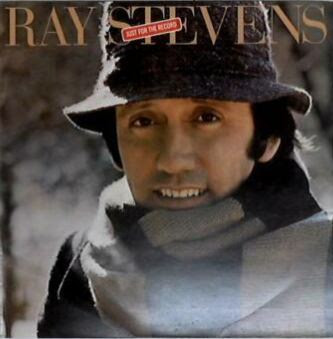
In early 1976 Ray Stevens became a recording artist for Warner Brothers Records. He had been on the Barnaby Records label since early 1970 and it was on that label in which Ray's music went international on a consistent basis...singles reaching the charts not only here in America but up in Canada and overseas, usually in the United Kingdom or Australia. Ray's debut for Warner Brothers arrived with the single, "You Are So Beautiful". The recording's arrangement was inspired by a previous single he'd issued a year earlier, "Misty". Ray's take on "You Are So Beautiful" featured the banjo, fiddle, and steel guitar as "Misty" and another recording of his from 1975, "Sunshine". "You Are So Beautiful" reached the Country Top-20 in the spring of 1976. The album featuring the single, Just For the Record, became available on April 2, 1976. The album's title is written in small print over top of Ray's name on the album cover. I always like to know the story behind the names of albums...I'm obviously talking about albums that aren't named for one of the songs. I've always wondered why this was titled Just For the Record. Some may have an answer. I've come across an explanation or two a number of years ago on message boards that no longer exist and one explanation was that several of the songs on the album deal with the subject of music. That's the only explanation that made sense. So, then, what are the songs on this 1976 album?? There's 10 songs altogether and most were written or co-written by Ray. There are several songs that were written by other writers. 

Track List:
1. Cornball
2. Gimme a Smile
3. Once in Awhile
4. One and Only You
5. You Are So Beautiful
6. Can't Stop Dancin'
7. OM
8. One Man Band
9. Country Licks
10. Honky Tonk Waltz

As you can tell from the track list you'll come across love ballads that fill up Side One of the album (the first five songs). On Side Two it opens up with a song about music...specifically dancing...but if you listen carefully, though, it uses dancing as a metaphor. It's an inspirational song telling the listener to never give up and to always strive for positivity in life and not allow negativity and unpleasantness cloud your better judgement. "Can't Stop Dancing" would later become a hit for pop duo The Captain and Tennille. Ray co-wrote the song and he published it...and so he shared in the success as both co-writer and song publisher when The Captain and Tennille had a Top-20 pop hit with it in 1977. 

The song, "OM", is all about transcendental meditation. I don't know if Ray was a student of transcendental meditation or if he was simply interested in what it was all about and therefore decided to write a song all about it. "One Man Band" is a sad song about a relationship that's ended and because of this Ray says he feels as if he's playing in a "One Man Band" since the harmony and joy in his life is now gone. "Country Licks", from the pen of Layng Martine, Jr., is a fabulous toe-tapping song with a bluegrass feel much like "You Are So Beautiful". The album closer is the equally clever "Honky Tonk Waltz" where a waltz and honky-tonk music is combined into one. "Honky Tonk Waltz" was the album's second single and it reached the Top-30 on the Country chart in the summer of 1976. The single's B-side is the previously mentioned "OM". That song, "OM", is 4 minutes and 39 seconds long and yes, it's a wonderful recording, and yes, you will probably feel as if you've been meditated by the time it's over. It has a lengthy electric guitar solo fade out. I could've posted a larger image but I didn't want my text shoved off to where it looks newspaper column style. That kind of design is okay if I were writing a newspaper column but this is a fan created blog spotlighting the legendary Ray Stevens. In hindsight I would've had the songs on Side Two on Side One since the name of the album is Just For the Record. However, since this was released primarily on vinyl, who says a fan couldn't play Side Two first? A cassette tape release was also available but they've become super obscure. I know a copy comes up for sale online every so often. On the pictorial time-line I have a photo of a cassette copy of Just For the Record


Once the publicity and single releases ran their course Ray closed out 1976 with a novelty single, "In the Mood", credited as The Henhouse Five Plus Too. This chicken clucking novelty reached the Top-40 of both the pop and country charts here in America early in 1977 and it tickled the funny bones of those in the United Kingdom as well as it peaked inside their Top-40. In some international markets the single retained it's Henhouse Five Plus Too credit...the Netherlands release was credited simply to Henhouse. Ray's name appears on the B-side as the writer/publisher of "Classical Cluck", but the performance itself is credited to Henhouse. In other international markets the single is credited to Ray Stevens. In the photo above, from 1977, Ray Stevens is explaining to Ralph Emery about "In the Mood" and for visuals he brings into the conversation a ceramic chicken mask.  

August 27, 2020

Ray Stevens performs "Honky Tonk Waltz"...

The video quality is so-so in this upload but earlier today "Honky Tonk Waltz" was uploaded onto the social media sites of Ray Stevens. The performance, from a 1977 episode of Pop! Goes the Country, had been uploaded onto YouTube by other people going back at least 10 years but since this is an upload from Ray's official YouTube channel I'm going to embed it. I'm sure I embedded earlier uploads of the performance and if I have then this will be another upload to enjoy!!

Me and Ray Stevens LP
The image off to the right is me and my vinyl copy of the 1976 Ray Stevens album, Just For the Record. I took this photo earlier this morning...the photo is actually larger than what it appears but I made it smaller for this blog entry so that the image wouldn't take up most of the text space. The album's title is in smaller print over top of Ray's name. The back of the album features the same photo of Ray. It's a photo that was apparently taken in the winter months...Ray's bundled up with a heavy scarf and a fisherman's hat. Publicity photo's from around the time of this album's release shown him wearing gloves, too. I don't know the story behind the photo session or how the name of the album came to be. It was his debut album for Warner Brothers...following a lengthy run with Barnaby Records (dating back to early 1970). Ray's debut single for Warner Brothers happened to be a newly arranged version of "You Are So Beautiful"...traditionally performed as a slow ballad but in Ray's rendition it's presented as an up-tempo sing-a-long in the vein of "Misty" but with an even more deliberate Bluegrass feel. It was a Top-20 hit on the country charts and it was followed by "Honky Tonk Waltz".


"Honky Tonk Waltz" deliberately combined two music/dance styles together...the main instrument being the mandolin. In the video Ray plays a guitar and the piano. In this era of his career he often appeared with a guitar on his back while seated at his piano. He has often remarked that he knows a few chords on the guitar but is in no way a guitar wizard...preferring to stick with his main instruments within the piano family. "Honky Tonk Waltz" hit the Country Top-30 midway through 1976. There were only two singles released from his 1976 album. It wouldn't be until 1995 that Warner Brothers began re-issuing Ray's recordings for their label...and they did so with three compilations: Cornball, The Serious Side of Ray Stevens, and Do You Wanna Dance?. This means that it wasn't until those three releases came along that a good dose of his Warner Brothers recordings were on the market. The label never issued any best-of collections on Ray until 1995 and they hadn't issued any since. It would be nice to have his studio albums for Warner Brothers become available in CD or have them become digitally available as Mp3's. It makes little sense to keep them unavailable. I have them on vinyl and I have those 1995 CD's but not everyone does...the late '70s Ray Stevens recordings need to become readily available again.

March 25, 2020

Ray Stevens on Hee Haw: 1977...

Hello all! A couple of days ago a video clip originated on Facebook containing the Ray Stevens performances from an episode of Hee Haw in 1976. The clip didn't originate on YouTube and it's one of those auto-play video clips where it begins playing as soon as it appears on your screen. I don't like embedding those kinds of video clips on my blog page and so I decided to just provide a link to the video clip. You can watch Ray Stevens perform two of his hit songs, "Honky Tonk Waltz" and "You Are So Beautiful", when you click HERE. Those two songs come from his 1976 Warner Brothers album, Just For the Record.

The video clip begins with Ray and Hee Haw cast member Jimmy Riddle. In this brief routine Ray sneaks up and surprises a startled Jimmy...who naturally reacts in hysterics...much to the delight of a laughing Ray Stevens. The two perform the classic eef and hambone routine usually performed on the show by Jimmy and Jackie Phelps who were billed as 'Riddle and Phelps' in the earliest years of Hee Haw.

Ray Stevens and Jimmy Riddle; 1976
Attempting to get a screen cap as Ray and Jimmy are doing the hambone routine can be difficult. Given the tempo of Ray's leg slaps it causes the right hand to look unfocused/blurry. Jimmy is in the process of eefing and making music with his hands. A photo posted further down the blog entry of the two of them from 1980 also features some blurry imagery during the hambone routine.

Ray Stevens; 1976
In the screen cap off to the left we have Ray Stevens immersed into his performance of "Honky Tonk Waltz". The song comes from the pen of songwriter Paul Craft. The Facebook video clip becomes only the second on-line video to feature Ray performing this song. There's another video clip from his appearance on an episode of Pop! Goes the Country and in that performance he plays both a guitar and the piano...and midway through the performance he dances briefly with Donna Fargo before being comically interrupted by host, Ralph Emery. In this performance from Hee Haw it is much more subdued and as you can see it's performed with a more serious flair. The song is a clever blend of two different styles of music. There's the honky tonk aspect and then there's the dance aspect of a waltz. The lead instrument is the mandolin followed closely behind by the fiddle. In the video clip the mandolin player is given screen time along side Ray. I've mentioned on social media sites that I think the mandolin player is Larry Sasser...and my assumption appears to be correct because in the second performance, "You Are So Beautiful", the same musician is playing the steel guitar. If my recollection is correct I believe Larry Sasser was part of Ray's touring band for a number of years...but not a lengthy member of his studio band. I think Larry played on just a couple of Ray's albums and those were in the 1980s. Larry appears as the steel guitar player during a performance of "Sunshine" that Ray taped for the Jerry Reed and Tom Selleck movie, Concrete Cowboys. I'll go back and edit this blog entry if I find out the identity of the mysterious mandolin/steel guitar player from the 1976 episode of Hee Haw...but I say it's Larry Sasser. In the meantime, "Honky Tonk Waltz" hit the Country chart on August 7, 1976 and remained charted for 10 weeks. It reached it's peak position in the Country Top-30 during it's 7th chart week on September 18, 1976. It appeared on the Country chart for it's 10th and final week on October 9, 1976. This episode of Hee Haw originally aired October 23, 1976. The footage was taped in the summer of 1976...right around the time "You Are So Beautiful" was his current release.

Ray Stevens and a couple of his musicians; 1976
"You Are So Beautiful" happened to be the debut single on Warner Brothers from Ray Stevens. He had recently left Barnaby Records after a 5 year run and his first single for Warner Brothers hit the Country chart on May 1, 1976. It reached it's Top-20 peak in it's 9th chart week on June 26, 1976 and remained on the chart until July 24, 1976. The single was arranged in a Bluegrass style similar to "Misty" from a year earlier. Whereas "Misty" was mid-tempo and the steel guitar, banjo, and fiddle were prominent "You Are So Beautiful" pushed for a more up-tempo delivery and an even heavier use of those instruments. In both songs there's an interlude where the musicians take center stage. In the performance of "You Are So Beautiful" both the steel guitar and fiddle player are on screen. The fiddle player is Lisa Silver. There's a brief routine with George Lindsey in this 1976 episode, too.

Author Update: 3/30/2020: ***I titled this blog using the year 1977 because I was using my eyes instead of going through my stats. I thought this episode originally aired in early 1977 and featured footage from a fall 1976 taping session. However, I decided to refresh my memory and I looked through my personal notes regarding Ray's career and found out this episode aired on October 23, 1976. This means the footage was taped in the summer of 1976, rather than the fall of 1976 as I originally thought. I've corrected the year, from 1977 to 1976, within the text of this blog entry and in the photo captions but I'm leaving the title of this blog entry as is. It's episode six of the 1976-1977 season of Hee Haw.***

I created a couple of photo comparisons earlier. Ray Stevens, in a 1980 appearance on Hee Haw, performed a hambone routine with Jimmy Riddle just as they had in the 1976 appearance. By this point Ray had grown a beard once again but unlike in years past he's kept the beard and it's become such a part of his look...I don't believe he's ever been clean shaven since the first half of 1978. In Ray's 1980 appearance on Hee Haw both Lisa Silver and Larry Sasser are part of the band. Here are the photos...

Ray Stevens and Jimmy Riddle; 1976 and 1980
Ray Stevens and Jimmy Riddle; 1980 and 1976
Ray Stevens and Jimmy Riddle; 1980