I decided to compose Part Ten today rather than wait until next weekend sometime. In Part Nine I left off with Warner Brothers deciding to release Ray's chicken clucking version of "In the Mood" in the final weeks of 1976. This single was backed with another chicken clucking serenade titled "Classical Cluck", a Ray Stevens original. In an episode of Pop! Goes the Country taped in 1977 the host, Ralph Emery, brings up the chicken clucking hit. A large ceramic chicken head mask was brought out and Ray spoke of the song and performed a few clucks of it.
Although Ray had a Top-40 hit on his hands in late 1976/early 1977 with "In the Mood" he continued gravitating toward serious works and he kicked off 1977 with a single that may have come across as a novelty song by it's title but it was far from a novelty song. "Get Crazy With Me" hit early in 1977 and it was backed with "Dixie Hummingbird". The A-side made the Country charts and then things began to get a little interesting. It seemed as if Warner Brothers had lost sight of how they wanted to promote Ray's music...by this I mean there was an erratic series of single releases sent out to radio stations as promo copies. I'm exaggerating a little bit but in addition to the promo copy of "Get Crazy With Me" being sent to radio stations, which featured the same song on Side A and Side B (the difference being one recording was in Monaural Sound and the other being Stereo Sound), Warner Brothers would issue promo copy versions of "Dixie Hummingbird" and "Feel the Music". In hindsight I'm guessing it was the record label's way of saying that they didn't care which side of the record that radio stations chose to play. "Dixie Hummingbird" was issued as a single in May of 1977 backed with "Feel the Music". On discography sites on-line you may come across "Feel the Music" listed as the A side but in reality there isn't an A or B designation on either side of the single. "Dixie Hummingbird", a nice little sing-a-long, looked as if it was on it's way at becoming a Top-40 Country hit both here in the U.S. and in Canada but it peaked in the mid 40's on the Country chart. "Feel the Music" never achieved a chart placement. The song is about self-motivation and the lead instrument is the piano.
The Feel the Music album features a stereo speaker on the front side and on the back there's a photo of Ray made to look as if it's been taped to the back of the stereo speaker. It's a clever album cover concept.
The back of the 1977 album shows clean-shaven Ray seated on a railing of some kind. The thing that catches the eye the most, aside from Ray's photo, is how detailed the art work happens to be in the recreation of what the back of a stereo speaker happens to look like. There's illustrations of the screws and ventilation chambers and Ray's photo appears in place of the stereo speaker's warranty...note how the illustration of tape on the top left and bottom right suggests as much. When you look off to the right you'll see the track list and another eye catcher is Ray Stevens being the songwriter of nine of the ten songs. The album is wonderful and it captures the sound of mainstream country music of that time period really well. The one song on this album that Ray didn't write is Buddy Kalb's inspirational ballad "Set The Children Free". The entire album, as mentioned, is wonderful so it doesn't do much good to say here are some of the highlights from the album...instead I'll just name some of the songs from the album: "Road Widow", the bluesy "Junkie For You", the infectious "Blues Love Affair" is probably the purest sounding country music song on the album, then there's the devastating "Alone With You" and the gospel tinged "Save Me From Myself". If you look at any of the single releases from Ray between the years 1974 and 1978 they still use the Ray Stevens Sound Laboratory as the name for his recording studio. Ray appeared on the cover of Country Song Roundup in October of 1977. The article featuring an overview of his career to that point and an interview is titled Get Crazy with Ray Stevens. The article/cover photo emerged in October of 1977 but it's tied in with the single that Ray issued at the start of the year, "Get Crazy With Me".
Ray's publishing company was the front and center hot item throughout most of 1977...as the publisher and co-writer of "Can't Stop Dancing"
by the pop music super-duo The Captain and Tennille but then with Ray
being the publisher of most of Layng Martine, Jr.'s early songs, "Way Down" became a massively successful song. First off "Can't Stop Dancing"
is a song that Ray wrote with another writer named John Pritchard. Ray
recorded his version of the song in 1976 for his album, Just for the Record.
The Captain and Tennille recorded their version later on the same year
and their record company released it as a single in February of 1977.
The song would go on and become a Top-10 Adult-Contemporary hit for the
duo in Canada, a Top-20 Adult-Contemporary hit in the U.S., and a Top-20
pop hit in the U.S. and Canada.
"Way Down", in the meantime, had
been recorded by Elvis Presley in the fall of 1976. The song, as
mentioned, was written by Layng Martine, Jr. and published by Ray. RCA
Records issued "Way Down" as a single in June of 1977, more than
half a year after it was recorded, and it became a hit...originally
peaking on the Hot 100 in the Top-40 in early August. It was also
climbing the Country music charts at the same time. Elvis died on August
16, 1977 at the age of 42 and the news shocked the globe and "Way Down",
which was way down on the Hot 100 after having reached what was thought
to be it's peak position at thirty one, suddenly reversed direction and
ended up peaking inside the Top-20 of the Hot 100 in September and over on the
Country chart the still-climbing "Way Down" had reached number one for the week ending August 20, 1977. It's biggest impact was in the United Kingdom...it spent 5 weeks at number one on their Top-40 chart. It hit number one in Canada and Ireland. J.D. Sumner, the legendary gospel artist, was featured on the record singing the bass hook line. I should point out that ATV Music, Ltd. is credited on the United Kingdom release of "Way Down" as publisher. On the sheet music from 1977, in the fine print, it credits Ray Stevens Music as the song's publisher but underneath this credit it lists ATV Music, Ltd. as publisher for the British Commonwealth (excluding Canada and Australia). The RCA single, posted above, credits Ray Stevens Music, BMI as the song's publisher. This credit is listed above the running time of the single. I pointed this out due to it being in small print.
Country music legend Marty Robbins hosted a syndicated television series in 1977 called The Marty Robbins Spotlight. Ray appeared a couple of times on this series. In one of his appearances he was the spotlight artist and in another appearance he was a special guest on the Chet Atkins episode. Ray and Chet discussed their recording project, a single titled "Frog Kissing". The two performed the song on Marty's television program and this novelty single reached the Country Top-40...it features Chet playing the guitar AND singing the lyrics (which some may suggest is something of a novelty itself) while Ray sings the high harmony. Buddy Kalb wrote the song and Ray produced and arranged it as well as published it.
Chet Atkins and Ray Stevens in 1977
Following the release of Feel the Music and the two singles from that album Warner Brothers issued the follow-up, There is Something On Your Mind. This album is something of an obscurity...a rarity...and even though it's listed in his official discography and copies can easily be obtained on eBay it remains an undiscovered gem of an album. Ray had so much fun recording the album and how do I know this? The fun and enjoyment comes across in the liner notes he wrote for the album and in his detailed description of why he chose the songs he recorded for this salute to classic Rhythm and Blues. Ray highlights the fact that he only used a few musicians in the making of the album and in his commentary he points out the some of the songs he chose had originally been considered too controversial for their time period and some of the songs never broke into the national spotlight. He puts together three separate medley performances and gives them the titles of "Dance Trilogy", "Old Faithful Trilogy", and "Banned in Boston Trilogy". The snippets of songs performed in each medley are: "Do You Wanna Dance?", "When You Dance", and "Save the Last Dance For Me"; "Shake a Hand", "Since I Met You Baby", and "Always"; "Sixty Minute Man", "Work With Me Annie", and "Annie Had a Baby".
The track list for There Is Something On Your Mind is shorter than the standard 11 or 12 tracks found on albums at that time but the running time of the album is just as long given the presence of those three medley performances and everything else featured on the project. This album includes Ray's versions of "One Mint Julep", "Money Honey", "Talk To Me", "Your Cash Ain't Nothin' But Trash", and the humorous title track, "There is Something On Your Mind". This album never appeared on any chart and no single releases emerged from the album. The album was officially released or else there wouldn't be copies of it available from time to time on eBay and so it's always been a mystery as to why Warner Brothers never promoted this project heavily...and there's no television footage of Ray performing any song from this album...but I've got a copy of this album and it's great. Later on in 1978 Warner Brothers issued the single "Be Your Own Best Friend" backed with another ballad, "With a Smile". "Be Your Own Best Friend" hit the Country Top-40 in the U.S. and the Top-20 on the country music chart in Canada. Ray appeared on the album cover for Be Your Own Best Friend dressed in a white suit and sitting in front of a white background. He had his beard and from this album forward he would never appear in public or on any studio album cover without a beard. Warner Brothers only issued the title track as a single...but the remainder of the album shouldn't go overlooked. It is a mix of country and Easy-Listening and some of the songs on the album incorporated bluesy overtones such as "Hidin' Place" and the title track. "You're Magic" is a personal favorite from that album. "L'amour" is fabulous as is "Two Wrongs Don't Make a Right" and "Comeback".
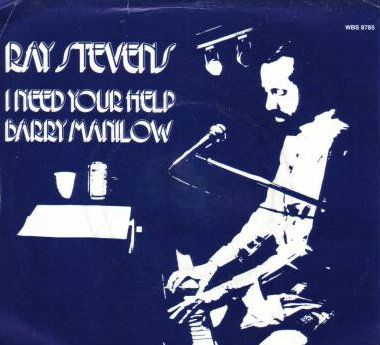
Ray's music was all over the place during his tenure with Warner Brothers, perfectly showcasing the eclectic nature of his genre-bending tendencies, but he had one last bit of commercial success with the label come the spring of 1979. In an interview he gave during this time period he credited those within his inner circle for convincing him to record "I Need Your Help, Barry Manilow", a song from the pen of Dale Gonyea. A publicity campaign soon emerged linking Ray and Barry's names together in all kinds of visually comical ways. The single itself was released with a blue colored picture sleeve...a photo of Ray visually mimicking the photo of Barry from Barry Manilow, II. The novelty song featured some pretty biting lyrics but the playful, easy-going delivery from Ray took away whatever bite there could have been and it's a perfect display of Ray being a considerate individual. You can playfully poke fun without resorting to being mean-spirited and cruel.
This is the first wave of marketing that came along in the wake of Ray's recording of "I Need Your Help, Barry Manilow". The single is partially based upon one of Barry's hit songs but the bulk of the song centers around a man facing all sorts of problems and misery. He turns to the music of Barry Manilow for solace and comfort...and within the lyrics there's the mention of several song titles and characters found on Barry's albums...referencing such people as Mandy and Lola as well as referencing hit songs "Copacabana", "Can't Smile Without You", etc. etc. Once Ray's novelty single became a hit Warner Brothers issued a compilation album built around the novelty song. The single reached a peak on the Hot 100 within the Top-50, it peaked a bit lower on the Country music chart obviously, and it had it's greatest commercial impact on Adult-Contemporary radio stations as it almost made the Top-10...peaking at number eleven.
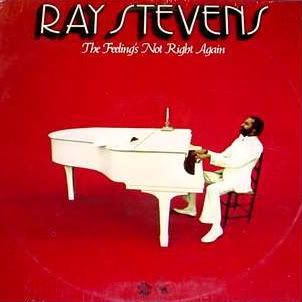
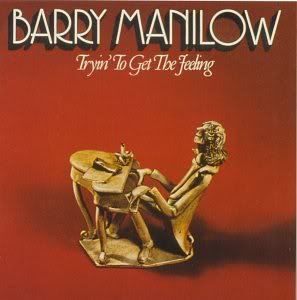
The release of Ray's 1979 album, The Feeling's Not Right Again, was the second wave of marketing designed to capitalize on the success of "I Need Your Help, Barry Manilow". Ray's compilation album got it's title from a song found on his previous studio album, Be Your Own Best Friend. On that 1978 album exists a song called "The Feeling's Not Right Again" and how amazing is that to have an album track lifted from a previous studio album and have it displayed as the title track of the follow-up album. Warner Brothers and Ray assembled this 1979 album and filled it with songs that musically or vocally sounded as if they belonged on a Barry Manilow album. The title track also works due to it coincidentally having a similar title of Barry's 1975 studio album...which, obviously, is why the cover art for Ray's 1979 album parodies the cover art seen on Barry's album. I've never posted any sort of video clip during the first Nine parts of this mini-blog series but this 1979 performance from a television special hosted by Jerry Reed features Ray loving every second of the impact that the song is having with the audience as he grins and has fun performing the song...and so, in closing of Part Ten, here's a video clip of Ray Stevens from 1979 singing "I Need Your Help, Barry Manilow"...and by all means enjoy the awesomeness...
Hello one and all...it was this week 40 years ago that a certain single from newly elected member of the Country Music Hall of Fame, Ray Stevens, hit the market. Ray's single, "I Need Your Help, Barry Manilow" (from the pen of Dale Gonyea) made it's debut on the charts on March 24, 1979. There's a social media group that I follow on Facebook and they typically post messages about the release dates and years of various pop and adult-contemporary singles and albums. I've never made it a part of my fan experience to keep track of or remember the actual dates that recordings debuted on the charts and so, like many of you, I rely on several on-line sites that provide such information. I've written blog entries in the past about this recording...and before you could even wonder...yes it happens to be one of my all-time favorite recordings from Ray Stevens.
The song is satirical and it's musically performed as a serious melodramatic ballad. It's within the lyrics of the song that the satire and humor emerges. Ray describes all of the bad luck and unfortunate goings-on in his life and looks to the songs of Manilow to comfort him. The single, like many labeled 'novelty', had a built-in resistance from radio but ultimately it became what the media like to refer to as a surprise hit. The song reached the Hot 100 pop chart (to date it's Ray's last entry on the pop chart) but the more surprising finish came within the radio format in which Barry Manilow had ruled for nearly five years: "I Need Your Help, Barry Manilow" peaked just outside the Top-10 on the Adult-Contemporary chart during the final week of April. The peak position can be found on the April 28, 1979 issue of the Billboard Adult-Contemporary chart. The single had a meteoric rise...it reached it's peak position in it's 5th week on the Adult-Contemporary chart. It's anyone's guess if the consumers back then were fully aware of the song's meaning or if the radio listeners simply loved the performance and the music and bought the single for those reasons alone...without actually taking in what the lyrics were saying.
As I've done in other blog entries surrounding this song I make it a point to bring up the fact that I'd never heard of Barry Manilow before...and so I didn't get the references made within the lyrics of the song...but I loved Ray's performance and the music of "I Need Your Help, Barry Manilow" so much that I searched for something by Barry Manilow in the music section of a local retail store. I came across a couple of compilation releases. When I looked at the songs on one of the compilation CD's I immediately realized that during the recitation part of Ray's recording he's named several Barry Manilow song titles. Once I heard "I Write the Songs" it was a revelation...it has almost the same intro as "I Need Your Help, Barry Manilow". Anyway...I have quite a few albums by Manilow but it's all because a certain 1979 recording from Ray Stevens inspired me to find out who this Barry Manilow happened to be. In 1987 MCA Records released an album on Ray titled Greatest Hits, Volume Two. That compilation is where I heard "I Need Your Help, Barry Manilow" for the first time.
Hello all once again!! A very early Sunday morning here as I write another fan created Ray Stevens blog entry. There hasn't been any updates over on WSM's website in their Opry archive section and so, as of this writing, I don't have any audio link to provide of Ray's July 3rd guest appearance. In my previous blog post I made mention that I already had the idea of what this blog entry would be about and so I'm unveiling what could possibly be my largest Ray Stevens collage. I make collage's for pure enjoyment and to spotlight albums, single releases, or photo's of Ray over the years...often I add photo's of myself showing off whatever I might be writing about.
After I finished writing a recent blog entry about some of the compilation albums that have been issued on Ray Stevens I got the idea to try and put together a collage of nothing but Ray Stevens on Warner Brothers Records. This would cover the years 1976, 1977, 1978, and 1979 in his career timeline. What I did was I gathered up images of his vinyl studio albums from those years and I gathered up images of his single releases from those years on the label and I put them all together in a collage. I didn't concern myself with whether or not the single release I chose to place on the collage was from the U.S. or the international market but I did attempt to arrange everything in chronological order.
If you're long time readers of this fan created blog page then you should be very aware of how much I champion Ray's music and career, in general, but then I often give heightened coverage to his Warner Brothers recordings. A lot of it has to do with my personal feelings given my enjoyment of the songs he recorded but also what drives my focus is how under-rated that era of his career generally is and so after I began this fan created blog nearly 10 years ago I took it upon myself to spotlight his late '70s material at any opportunity. In a lot of the compilation albums that were issued on Ray Stevens over the decades (from the mid '80s onward) and then in the ones that appeared later in the 1980s and especially the 1990s there tended to be a pattern of covering an abundance of his Monument and Barnaby recordings (specifically the years 1968 through 1975) while more or less skipping over Warner Brothers (1976-1979) and RCA (1980-1982) except for a couple of novelty recordings for each of the two labels. I may do one of these collage projects spotlighting his RCA recordings but for now here's the one I did spotlighting his Warner Brothers era:
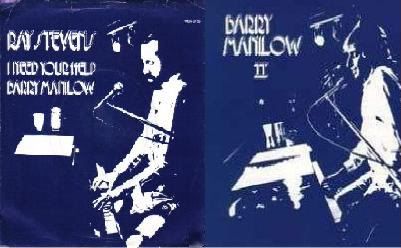
Now, I know this is way too small for anyone to actually see the writing on the albums and the single releases but you can click the image for a somewhat larger view. Anyway...this is probably...well, actually, it is the largest Ray Stevens collage I've created. In his three years with Warner Brothers he recorded four studio albums and one compilation album. The compilation album arrived in 1979 to cover the years 1976, 1977, and 1978 but it also featured his hit, "I Need Your Help, Barry Manilow", from earlier in the year which up to that point was only available as a vinyl single. The 1979 album is the fifth one in the collage off to the left (the first panel in row two). If you are familiar with Barry Manilow then you should see the comical connection in art work. Barry's 1975 album had a similar cover design and letter font and the name of his album that year was Trying to Get the Feeling whereas Ray's album in 1979 is titled The Feeling's Not Right Again (named after a song on Ray's previous studio album in 1978). I also added a comparison image of the single release of Ray's recording next to the cover design of Barry Manilow's second studio album. I have almost all of Ray's studio albums on vinyl and I have a vinyl copy of the "I Need Your Help, Barry Manilow" single but my copy doesn't feature the picture sleeve. My copy, which I bought on-line, arrived in a plain paper sleeve. I've seen auctions on eBay for the single and it's picture sleeve but those, obviously, were always out of my price range and so I opted for the cheaper alternative. I wanted the vinyl single anyway...not having the picture sleeve didn't change my feelings concerning the actual song. As you see in the collage there are five images of vinyl albums, 2 comparable cover art depictions, and eight single recordings. Here is the breakdown of everything you see...starting with the vinyl albums:
Just for the Record (1976); Feel the Music (1977); There is Something on Your Mind (1978); Be Your Own Best Friend (1978); and The Feeling's Not Right Again (1979).
The single releases, the month and year of release, and their catalog numbers:
"You Are So Beautiful" (April 1976; WBS 8198)
"Honky Tonk Waltz" (August 1976; WBS 8237)
"In the Mood" (December 1976; WBS 8301)
"Get Crazy With Me" (January 1977; WBS 8318)
"Dixie Hummingbird" (May 1977; WBS 8393)
"Be Your Own Best Friend" (July 1978; WBS 8603)
"I Need Your Help, Barry Manilow" (March 1979; WBS 8785)
"Get Crazy With Me" (June 1979; WBS 8849)
The comparable cover art depiction is of the picture sleeve of "I Need Your Help, Barry Manilow" and Barry's second studio album, Barry Manilow II. If you look at the chronological listing of single releases you'll notice a couple of things...at least I took notice right away. The first is the lapse of time between the release of "Dixie Hummingbird" and "Be Your Own Best Friend". There's more than a year separating the two. Then there is no further single releases throughout the rest of 1978 even though the Be Your Own Best Friend album had plenty of single worthy recordings such as "Comeback", "Two Wrongs Don't Make a Right", or the re-recorded "You've Got the Music Inside" which had originally been recorded in 1973 by Ray. Another thing you should notice is the re-issue of "Get Crazy With Me".
Warner Brothers originally issued the single in January 1977...right on the heels of Ray's surprise novelty hit with his chicken clucking rendition of "In the Mood". In the original release of "Get Crazy with Me" in January 1977 the B-side happened to be "Dixie Hummingbird". Ray's "Get Crazy with Me" isn't a novelty song but it's title would suggest otherwise and it's my guess Warner Brothers felt the title could serve as a follow-up and therefore become an immediate hit. Later on Warner Brothers re-issued it upon the strength of Ray's novelty hit, "I Need Your Help, Barry Manilow".
The re-issue of "Get Crazy With Me" in 1979 featured "The Feeling's Not Right Again" as it's B-side. Let's add more to this vinyl sea of confusion by pointing out "Dixie Hummingbird", the original B-side of "Get Crazy with Me" from January of 1977, when it was issued as an A-side single in May of 1977, it's B-side happened to be "Feel the Music". The funny thing is Ray performed "Feel the Music" on television several times in the mid '70s and once in the early '90s but I don't think he ever performed "Dixie Hummingbird", the actual A-side, on television...ever!
In the last couple of paragraphs I had some fun relating the single release pattern of Ray's Warner Brothers recordings but let that not scare you from seeking out those recordings. You are likely to find Mp3 copies of select recordings at Amazon. If you look up the 1995 compilation albums: Cornball, Do You Wanna Dance?, and The Serious Side of Ray Stevens then you'll find a lot of his Warner Brothers recordings. They're, to date, the only definitive look at his late '70s recordings. The only thing that could top those releases were to be if Warner Brothers were to re-issue Ray's actual studio albums in a series of CD's or Mp3's but there's been no indication such a thing will ever happen so those 1995 releases are your only hope in hearing those obscure recordings.
35 years ago...March 1979...to be specific the week of March 24, 1979...Ray Stevens entered the Hot 100 pop chart with a brand new recording, "I Need Your Help, Barry Manilow". The song, written by Dale Gonyea, can be seen as a parody, a satire, a spoof, or some may take it as a tribute...nevertheless, it became a 'surprise hit' to a lot of people in the spring and summer of 1979. I first heard this song on 1987's Greatest Hits, Volume Two on MCA Records. That particular release is the one that features Ray as the baseball player on the album's cover. I immediately loved the song upon hearing it...entirely clueless as to who Barry Manilow happened to be. Raised on country music I never became familiar with Barry's actual recordings until the early/mid 1990s when I started to purchase some of the CD's that I came across at the local store. I had wanted to hear for myself the singer that Ray sang about. Once I heard "I Write the Songs" and seen a lot of the titles of songs on several of Barry's Greatest Hits collections I started loving "I Need Your Help, Barry Manilow" even more than I already did. The thing that attracted me to the song, aside from it being RAY STEVENS of course, is the arrangement/music structure. I loved that sound so much that I actually became something of a fan of Barry's thanks largely to Ray's 1979 hit song...which perhaps wasn't originally meant to have such a positive effect and have the potential to create fans for Barry...but, yet, in my case that's exactly what happened. Later on, once I heard "Copacabana", I found out who Lola happened to be...Ray mentions that name in his 1979 hit. As you can see, the marketing department at Warner Brothers really got into the promotion and publicity of this single...designing the picture sleeve of Ray's single to look identical to Barry's second studio LP.
The similarities didn't stop there...Ray's 1979 album The Feeling's Not Right Again is pretty much identical in design/cover art of Barry's 1975 album of a similar title, Trying To Get the Feeling. The ironic thing is, excluding the "I Need Your Help, Barry Manilow" hit single, the rest of Ray's 1979 album is a Best-of collection. The remainder of the LP is filled out with selected album songs, and a couple of single releases, lifted from three of Ray's previous four studio LP's for Warner Brothers (from the years 1976, 1977, and 1978). "Get Crazy with Me" is track 2 on the 1979 album. It originally was issued as a single in 1977, from the Feel the Music album...and by the way, "Feel the Music" is found on this 1979 album, too. The title track of one of his 1978 albums, "Be Your Own Best Friend", closes out the 10 song LP. It had been issued as a single in 1978 and reached the Top-20 on Canada's country music chart and the Top-40 country chart here in America. In fact, of the 10 songs on the 1979 album, 5 of them come from his 1978 Be Your Own Best Friend album. 2 songs come from the 1976 Just For the Record album ("OM" and "Gimme a Smile").
So, if we break it down, here's what we have: two songs from 1976, two songs from 1977, five songs from 1978, and the lead-off 1979 release, "I Need Your Help, Barry Manilow".
The catalog number for the single is WBS-8785. It's b-side, the Ray Stevens-penned "Daydream Romance", comes from 1977's Feel the Music album. On some releases the label credits 1979 on both sides of the single...especially on the larger 33 1/3 single release and the UK export. The 45-RPM single released in America accurately credits the A-side as 1979 and the B-side as 1977.
There are several nostalgic items from 1979 centered around this particular single. One of the items is a 1979 issue of Country Song Roundup that features an interview with Ray for an article called Help Me, Ray Stevens. I prefer that article...I have that issue in my collection...I purchased it on eBay in early 2000s. There also happens to be another 1979 article about the single in the pages of People magazine (a May 1979 issue). The story can be seen on-line but it contains a couple of factual errors (proclaiming his 1975 single, "Misty", to be his last hit prior to 1979's Manilow parody; another error is the intimation that his career had ceased to exist during that 4 year period between songs).
The truth is, Ray's career and song releases had simply moved over to country radio and into country music-oriented programming...he didn't "vanish" and his career certainly didn't cease to exist. It continued to thrive as the '70s continued on.
The song debuted on the Hot 100 pop chart on March 24, 1979 and made it's way into the Top-50 during an 8 week run. Music industry politics, no doubt, played a factor in the single not going higher than it did on the Hot 100. A week later, on March 31, 1979, the single debuted on the Adult-Contemporary chart. It's on this particular chart and radio format that the single achieved it's greatest success (reaching the Top-15 during a healthy 13 week chart run). This is something of an irony if you consider that in 1979 Barry Manilow was certainly the king, or at least one of the kings, of soft-rock and the master of the power ballad...and here was a song that had fun with that very sound...and so, as mentioned at the start of this blog entry, some may have taken this as a tribute of sorts to Barry (rather than see it as a parody).
For whatever reason, Warner Brothers decided to issue the song to country radio, too. A song about a megastar in pop/Adult-Contemporary music gets released to a radio format that doesn't even play that artist. It doesn't make much business sense but nevertheless it happened. The single, unbelievably, made the country charts in April 1979 largely, I assume, on the strength of sales and the publicity it generated on country music programs that Ray appeared on. It had a brief 3 week stay on the country music chart that month (it peaked in the much lower half of the then 100 position country single chart). It debuted on the April 14, 1979 chart and was in it's third and final week on the April 28th chart. The only time I've seen Ray perform the song is on a 1979 television special called Nashville Salutes America. It was released on DVD in 2005. Jerry Reed hosted the special and a lot of artists appeared on it performing their latest or their biggest hits...and Ray performed "Freddie Feelgood" and then spoke about his then-current single titled "I Need Your Help, Barry Manilow" before launching into it. Laughter greeted the narrative part of the song where Ray lists several Manilow song titles in a one sided conversation with a woman named "Mandy".
And that's some of the information on "I Need Your Help, Barry Manilow"...a very funny song from Ray Stevens that made it's chart debut 35 years ago this month!
In this installment of the Golden LP Series we take a look at a 1979 single from Ray Stevens titled "I Need Your Help, Barry Manilow". This particular novelty single became what the music industry describes as a surprise hit. The song has become interpreted by many who've heard it as either a tribute to the music of Barry Manilow or a vicious parody of his style. I've never actually made a point to label it a tribute or a vicious parody...all I know is I love the song and I've described it as a parody in the general sense as it replicates the sound heard in many of Manilow's songs but it's played against comical lyrics which may cause some to view it as a vicious parody. The overall melody borrows a lot from "I Write the Songs", a huge hit for Manilow in 1975.
From the pen of Dale Gonyea comes "I Need Your Help, Barry Manilow". There were several write-up's about this single and there was even a promotional piece in People Magazine detailing the surprise hit and it's impact on music consumers. In country music circles it was written up in an article that appeared in the Country Song Roundup publication, the October 1979 issue. The issue featured Dolly Parton on the cover and within the issue was the article titled Help Me, Ray Stevens. The article was well-written and it featured a very reflective Ray Stevens giving his thoughts about music, hit songs, and the image that his current single will no doubt help reinforce in the minds of music buyers and the critics. In the article Ray was coming off an appearance on The Tonight Show. The song is about a man whose love life is in shambles and so he turns toward Barry Manilow for help and guidance. The lyrics string together, in a clever way, several titles of Manilow's hit songs as well as familiar names from his songs. Some of the songs mentioned are "Copacabana", "Can't Smile Without You", "Mandy", and several others.
Warner Brothers issued a compilation album in 1979 to tie in with the single. The single's picture sleeve spoofs the art design and imagery on Manilow's second studio album. The 1979 compilation album's cover art spoofs Manilow's 1975 studio album. I don't consider this a studio album and so I've presented it within this Extra installment. The LP contains 10 songs...all but one of them had been previously released. The title track, The Feeling's Not Right Again, for example, appeared on Ray's 1978 LP as did a few other selections on this 1979 compilation. The only newly recorded song is "I Need Your Help, Barry Manilow" as the remaining tracks were lifted from Ray's 1976, 1977, and 1978 albums. As far as the commercial success of the single goes it became a chart hit on three different radio formats: pop, adult-contemporary, and country. It reached the lower regions of the Country Top-100 but this was perhaps to be expected given that the novelty single dealt with one of pop music's biggest recording acts of the time and maybe the humor was lost on country music fans. It reached the Top-50 on the Hot 100 pop singles chart but in one of the most ironic accomplishments it climbed into the Top-15 on the Adult-Contemporary chart, coming close to reaching the Top-10. This meant that the very radio format where Barry Manilow had ruled the airwaves pretty much since the mid '70s couldn't resist the spot-on parody from Ray, either.
This novelty single would become his final release for Warner Brothers. In terms of publicity and consumer reaction, this was considered to be his biggest hit single for the label since the Top-40 pop and country success of "In the Mood" early in 1977. In other words, Ray's thoughtful and introspective ballads and love songs that he wrote and recorded while on the label just didn't have the staying power as the two novelty songs he released. In the years/decades to come those two novelty songs would appear on many compilation albums...without a trace of any other hit single he had with the label.
It wasn't long after "I Need Your Help, Barry Manilow" reached it's peak and started to fall back down the charts that Ray found himself at RCA Records. He joined the label in the latter half of 1979 and his debut single arrived early in 1980...so rev up your motorcycles...we're in for a good ole time as Ray makes his way to RCA!!
In the career of Ray Stevens 1979 is highlighted by one song in particular...a satirical spoof entitled "I Need Your Help, Barry Manilow". What you see is half of the lengths that the publicity department went to in their promotional campaign of Ray's song. The other half of the promotional campaign would feature an album on Ray in which the cover of the album would be another spoof of a Manilow release. The single was written by Dale Gonyea and it became a Top-50 pop hit in 1979 but it reached the Top-15 on the Adult-Contemporary lists. This is important to point out because the Adult-Contemporary format is where Barry was the airplay king...having a solid string of virtually uninterrupted Top-5 hits dating back to early 1975. Manilow's streak of Top-20 successes would continue on AC radio through 1986 but Ray's single came at a time (1979) when Manilow was reaching his peak on Top-40 pop radio even though he still had nearly 8 more years of AC success ahead of him. That's why it's so ironic that Ray's spoof of Manilow hit bigger on AC radio than on pop radio...you'd think the format that wasn't playing Manilow as much (pop) would've had a field day with "I Need Your Help, Barry Manilow" but instead the exact opposite occurred: favorable AC radio played the Manilow spoof.
The hit single spawned the album I earlier mentioned...the album was a compilation project built to support Ray's unexpected hit single. That album, The Feeling's Not Right Again, mocks the album design of Manilow's 1975 release, Tryin' To Get The Feeling. This 1979 single and the chicken clucking "In The Mood" from late 1976/early 1977 are the two recordings that Ray Stevens did for Warner Brothers that often get included on compilation projects. He had more hits for Warner Brothers than just those two releases but given that those two are in the comical/novelty vein probably explains why compilers single out those two recordings in particular. Most compilers like to spotlight his comical recordings more than the non-comical...but then again, some projects feature more non-comical selections than comical...it all depends, I guess, on which record company is putting the collections together and which audience they're aiming to attract.
Touching base upon a specific time frame in the career of Ray Stevens I want to journey back to the late 1970's when Ray's music home was Warner Brothers. Down through the years, either for financial reasons or otherwise, there was not much catalog repetition from Warner Brothers when it came to Ray Stevens. I don't know if it was a contractual decision...some artists may not want previously released material available and if they sign a contract stating so then that's the way it'll be. Also, some labels pick and choose which alumni they'll continue to release material on. It used to be second nature for labels to issue albums on artist's that had long since left their label. Sometimes this still goes on...usually if the artist is no longer living a record label will celebrate the artist's birth or remember their death with music releases. As an inquisitive fan of Ray Stevens it had always puzzled me why a lot of compilation releases didn't feature many Warner Brothers recordings. If any were included it was one or two songs at best...there was no real spotlight on his late 1970's songs for almost two decades.
This all changed in 1995 when Warner Brothers issued three special collections of Ray Stevens material. Cornball, Do You Wanna Dance, and The Serious Side of Ray Stevens. In reality, 99% of the songs on the three collections were serious...so it was a bit ironic to title one of the collections as such. These 1995 collections were my introduction to a large amount of material that Ray Stevens recorded in the late '70s. At the time I didn't own any vinyl albums as I do now...so I nearly wore out the 1995 cassette tapes. I didn't own a CD player at the time either, believe it or not! CD's cost too much in comparison to cassette tape. If I had a CD player of course, I would've bought the CD versions instead. Anyway...
Ray's tenure on Warner Brothers is often highlighted by two novelty songs. The first being "In The Mood" in which he clucked the performance in the vocals of a chicken. This recording isn't just a cluck or two...there are a lot of chickens clucking along in different harmony. A cow also lends a moo or two along the way. To the casual listener it may come off as a cheaply made recording that didn't take much effort but if you actually dissect the performance and realize a lot of effort and over-dubbing went into it you may walk away with more respect for the work that went into the performance and respect for Ray's creativity in the recording studio. The recording was released under an alias of all things: The Hen-House Five Plus Too. There was a time when people didn't really know it was Ray Stevens and would genuinely credit the fictional group as the "artists". I even heard a radio DJ refer to the performers by the fictional name instead of crediting Ray, the real person behind the song.
"In the Mood" in a lot of ways continued a concept, or a pattern, that was happening in Ray's career of covering pop-standards or covering pop songs in general. Prior to "In The Mood", Ray had enjoyed two back-to-back country hits in 1976. "Honky Tonk Waltz" became a Top-30 entry while Ray's debut on Warner Brothers was "You Are So Beautiful", a single that hit the country Top-20, and was a recent pop hit for Joe Cocker at the time. These two singles were taken from his debut album for Warner Brothers, Just For the Record. The album also featured his version of "Can't Stop Dancing" which would become a hit for the pop duo, The Captain and Tennille. Ray wrote and published the song as he did mostly every song he's recorded.
"In The Mood" had become a commercial single in late 1976, somewhere along the lines of the month of December, and so it didn't exactly reach it's peak until early 1977. It was one of those rare occurrences of a single hitting due to it's unique nature...which is one of the traits of a novelty song. It was a Top-40 pop and country hit in America and pop hit in England. It was released under Ray's name in England but in America it was continually referenced to the Hen-House Five Plus Too. Two is intentionally mis-spelled as "too" on the official single. If you scroll down the right hand side of the blog you'll see a picture sleeve for the single with the illustration of chickens.
Throughout the rest of 1977 and through 1978 in hindsight Ray's albums weren't promoted heavily. I did some research and looked through some news archives and found that there was barely any write-up's or any publicity focusing on any of Ray's singles or albums during that time period. As a consequence not much is chronicled and in terms of sales it's as if the albums didn't exist. Feel The Music was the lone album from 1977. It was a departure of sorts because it consisted of experimental sounds and a mixture of all kinds of genres. "Feel The Music" is a song that's inspirational and it features a grandiose chorus which is necessary for the message being delivered. "Get Crazy With Me" features a funky sound...I want to say that the arrangement is meant to sound far-out and crazy. "Junkie For You" is a wonderful bluesy ballad using clever lyrics in a love song that substitutes what a junkie is viewed as by society and he turns the word around to a positive meaning saying that he's addicted to a woman in every way and just her sight makes the man tremble and shake...in excitement. The album also features the slow love ballad, "Daydream Romance", and the bouncy single "Dixie Hummingbird".
In 1978 Ray issued two albums. Be Your Own Best Friend and There Is Something On Your Mind. Aside from my blog and perhaps a few others you won't really see much about these Warner Brothers albums on-line as far as blogs are concerned. Fortunately those 1995 collections that I wrote of earlier in this entry have become available as MP3's and can be purchased on-line...so for those interested in Ray's under-rated Warner Brothers era seek out those collections for yourselves. "Be Your Own Best Friend" became a Top-40 country hit in 1978 but that was the only single release of the year, strangely enough. The album contains several wonderful performances including "L'amour", "You're Magic", "Comeback", "Two Wrongs Don't Make a Right", and a re-recording of "You've Got the Music Inside". The second album from 1978 was a salute to classic R&B artists and it featured Ray's versions of the songs from that era like "One Mint Julep", "Money Honey", "Talk To Me", etc.
Ray closed out his association with Warner Brothers in 1979 following the surprise success of you guessed it...a novelty song. This time around Barry Manilow served as the subject matter. "I Need Your Help, Barry Manilow" is a satiric look at the sound/songs of Manilow while at the same time is fully entertaining at the same time without coming off as a "let's see how many Manilow references I can squeeze into the song". Dale Gonyea wrote the song and it hit the Top-50 on the pop chart and the Top-20 on the Adult-Contemporary chart. The single was later put on a compilation album that Warner Brothers specifically released to promote the song. The album, The Feeling's Not Right Again, contains songs that Ray had recorded during his first three years at Warner Brothers: 1976, 1977, and 1978 with the addition of 1979's "I Need Your Help, Barry Manilow".
After the release and success of that single, Ray departed the label for RCA Records.
One of the aspects of Ray Stevens career and one that sets him apart from most other acts who are collectively grouped into the "country comedy" category is that Ray rarely did parodies and still doesn't for the most part. This album cover is a mock-up...an imitation...in both color and letter design of a 1975 album from Barry Manilow titled Tryin' To Get The Feeling. I do not know who came up with the idea, maybe Ray, to humorously spoof Manilow's album cover but it's one of the most eye-catching album covers of this era of Ray's career. The album itself is built around the success of a certain single that was issued in 1979. The success of the single no doubt lead to the making of this album and they used a song found on a previous album as this album's title, which lent itself perfectly to the mocking album cover. Ray's album is called The Feeling's Not Right Again...a song that made it's debut a year earlier in 1978 on his Be Your Own Best Friend release. As you can see, Ray's 1978 song lent itself perfectly as the title track of this 1979 collection.
The single in question is "I Need Your Help, Barry Manilow". The song was written by Dale Gonyea and Ray recorded it...and along the way had an unexpected hit with it. I say this because Warner Brothers put this album out to support the single...the picture sleeve on the 45 single was also a parody of Manilow's album design on his second album, Barry Manilow II.
As a single, "I Need Your Help, Barry Manilow" hit the pop, country, and Adult-Contemporary charts in 1979. Predictably, the single wasn't a big hit on country radio because the subject matter wasn't appealing to country listeners. It peaked in the Top-85 on the country chart back when that chart was 100 positions. It did much better on pop radio, hitting the Top-50...but what is considered the most ironic is the single did even better on Adult-Contemporary radio, reaching the Top-20. The irony coming from the fact that Barry Manilow at that time was the undisputed king of the Adult-Contemporary radio format. Warner Brothers issued Ray's album, which consists of previously recorded material dating back to 1976, with only the Barry Manilow song as the only new recording. The back of Ray's album shown him sitting beside a dog. Ray has on a shirt that reads "I Love Bagles". This is, of course, a mock-up of Barry because on the back of his 1975 album it shown him sitting beside a dog and Barry's wearing a shirt that reads "I Love Beagles". That's how detailed the spoof/parody was carried out.
"I Need Your Help, Barry Manilow" was the story of a man down and out on his luck and he turns to Barry asking for help. Within the lyrics there was the use of song-titles and catch-phrases from various Manilow recordings...much of that coming during a recitation near the end of the song. It's a very funny song using Barry Manilow's reputation for easy-listening love songs and for incorporating overly dramatic music into the recordings, to heighten a mood.
The single became Ray's last entry on the pop and adult-contemporary charts in 1979. This was also his final album for Warner Brothers, a label he joined in 1976. For those curious this is what the back of those two albums look like...