Feel The Music, from 1977, continues to be one of the great albums from Ray Stevens. The album itself features a musical display of easy-listening pop and a couple of jazzy-country recordings. The label Ray recorded this for was Warner Brothers. I got ahold of this particular album several years ago from eBay and up until that point in time I had never saw what the back of the album looked like. On the back there's a publicity picture of Ray along with an illustration of the back of a stereo speaker. As you can see, the image that's on front of the album is the stereo speaker. The album contains 10 songs...9 of the 10 were written by Ray Stevens while the lone exception, "Set The Children Free", was written by Buddy Kalb. Interestingly, though, during the time that this album was released the music on here was considered mainstream country. This had to do with the simple fact that most major country music radio stations in the mid to late '70s were playing mostly up-tempo or slow ballad songs with a decidedly pop production and instrumentation. This style of pop-country being released by a whole host of country music acts inspired the creation of the television program, Pop! Goes the Country. In hindsight the music on Ray's 1977 album is much more in step with easy-listening and soft rock than it is with country music but nevertheless it was marketed at country music audiences in 1977 and as a result the album and the singles charted country. The album reached the Country Top-50 while "Dixie Hummingbird" and "Get Crazy With Me" were released as singles. "Get Crazy With Me" is a great song and it incorporates a lot of funky musical accompaniment...enabling some of the instrumentation to become non-verbal hooks. It reached the lower half of the Top 100 Country chart in 1977 during a chart run of less than 7 weeks. "Dixie Hummingbird", in the meantime, was the complete opposite. It's jazzy-country arrangement and uptempo delivery created a catchy recording that enabled the single to knock on the door of the Country Top-40, mostly through sales and steady airplay during the single's first few weeks on the market. Sadly, though, it peaked several slots below #40 on the Country single charts and didn't get the chance to really compete with the airplay heavy Top-40. It hung around on the charts for nearly 10 weeks, though. Some of the other songs on this album are "Alone With You", "Road Widow", "Save Me From Myself", the title track "Feel the Music", and "Junkie For You".
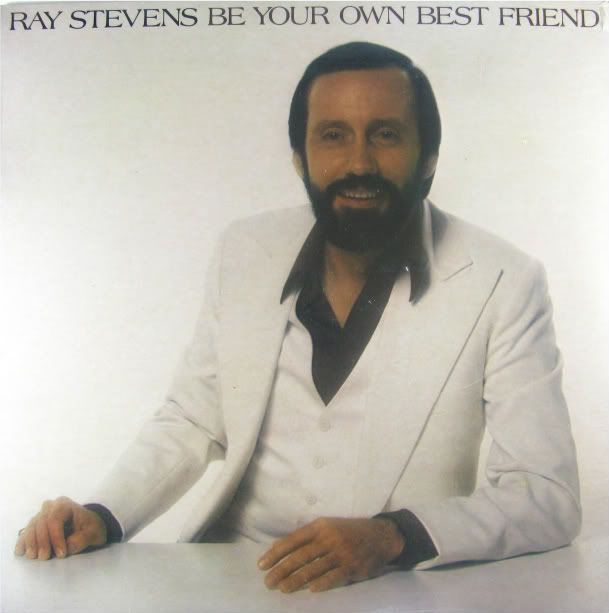
This Warner Brothers album from Ray Stevens, Be Your Own Best Friend, released in 1978, came into my collection in the late '90s. At that point in time I was beginning to track down Ray's vinyl albums but I never really had much of a chance to really expand on that until I got on-line in 2002 and was able to visit on-line auction sites and music stores that sold vinyl albums regularly. Up until 2002 I only had a couple of Ray's vinyl albums that a local flea market had for sale. This was one of the first vinyl albums of Ray Stevens that I was able to get my hands on in the late '90s. I had only heard a few of the songs on this album (thanks to the 1995 3-CD project that Warner Brothers issued!). I was obviously interested in hearing the songs whose titles I had long known of but up until then had never heard. "With a Smile" is a slow ballad and one that fits the mood that the album, overall, I assume was attempting to convey. "You're Magic" became one of my all-time favorite songs after I heard it the first time. You can also add "Comeback" to that category, too! In this song Ray sings like a man possessed...in the song he plays the part of a man who definitely wants the woman in his life to comeback to him. He makes this fact perfectly clear! I love the way the chorus goes and the sing-a-long feel. The album contains 9 songs and I think a lot of that has to do with the running time of quite a few of the songs. "Comeback", for example, is lengthy as is "L'amour", "Two Wrongs Don't Make a Right", "The Feeling's Not Right Again", and the title track, "Be Your Own Best Friend". Each of those songs are well over 3 minutes in length...with some close to 4 minutes.
Here's one of the more recent albums from Ray Stevens released on his own label, Clyde Records. 2010's We The People came together as a result of the viral success of his You Tube music video, also titled "We The People". The subject matter is political and as a result the video/song has it's fans and it's detractors. The album contains 22 songs which convey a political message but there are other songs on the collection that express patriotism and offer recognition to what's called small-town America and the values that consist in 'fly over country'. In fact, there's a song on this album called "Fly Over Country" which highlights the practice of some politicians who leave their relatively smaller hometowns for Washington, D.C. and only return to their hometown several weeks prior to election day. This album is not a ha-ha let's have a lot of fun kind of project even though the music videos of some of the songs on here, available on You Tube, are visually whimsical and light-hearted. The music video releases from this album include: "We The People", "Caribou Barbie", "Come to the U.S.A.", "Throw the Bums Out!", and "The Global Warming Song". Ray's 2004 single, "Thank You", was added to this 2010 album to add to the patriotic material. The other patriotic songs on here are "Let's Roll", "Stand Up", "The Fallen Ones", "Midnight in Baghdad", and his "Pledge of Allegiance/Star Spangled Banner" medley. Small-town America gets recognized in "Fly Over Country", "Safe at Home", "Dear Andy Griffith", and "Kings and Queens". The rest of the songs, in addition to the ones that were made into music videos, are strictly in the political vein: "We Are the Government", "Solar Powered Song", "Three Fractured Factions", "Obama Nation", "Sucking Sound", and "If 10% Is Good Enough For Jesus". If you're counting that's 21 songs, yes? There is one song on here that has nothing to do with politics or the military...it's his updated version of "Mr. Businessman" which was lifted from a concert a few years ago. He dedicates the song to a certain businessman who epitomizes the lyrics almost to a tee.
Released in 1985, this overview of Ray Stevens on RCA features 8 recordings. Collector's Series was the umbrella title for a lot of artists who recorded or still recorded for RCA at the time. Each release featured 8 songs and so that's exactly the amount of songs you get in the album spotlighting Ray Stevens. Unlike the other artists given the Collector's Series spotlight, Ray recorded for RCA for just three years: 1980, 1981, and 1982; although research shows he was under contract with RCA from late 1979 through early 1983. With only 3 studio albums to choose material from we get 3 recordings from his 1982 album, Don't Laugh Now, 3 recordings from his 1980 Shriner's Convention comedy album, and 2 recordings from his 1981 One More Last Chance album. A track list of 8 songs on a compilation album, no matter the artist, is something that I imagine is difficult to assemble. This 1985 release came into my possession in the early '90s. I already had a 1987 version of this album which removed 1981's "One More Last Chance" in favor of 1980's "Put It In Your Ear". This meant that the 1987 re-issue featured 4 songs from 1980, 1 from 1981, and 3 from 1982. The 1987 re-issue was released on CD in 1992. This collection was my introduction to 7 of Ray's RCA recordings...previously I had only heard "Shriner's Convention". His RCA recordings (1980-1982), like the Warner Brothers recordings (1976-1979), have never been kept in print for any extended amount of time. This 1985 release and the 1987 and 1992 re-issues remain the only compilations to focus exclusively on his RCA recordings. His Warner Brothers recordings haven't been in print since 1995...except for the Mp3 release of those 1995 CD's a few years ago. As far as studio albums go there's not been any CD re-issue of any Warner Brothers or RCA album by Ray Stevens...and for a lot of fans it just doesn't make much sense why those studio albums have yet to see the light of day in CD or Mp3 format.
January 30, 2012
January 29, 2012
Ray Stevens and Obama Money, Part 17...
Good early Sunday morning!! We are a week away from the Super Bowl. The Pro-Bowl is tonight and I may or may not watch it. It all depends on the broadcaster's moods. Usually we get broadcasters who belittle the Pro-Bowl and attempt to take the joy out of watching it with their caustic comments. Even though people say that broadcasters shouldn't spoil the mood if a person really wants to watch a sporting event the truth is that broadcasters CAN spoil the mood if their style isn't harmonious with the viewer and that's why for me a broadcaster is important when it comes to whatever sport I'm watching on TV or hearing on the radio.
Now, taking a look at the You Tube numbers we see that Ray's current music video, "Mr. President - Mr. President" is inching closer to half a million on-line views. It's current total is 462,039. It's been on-line for 4 months and I expect it to smash through the 500,000 mark at some point in February. A gap of a little more than 28,000 views separates it from the half a million mark. The President gave one of the most low-rated State of the Union speeches in history several days ago...commentators viewed it as a replay of 2009, 2010, and 2011's speeches with just a tweak here and there for topicality purposes. I didn't watch the speech...I heard snippets of it during newscasts on both radio and TV and that's all I needed to hear to form my own conclusion that it was the same old-same old speech instigating class warfare, highlighting so-called economic unfairness and so-called inequality, and how the Government should be the solution to everybody's personal and financial problems but a little ol' thing called the Constitution keeps getting in his way. In other words it was the same old garbage as before more or less...maybe more since the speech ran overtime.
Speaking of the President, the "Obama Budget Plan" music video from Ray Stevens is nearing 1.1 million views. At the moment it has 1,088,519 views. It was uploaded 9 months ago and was a slow climb to half a million views. The recurring battles about the budget and the debt ceiling in the latter half of 2011 pushed the video into the million views stratosphere.
A recent controversy surrounding Kentucky Senator Rand Paul and the TSA in a Nashville airport caused some activity for Ray's video titled "The Skies Just Ain't Friendly Anymore". The video has 276,126 on-line views now and was the second single/video release from Spirit of '76 in 2011. The music video's been on-line for almost 1 year...11 months and counting. It's a lot closer to 300,000 views now than it was prior to the Rand Paul story. The TSA music video, as I theorized in a couple of blogs, hits home with those who travel frequently and have to deal with the screenings and invasive pat downs. The song's title refers to the phrase "fly the friendly skies" made famous by United Airlines. His 2010 anti-illegal immigration video, "Come to the U.S.A." is nearing 5.8 million views! The totals at the moment are 5,791,250! The Obama Care music video from 2009, "We The People", has 4,648,990 views. "Throw the Bums Out!" has 854,504 and "God Save Arizona" is in the 800,000 range too with 840,795 views.
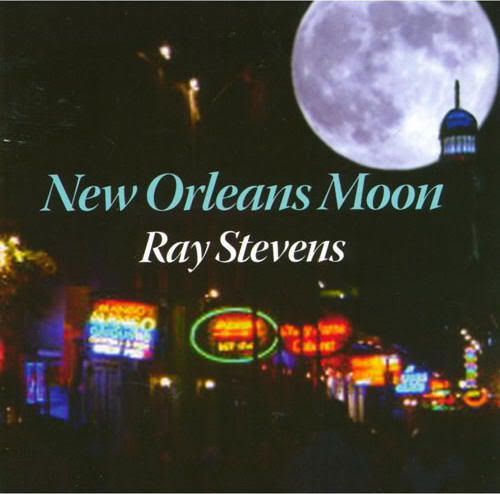
A short 5 years ago Ray Stevens released this wonderful salute to the music of New Orleans. New Orleans Moon, from July 2007, features Ray's versions of many songs celebrating not only New Orleans but the entire state of Louisiana as well. There are 11 selections on the CD and like a few of Ray's albums in the past this one slipped through without a lot of fanfare. A lot of that presumably had to do with the simple fact that none of the songs are comical and as a consequence there's a large segment of the listening audience that prefer comedy and funny business from Ray Stevens instead of thought-provoking, serious work. This has long been the case...even when Ray was releasing only non-comedy albums year after year...there are just some people who expect/insist on Ray Stevens being the funny guy without a trace of seriousness. Now, of course, there are plenty of people who appreciate all the music from Ray Stevens...whether it's serious or comical. "New Orleans Moon", the title track, was written by Ray and Chuck Redden. As a side note, Chuck wrote "The New Battle of New Orleans", by the way. Ray and Buddy Kalb re-wrote a lot of the original lyrics in the song and Curb Records issued Ray's version in 2005 as a CD single in limited quantities. That song isn't on this 2007 CD but I decided to mention the 2005 single's existence anyway!
Meanwhile, the first track on New Orleans Moon is "Way Down Yonder in New Orleans". I purchased the digital download/Mp3 album of New Orleans Moon when it was brand new but have never purchased a copy of what they now call the physical CD. I plan on doing so at some point. On this CD you will hear Ray's take on "Basin Street Blues", "New Orleans", "Louisiana Man", "Louisiana", "Do You Know What It Means to Miss New Orleans?", and "When The Saints Go Marching In" among several others. Pay attention for several impressions by Ray of Louis Armstrong.
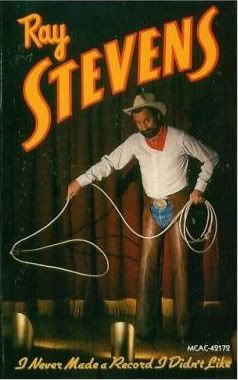
This was a comedy album released in 1988 from Ray Stevens. I recently came across commentary about the album and some of the songs from it and so I decided to give some spotlight to it again. I Never Made a Record I Didn't Like is based upon a phrase attributed to Will Rogers that went something like: "I never yet met a man I Didn't Like". Given the connection it makes sense for Ray to dress up as Will Rogers on the album's cover. Consisting of ten recordings the material runs the gamut from satellite TV curiosities and Hollywood scandals to hippies and boogie men to the Beach Boys, Michael Jackson, and Elvis...and everything else in between. First things first is "Surfin' U.S.S.R." which became a music video. The video features an extended comedic routine at the start with parodies of Ronald Reagan and Mikhail Gorbachev. Ray supplies the voices for both. There are also parodies of their wives who get in a fight in the background as their husbands talk about U.S. and Soviet relations...leading up to Reagan inquiring about Malibu, California and why there happens to be a Soviet sub there. Cue the main song as the two start dancing. The audio recording doesn't feature the Reagan and Gorbachev parody, though, it's only available on the music video. "Blood and Suede" is the story song about a Hollywood car crash between a drunk driver and a singer. The singer was listening to his own album real loud while the drunk driver, in a Mercedes, plowed into the Porsche. The song carries satirical undertones about the fast living and fast cars image of Los Angeles and it's surrounding area, cut throat lawyers that exist everywhere but are glamorized in Hollywood movies, and the egotism that exists amongst celebrities in general (the singer, afterall, was listening to own Greatest Hits album prior to the crash). For those who have this album, as I do, take a more closer listen to the song. When I originally heard it for the first time in the early '90s I didn't soak in everything that the song addresses. At that time I was mostly fascinated with it's melody and Ray's hushed small town hamlet storytelling narration. On this particular album Ray performs songs in various vocalizations. There's the Beach Boys style in "Surfin' U.S.S.R.", a talking blues style on "The Booger Man", a broad exaggeration on Bob Dylan in "Old Hippie Class Reunion", Michael Jackson enunciation parodies in "Bad", and of course in "Blood and Suede" we have the hushed storyteller delivery. There are songs in Ray's natural voice, too: "Mama's in the Sky With Elvis", "I Don't Need None of That", "Ethelene the Truckstop Queen", "Language, Nudity, Violence, and Sex", and "The Day I Tried To Teach Charlene MacKenzie How To Drive". The song about Charlene MacKenzie was released as a single and it charted on the Country Top 100...but it peaked in the low-80s on the charts. "Surfin' U.S.S.R." didn't reach the country charts but it was issued as a commercial single and music video. The album reached the Top-60 on the country charts in the fall of 1988 and remained a best-selling country album for more than 15 weeks.
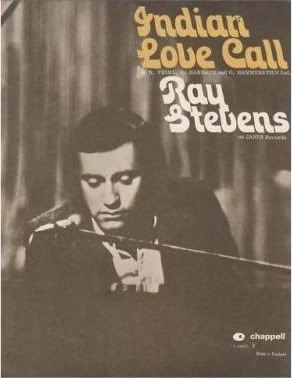
One of the great recordings of Ray's career is his take on "Indian Love Call". Aside from the obvious vocalization there is the standout arrangement of the song which is unlike any version. Whereas usually the song is performed as a mid-tempo love ballad with the love calls being a trademark, in Ray's version we get the love calls but we also get the R&B flavored, doo-wop harmony in the background. As many Ray fans know he often over-dubbed his own voice on his earliest recordings and the choir of doo-wop vocalizations heard in the background are his own voice. When he performed the song on television around the time it was a single he'd use a click track which integrated his over-dubbed background into the live recording. Ray's only performance of the song on television, that I'm aware of, is a 1975 appearance on the Pop! Goes the Country program. I'm aware of this because I own a DVD which features the 1975 episode in it's entirety. Ray, with a full beard by the way, sings "Misty", "Indian Love Call", "Twilight Time", and does a duet with the other guest, Sammi Smith, on "Everything Is Beautiful" as the show's credits roll. I'd written about the Pop! Goes the Country DVD collections many blogs ago. You can look up the information about them by searching their web-site, Country Music DVD. The 1975 episode with Ray Stevens is on DVD Volume 4. There are a couple more DVD's featuring episodes with Ray, too. On each DVD there's multiple episodes featuring all sorts of country music celebrities as guests but for the purposes of this blog I only highlight the DVD releases with a Ray Stevens episode. "Indian Love Call" reached the country Top-40 for Ray in 1975 and was one of his last single releases for Barnaby Records prior to his switch to Warner Brothers in 1976. His ballad rendering of "Young Love" reached the country Top-50 in early 1976 while the wonderful "Mockingbird Hill" didn't reach the charts.
Now, taking a look at the You Tube numbers we see that Ray's current music video, "Mr. President - Mr. President" is inching closer to half a million on-line views. It's current total is 462,039. It's been on-line for 4 months and I expect it to smash through the 500,000 mark at some point in February. A gap of a little more than 28,000 views separates it from the half a million mark. The President gave one of the most low-rated State of the Union speeches in history several days ago...commentators viewed it as a replay of 2009, 2010, and 2011's speeches with just a tweak here and there for topicality purposes. I didn't watch the speech...I heard snippets of it during newscasts on both radio and TV and that's all I needed to hear to form my own conclusion that it was the same old-same old speech instigating class warfare, highlighting so-called economic unfairness and so-called inequality, and how the Government should be the solution to everybody's personal and financial problems but a little ol' thing called the Constitution keeps getting in his way. In other words it was the same old garbage as before more or less...maybe more since the speech ran overtime.
Speaking of the President, the "Obama Budget Plan" music video from Ray Stevens is nearing 1.1 million views. At the moment it has 1,088,519 views. It was uploaded 9 months ago and was a slow climb to half a million views. The recurring battles about the budget and the debt ceiling in the latter half of 2011 pushed the video into the million views stratosphere.
A recent controversy surrounding Kentucky Senator Rand Paul and the TSA in a Nashville airport caused some activity for Ray's video titled "The Skies Just Ain't Friendly Anymore". The video has 276,126 on-line views now and was the second single/video release from Spirit of '76 in 2011. The music video's been on-line for almost 1 year...11 months and counting. It's a lot closer to 300,000 views now than it was prior to the Rand Paul story. The TSA music video, as I theorized in a couple of blogs, hits home with those who travel frequently and have to deal with the screenings and invasive pat downs. The song's title refers to the phrase "fly the friendly skies" made famous by United Airlines. His 2010 anti-illegal immigration video, "Come to the U.S.A." is nearing 5.8 million views! The totals at the moment are 5,791,250! The Obama Care music video from 2009, "We The People", has 4,648,990 views. "Throw the Bums Out!" has 854,504 and "God Save Arizona" is in the 800,000 range too with 840,795 views.
A short 5 years ago Ray Stevens released this wonderful salute to the music of New Orleans. New Orleans Moon, from July 2007, features Ray's versions of many songs celebrating not only New Orleans but the entire state of Louisiana as well. There are 11 selections on the CD and like a few of Ray's albums in the past this one slipped through without a lot of fanfare. A lot of that presumably had to do with the simple fact that none of the songs are comical and as a consequence there's a large segment of the listening audience that prefer comedy and funny business from Ray Stevens instead of thought-provoking, serious work. This has long been the case...even when Ray was releasing only non-comedy albums year after year...there are just some people who expect/insist on Ray Stevens being the funny guy without a trace of seriousness. Now, of course, there are plenty of people who appreciate all the music from Ray Stevens...whether it's serious or comical. "New Orleans Moon", the title track, was written by Ray and Chuck Redden. As a side note, Chuck wrote "The New Battle of New Orleans", by the way. Ray and Buddy Kalb re-wrote a lot of the original lyrics in the song and Curb Records issued Ray's version in 2005 as a CD single in limited quantities. That song isn't on this 2007 CD but I decided to mention the 2005 single's existence anyway!
Meanwhile, the first track on New Orleans Moon is "Way Down Yonder in New Orleans". I purchased the digital download/Mp3 album of New Orleans Moon when it was brand new but have never purchased a copy of what they now call the physical CD. I plan on doing so at some point. On this CD you will hear Ray's take on "Basin Street Blues", "New Orleans", "Louisiana Man", "Louisiana", "Do You Know What It Means to Miss New Orleans?", and "When The Saints Go Marching In" among several others. Pay attention for several impressions by Ray of Louis Armstrong.
This was a comedy album released in 1988 from Ray Stevens. I recently came across commentary about the album and some of the songs from it and so I decided to give some spotlight to it again. I Never Made a Record I Didn't Like is based upon a phrase attributed to Will Rogers that went something like: "I never yet met a man I Didn't Like". Given the connection it makes sense for Ray to dress up as Will Rogers on the album's cover. Consisting of ten recordings the material runs the gamut from satellite TV curiosities and Hollywood scandals to hippies and boogie men to the Beach Boys, Michael Jackson, and Elvis...and everything else in between. First things first is "Surfin' U.S.S.R." which became a music video. The video features an extended comedic routine at the start with parodies of Ronald Reagan and Mikhail Gorbachev. Ray supplies the voices for both. There are also parodies of their wives who get in a fight in the background as their husbands talk about U.S. and Soviet relations...leading up to Reagan inquiring about Malibu, California and why there happens to be a Soviet sub there. Cue the main song as the two start dancing. The audio recording doesn't feature the Reagan and Gorbachev parody, though, it's only available on the music video. "Blood and Suede" is the story song about a Hollywood car crash between a drunk driver and a singer. The singer was listening to his own album real loud while the drunk driver, in a Mercedes, plowed into the Porsche. The song carries satirical undertones about the fast living and fast cars image of Los Angeles and it's surrounding area, cut throat lawyers that exist everywhere but are glamorized in Hollywood movies, and the egotism that exists amongst celebrities in general (the singer, afterall, was listening to own Greatest Hits album prior to the crash). For those who have this album, as I do, take a more closer listen to the song. When I originally heard it for the first time in the early '90s I didn't soak in everything that the song addresses. At that time I was mostly fascinated with it's melody and Ray's hushed small town hamlet storytelling narration. On this particular album Ray performs songs in various vocalizations. There's the Beach Boys style in "Surfin' U.S.S.R.", a talking blues style on "The Booger Man", a broad exaggeration on Bob Dylan in "Old Hippie Class Reunion", Michael Jackson enunciation parodies in "Bad", and of course in "Blood and Suede" we have the hushed storyteller delivery. There are songs in Ray's natural voice, too: "Mama's in the Sky With Elvis", "I Don't Need None of That", "Ethelene the Truckstop Queen", "Language, Nudity, Violence, and Sex", and "The Day I Tried To Teach Charlene MacKenzie How To Drive". The song about Charlene MacKenzie was released as a single and it charted on the Country Top 100...but it peaked in the low-80s on the charts. "Surfin' U.S.S.R." didn't reach the country charts but it was issued as a commercial single and music video. The album reached the Top-60 on the country charts in the fall of 1988 and remained a best-selling country album for more than 15 weeks.
One of the great recordings of Ray's career is his take on "Indian Love Call". Aside from the obvious vocalization there is the standout arrangement of the song which is unlike any version. Whereas usually the song is performed as a mid-tempo love ballad with the love calls being a trademark, in Ray's version we get the love calls but we also get the R&B flavored, doo-wop harmony in the background. As many Ray fans know he often over-dubbed his own voice on his earliest recordings and the choir of doo-wop vocalizations heard in the background are his own voice. When he performed the song on television around the time it was a single he'd use a click track which integrated his over-dubbed background into the live recording. Ray's only performance of the song on television, that I'm aware of, is a 1975 appearance on the Pop! Goes the Country program. I'm aware of this because I own a DVD which features the 1975 episode in it's entirety. Ray, with a full beard by the way, sings "Misty", "Indian Love Call", "Twilight Time", and does a duet with the other guest, Sammi Smith, on "Everything Is Beautiful" as the show's credits roll. I'd written about the Pop! Goes the Country DVD collections many blogs ago. You can look up the information about them by searching their web-site, Country Music DVD. The 1975 episode with Ray Stevens is on DVD Volume 4. There are a couple more DVD's featuring episodes with Ray, too. On each DVD there's multiple episodes featuring all sorts of country music celebrities as guests but for the purposes of this blog I only highlight the DVD releases with a Ray Stevens episode. "Indian Love Call" reached the country Top-40 for Ray in 1975 and was one of his last single releases for Barnaby Records prior to his switch to Warner Brothers in 1976. His ballad rendering of "Young Love" reached the country Top-50 in early 1976 while the wonderful "Mockingbird Hill" didn't reach the charts.
Labels:
1988,
indian love call,
new orleans,
novelty songs,
obama money,
ray stevens
January 28, 2012
Ray Stevens and the Silver Bracelet...
The one and only Ray Stevens made his way into a recording studio 55 years ago...at the age of 18...to record a series of songs. One of those songs, "Silver Bracelet", was released as a single on the Prep label, a subsidiary of Capitol Records. The year was 1957! Ray recorded for Prep in 1957, Capitol in 1958, and from 1959 through 1961 he was with the NRC label. He released quite a few teen pop ballads and uptempo rocker songs during the late '50s and he performed on quite a few sessions along the way. His session work greatly expanded in the '60s as he moved onto Mercury Records and then Monument Records. The time period being 1961 through early 1970. The session work continued in the '70s but not as consistently as it had been primarily because from 1969 onward Ray became a superstar with music that hit with all music brands: pop, country, adult-contemporary, gospel, plus he was testing the waters with an international market during this same time period. His singles were popping up in Canada, Europe, Asia, Australia...with several singles making the Top-20 and Top-10 on foreign music charts. The extra time for session work predictably had vanished as Ray's fame grew and he became more and more in-demand for concerts and TV appearances.
However, no matter how big Ray Stevens eventually became once he joined Mercury Records in 1961, there's still the musician/producer/arranger/writer side of him that nobody should ever forget....for he still produces, arranges, and plays piano and, or, keyboards and synthesizers on his CD's to this very day. Ray Stevens is a true Renaissance Man whose career extends well beyond the handful of novelty songs that a general public is most familiar with.
These series of anniversary blogs that I've been writing since the first of January are leading up to the much anticipated release of Ray's 9-CD Encyclopedia of Recorded Comedy Music. The release, originally set for January 2012, will now be released in February. I'm really excited to hear Ray's take on a lot of the novelty songs by other artists through the years...and I'm also excited to get the book that'll spotlight all the songs and feature history and other information. According to a radio interview in 2011 the songs will go in alphabetical order starting with songs that begin with the letter "A" and not stop until the end of the alphabet. It's going to be a fascinating collection!
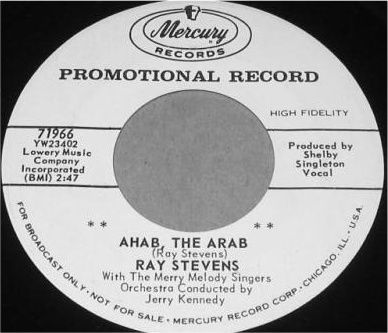
It's Saturday morning...well...Saturday afternoon. As I've discussed elsewhere, white promo singles used to be commonplace amongst radio stations. As the decades went by the singles found their way into the public domain. As you can see on the label, the actual song was produced by Shelby Singleton with orchestra conduction by Jerry Kennedy. The Merry Melody Singers are given credit on the single as well. Several blogs ago I saluted the single turning 50 this year...a Golden Anniversary...and I also praised the song's importance in Ray's career. There have been several versions of the song issued through the years...which is highly understandable considering that record labels own the recordings that artists make and if a label doesn't keep a recording in print then the artist has no choice put to re-record the song(s) in an effort to keep the song(s) in print and available. 1962 was the original year for "Ahab the Arab" while a couple of years later an impromptu version performed on a program hosted by Ralph Emery made an appearance on an obscure vinyl album released by Mercury Records. Ralph is heard at the beginning and the end of the song. In between you have the song itself with some alternate lyrics heard only in that performance. I don't know if this performance is an audio cut from one of Ralph's mid '60s television programs or if it's taken from any number of package shows that used to be commonplace in country music during the '50s through the early '70s where a lot of country artists would travel together, along with an emcee (typically a radio or TV personality) and they'd perform shows. George Strait in more modern times did something like that with his Festival concerts in the late '90s. Anyway...this version with Ralph Emery's announcing can be found on The Best of Ray Stevens. In 1969 the more familiar recording of "Ahab the Arab" was included on the Gitarzan album. I say more familiar because it's that recording which appears on countless compilation albums and it's been the recording that was kept in print the longest during the '70s, '80s, and '90s. A fourth recording arrived in 1995 when the music video came along for his Get Serious! movie. In my Ahab tribute blog I covered a lot of this same information but I thought to bring it back again considering it was several blogs ago.
However, no matter how big Ray Stevens eventually became once he joined Mercury Records in 1961, there's still the musician/producer/arranger/writer side of him that nobody should ever forget....for he still produces, arranges, and plays piano and, or, keyboards and synthesizers on his CD's to this very day. Ray Stevens is a true Renaissance Man whose career extends well beyond the handful of novelty songs that a general public is most familiar with.
These series of anniversary blogs that I've been writing since the first of January are leading up to the much anticipated release of Ray's 9-CD Encyclopedia of Recorded Comedy Music. The release, originally set for January 2012, will now be released in February. I'm really excited to hear Ray's take on a lot of the novelty songs by other artists through the years...and I'm also excited to get the book that'll spotlight all the songs and feature history and other information. According to a radio interview in 2011 the songs will go in alphabetical order starting with songs that begin with the letter "A" and not stop until the end of the alphabet. It's going to be a fascinating collection!
It's Saturday morning...well...Saturday afternoon. As I've discussed elsewhere, white promo singles used to be commonplace amongst radio stations. As the decades went by the singles found their way into the public domain. As you can see on the label, the actual song was produced by Shelby Singleton with orchestra conduction by Jerry Kennedy. The Merry Melody Singers are given credit on the single as well. Several blogs ago I saluted the single turning 50 this year...a Golden Anniversary...and I also praised the song's importance in Ray's career. There have been several versions of the song issued through the years...which is highly understandable considering that record labels own the recordings that artists make and if a label doesn't keep a recording in print then the artist has no choice put to re-record the song(s) in an effort to keep the song(s) in print and available. 1962 was the original year for "Ahab the Arab" while a couple of years later an impromptu version performed on a program hosted by Ralph Emery made an appearance on an obscure vinyl album released by Mercury Records. Ralph is heard at the beginning and the end of the song. In between you have the song itself with some alternate lyrics heard only in that performance. I don't know if this performance is an audio cut from one of Ralph's mid '60s television programs or if it's taken from any number of package shows that used to be commonplace in country music during the '50s through the early '70s where a lot of country artists would travel together, along with an emcee (typically a radio or TV personality) and they'd perform shows. George Strait in more modern times did something like that with his Festival concerts in the late '90s. Anyway...this version with Ralph Emery's announcing can be found on The Best of Ray Stevens. In 1969 the more familiar recording of "Ahab the Arab" was included on the Gitarzan album. I say more familiar because it's that recording which appears on countless compilation albums and it's been the recording that was kept in print the longest during the '70s, '80s, and '90s. A fourth recording arrived in 1995 when the music video came along for his Get Serious! movie. In my Ahab tribute blog I covered a lot of this same information but I thought to bring it back again considering it was several blogs ago.
Subscribe to:
Posts (Atom)