Showing posts with label 1981. Show all posts

March 31, 2024

Ray Stevens: Singing about Women, Part 5

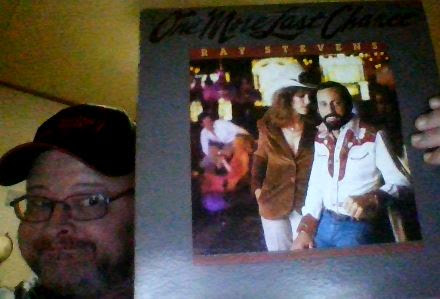
Hello fans of Ray Stevens!!! As we wind down women's history month and as we wind down the examination of love songs and comedy songs that Ray has sung that fit the theme of this limited blog series during women's history month we begin with 1981 and the release of the fabulous album titled One More Last Chance. This album is chock full of love songs...everything from full-on passionate pleas of longing to heartache and heartbreak. It's a ballad heavy album and the title track features a neat combination of steel guitar and electric guitar trading solo's within the song. It starts out with an electric guitar but eventually you'll hear the steel guitar. "One More Last Chance" is a song about a broken relationship and how the guy realizes his mistakes/faults and begs forgiveness. The woman has apparently taken him back time and time again and given him one last chance each time but now, as he says, he wants her to give him just "One More Last Chance". The album's title track was the second single release from the album. The first single had actually hit several months before the album was released. Late in 1980 "Night Games" emerged. The bouncy song is like a page right out of any night club all over the country. In 1980, when the topic of bar rooms was brought up, what would immediately come to mind is the movie, Urban Cowboy, and the bar/nightclub featured in the movie was called Gilley's. The bar was a business venture between country singer Mickey Gilley and a businessman named Sherwood Cryer. It was located in Pasadena, Texas and was in operation from 1970 until it literally burned to the ground in 1990. The album cover shows Ray in the clothing that most, if not all, country music and aspiring country music singers as well as fans were wearing in the aftermath of the 1980 movie. The bar and movie popularized the mechanical bull, too. 

"Night Games", as mentioned, fits into that era as we hear about a single's bar where we're told the story of two strangers hoping to find romance. The thing that happens, however, is the two have a one night stand and they wake up to find they're not compatible and feel just as strange to one another as the moment they met the night before. Elsewhere on the album is his up-tempo rendition of "Pretend" plus we have a big ballad titled "Certain Songs". Heartbreak is the subject in the ballad "Just About Love". A tale of a couple with opposite personalities and backgrounds is told in "Melissa". We're not told why the woman is no longer in the relationship, however, but from Ray's singing we're informed that he's missing her. In a ballad-heavy album "Pretend" is the only song that's really super charged up-tempo. "Night Games" is a bouncy sing-a-long whereas "Let's Do It Right This Time" and "One More Last Chance" are a combination between ballad and mid-tempo. 

In 1982, from the Don't Laugh Now album, Ray returns to a more balanced approach of up-tempo and ballad recordings. The album kicks off with the rocking "Such a Night". The retro feel of the music arrangement might be the reason the album's title is written in a '50s neon design.

The album, produced by Ray Stevens and Bob Montgomery, is fun to listen to as are so many of Ray's albums. "Such a Night", "Take That Girl Away", "Oh, Leo Lady", and practically the entire album is devoted to love songs as well. The two songs that were issued as single releases were "Written Down in My Heart", a ballad, and the gospel-flavored "Where The Sun Don't Shine". The cleverest song, "Oh, Leo Lady", takes the sound of yodeling as in oh-lee-oh-lady-hoo but transform it into a love song using astrology. In the song Ray sings about being in love with a Leo in spite of his horoscope saying that a Leo isn't part of his destiny. It's the only song, that I'm aware of, that uses astrology as a backdrop and incorporates Leo, Gemini, Pisces, Jupiter, Scorpio, etc. into the lyrics. The album's title track is a slow ballad that visits the theme of unrequited love. In the song Ray sings about a guy that's in love with a woman and he tells her how much he loves her and for how long he's had feelings for her. He asks that she "Don't Laugh Now" given how she's always seen him as a friend and nothing more. "Country Boy, Country Club Girl" is a song about two people from different backgrounds finding one another. He's a country kid who worked as a lifeguard inside a ritzy country club. He falls for a woman named Mary Lou Pickett. Her father happened to own a mill in town and he raised his family in an eight column house.

In 1983 Ray left the RCA label (signed with them in the latter half of 1979) and signed what turned out to be a one album deal with Mercury Records. He'd been on that label in his past. He recorded for them from 1961 until 1965. The results of the newest partnership began showing up in the latter half of 1983. A series of single releases emerged as well as the album, Me. 

In hindsight there wasn't a lot of publicity surrounding the album. The album contains 10 songs and it features a combination of up-tempo, mid-tempo, and ballads. In recent years through social media several songs from the album have been discovered by fans...one, in particular, is the fun "Piece of Paradise Called Tennessee". The song should have been used for Nashville tourism or Tennessee Tourism but it never was. The single releases happened to be "Love Will Beat Your Brains Out", "Mary Lou Nights", and "My Dad". The latter, written by Dale Gonyea, is a salute to fathers. Although it has the eye catching title of "Love Will Beat Your Brains Out" it's a serious recording about mental stress and the anguish that being in love, or losing love, will bring. "Game Show Love" is my all-time favorite from the album. Through the incorporation of game show titles and catch-phrases we hear a song about how a woman was never serious about a relationship and all she did was string him along. The opening line in the song's chorus: 'love, is just a game to you...'. In "Yolanda" we hear a song about a guy's desire for a Spanish woman and in spite of his not being able to speak the language he nevertheless can't get her off of his mind. Have you ever heard a song about an anniversary of a break-up? In "Special Anniversary", a phrase we don't hear until the end of the song, Ray sings about seeing a woman that he used to love and wonders if his running into her is just a coincidence given that it had been exactly one year since the two broke up. It was a fantastic album and much, if not all, of the brief publicity for the album and it's songs arrived in the first couple of months in 1984. However, the Me album was ultimately overlooked and overshadowed by some big changes that took place in Ray's career in 1984. Seen below is Ray performing "My Dad" from an episode of his CabaRay Nashville television series.


Ray left Mercury Records and signed with MCA Records. Although the entire terms of the recording contract will never be public it was reported in country music media that he was signed as a comedy act. It was the first time in his career where he shifted his full attention to comedy and the first time he fully embraced being marketed as a comedy performer. His first five albums for the label were all comedy and the first four were huge record sellers. The 1984 debut, He Thinks He's Ray Stevens, contained what became an immediate classic... "It's Me Again, Margaret". This comedy song, in case you hadn't heard it, is about a prank caller named Willard McBain who calls up his victim, Margaret. In a series of phone calls he embarrasses the woman until she finally gets the police involved. They eavesdrop and hear Willard's latest verbal assault and he's arrested. There were some other songs on that album dealing with women. "Happy Hour is the Saddest Time of the Day" is a nutty comedy song about a pair of alcoholics. She's sobered up and left him which is why Happy Hour is a sad time for him. "I'm Kissin' You Goodbye" is the album's opening track. This is a very funny song, if you listen to it carefully, but it's performed seriously with an up-tempo bluegrass flavored arrangement. 

This concludes my look at love songs (both non-comical and comical) from Ray Stevens. Now, don't let this overview lead you to think he's not recorded much more than what I've covered in this 5-part series. He's recorded more since 1984. In 1985, for example, there was "Punk Country Love" and then there was "Can He Love You Half as Much as I?" in 1986. In 1987 there was "The Flies of Texas", which in spite of it's title, is a love song about a guy who thinks he's marrying into money only to learn that his potential father-in-law owns a fleet of garbage trucks. "The Three Legged Man" tells the wild story of a guy who steals a woman away from another man. The other man happens to have a wooden leg and he steals it, too. So, now, he's a guy with three legs with a woman who has two legs and they're being chased by a one legged man.  

February 19, 2023

Ray Stevens: The RCA Single Releases

Hello fans of Ray Stevens!! Whenever I'd go and look through some of my statistics for this blog I'm always seeing several visits to a blog entry I wrote quite awhile ago focusing on the Barnaby Records single releases on Ray Stevens. It got me thinking...and I've written so many blog entries over the last 10 or so years...that perhaps it's time to re-visit that type of blog entry and focus on the Ray's RCA Records single releases. Ray was officially on the RCA roster for four years (1979-1983). In that time period the record company issued three studio albums, a Greatest Hits album, and six single releases from Ray Stevens. His greatest commercial hit happened to be his debut for the label, "Shriner's Convention", which hit early in 1980. This is a song that had been tested out beforehand in concert and in a couple of television appearances in the latter half of 1979. The single would become a Top-10 Country hit as would the album of the same name. The album peaked within the Top-5 on the Country Albums chart. Ray's tenure at RCA was short but the music he recorded while at the label was fabulous in my opinion. Ray's RCA catalog has never been properly kept readily available in the online digital age beyond a few recordings. Non-fans would say it's because there's a lack of 'hit songs' during that time period (an untrue statement, by the way) but Ray Stevens fans, like myself, will argue and say it's because the record company has no interest in releasing his studio albums to the digital market...and, IF that's really true, it's a shame. If it's NOT true then I'd like to hear an official explanation as to why his RCA recordings aren't widely available in a digital format.

1980: Shriner's Convention / You're Never Goin' To Tampa With Me

1980: Hey There / You're Never Goin' To Tampa With Me (released in Canada and overseas)

1980: Night Games / Let's Do It Right This Time

1981: One More Last Chance / I Believe You Love Me

1982: Written Down In My Heart / Country Boy, Country Club Girl

1982: Where The Sun Don't Shine / Why Don't We Go Somewhere and Love

The three studio albums Ray recorded for RCA are titled: Shriner's Convention (1980), One More Last Chance (1981), and Don't Laugh Now (1982). When RCA released a Greatest Hits album on Ray in 1983 they only included two RCA tracks. They should have featured five or all six of the A-side single releases and a few older tracks. However, a few years later, RCA issued several albums called Collector's Series. The series focused on past and present RCA recording artists. Ray's collection arrived in 1985 and then it got re-released in 1987. It was an album of 8 songs and they were all from his RCA years. Yes, a skimpy collection, but nevertheless it was an introduction to his RCA years for a lot of his younger fans who discovered Ray in the mid to late 1980s. Believe it or not Collector's Series remains the only official overview of Ray's RCA years. Unless you have the studio albums in vinyl or cassette format the Collector's Series remains the most widely released overview of his early 1980's music.  

January 25, 2022

Ray Stevens: Random Vinyl Spotlight...

Hello fans of Ray Stevens! I decided to just randomly pick out an album released on Ray Stevens and spotlight it. This particular vinyl album, released in 1981, is obscure but it shows up on eBay once in awhile. I was looking through eBay and came upon this Oh, Lonesome Me vinyl album and it inspired me to compose this particular blog entry. I had been under the impression that this was an import album...given that it's on a label called Piccadilly Records. Whenever I see the word, Piccadilly, I think of England. I discovered, however, that this 1981 album was manufactured here in the United States. On the back of the album cover there's a small credit that runs along the bottom that reads "Manufactured and Distributed by First American Records" and it shows that their address is in Seattle, Washington. As you can see Ray Stevens doesn't appear on the front of the album. He doesn't appear on the back of the album, either. The album contains 11 tracks...with 9 of them from Ray's 1975 album, Misty. So, yes, one could call this a partial re-issue of the Misty album minus the first two songs from that album, "Misty" and "Indian Love Call". Oh, Lonesome Me kicks off with "Over the Rainbow" and the following 8 songs are in chronological order as to how they appeared on the Misty album. The final 2 tracks on the 1981 Oh, Lonesome Me album are 1968's "Isn't It Lonely Together?" and 1969's "Have a Little Talk With Myself". The 1981 album isn't part of my personal collection and so I don't know if a photo of Ray appears on the paper sleeve inside the album or not. Record companies used to have a photo of the singer on the paper sleeve...as a sort of exclusive...for those that purchased the album. Decades before the internet and photo sharing the allure of it all for the fan was to have a photo of the singer on the paper sleeve that wasn't visible on either the front or back of the album. 

June 19, 2021

Ray Stevens: The Cannonball at 40...

Hello Ray Stevens fans!! Today marks the 40th anniversary of the comedy movie, Cannonball Run. The all-star blockbuster comedy movie starred Burt Reynolds, Dom DeLuise, Dean Martin, Sammy Davis Jr., Roger Moore, Farrah Fawcett, Jamie Farr, and many others...the movie spawned a sequel just as funny with an equally lengthy cast list. The movie is centered around a mad-dash, cross country auto race. The movie cost somewhere near 20 million dollars...and to date it's raked in over $70 million in the U.S. through VHS, DVD, and Blu Ray. The movie's opening weekend in 1981 reportedly made more than $11 million. Global profits of the movie, to date, are more than $160 million. 

Ray Stevens wrote and performed two songs for the Cannonball Run soundtrack in 1981. He wrote and performed the movie's theme song, "Cannonball", heard during the opening credits. Later on in the film he's heard singing the love ballad, "Just for the Hell of It". Ray didn't appear on-camera in the movie. His connection to the film is the writing and singing of those two songs. In correspondence with Ray's office staff more than 20 years ago I learned that Burt Reynolds personally asked Ray if he would write/perform the movie's theme song. Burt had a strong connection to country music and southern culture going back to the early to mid 1970s with his southern-based films Deliverance, White Lightning, Gator, W.W. and the Dixie Dancekings, and the Smoky and the Bandit franchise. It was primarily the Bandit films, co-starring Jerry Reed, that I think enabled Burt to attract the bulk of this country music attention...but I'm sure his string of southern-based movies, overall, generated a lot of appreciation and publicity within Rural America.  

The love ballad from Ray Stevens, "Just for the Hell of It", from Cannonball Run can be heard in the embed down below. Happy 40th, Cannonball...

January 2, 2021

Ray Stevens: Last Chance at 40...

Hello once again all you fans of Ray Stevens!! I'm spotlighting an album that Ray Stevens released in 1981 which reaches 40 this year. That year in country music was dominated by the Urban Cowboy influence...the Urban Cowboy movie had been released in 1980 and it set off a massive explosion of country music appeal to a wider pop audience. Country music had adopted pop sensibilities prior to 1980 when you consider the fact that the concept of the syndicated television show, Pop! Goes the Country, was centered around the pop influences in country music...and that series debuted in 1974...so by 1981 there had been a gradual shift in how the music was being marketed. Pop! Goes the Country, by the way, was hosted by Ralph Emery (1974-1980) and then Tom T. Hall (1980-1982). The Urban Cowboy movie and everything that followed was in it's prime, you might say, into 1981. A lot of country music artists were going places that country singers hadn't been before...it catapulted Mickey Gilley, a country singer who'd had a string of hits since the early '70s, into super-star status. His honky-tonk bar, Gilley's, was the main setting for the Urban Cowboy movie and he had several scenes in the film as did Johnny Lee and other country music artists. The album cover can be found in my pictorial time-line off to the side of the blog page.   

Ray Stevens adapted to the Urban Cowboy craze, a little bit, and this album is one that I've always referred to as his contribution to early '80s Urban Cowboy sentiments. The music is wonderful but so is the photography on the album and the design. The visuals, as you can see, fit in perfectly with the honky-tonk, cowboy, bar room romanticism that was taking place in the aftermath of the Urban Cowboy film. Although this fine, ballad heavy album emerged in 1981 it included a song that had already been released as a single by Ray in the fall of 1980...a single that climbed into the Country Top-20 in the latter half of 1980, "Night Games". The hit song is all about a couple who meet in a single's bar and decide to have a one-night stand...but there's no love or passion between the two come the dawn. Ray tells us that in spite of the couple having fun, and being lost in the thrill of what the night would bring, we're told it's simply part of the routine...the couple go their separate ways with the hope of finding the right person back inside the bar where all the 'grown-up kids' play their "Night Games". The steel guitar players on this 1981 album are Larry Sasser and Hal Rugg. However, the two legendary steel guitarists aren't specified as to which songs they played the steel guitar on...the mystery thickens as this album included a lot more steel guitar than any previous or any upcoming Ray Stevens album. "Night Games" featured steel guitar as did the title track, "One More Last Chance", and "Let's Do It Right This Time". The love ballad title track features a great combination of steel guitar and electric guitar taking turns with lengthy instrumentation. 

That's the photo of Ray Stevens that appears on the back of the album for those that aren't familiar with this 1981 release. I've often half-jokingly suggested that Ray's plea for "One More Last Chance" must've been rewarded because he's giving us a big grin and he's wearing the cowboy hat that the woman was wearing on the front of the album. Did you know that Ray recorded his version of a pop classic for this album? The song, "Pretend", had previously been recorded by a whole host of recording artists. Nat King Cole had a big hit with it as a ballad. Carl Mann had a hit with a rock and roll version. Ray's take on the song is partially up-tempo like Carl Mann's but instead of having a distinctive rock and roll sound to it, like Carl's, the Ray Stevens arrangement features a lot of trumpets...a whole lot of trumpets. Ray put a lot of life into his rendition of the song. Once "Pretend" reaches it's end you'll think you just left the bullfights in Madrid, Spain. I wish there was an audio clip of Ray's version of the song on-line so I could share the great rendition with those that more than likely haven't heard it. This 1981 album was issued on RCA Records. "Night Games" closes out the album while the title track, "One More Last Chance", opens the album. The title track hit the Country Top-40 early in 1981...but for the rest of the year no other songs from the album were issued as singles. Ray was keeping busy as a touring artist and appearing on numerous television shows. It was in 1981 that Ray guest starred in several episodes of the soap opera, Texas. He played himself and in one of the episodes he sang "One More Last Chance". The video footage of his soap opera appearance used to be on-line in the mid 2000's but it's long since been taken off-line. I used to have screen-caps but those were on a different computer. I think his Texas guest appearance was the only time Ray Stevens sang "One More Last Chance" on television. In addition to his guest appearance on the soap opera he also lent his talents to the movie, Cannonball Run. Ray wrote and sang two songs for the movie: "Cannonball", the movie's theme song, and the love ballad, "Just For the Hell Of It". The 1981 One More Last Chance album contains 10 songs...as mentioned earlier it's a ballad heavy album. There is only one song that would qualify as legitimately up-tempo. There are a couple mid-tempo songs but the rest are ballads. The album is outstanding but it remains only available on eBay in vinyl format and once in awhile it'll become available in cassette format on eBay but it's never been issued on CD or on any on-line digital music store: 

1. One More Last Chance
2. Just About Love
3. Certain Songs
4. Melissa
5. I Believe You Love Me
6. Pretend
7. It's Not All Over
8. Let's Do It Right This Time
9. Take Your Love
10. Night Games

November 10, 2019

Ray Stevens: Vintage Video Clips...

Hello again...it's been almost a week since my previous blog entry. I'll post a reminder as we get more deeper into November of the upcoming appearance of Ray Stevens and Ralph Emery in Dickson, Tennessee on December 3rd. The blog entry I previously posted was meant as a breaking news kind of blog post...so as we get more closer to next month I'll obviously post about the event. In addition to the Christmas-themed concerts at the CabaRay showroom Ray has also been busy sharing video clips from his large collection of previously released and unreleased video clips. Now, in addition to the video clips posted on Ray's social media site, there's been the upload of another clip of Ray that isn't affiliated with Ray's social media group...but I'm going to embed it nonetheless.

I'll begin with the most recent video upload...a comical sketch from his Amazing Rolling Revue VHS. It's a parody of cereal commercials...specifically the athletic driven Wheaties brand. In Ray's video the name of the cereal is Beeties, from overseas, and it contains all the ingredients designed to help with a certain type of personal issue...you'll find yourself laughing, of course, but mixed in with the comical overtone is a shot of Ray in horror attempting to swallow the prune and high fiber cereal concoction. The voice-over is provided by Buddy Kalb. It was uploaded on November 8th...


A day earlier, November 7th, a video clip of the jogging sketch from Ray's guest appearance on Barbara Mandrell and the Mandrell Sisters variety show appeared on YouTube. Barbara's show was on the air for two seasons, 1980-1982, and Ray appeared on it twice. In this appearance not only is Ray and the Mandrell's in the sketch but it also features the other guest, Donny Osmond.


Jogging was becoming something of a new fad, I guess, even though it had been popularized in the mid 1960s...for not only do we have the above sketch but in this same time period the concept of jogging had inspired a couple of songs: "The Jogger" by Bobby Bare and "Joggin'" by our music/entertainment hero, Ray Stevens, plus a comical story, "Joggers", from Jerry Clower. Bobby's novelty recording hit in 1983 whereas Ray's recording arrived in 1984 as did the story by Jerry Clower. If jogging hadn't been a fad in the early/mid '80s then it was purely coincidental that the subject matter took center stage on three separate recordings all within a year from each other.

On November 5th a very appreciated video clip surfaced onto YouTube. If you recall earlier in the year I made mention of RFD-TV airing a 1981 episode of That Nashville Music featuring Ray Stevens as a guest star. Video footage surfaced not too long afterward of performance clips from that episode but the footage of Ray wasn't included. I taped the episode not too long ago when it was reran...but thankfully the performances from Ray have now made it onto the internet so that an even bigger audience can enjoy them. The series was one of the longest running...airing in syndication from 1970 to 1985...and Ray appeared many times. The video clip captures only the Ray Stevens performances and he sings: "You've Got the Music Inside", "Marie", and "Everybody is a Clown Inside". Ray performs the re-arranged version of "You've Got the Music Inside"...the way he did on an episode of Pop! Goes the Country from this time period. Ray had originally recorded the song as a mid-tempo love ballad in 1973; he then re-recorded it in 1978 as a slower ballad...the re-arranged version, which he never officially recorded, blends the mid-tempo and slow ballad styles together...and on top of this he added a layer of up-tempo...so he covers all the bases in that performance. "Marie" is a slow love ballad that would've made a great addition to his 1981 album, One More Last Chance. The tempo and overall feel of that song fits in with the overall mood of that album.

I like all the performances but for me the stand-out is "Everybody is a Clown Inside"...it's a fabulous performance, first of all, and it's simply a feelgood, cheery puts a smile on your face kind of song...if you dislike the song then something must be wrong with you...or you have an intense dislike for fun songs and patter...but "Everybody is a Clown Inside"...

Ray Stevens 1981


A member of YouTube named Randall Hamm uploaded the above video. If you do a YouTube search for Ray Stevens and select "video" as well as "release date" in the filter area, so that the video clips will be arranged from most recent to oldest, you won't find this clip among the search results. Ray's name isn't featured in the video tags...which could explain it...but if you do a YouTube search for Ray Stevens and you include the name of the TV show or one of the songs he sang on the TV show then the video clip will show up in the search results. I have a brief conversation with the video's uploader...if you read the comments over on the video's main page you'll be able to see it. Those curious can click this LINK to watch the above video on it's main YouTube page with the comment section. In the brief conversation the clown's identity is revealed to be a man named Bayron Binkley, Sr. who went by the character's name, Happy A Clown, and the character was well-known by locals watching WSM-TV. I didn't know this information before hand, though. This information was supplied by the video's uploader during the brief conversation I had with him in the YouTube comments section. Also in the comments section I was asked if I had been to the CabaRay showroom, I replied I had been there, and I directed them to this fan-created blog where I wrote about my visit to the CabaRay last year (you can find it in the Archives on the right hand side of this page located in the month of March in 2018).

September 3, 2019

Ray Stevens: The Road to the Country Music Hall of Fame, Part Eleven...

Here we are in Part Eleven and we're in the latter half of 1979 in the career of Ray Stevens. If you do the math that's 22 years into his professional recording career...and if you do even more math 1979 was 40 years ago...so we've got a lengthy road left to travel as we make our way to 2019.

Warner Brothers issued a follow-up single from Ray in the summer of 1979 on the heels of "I Need Your Help, Barry Manilow". It was more of a re-release...they brought back Ray's 1977 single, "Get Crazy With Me", and issued it with "The Feeling's Not Right Again" as the B-side. Those two recordings happened to be part of the 1979 compilation album, The Feeling's Not Right Again, that Warner Brothers issued on Ray in the aftermath of "I Need Your Help, Barry Manilow" becoming a hit single. "Get Crazy With Me", originally backed with "Dixie Hummingbird" in 1977, has a catalog number of WBS-8318. The re-release in 1979 has a catalog number of WBS-8849.

The 1977 and 1979 issue
Technically some may not consider the 1979 copy being a re-release because of it having a different B-side, different art work, and a different catalog number but yet it's the same recording on both single releases. Anyway, upon the release of this single, not too long afterward Ray signed a recording contract with RCA Records. This was another high profile record label, like Warner Brothers, when compared to Barnaby Records and in some cases Monument Records. One of Ray's long time friends in the music industry, Chet Atkins, was not only a legendary guitar player but was also one of the top producers at RCA and was eventually given the title of Vice President of the record label...and during Ray's early years in Nashville it was usually Chet that hired him for numerous recording sessions...so their friendship went way back to the early '60s. In addition to Chet's presence at RCA one of Ray's other long time friends, Jerry Reed, had been on the RCA roster for a number of years and so the two of them became label mates. I don't know who officially signed Ray to the RCA label but by the fall of 1979 he was performing an unrecorded song in his concerts and he performed it on television a couple of times as well. In a television movie that aired in October of 1979, Concrete Cowboys, there's a brief clip of him performing this song and in an episode of Pop! Goes the Country from 1979 he performed the song in it's entirety and spoke of it's origins.

The song was comical...not necessarily a song...it was a narration almost. The title being "Shriner's Convention" Ray told the tale of an unorthodox Shriner named Noble Lumkin being scolded during a telephone conversation by head Shriner, the Illustrious Potentate. It's a one-sided conversation and all we hear is the head Shriner giving orders and then reacting to what he hears on the other side of the phone. There are three separate phone conversations between the two Shriner's...in the first conversation the Illustrious Potentate calls Noble Lumkin but the Noble has no idea who this 'Illustrious Potentate' happens to be. Potentate rather quickly grows frustrated within the first several seconds and drops the formalities and angrily replies "Coy!!! This is Bubba!!!". The satirical lyrics and the kind of humor presented throughout the recording was risky...meaning that it's a type of song that perhaps is only appealing to those within one of those fraternity organizations and therefore will get the humor and understand the nuances of the lyrics more so than a general audience might. Fortunately, though, a general audience loved "Shriner's Convention" when RCA released it as a single in February of 1980. The antics of Coy and the annoyance of Bubba tickled the funny bone of those that heard the recording and those two fictional characters became just as synonymous with Ray as Ahab, Fatima, Clyde, Gitarzan, and Ethel had become in the past. Coy loved motorcycles, for example, and in one phone conversation Bubba memorably asks how Coy was able to get the Harley on the high dive of the motel's swimming pool. The song was inspired by an actual Shriner's convention that was taking place and while Ray was on the road in the middle of a tour one of the hotels he was staying at included rooms being occupied by several boisterous Shriner's that, according to Ray's recollections, "were having way too much fun...carrying on all night long..." and so he created a story of a boisterous Shriner and how his behavior is frowned upon by the more senior members of the fraternity.

"Shriner's Convention" became a big hit for Ray early in 1980. It made it into the Country Top-10...and while all of this was going on he was working on a Shriner's Convention album. RCA issued two versions of the single. There is an edited version for radio that has a running time of 4 minutes and 10 seconds. There is also an unedited version with a running time of 5 minutes and 33 seconds. RCA issued a promotional single featuring the Edited copy on one side and the Unedited copy on the other side. The commercial release featured "You're Never Goin' To Tampa With Me" on the B-side. Ironically, in the United Kingdom, RCA released a different single on Ray...his comical approach to the pop love ballad, "Hey There". The B-side remained "You're Never Goin' To Tampa With Me". I'm assuming RCA felt the humor of "Shriner's Convention" wouldn't play that well to an international audience. In Canada "Shriner's Convention" hit the runner-up position on their Country chart. The album's cover, as you can see, depicts Coy on his motorcycle with the waitress he picked up when he visited the motel's swimming pool. In the background are angry Shriner's and on the back of the album there's a couple of comic strip panels focusing on the plot of the song with Bubba growing annoyed, panel by panel, over Coy's antics. The album reached the Top-10 on the Country Album chart in the spring of 1980. The entire first half of 1980 for Ray Stevens was all things Shriner, Coy, and Bubba. The album features nine novelty songs...some of them are "Coin Machine", "The Last Laugh", "The Watch Song", and a song that's become popular among his fans, "The Dooright Family". Ray performed "Shriner's Convention" and "Love Me Longer" on an episode of Hee Haw...the episode originally aired on February 16, 1980...which was right around the time the "Shriner's Convention" single was just starting to take off. By the middle of 1980 Ray was distancing himself once again from the comedy and along came a bouncy bar room ballad titled "Night Games" from the pen of Buddy Kalb. This single was backed with another Buddy Kalb composition, "Let's Do It Right This Time". An article in Country Song Roundup featuring Ray on the cover hit the market in September 1980. The name of this article is More Than Meets the Ear and it's an article that puts a spotlight on his serious side and how the comedy records overshadow the serious material.

"Night Games" reached the Top-20 on the Country chart in the fall of 1980...fitting right in with the national trend taking place in the wake of the Urban Cowboy movie...where all walks of life were dressing up in Western attire and acting as if they were real cowboys and cowgirls. Not only that but radio stations were flipping their formats from Adult-Contemporary and pop music to country music. The trend took over the Country Music industry for a solid three years...at least. The film made it's debut in June of 1980 and it catapulted Mickey Gilley, already a successful Country music singer, into a superstar and his night-club, Gilley's, became an international tourist attraction (the bulk of the movie took place inside Mickey's famous, former night-club). A second 1980 appearance on Hee Haw which aired on October 11, 1980 featured Ray performing "Night Games" as well as "You've Got the Music Inside". RCA didn't issue any further singles from Ray in 1980 following "Night Games". The year featured a couple of recognition's for his career in the form of induction into the Nashville Songwriters Hall of Fame as well as the Georgia Music Hall of Fame. RCA released a follow-up to "Night Games" early in 1981...as it turned out "Night Games" was the first single release from a forthcoming studio album from Ray. The title track of this forthcoming album turned up in single form early in 1981. The lover's plea "One More Last Chance" is a ballad overflowing with all kinds of energy...not necessarily a power ballad...but the song kicks off with an electric guitar and the music swells up during a brief intro prior to Ray delivering the first words of the song. The song hit the Country Top-40 and it was followed by the album, One More Last Chance. It's such a wonderful collection of mostly love ballads...with heavy use of steel guitar on several songs...and on the album's cover there's Ray dressed up in his Western/casual attire...showcasing the trend of Urban Cowboy for one and all to see...

One of the unfortunate things surrounding this album is that RCA nor Ray explored anything else from the album. "Night Games" is on this album but it's more of a 1980 hit single while the title track hit early in 1981...and was climbing the Country chart at the time of the album's release. Upon the peak of the "One More Last Chance" single there would be the entire calendar year of 1981 remaining but as it turned out RCA never released any further singles from this album. Ray, in the meantime, was still touring heavily and his television appearances were just as steady. He guest starred for several episodes on the soap opera, Texas, and performed several songs...including "One More Last Chance". The film, The Cannonball Run, starring Burt Reynolds and Dom DeLuise, became a gigantic movie in the summer of 1981 and beyond. Ray wrote and performed the movie's theme song, "Cannonball". Ray was also heard singing a love ballad he wrote, "Just For the Hell Of It", in the 1981 movie. Some of the songs on One More Last Chance include "I Believe You Love Me", "Melissa", his uptempo arrangement of "Pretend", "It's Not All Over", and the beautiful "Just About Love". Don't quote me on this but I think this is one of the first studio albums or possibly the only studio album in his career in which he didn't write or co-write any of the songs. He was still the producer and arranger and he played piano/keyboard/synthesizer as well as the horns heard on "Pretend" but as a songwriter he didn't contribute any of the songs. Regardless of this all of the songs on the album feature his personal stamp given that he musically arranged every song...and music arranging is something he'd been doing on all of his albums and singles going back to the early '60s. In part Twelve we'll be heading into 1982 and 1983 and during those particular years Ray was coming to something of a crossroads in his career.

June 29, 2019

Ray Stevens: Vintage Flav-O-Rich Commercial...

Hello once again...it's been awhile since I've posted a blog entry. I had decided to ease up on the blogging because I'd posted quite a few during the first half of the month but yet that's only due to how active Ray's been and how earlier this month practically everything was centered around CMA Fest 2019 of which he participated by giving an interview on the Close-Up Stage. In this blog entry I'll be embedding a second vintage Flav-O-Rich television commercial that Ray Stevens uploaded onto the social media sites. Last month (May 1st) an ice cream commercial was uploaded in which Ray appeared as a little boy...an effect accomplished, of course, with oversized props enabling him to look tiny. In this latest vintage commercial upload he's advertising milk...but he has to put up with a scene stealing co-star as you can see in the screen cap below. I'd say this commercial is very early '80s...the Flav-O-Rich name debuted in 1979 after having been known as Farm Best...and Ray was the spokesman in commercials before and after the change in company name. This means the commercial may have originally aired at some point between the years 1979 and 1985. I use that as a cut-off year because I think that's the final year he did local/regional commercials for the company...but I definitely think the commercial embedded below is from 1980/1981...


June 9, 2019

Ray Stevens: Vintage Visuals early 1980s...

Oh yes I'm almost a week late in posting this image on my fan created Ray Stevens blog page. I wrote several blog entries recently centered mostly around Ray's participation in CMA Fest 2019 as well as his concerts at the CabaRay but I didn't want to pass up the opportunity of sharing this particular photo...

I almost came close to titling this blog entry 'Georgia at Alabama' as if it were a College ball game. It's Ray Stevens on stage with Alabama, of course. When the photo was posted this past Tuesday on his social media sites I remarked that Ray's belt buckle and vest cry out Urban Cowboy and that the photo has to be from somewhere during the 1980-1982 time frame...maybe 1983. Ray and Alabama were label mates on the RCA roster during that point in time. The label was also the home to Ronnie Milsap, Charley Pride, as well as the label that kept the catalog of Elvis Presley in print. Chet Atkins, one of Ray's closest friends in the music industry, had long been a recording artist (instrumental albums) as well as a record producer for RCA and later an executive at the label but he stepped down as an executive at some point in the late '70s. I'm pretty sure Chet was responsible for guiding Ray to the RCA roster in 1979 once Ray's contract with Warner Brothers expired but I don't know if Chet, himself, signed Ray to RCA in 1979 or if someone else happened to. Ray's debut album for RCA was released in February of 1980 shortly after the release of the album's title track, "Shriner's Convention". Ray recorded three studio albums for RCA: Shriner's Convention (1980), One More Last Chance (1981), and Don't Laugh Now (1982). The label released two compilations on Ray during the 1980s: Greatest Hits (1983) and Collector's Series (1985). The latter was a general release in which artists both past and present for RCA were each given their own Collector's Series spotlight release. Ray had joined MCA Records by the time RCA began issuing the Collector's Series compilations so he was considered, obviously, a former RCA artist. Each release consisted of eight songs. Chet Atkins, in the meantime, had departed from RCA in 1982 after a decades long run. He joined the label in 1957 and so he spent 35 years on their roster as a recording artist and music executive before departing for Columbia Records. I imagine it's pure coincidence that Ray's third and final studio album for RCA arrived the same year Chet departed from the label: 1982.

Now...about that photo...

Ray, as you can see, is in the early '80s country music attire...casual clothing with a decidedly western flavor (Urban Cowboy). The next thing that caught my eye is the wild hair of their drummer but then the third thing that caught my eye is Jeff Cook's shirt!! Does it look familiar? If you're a Ray Stevens fan the shirt should be very familiar to you. In addition to it's appearance on 1983's Greatest Hits (released on RCA) Ray also wore the shirt (or one very similar) in a television appearance in an episode of The Fall Guy. He appeared in the episode 'The Pirates of Nashville' and during a performance scene of "Piece of Paradise Called Tennessee" he wore one of those flowery black button up shirts. The episode originally aired November 23, 1983. Ray Stevens, Dottie West, and The Charlie Daniels Band appear. Dottie and Charlie appear as themselves, though, while Ray plays a fictional character essential to the episode's story-line. The irony, though, is at the time of Ray's appearance on The Fall Guy he had signed with Mercury Records and had issued a studio album, Me, and so he wasn't on the RCA roster when his episode of The Fall Guy premiered; and yet another irony is one of Ray's RCA recordings is heard in the background, 1982's "Country Boy, Country Club Girl", during the show's opening scene. I have no information on the production details of Ray's episode of The Fall Guy. It was taped at some point in the latter half of 1982 or sometime in the first half of 1983 given that it's an episode of the show's 1983-1984 season.  

April 8, 2019

Ray Stevens and That Nashville Music...

Two blog entries in the same day...oh yes...sometimes I may do such a thing! In my previous blog entry I wrote about Ray Stevens and his promotional video clip for It's Starts with M.E. which you can find in the April 2019 archives off to the right hand side of the page.

Yesterday evening featured a Ray Stevens mini-bonanza on RFD-TV. It began at 7:30pm Eastern with the airing of That Nashville Music and this was followed by Hee Haw at 8pm. In the Hee Haw episode Ray Stevens guest starred and sang "Shriner's Convention" and "Love Me Longer". This episode originally aired on February 16, 1980 with footage taped in the fall of 1979. The episode had previously aired on RFD-TV last year and it's been uploaded onto YouTube numerous times. It's the first of two appearances by Ray Stevens on Hee Haw in 1980. The second 1980 appearance recently aired for the first time on RFD-TV (February 24, 2019) in which Ray sang "You've Got the Music Inside" and "Night Games". This footage was taped at some point during the summer 1980 taping session and originally aired on October 11, 1980. Preceding the Hee Haw episode last night was That Nashville Music. This was a syndicated country music series that aired for 15 years (1970-1985). On-line information regarding the guests and air-dates is scarce to non-existent but I know Ray made appearances on the show throughout it's lifespan...and last night an episode from 1981 aired on RFD-TV. The series originally began under the title That Good Ol' Nashville Music and was hosted by Dave Dudley. Eventually the series featured a different guest artist each week in the informal role as host/presenter. The episodes were taped at the Grand Ole Opry House and in the episode I seen the off-screen announcer was the legendary Opry announcer, T. Tommy Cutrer. Ray opened the show with "You've Got the Music Inside", performed in the manner in which he had been performing it in his concerts and on television shows of this time period: a blend of uptempo and ballad. The recording of the song, which Ray issued twice (1973 and 1978), were recorded as slow ballads...but Ray obviously decided that the song needed uptempo elements sprinkled throughout so it wouldn't be too long of a ballad for live performances. He performed this arrangement of the song on Pop! Goes the Country, which is where I first seen it, prior to the performances on Hee Haw and That Nashville Music.

Reba McEntire and Leon Everette were the other two performers on the 1981 episode of That Nashville Music. Reba wasn't considered a newcomer in 1981 and yet she wasn't the super-star she became just a short couple of years later. She became a super-star after she joined MCA. As a result of her being a well established recording artist in 1981 she performed two songs: "How Does it Feel to be Free?" and "Today All Over Again" with harmony vocals from her sister, Susi McEntire (during her lengthy career as a Contemporary Christian artist she went by the name of Susi Luchsinger). Although Reba and Leon began tasting fame in the mid and late '70s, Reba was placing singles on the Country Top-40 consistently by the time of this 1981 television appearance. Anyway...

Leon Everette appeared in the segment following Reba's first performance and his segment baffled me. He's wearing the unzipped black jacket from the cover photo of one of his albums, Hurricane, plus he's wearing a cowboy hat for the performance. The thing that's baffling to me is the actual name of the song. He makes numerous mentions of roses and within the performance he states the phrase "Raining on the Roses" a couple of times during what appears to be song's chorus and so I'm assuming "Raining on the Roses" to be the name of this song...but yet no song with that title appears on any of the studio albums released on Leon Everette during the years of 1977 through 1981. I've already looked up his studio albums on eBay and gone over the track lists of those albums. Unless this song appeared on some obscure collection of songs that hasn't appeared on-line yet, was never recorded but only performed for this appearance, or whether I've got the song's title wrong hopefully someone out there will have some recall of the recording I'm baffled over. Now, when I was watching Leon's stage presence, he reminded me of Conway Twitty and Gene Watson...not vocally, of course, but the manner in which those two presented themselves on stage seemed to have heavily influenced Leon's performing style.

Leon, at the time, was a label mate of Ray. The two were on the RCA roster in 1981. Reba, on the other hand, had been on Mercury for a number of years...Jerry Kennedy would produce a lot of her earlier recordings...and eventually she would have Norro Wilson as a producer for several of her recordings...and those two men were a couple of legendary figures with connections to Ray Stevens.

Ray sang "Marie" prior to Reba's second performance...mentioning Randy Newman as it's writer. I'd never heard the song before and so this performance from Ray was brand new to me. As mentioned, Reba and Susi performed "Today All Over Again", and this was followed by a brief clogging routine. Ray closed the show with a song whose title is, I think, "Everybody is a Clown Inside", which I've not been able to find any information about. One of the band members dressed up as a hobo clown (in the tradition of Emmett Kelly) and pantomimed/acted to Ray's performance.

As far as Ray's attire...for those that like to know these things...when he opened the show he was seated at the piano. The button-up shirt he was wearing was sort of light blue...it had some embroidery on it similar to the design that appears on the black shirt he's wearing on the 1983 Greatest Hits album on RCA. The remainder of the episode featured Ray wearing a brown jacket/suit...it might be the same one worn during an appearance he made on Barbara Mandrell's television show in 1981. As of this writing the 1981 episode of That Nashville Music hasn't been uploaded onto any social media video page and so I'm not able to embed the episode. A video of the episode exists on RFD-TV's subscription service, Country Club, though. You can visit that page by clicking HERE.

July 15, 2018

Ray Stevens and the abc's of RCA...

Hello one and all...as I made mention in a previous blog entry the current season of the Ray Stevens CabaRay Nashville television series wrapped up a couple of weekends ago and so most of my blog entries are going to be more along the lines of the kind I used to do before I began devoting most of my time to writing reviews and comments of his television program.

A couple of blog entries ago I wrote about Ray's under-rated stay at Warner Brothers Records in the late 1970s (1976 through 1979) and I revealed a collage that I created revolving around his music of that period. You can read that blog by clicking HERE. I posted it back on July 10th but it's something that I'm going to periodically refer to from now on because of my desire to spotlight those recordings to anybody that visits this fan created blog page.

Although I don't really need to remind anyone I'll go ahead and do so for any new readers that come across the blog:

I celebrate/spotlight all areas of Ray Stevens career. I also take pride in the fact that I offer accurate, fact based information when it comes to albums, music videos, or appearances from both the past and present by Ray Stevens. I also never marginalize any aspect of his career. There are some music historians and music fans, in general, that only blog about the widely known aspects of Ray's career and offer very little else about him or they offer partially accurate information due to sloppy research. I came across a discography of Ray Stevens from some website...it was an image taken from one of those music guide books...that discography had more skips than a well worn vinyl album. Albums were omitted and some had the wrong year of release. Sloppy...sloppy...need I type it again? Sloppy!

But let's move along to the subject of this particular blog entry. I call it the abc's of RCA and I title it as such because I'm going to shift some focus onto his RCA recordings in the early 1980s. I've written on this subject before...my older blog entries indicate as much...but I like to update my commentary and revisit past subjects rather than let previous thoughts and analysis rest in the archives. These RCA recordings were on the heels of the under-rated Warner Brothers recordings and like the recordings on that label his RCA material is rarely, if ever, available for purchase in any detailed quantity.

The RCA years in the career timeline of Ray Stevens cover 1979 to 1983. Ray signed with RCA in the latter half of 1979 and he went to work on his first album for the label...the results surfaced very early in 1980 in the form of the single, "Shriner's Convention", in February. The comedy album, Shriner's Convention, surfaced as well. The single and the album both hit the Country Top-10. I have a vinyl copy of the 1980 album in addition to the cassette release. The single received a lot of publicity in various country music trade magazines of the time period and given that the song and album were devoted to comedy (his first comedy album in 6 years) it forever more cemented his image as a comedy/novelty act among country music consumers. Around the same time that "Shriner's Convention" was hitting in America RCA issued one of the tracks from the album as an international single. "Hey There" was issued as a single in Canada, The United Kingdom, Germany, and in the Netherlands. That single's B-side is "You're Never Goin' To Tampa With Me" which is also the B-side of "Shriner's Convention". I've never been able to find any chart data on "Hey There"...no data on chart statistics or what month the single was released...but there are plenty of images of the single available on-line and I'll post one of those images later in the blog entry.

Anyway, upon the fast climbing success of "Shriner's Convention", just as in times past, whenever Ray saw success with a comical project he'd almost immediately distance himself from it and return to serious, non-comedy recordings. After the meteoric success of "Shriner's Convention" and everything that came with it early in 1980 he ultimately began work on a serious follow-up. In the fall of 1980 Ray emerged with "Night Games". Sufficient enough time had lapsed between the release of the rollicking "Shriner's Convention" in February and "Night Games" in August. Ray performed "Night Games" on a 1980 television special honoring his long time friend and sometimes business associate, Chet Atkins. On this same television special he and Chet performed a rendition of "Frog Kissing" which Chet had a hit with in 1976. Ray produced, arranged, and published the recording session. In the era of the Urban Cowboy fad "Night Games" told the story of life in singles bars and the relationships that form in darkness but often vanish in the light of day. The song climbed into the Top-20 on the country music chart.

The B-side of "Night Games" is a love ballad called "Let's Do it Right This Time". Each of these recordings, from the pen of Buddy Kalb, appear on Ray's 1981 album, One More Last Chance.

As you see in the above collage in panel two Ray is dressed in cowboy attire with an alluring woman at his side. On the back of the album Ray appears in a casual shirt and wearing the cowboy hat that the alluring woman is wearing on the front of the album. I have the album on vinyl but not in cassette which is why there isn't a photo of myself and a cassette version. Prior to the release of his 1981 album, however, the title track was issued as a single in January 1981 and it eventually became a Top-40 hit on the country charts. "One More Last Chance" is a super recording...stellar use of steel guitar and electric guitar...and you've heard songs referred to before as a lover's plea...well, this one is a highly emotional lover's plea. So much was put into the production...it's also a lengthy recording. There are numerous lengthy recordings on this 1981 album...it's ballad heavy...but some are kind of uptempo but still lengthy. The B-side of "One More Last Chance" is "I Believe You Love Me".

It is such a great album and, for me, it remains a mystery as to why no further single releases or publicity arrived for the rest of the calendar year concerning the One More Last Chance album. If you were at the movies in the summer of 1981 you no doubt heard Ray singing on The Cannonball Run movie. He sang the theme song, "Cannonball", and a love ballad, "Just for the Hell of It". The movie opened in theaters on June 19, 1981. Prior to this he appeared on the soap opera, Texas, and performed "One More Last Chance" on camera. It's credited on-line as episode 217...the original air-date being June 10, 1981. So, no, it wasn't like 1981 was a bleak year or anything in his career. What turned out to be Ray's final studio album for RCA arrived early in 1982 in the form of Don't Laugh Now. This album was far less ballad heavy and it also represented some changes on the technical side. Ray enlisted a co-producer, Bob Montgomery, and on several recordings the arranger was Ron Oates. On practically every studio album by Ray Stevens dating back to 1970 Ray is credited as both producer and arranger...and the keyboard/piano/organ/synthesizer player.

On this album Ron Oates is credited with keyboards and is the credited arranger of "This Old Piano", "Why Don't We Go Somewhere and Make Love", and the album's first single, "Written Down in My Heart". Ray is credited as the arranger on the other seven recordings. The neon-like cover art in the lettering seen on the vinyl copy ties into the '50s era rock and roll feel of the album's lead-off track, "Such a Night", along side the abundance of electric guitars heard throughout the album. Yet, "Written Down in My Heart" is a soothing love ballad with just a few touches of electric guitar. The single hit the country music Top-40 in early 1982...the B-side is the mid-tempo "Country Boy, Country Club Girl". The last single RCA released on Ray appeared in the spring of 1982, "Where the Sun Don't Shine". This sing-a-long carries a southern gospel overtone in the music arrangement but the lyrics offer a humorous story about a man leaving a woman and offering parting advice in the form of the song's title. It made the country music charts but didn't crack the Top-40. Ray remained an RCA recording artist, contractually, into 1983.

The company released a Greatest Hits compilation on him that year which was comprised almost entirely of recordings of Ray from Monument Records and Barnaby Records (covering the years 1968 to 1975) but it tacked on two recordings from his 1980 debut album for RCA. "Shriner's Convention" and the album track, "The Dooright Family", appeared on the 1983 compilation. In hindsight RCA should have included the six single releases from Ray during his brief stay on RCA and then filled the remainder of the album with older songs but instead there are only two RCA recordings on 1983's Greatest Hits. "Hey There", interestingly, is never included on any compilation album even though we all can clearly see it was released as a commercial single but yet the equally hilarious recording, "The Dooright Family", which was never released as a commercial single, has long become prominent on several compilation albums. Ray even produced a music video of the song in 1995...so it's gained a reputation among fans as being a 'hit' song in spite of it never being commercially released as a single.

After Ray's RCA contract ended he went over to the Mercury label for one album (1983's Me) and then he signed with MCA about midway into 1984. During his stay at the label he enjoyed much sales success for the rest of the decade as he embraced the comical image he had tried so valiantly to distance himself from for pretty much his entire career up to that point.

RCA, in the meantime, released a compilation in 1985 called Collector's Series. A brief overview of Ray's time with the label...it features eight recordings chosen seemingly at random...from his three studio albums for the label. This title would be re-issued in 1987 with a slight change in song selection. In the 1985 copy it includes his 1981 hit, "One More Last Chance". In the re-issue in 1987 that song is omitted and replaced by the non-hit, but comical "Put It In Your Ear" from the 1980 Shriner's Convention album. I have the 1985 vinyl and cassette copy of Collector's Series.

I used to have the 1987 re-issue on cassette but the tape was eaten by a malfunctioning player. The image in the fourth panel in the collage is the CD copy of the 1987 release of Collector's Series. Even though this eight song RCA compilation provides only material from his RCA period in each release (1985 and 1987) each one omits a couple hit songs: "Night Games" and "Written Down in My Heart"...but because it spotlights the RCA recordings and since no other compilation that's come along features as many I consider Collector's Series an essential purchase for fans looking for early '80s recordings by Ray Stevens. The next best thing is seeking out his vinyl albums from that time period. Those vinyl albums are: Shriner's Convention (1980); One More Last Chance (1981); and Don't Laugh Now (1982).

Here are the commercial singles, year of release, and catalog number for Ray Stevens on RCA:

"Shriner's Convention"; 1980 PB-11911
"Hey There"; 1980 PB-9525
"Night Games"; 1980 PB-12069
"One More Last Chance"; 1981 PB-12170
"Written Down In My Heart"; 1982 PB-13038
"Where the Sun Don't Shine"; 1982 PB-13207

September 2, 2015

Ray Stevens: The Elusive Ten...

Hello to all the fans of Ray Stevens! September is here and for those that took advantage of the half-price sale of Ray's Such a Night DVD (sale ended yesterday), good for you. I'm sure it and or other items are going to be on sale in a couple of months as the Christmas season begins but perhaps not at such a steep discount as the one that just ended. By that time could it be possible that the long-awaited Volume 2 of his gospel recordings might be available?

I don't, of course, have any idea about the contracts and other things that go on in Ray's business life but I'd like to hear the remaining songs from those gospel recording sessions...at some point.

The reason I bring it up is because during the publicity and promotion for the Ray Stevens Gospel Collection, Volume One CD Ray often remarked that he'd recorded more than 20 songs and the first 10 appear on the Volume One CD and the other batch of songs are going to appear on Volume Two. The gospel CD hit the market on August 19, 2014 and so, given that it's been more than a year, could it very well be possible that the follow-up is right around the corner?

Getting to the heart of this particular blog entry I'm bringing attention to a series of LP's in the career of Ray Stevens that have, to date, remained exclusive to vinyl, cassette, and 8-track format in an era of CD, digital downloads, and other technological inventions. As a result of the LP's not being available in a contemporary format there's a chance that some of his fans may want to track these albums down on internet auction sites to hear what they've been missing.

There's proof via social network commentary that a lot of Ray's younger and or newest fans discovered his music by accident given the lack of mainstream publicity on radio/television...therefore these newer fans of his are more often than not only familiar with Ray for whatever video clip they discovered on YouTube from him. This fan created blog is designed to spotlight his career, from all time periods, for those that have discovered him on YouTube but may not know much at all about his music.

In keeping with that goal here is a list of 10 studio albums from Ray Stevens that have never been available on CD or Mp3...

1. Have a Little Talk with Myself; 1969 Monument Records-  This is one of Ray's cover albums. In this collection he delivers the hits originally recorded by the likes of The 5th Dimension, Blood, Sweat, and Tears, The Beatles, Bob Dylan...a varied collection of pop music artists and groups. There are three original songs among the covers...first there's "Sunday Mornin' Comin' Down" from the pen of Kris Kristofferson. Ray recorded this song before Johnny Cash...but it's Johnny that ended up having the big hit single on it. Ray's recording afforded him the chance to appear on the Country music singles chart for the first time in his career...both here in America and in Canada. The other original song is "The Little Woman", a tale of fidelity and devotion. The third original song is the album's title track...the inspirational tale of attitude correction and prioritizing one's life. The title track also reached the country singles chart. The cover songs include "Help", "Aquarius", "Hey Jude", "I'll Be Your Baby Tonight", and "Hair" among others. The highlight among those being "Hair"...the production and time put into making the record sound almost exactly like the original by the cast of the musical, Hair, is a testament to his genius in the recording studio. The entire LP is incredible. It's a travesty it's never been issued on CD/Mp3.

2. Losin' Streak; 1973 Barnaby Records- For whatever reason this LP didn't see a re-issue from Collectible's Records even though the company re-issued the other studio albums Ray recorded for Barnaby (1970-1975). It still remains a mystery as to the reason it was skipped over. The title track appeared as a single release but it never charted. One of the tracks, "Inside", found itself as the B-side of several single releases from Ray in this era. There's an instrumental on here called "Laid Back". My favorites are "Golden Age", "This is Your Life", and "Idaho Wine". Physically, this is the first album of his to show him having a beard. Typically clean-shaven for photo sessions the beard didn't become a physical fixture until around 1978 or so. If anybody has a clean-shaven photo of Ray from the 1980s, 1990s, or even this decade I'd love to see it! I doubt any exist.

3. Just For The Record; 1976 Warner Brothers- Ray's debut on a different label after 5 years at Barnaby. The music he recorded on this album, country-pop, fit in nicely among the other songs on country radio and he enjoyed a pair of Top-30 country music hits in the process... "You Are So Beautiful" and "Honky Tonk Waltz". A non-album single, "In the Mood", hit in December of 1976 and it became a novelty hit in the early part of 1977 in America, Canada, and in the United Kingdom. The single, clucked like a choir of chickens and initially released as The Henhouse Five Plus Too, is one of those rare instances of a single hitting the market out of the blue without any advanced publicity to speak of. It never appeared on any LP but the label promoted the single, heavily, to pop music markets and it became an international Top-40 hit. It's long been said by historians that being primarily a West Coast music company, Warner Brothers didn't necessarily know how to market to country music outlets (especially the southern markets in the Eastern portion of the United States). Also, the label hadn't been in the business of marketing music for too long. Legendary country music artist Buck Owens, also signed to the label around the same time, seen a dramatic drop in his album sales, too, compared to his previous albums for Capitol. In fact, Buck's first 2 studio albums for Warner Brothers never even appeared on the sales charts. Ironically, this Ray Stevens album happened to be a success, however...

4. Feel the Music; 1977 Warner Brothers- For this album Ray penned 9 of the 10 songs! He also, as usual, produced and arranged the music from his own recording studio and contributed his musical prowess on keyboards/piano. Unfortunately the extreme lack of publicity for the LP caused it to literally anchor the Top-50 album chart during an all too brief visit. The label's continued publicity for "In the Mood" may have also hurt this album's potential (commercially speaking, of course). The number of positions on the Country album chart at the time happened to be 50. Even though, by comparison, one of the single releases from the LP titled "Dixie Hummingbird", managed to peak just outside the radio-oriented Top-40 portion of the Country singles chart; however, the funky audio sound effects in "Get Crazy With Me" and it being marketed to country music outlets as it was, well, obviously, the song seen resistance from programmers unwilling to add it. One gets the sense that there wasn't any clear direction, from a label stand-point, as to which way to market his music. He remained just as popular as ever on tour but clearly the label's inability to market/promote his records properly certainly must have caused strained relations...

5. There Is Something On Your Mind; 1978 Warner Brothers- This is a covers album featuring Ray paying tribute to classic rhythm and blues artists and groups. The album is one of his most personal given that he supplied his own liner notes (a rarity) and discussed, song by song, his thoughts and opinions about each of the songs and how he became familiar with them during his child-hood/teenage years. It's a marvelous collection but it never reached the album charts and no song became a single release...almost as if it's a ghost album that existed at one time but yet there's no trace of it's existence in music trade publications. I've yet to come across any article in Billboard from 1978 (via Google archive research) to mention the LP in any write-up or any promo ad from Warner Brothers. If anybody has any publicity about the LP let me know! I've got the LP in my collection but as a fan I like seeing advertisements/publicity for Ray's music at the time it originally surfaced.

6. Be Your Own Best Friend; 1978 Warner Brothers- This is the fourth and final studio album Ray recorded for the label. Surprisingly the album received publicity in a more traditional sense by appearing in a large print ad in Billboard. The album never reached the charts but the title track became a Top-40 country music hit in America and a Top-20 country music hit in Canada. In Canada it happened to be a fairly decent hit...peaking in the Top-20 on October 14, 1978 (after leaping from the lower half of the Top-40 a week earlier). It can be said that the single peaked too soon because, for a Top-20 hit single, it was only among the Top-20 for one week before falling back into the upper Top-30. One also could say the single either had massive sales spikes or enormous airplay during an 8 week period (September 9, 1978-October 28, 1978).

1979's release, The Feeling's Not Right Again, is a compilation album consisting of 9 songs taken from Ray's previous LP's for Warner Brothers and one brand new song, the satirical "I Need Your Help, Barry Manilow". That particular single, chart-wise, is his biggest single release for the label. It charted country (ironically enough) and it peaked in the Top-50 on the Hot 100 pop chart but more ironically is it's performance on Adult-Contemporary/Easy-Listening radio (the format ruled largely by Barry Manilow during the latter half of the 1970s). The single peaked just outside the Top-10 on Billboard's Adult-Contemporary chart. The single reinforced his reputation as a novelty artist, though. His biggest selling hits for the label happened to be this and 1977's "In the Mood". Not long after the success of "I Need Your Help, Barry Manilow" Ray quietly left Warner Brothers and joined the roster of RCA Records. His move to RCA took place in the latter half of 1979...and publicity surrounding his arrival appeared in Billboard that same year. The blurb mentioned that he'd soon be in the studio to start working on his debut for the label.

7.  Shriner's Convention; 1980 RCA- This is Ray's debut album for the RCA label and it's an all-comedy project. It marked the first all-comedy album from Ray in 6 years (his previous being the 1974 album spotlighting "The Streak"). This album also reached the Top-10 on the Country album chart...a major success in both sales and publicity. It's big hit, "Shriner's Convention", also became a Top-10 hit on the country music singles chart. The album contained another single release, "Hey There", but it never charted. The title track and "The Dooright Family" have consistently appeared on numerous compilation albums released by RCA and their family of labels.

8. One More Last Chance; 1981 RCA- Like the other LP's this one is also unavailable on CD and Mp3. This collection of songs are meant to compliment the Urban Cowboy craze that had been sweeping the nation for the last couple of years. Even though Ray's previous LP happened to be a Top-10, all-comedy smash hit he immediately began to work on this album. In fact, during a couple of print interviews that surfaced in newspapers at the time of the album and single's success, Ray defiantly took the stance of distancing himself from comedy as soon as possible so he could get back to serious recordings once more. The album's first single, "Night Games", appeared in the latter half of 1980 and it climbed into the Top-20 on the country singles chart in America...but at the time there happened to be no LP in the stores featuring the single and so it remained a single-only release until this album appeared in 1981. In a show of the times Ray is decked out in western attire and on the back of the album he's wearing a cowboy hat. "Night Games" did even better in Canada...peaking 9 positions higher than it's peak position in America. The album's title track reached the country singles Top-40.

9. Don't Laugh Now; 1982 RCA- Ray's third studio album for the label carries a bit more Rhythm and Blues and pop-country than the previous collection as the opening track, "Such a Night", clearly demonstrates. This album didn't reach the charts (neither did the 1981 LP) but it contained a Top-40 country hit in "Written Down in My Heart" and a gospel-tinged novelty single titled "Where The Sun Don't Shine", which also reached the country chart. In contrast to the 1981 LP, this one carried a much more uptempo feel and an optimistic one. Most of the songs on the 1981 LP happened to be ballads and the feel of the collection had an overall melancholy flavor in spite of several rousing uptempo songs. For the 1982 LP there's the fair share of ballads but not all of them are slow ballads...a couple of them are mid-tempo, actually, such as "Country Boy, Country Club Girl" and "Oh Leo Lady" and then there's "Why Don't We Go Somewhere and Make Love". Even though it's a romantic ballad the chorus picks the song up delivering an easy-listening sing-a-long. The only slow ballad is "This Old Piano"...in close second is the title track.

10. Me; 1983 Mercury-  Lastly there's this 1983 studio album on Mercury Records...the label that made Ray Stevens a recording star in the early '60s. This time around Ray delivered an album of songs mostly self-written but like his last 2 studio albums for RCA this one didn't make the charts, either. It did contain one single that reached the country charts...the majestic "My Dad", from the pen of Dale Gonyea (the one that wrote "I Need Your Help, Barry Manilow"). The LP didn't receive much publicity and beyond the brief chart run of "My Dad" it didn't get much notice except for an extremely rare promo by Ray Stevens on an episode of The Fall Guy titled 'The Pirates of Nashville'. In that episode Ray plays a character named Covington, a country music artist estranged from his son. There's a performance of one of the songs from the album at the end of the episode but there's no mention of the album's existence or anything. The album hit in the last half of 1983 and the single releases didn't arrive until 1984. "My Dad", "Love Will Beat Your Brains Out", "Mary Lou Nights", "Game Show Love", "Me", and "A Piece of Paradise Called Tennessee" appeared on single releases from Mercury throughout the first half of 1984. Once his contract expired Ray set his attention on MCA Records and an incredible run of commercially successful albums and singles soon followed.

And there you have it! Those 10 studio albums have never seen a re-issue of any kind on CD or Mp3. Some may say it has to do with the lack of major hit recordings contained on those albums....some may say the albums themselves aren't worthy of re-issue...and some may say the albums had no commercial value then so why would there be any audience all these years later. I think there's an audience...a built-in audience of fans that are familiar with his songs but hadn't actually heard the various styles of music those albums represent because the complete studio albums are hard to come by and if found can only be heard on vinyl or cassette tape.